The Seattle Aquarium invites you to participate in marine research through Kelp Quest, a program that allows anyone to review photos collected by the Aquarium’s remotely operated vehicles, otherwise known as ROVs, to capture hundreds of thousands of images of the sea floor.
Studying the seafloor
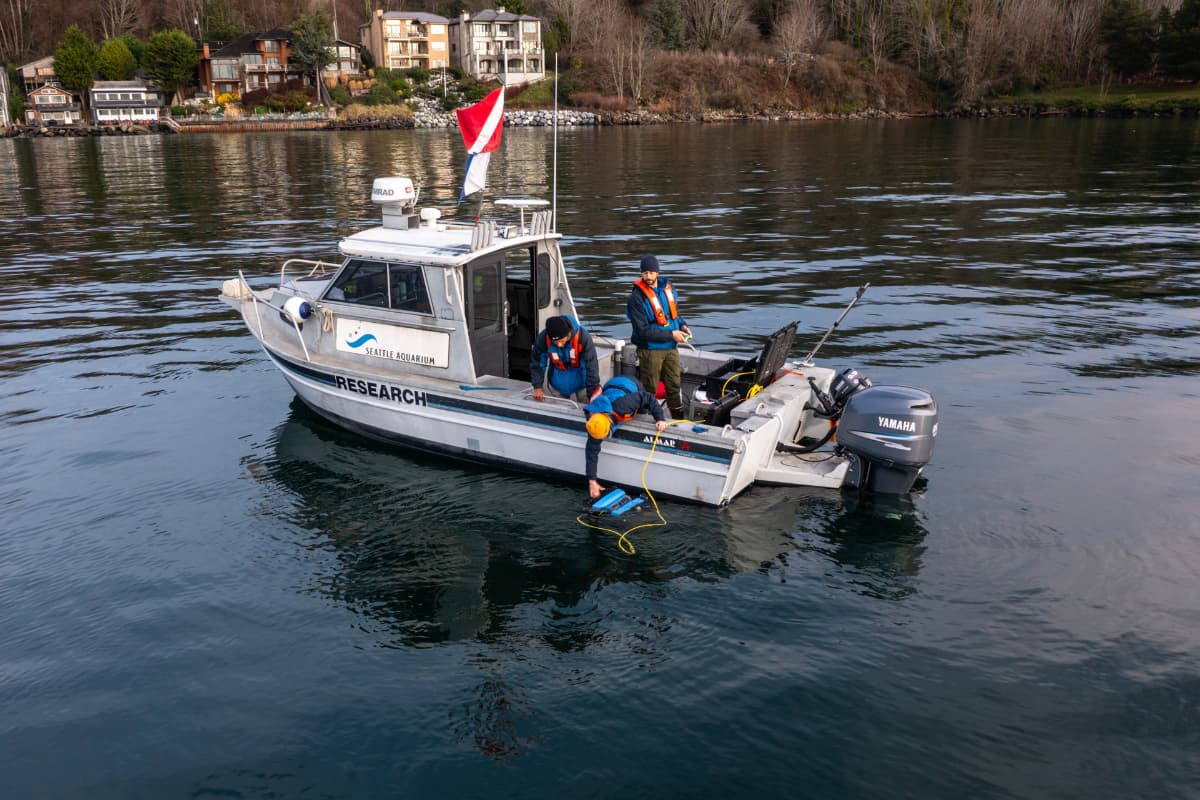
The Aquarium’s Coastal Climate Resilience (CCR) Team uses two ROVs to study local kelp forests to understand the conditions contributing to bull kelp thriving or declining in certain areas of the sea floor. That data is shared publicly to inform action to protect kelp forests, a habitat that’s key to the health of species such as sea otters, salmon, and rockfish, just to name a few.
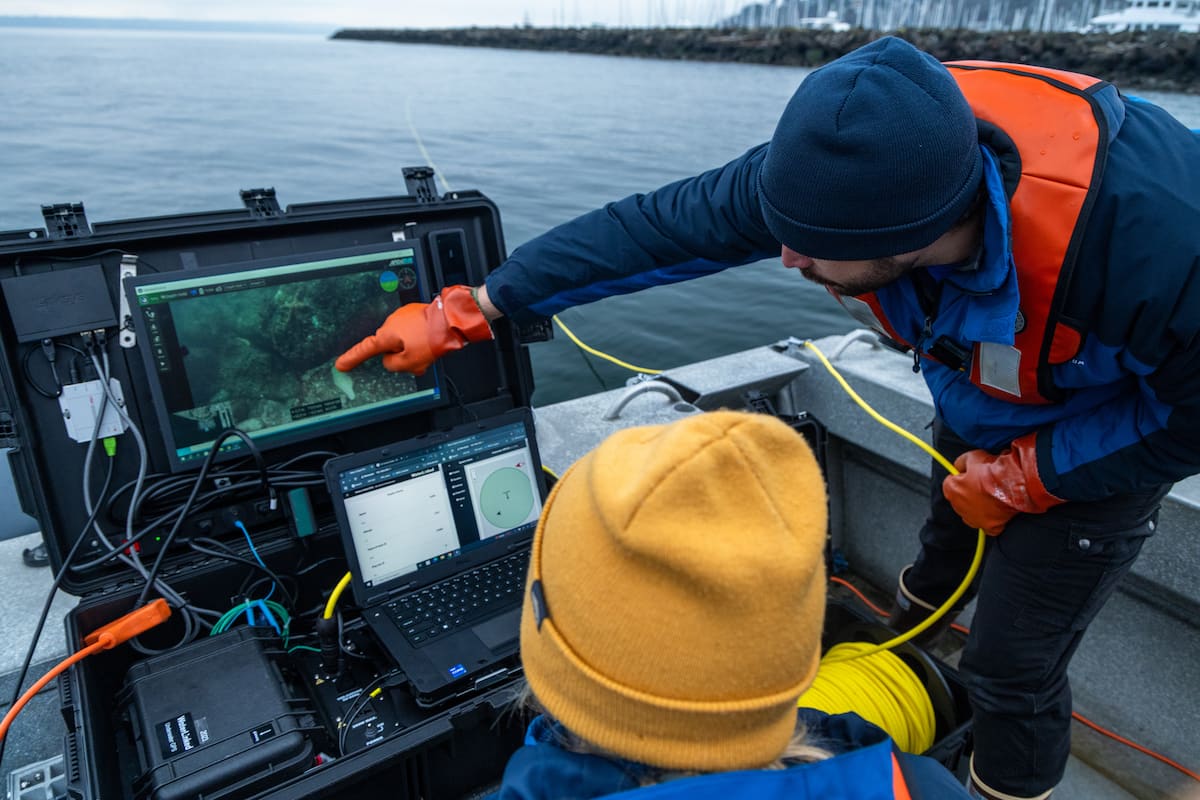
The team has trained a machine-learning model to identify animals, algae, plants, objects, and seafloor conditions found in our massive library of images. Models like the one we are using have been around since the 1950s and are frequently used in scientific and environmental research to identify patterns in large sets of data. However, the Aquarium’s model is still learning and can make mistakes.
Lending a Kelping Hand
That’s where you come in! Anyone with internet access can contribute to Kelp Quest by reviewing the collected images.
There are two ways to help. In the “Yes/No” workflow, you can confirm or correct the model’s guess of what is pictured in the image. And in the “Multiple Choice” workflow, you’ll label the image yourself.
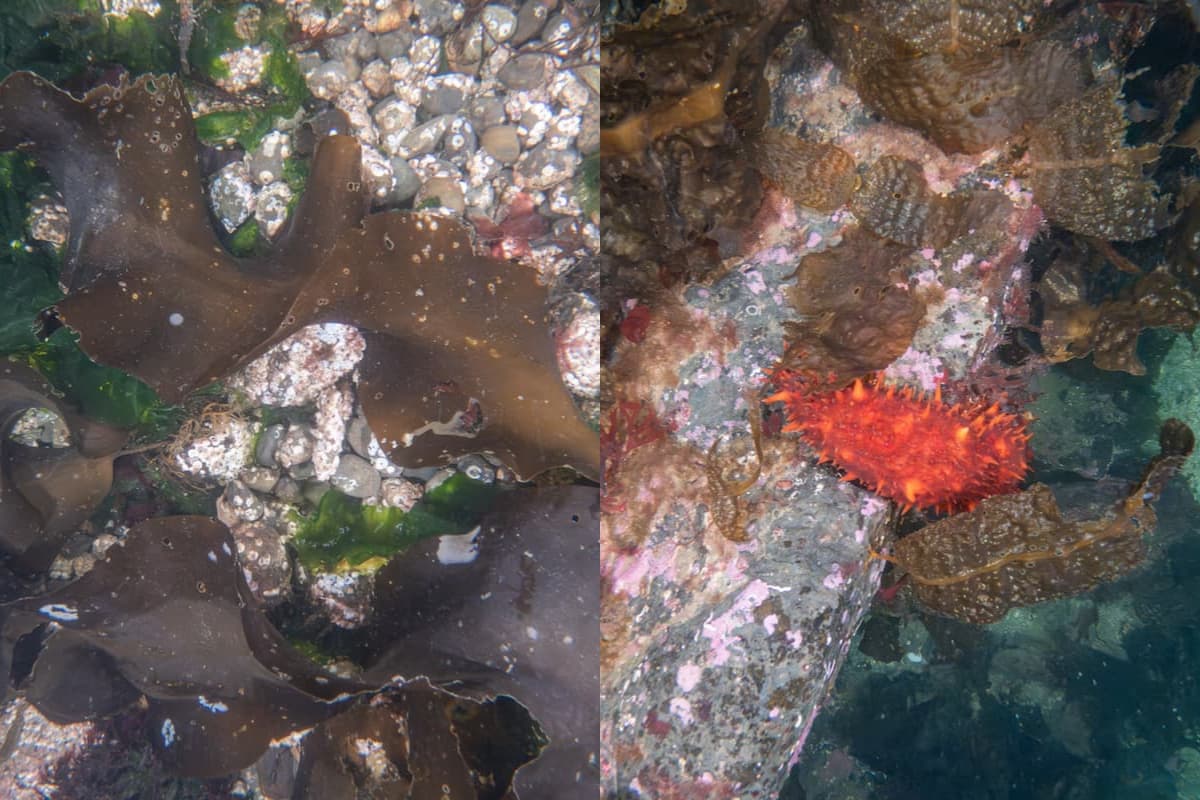
By helping label these images, not only are you supporting this project, but you’re also helping train our model to be more accurate, further supporting future marine research.
“We really want to make this as collaborative as possible,” research technician Reid Thomson says. “We want to facilitate conservation efforts, because you can’t do research on a subject if your subject is no longer around.”
Don’t worry if you’re no marine expert! The CCR team has developed a handy “Field Guide” that goes over all sorts of things you might encounter, from kelp and other algae to rocks and car tires.
“None of us were born as kelp experts,” research scientist Megan Williams says. “We all learned via exposure to animals and algae. This is a way to engage in recognizing details and patterns while helping the ocean.”
Science is a team sport
Kelp Quest is hosted on Zooniverse, a platform with nearly three million registered volunteers that’s built around the idea that many people can collaborate on research projects together.
As an open-source and open-access research project, Kelp Quest is set up in a way that supports the idea that science is a team sport. Open source means the computer code we use to run the model is publicly available for anyone to use and improve. Open access also means we make the results of our research (including the model) publicly available whenever possible.
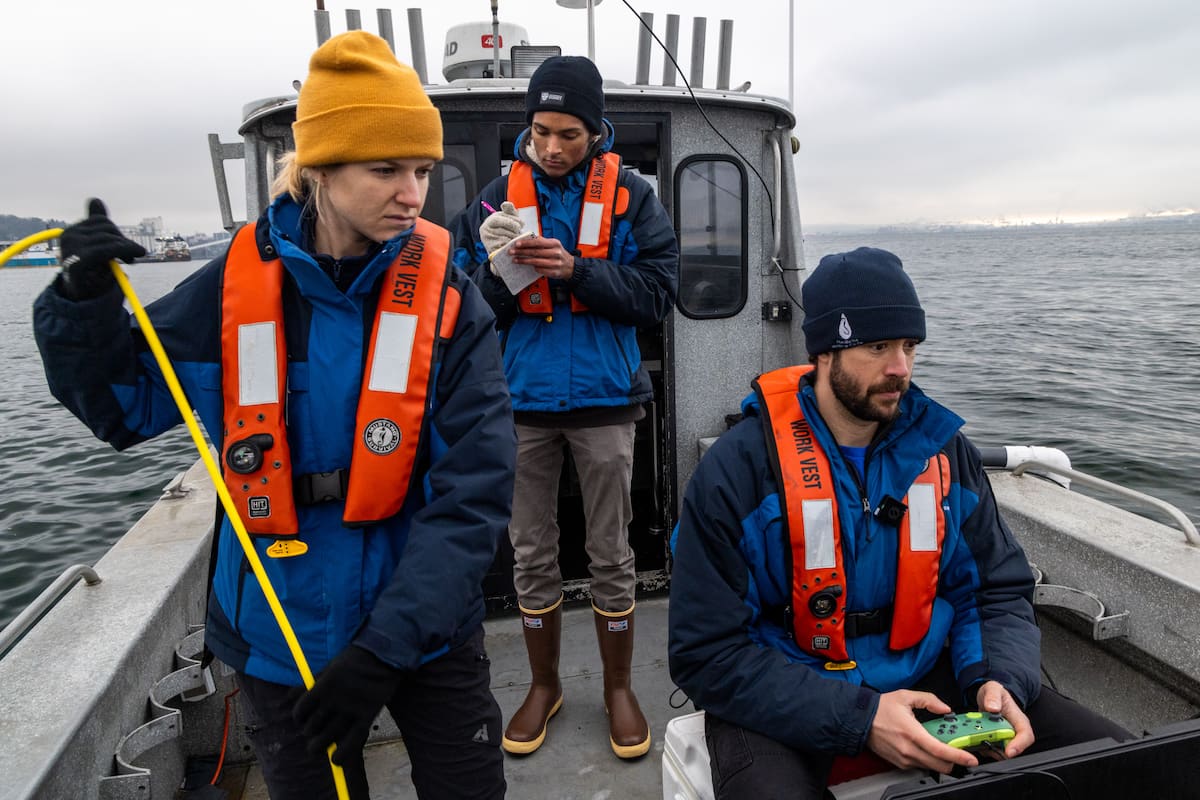
Meet the team
Dr. Zachary Randell, Ph.D.
Senior research scientist
Zach grew up in Anchorage, Alaska, and started scuba diving there when he was 15. His passion for ocean exploration led him to pursue scientific scuba diving at the University of California, Santa Cruz and complete a dissertation at Oregon State University, focusing on long-term kelp forest dynamics, underwater experimentation and dynamical modeling. He has always been eager to explore underwater, and this project allows him and his team to use cutting-edge ROVs and data analysis to study the ocean in new ways.
Megan Williams, M.S.
Research scientist
Megan grew up in Seattle, where sailing and exploring tide pools fostered an early appreciation for the beauty of Puget Sound. That connection to the marine environment led her to James Cook University in Australia, where she studied how coastal ecosystems respond to change. She has played a key role in advancing the CCR team’s spatial analysis and machine learning work and brings a strong field perspective to the team. She remains inspired by Washington’s rugged, green waters and is committed to protecting the natural places that shaped her life for future generations.
Reid Thomson, B.S.
Research technician
Despite his upbringing in the Midwest, Reid developed an unwavering passion for marine life at an early age. Summers spent constantly in and around lakes and streams fused with a love of nature documentaries to drive his fascination with the mysteries held by even larger bodies of water. Reid’s curiosity led him to pursue a degree in marine science at Boston University, where he refined his passion toward a career in marine research. He has a particular fondness for fieldwork that helps him explore Washington’s beautiful, rugged coast.
About the Seattle Aquarium:
Founded in 1977, the Seattle Aquarium is a marine conservation organization working to regenerate the health of Earth’s one ocean. We work among global leaders to advance animal wellbeing, marine and ecosystem science, public policy, field conservation, education, and species recovery programs that benefit the ocean. Help support the Aquarium’s mission of Inspiring Conservation of Our Marine Environment.
On the web: SeattleAquarium.org
On Facebook: facebook.com/Aquarium.Seattle
On Instagram: instagram.com/seattleaquarium
On Youtube: youtube.com/seattleaquarium