This story is part of our Nerdy Science Series—how we’re using research and technology in service of a healthy ocean.
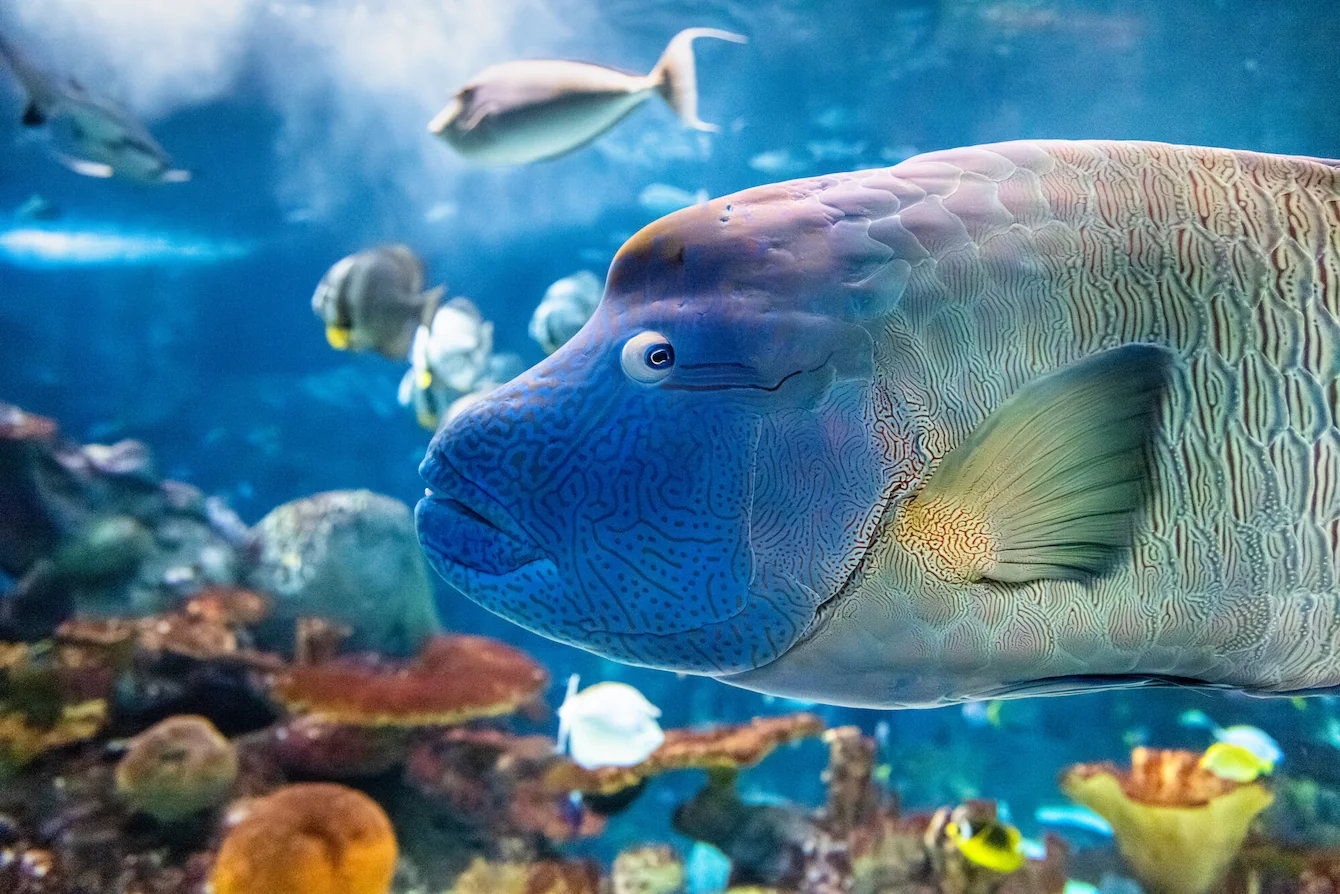
At the Seattle Aquarium, you can come face to face with thousands of different marine species from tiny hermit crabs to stately fur seals. But there’s one special face at the Aquarium that is visually stunning and helps drive conservation for his whole species.
Meet Tandu, a humphead wrasse. He moved into The Reef habitat in the Ocean Pavilion earlier this year. Before he arrived in Seattle, he was illegally trafficked into Hong Kong, then spent time in Singapore.
He’s more than just a pretty face. During his journey, Tandu became involved in a project that fights the booming business of trafficking his species.
Wrap your head around wrasse
To understand Tandu’s story, we have to understand more about the state of the humphead wrasse.
Also called the Napoleon wrasse, this large reef fish lives around the coral reefs of the Indo-Pacific region. They can grow up to 6 feet long and weigh 400 pounds. Humphead wrasse are known for the distinctive bump on their heads (found in larger members of the species), colorful scales and complex markings around their face and eyes.
Humphead wrasse are known for their colorful scales and unique facial markings.
This endangered species is particularly vulnerable to overfishing because of its mating habits. Though humphead wrasse are mostly solitary, they come together in large groups to mate. They meet at specific reefs, making it easy for fishers to track them.
But the biggest threat comes from their desirability (and high value) as seafood which encourages many fishers and traders to catch juveniles, grow them in cages and then sell them internationally.
Because of their endangered status, many countries have bans or heavy restrictions on the selling of this species and are obligated, under international law, to protect them. However, because humphead wrasse is also a delicacy in some cuisines, individual fish can sell for hundreds of dollars. These forces combine to make the ecologically harmful trafficking of humphead wrasse a lucrative venture. Illegal trade is regularly reported.
Tandu’s tale
In 2017, Tandu was trafficked illegally into Hong Kong, which has restrictions and permitting requirements for humphead wrasse sales. Local authorities found Tandu, and he was relocated to Ocean Park Hong Kong.
Because of the duplicitous nature of his journey, it’s impossible to determine where exactly Tandu is from or to return him to the wild. We estimate Tandu is about 12 years old. In aquariums, humphead wrasse can live up to about 30 years.
Ocean Park Hong Kong donated Tandu to Singapore Oceanarium at Resorts World Sentosa once he was able to be transported. He lived there for about four years before journeying across the Pacific to Seattle.
When Tandu arrived at our off-site Animal Care Center, our team guided him through a quarantine and acclimation period. During this time, our animal care staff worked with him on target training, where he was trained to react to a specific audio and visual cue by swimming over and receiving food. This makes feeding and healthcare easier for everyone. He has since moved into The Reef habitat in the Ocean Pavilion.
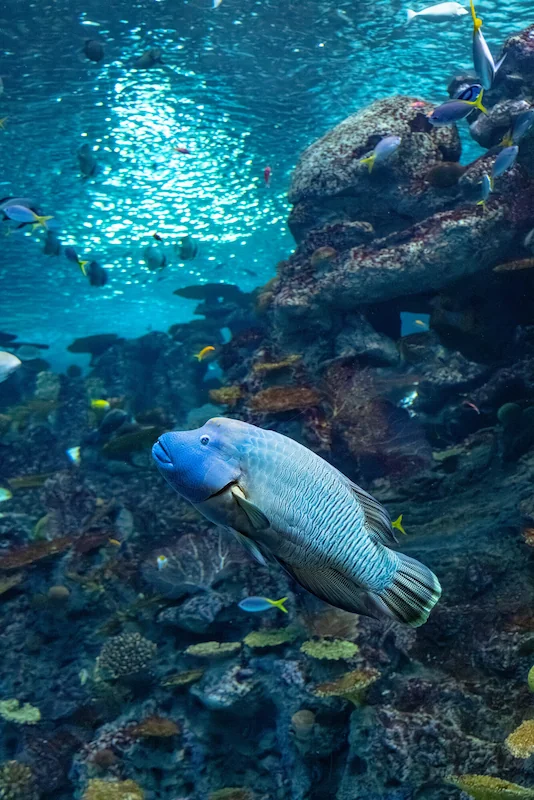
Tandu’s caretakers report he’s settling in nicely. He’s curious about his new surroundings and has taken to exploring the habitat, a good sign for a highly mobile species.
Saving Face
While he was at Ocean Park Hong Kong, Tandu got involved in Saving Face, a research project, led by Dr. Yvonne Sadovy and Dr. Loby Hau at the University of Hong Kong, focused on detecting and preventing humphead wrasse trafficking.
Using photos of humphead wrasse, researchers developed a way to identify individual wrasse faces. The maze-like markings on each fish’s face are unique to the individual, like a fingerprint, and are consistent for more than two years. With this facial recognition, wildlife enforcement can identify fish in markets and restaurants to check if they were imported with proper permits or could be laundered.
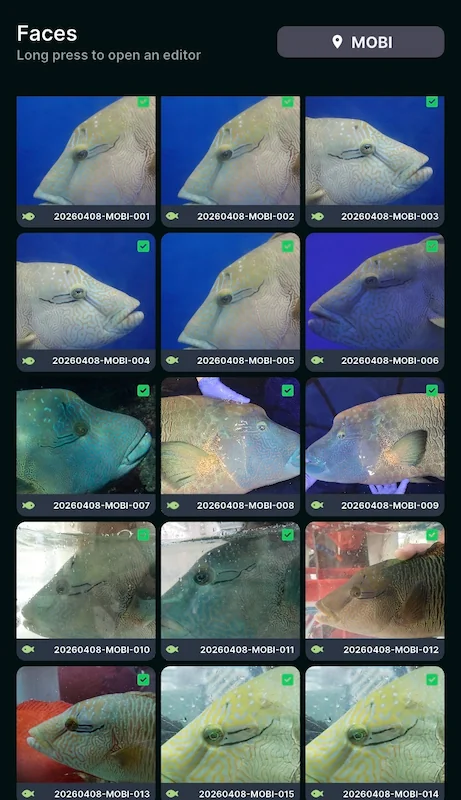
Tandu is one of the longest-serving participants in the study. His role is essentially to be a model for the program. Every year, our Aquarium photographer will take high-quality portraits of his face and send them to the researchers, allowing them to continue tracking any changes to his facial patterns over time. This data will help ensure the accuracy of the app’s facial recognition throughout a fish’s lifespan.
The Saving Face app is available for download. Once it’s in wide use, anyone can upload a picture of humphead wrasse at markets or restaurants to help check if that fish was imported legally. It can also be used to follow individual fish in the field in underwater studies, without having to catch and mark animals.
Lending a hand to our finned friends
You might not be in a fish market in Hong Kong any time soon, but you can still help humphead wrasse and other marine life wherever you are.
Being aware of the pressures facing marine life is a great first step. You can also share that knowledge with your family and friends, so more people feel inspired to act on behalf of the ocean.
For those looking to eat sustainably caught seafood, Monterey Bay Aquarium maintains a helpful guide called Seafood Watch.
When you visit the Seattle Aquarium, you support not just Tandu and the other animals in our care, but also their wild counterparts in our world’s one ocean and the vital research we participate in.
Your visit to the Aquarium supports conservation work that helps countless marine species.