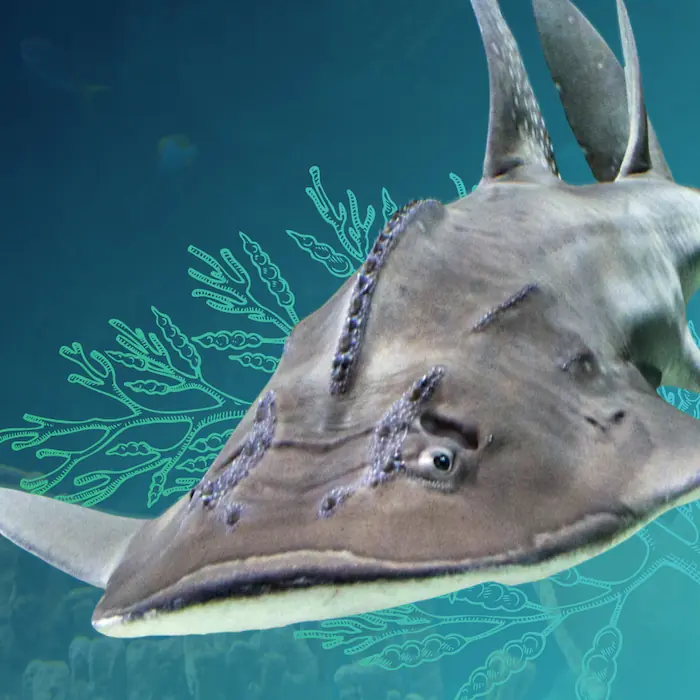
Last May, we announced our exciting research collaboration focused on sixgill sharks—an ancient, elusive species that has been around since before the dinosaurs, but about which little is known because individuals tend to live deep in the ocean.
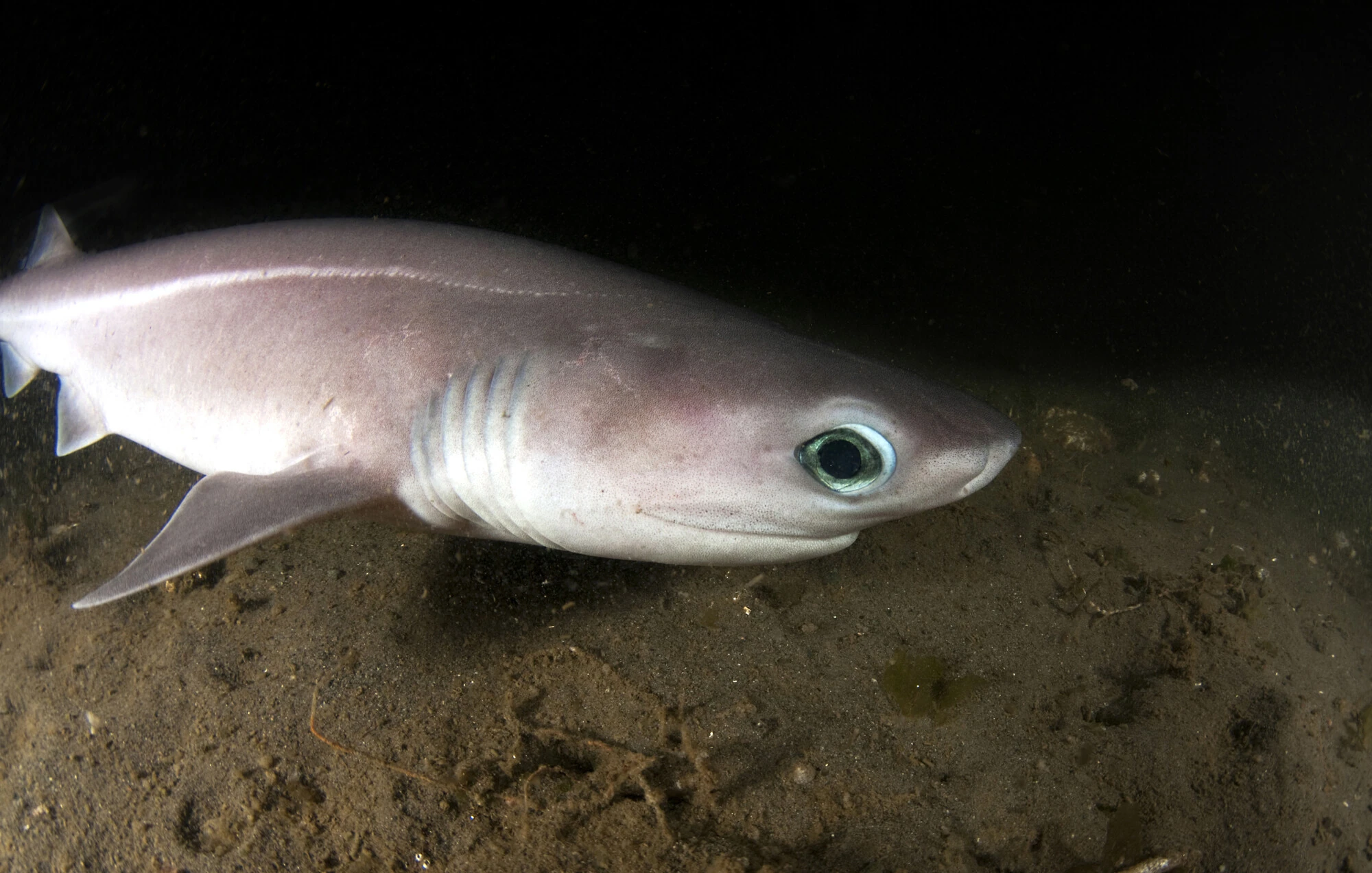
Not always creatures of the deep
Amazingly, sixgills are seen periodically in the waters of Puget Sound—and this year, they were spotted by divers in high numbers—providing a rare and fortuitous opportunity to study and learn more about them. Together with collaborators including the Washington Department of Fish & Wildlife, Big Fish Lab at Oregon State University and Point Defiance Zoo & Aquarium, scientists conducted research at three Puget Sound sites from May through September.
The goal of the project, says Director of Animal Health Dr. Caitlin Hadfield, “…Is to better understand this population—their behavior, feeding, physiology and more—to help shape their management needs.” She adds, “This is a long-term goal because of how little is currently known about them.”
(Read our full story for more details and background.)
An exciting season in the field—or, rather, on the water
With the research season concluded, Research Scientist Dr. Dani Escontrela shared highlights of what the team did and accomplished. “The sixgill fieldwork season was a tremendous success—we’re grateful to our collaborators and everyone who helped along the way,” she says.
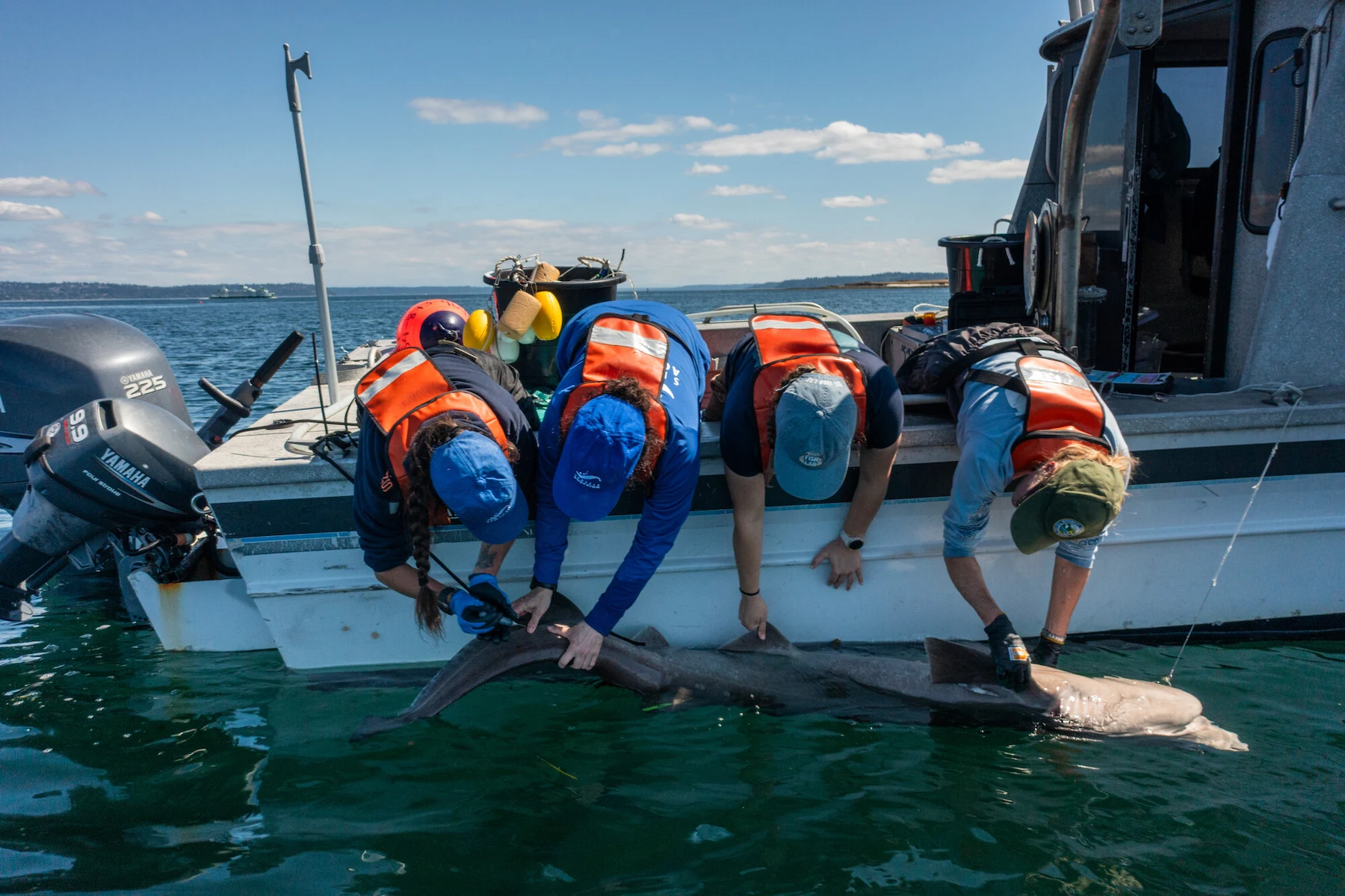
Over 15 field expeditions—five each at sites in Elliott Bay, near Bainbridge Island and off Redondo Beach—the team briefly brought 20 sixgill sharks and six spiny dogfish to the surface to collect data. Of the sixgill sharks sampled, the average size was 7.6 feet (232cm), with the smallest individual at 5.8 feet (178cm) and the largest at 9.1 feet (277cm). Team members worked quickly to collect samples on all the sixgills and two of the dogfish, including blood, muscle, fin and cloacal* swabs. They also conducted assessments for parasites, took various measurements and documented the animals with photographs.
During the brief time the animals were on the surface, the team deployed external Floy tags on all individuals to help answer questions about their movement if they’re sighted by divers or incidentally caught by other people (this is a good place to note that it’s illegal to fish for, retain or remove sixgill sharks from the water). They also tagged some animals with acoustic tags, which provide data on movement and habitat use.
Speaking of tags: As part of this project, the team also launched a sixgill sightings report form for divers, which applies to both tagged and non-tagged animals. So far, we’ve received reports on 22 individual sharks—one of whom had been tagged by our research team and has been spotted four separate times!
* What’s a cloaca? It’s an opening, present in birds, reptiles, amphibians and some fish, used for waste elimination, urination and reproduction. Gentle swabs of this area can provide species–level identification of their prey at shorter time scales than other sampling methods.
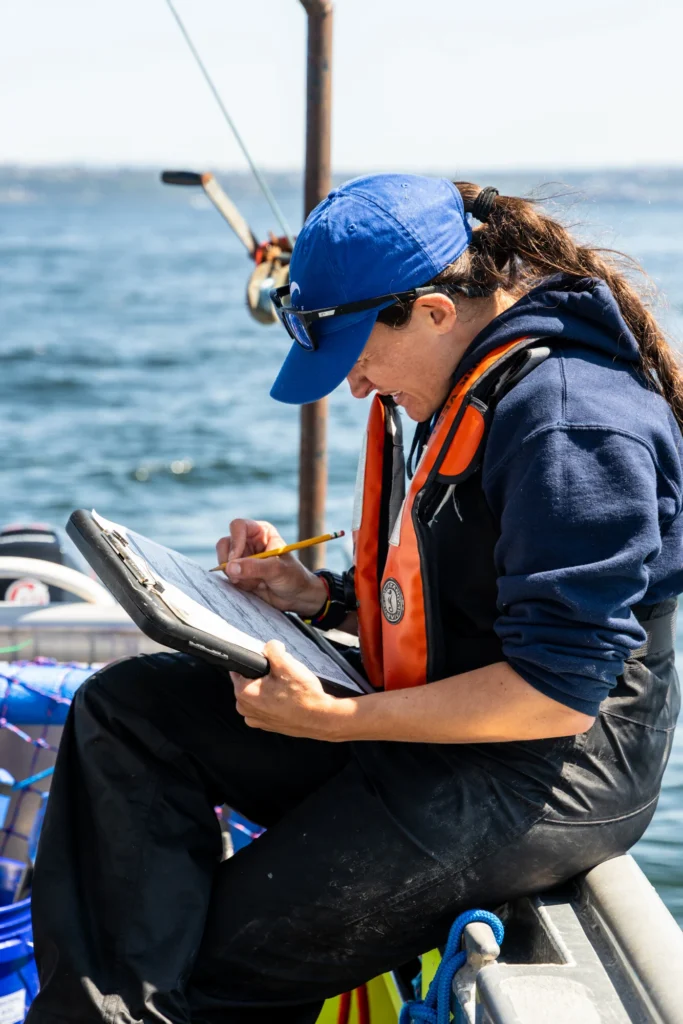
“Conducting shark research is a dream come true, and as a lover of the deep ocean, I find working with deep-water, otherwise elusive species a huge bonus. Even though I knew sixgills were in the Sound, I still couldn’t believe it when we brought our first individual to the surface! Everything about them was thrilling to see in person—especially their huge, teal eyes.
This was such an exciting year for learning and refining our methods, developing partnerships with collaborators to answer new questions, and teaching the community about a shark species found in our own backyard. I can’t wait for the years to come and to analyze all the data we’re collecting!”
— Seattle Aquarium Research Scientist Dr. Dani Escontrela
One of the world's largest shark species, swimming directly below the aquarium?
It’s true! The team’s Elliott Bay research site was actually below the Aquarium’s Pier 59. And this summer wasn’t the first time we’ve studied sixgills there: In the wake of increased local sightings in the early 2000s, we actively studied the species—but, after sightings declined, that work concluded in 2015. (Check out this video to learn more!)
With sixgills now present in our local waters, the team set to work below Pier 59. They completed five dives to set bait below the surface between May and September; each dive was paired with time-lapse GoPro footage. We also partnered with MarineSitu to deploy their adaptable monitoring platform (AMP) below the pier to capture continuous video footage.
Nothing to see here—just a sixgill shark underneath Pier 59! Video courtesy of MarineSitu.
Thanks yous and next steps
This project wouldn’t have been possible without collaboration from the partners mentioned above, as well as the Monterey Bay Aquarium, the Science and Math Institute in Tacoma, Seattle Central College, University of Hawai‘i at Mānoa, Seattle University, Stanford University and the recreational diver community.
“For the rest of this year, we will be dedicating our efforts to processing the samples we collected, preparing for our next field season, continuing to develop our partner relationships, and starting to analyze the data we collected this year,” says Dani.
We’ll continue to share updates on this exciting work as it progresses!
All research activities are authorized and follow guidelines in WDFW Scientific Collections permit number ESCONTRELA 26-131a.