This site uses cookies. View our Cookie Policy to learn more about how and why.

Regular hours: 9:30 am – 6 pm
Last entry at 5 pm

A white wave shape.

Wrasses

All in the Labridae family

More than 500 species of wrasses—marine fishes that belong to the Labridae family—are found in the tropical and subtropical waters of the Indian, Pacific and Atlantic oceans. Here at the Aquarium, we have a variety of wrasse species in our care: the Christmas wrasse, sixline wrasse, cleaner wrasse, bird wrasse—and the largest wrasse species of them all, the humphead (also called Napoleon) wrasse. Keep reading to learn more about these amazing fish—then plan a visit to see them in person!

At the Aquarium

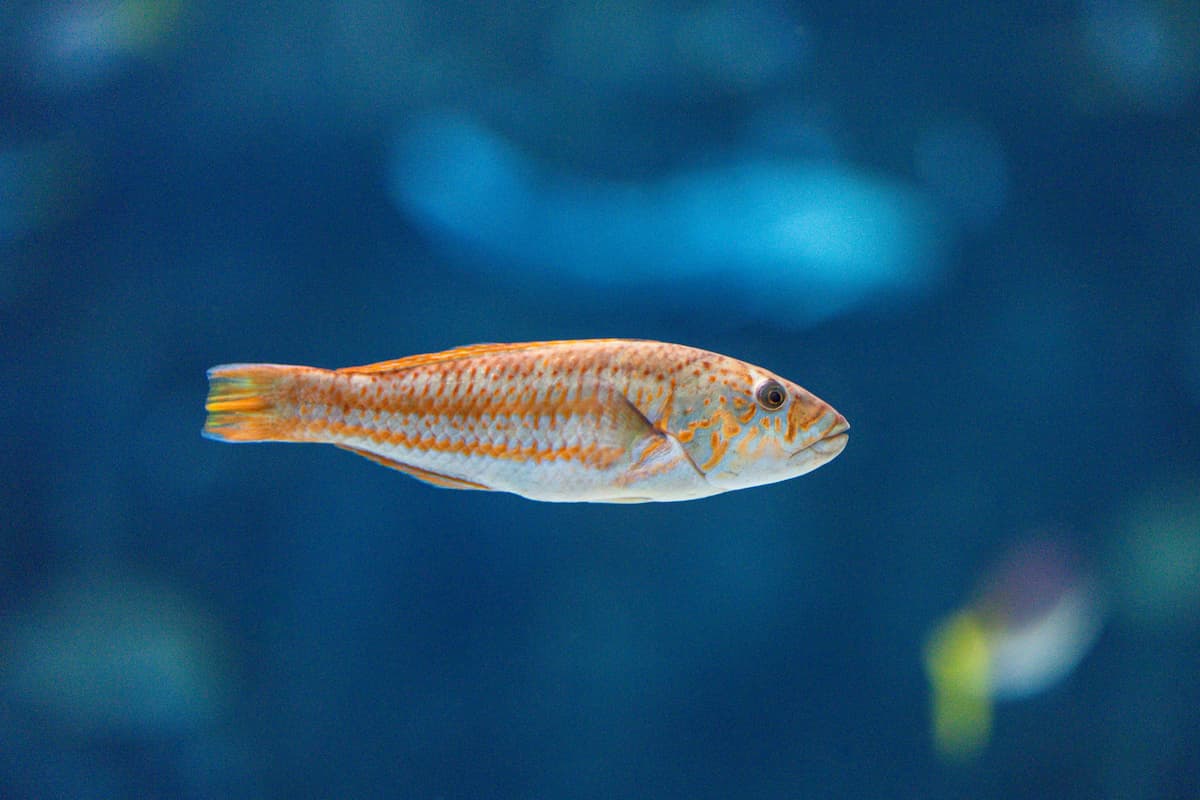
A Christmas wrasse.
Christmas wrasse

Wrasse class: now in session

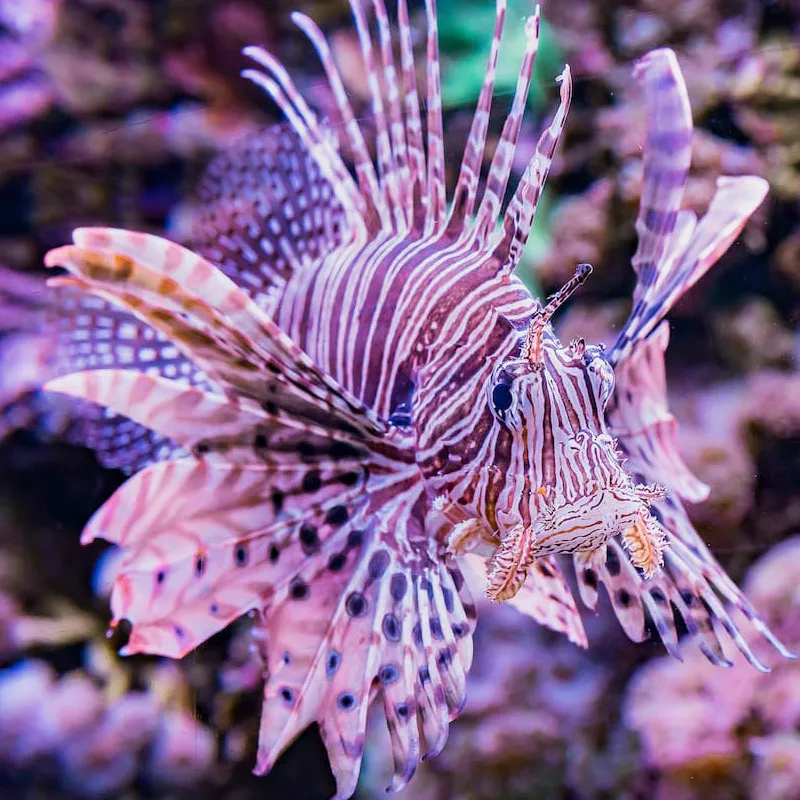
Depending on species, wrasses make their homes in coastal areas, rocky shores, coral reefs, tide pools and the sandy ocean floor. While most have life spans of three to five years, humpheads, one of the largest of all reef fishes, may live longer than 30 years. Regardless of species, wrasses are confirmed carnivores. Their diets are based on invertebrates (animals without backbones) such as shellfish, snails, sea stars and sea urchins, as well as fish. And who eats wrasses? Their predators include lionfish, barracudas and sharks.

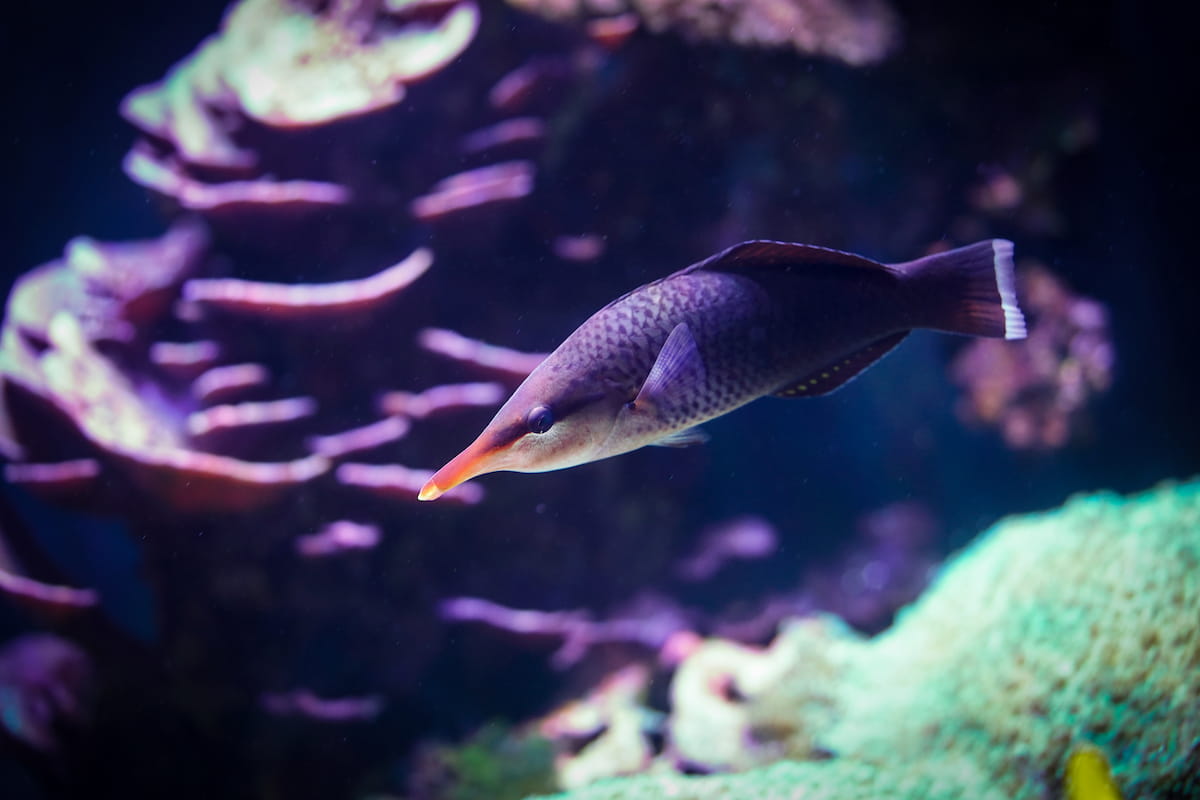
A bird wrasse.
Bird wrasse

Labriform locomotion

Most fish species use their pectoral fins—located on their sides, just behind their heads—primarily for stabilization. But the majority of wrasse species rely almost entirely on those fins, instead of their caudal fins (tails), for propulsion. In fact, it’s enough of a signature that this kind of movement, called labriform locomotion, is named after the Labridae family. Some say that it makes the fish look more like they’re flying than swimming.

Wrasse pectoral fins work like oars, pushing the water backward in a powerful stroke that thrusts the fish forward. Then, during the recovery stroke, pectoral fins are held close to the body to reduce drag in the water as they return to their starting position.

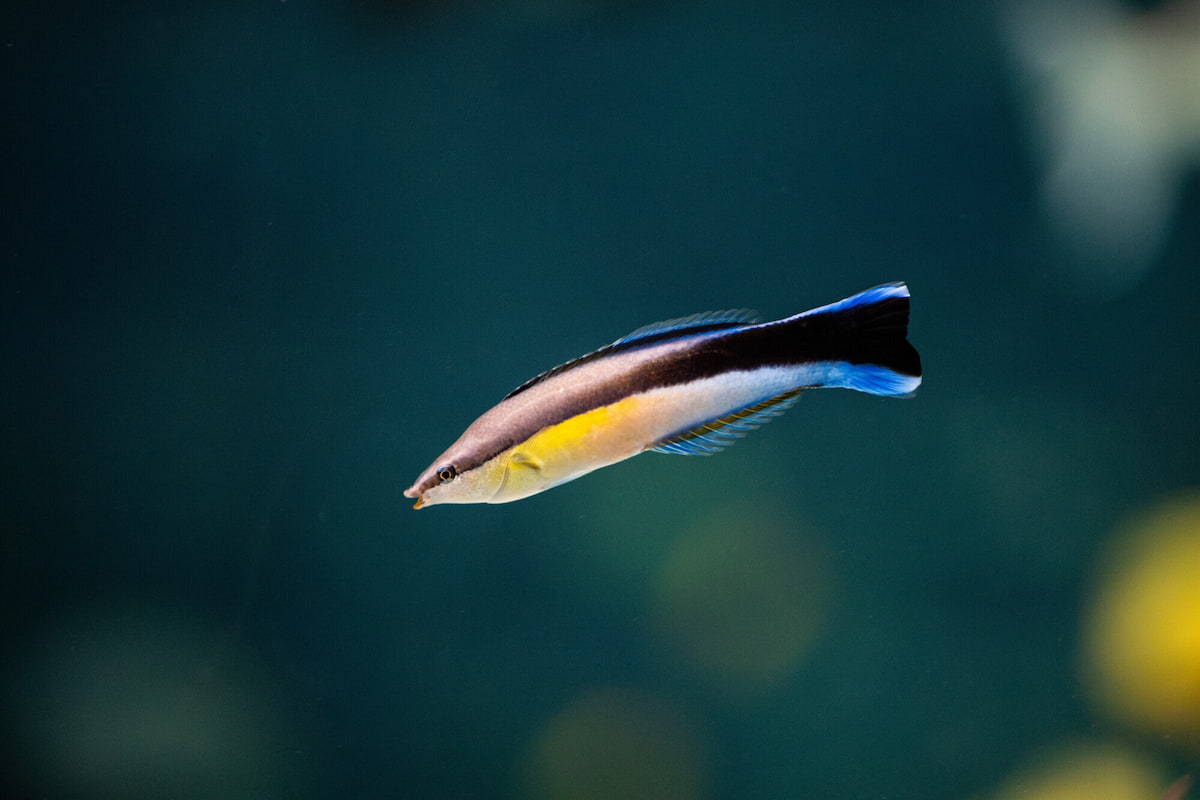
A cleaner wrasse.
Cleaner wrasse

Keeping it flexible

Many, if not all wrasse species are capable of changing sex from female to male. Most wrasses are born female and can change their sex as they grow older and larger. Why does this happen, when it does? Usually because of the loss of the dominant male, or if there are too many females. In those instances, the largest (formerly) female becomes male and takes control of the mating group so reproduction can successfully continue.

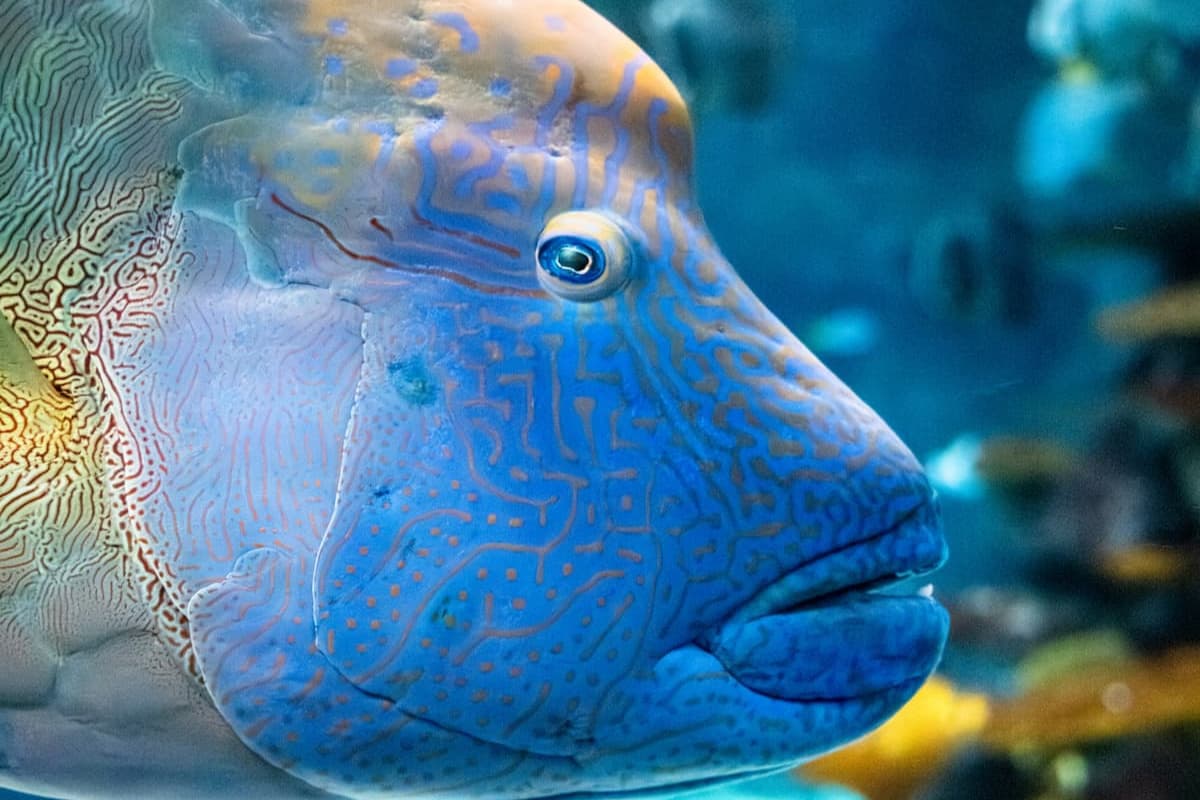
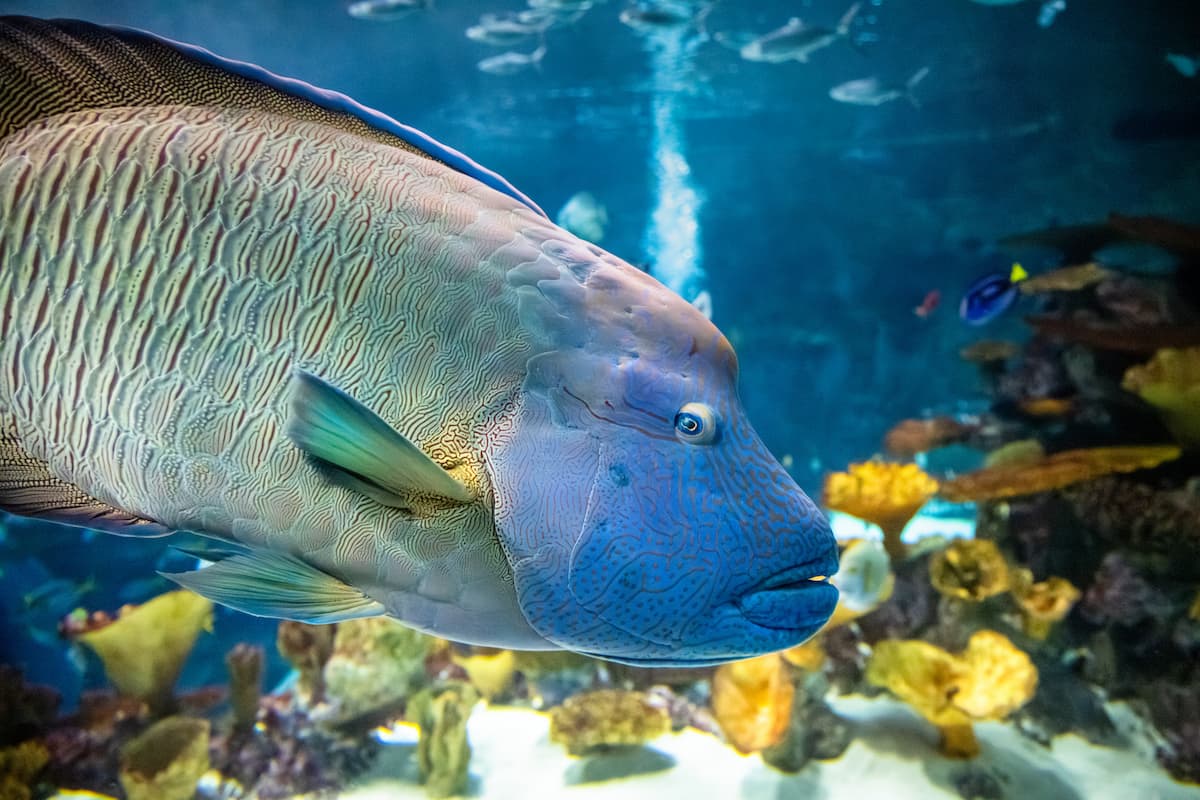
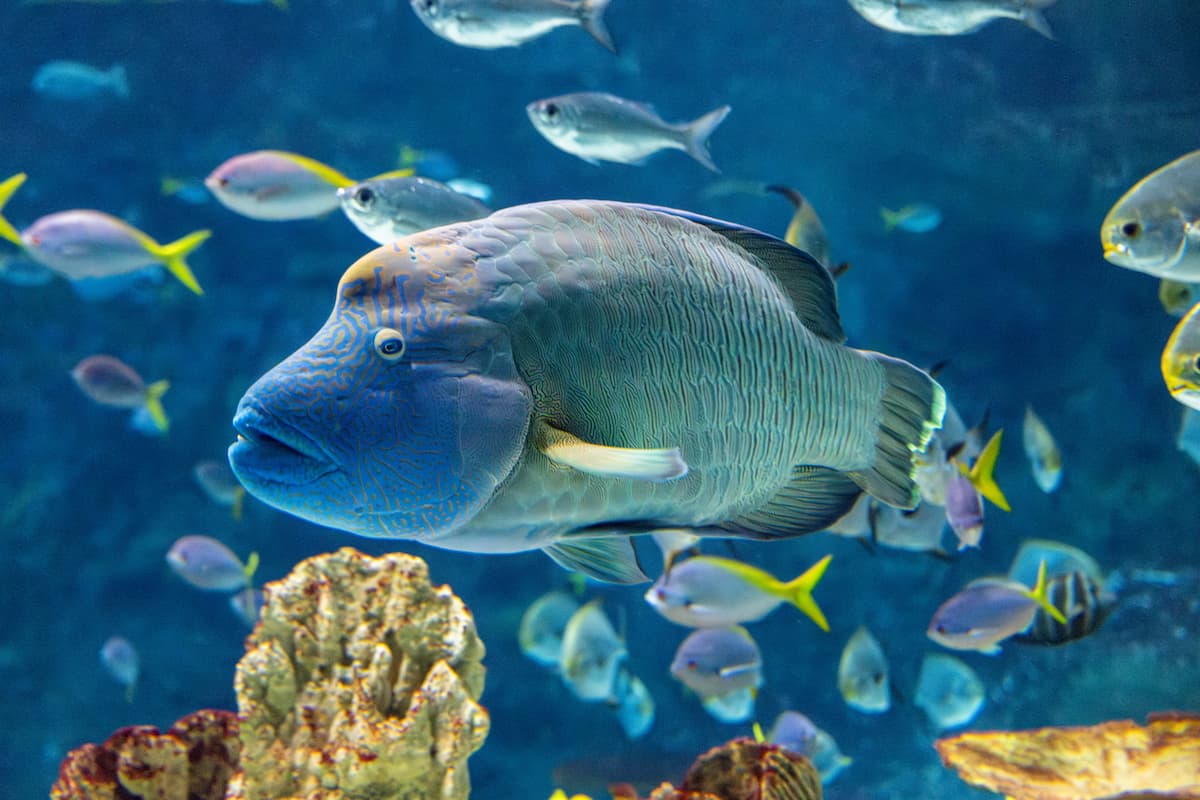
Tandu the humphead wrasse in swimming in The Reef.
Humphead wrasse

A (hump)head above the rest

In September 2025, the Seattle Aquarium welcomed a male humphead wrasse (Cheilinus undulatus) into our care. He spent some time getting acclimated at our off-site Animal Care Center until he was ready to make a move to the Ocean Pavilion. Before we introduce you to him, a few basics on this species:

  • As mentioned above, humpheads are the world’s largest wrasse species—males may grow to more than 6 feet long and weigh over 400 pounds!
  • They’re known for their beautiful, green-to-blue hues, brightly colored facial markings and big, circular scales.
  • Their common name comes from the large, bulbous hump that develops on the forehead of mature adult males.
  • Humpheads are listed as Endangered by the International Union for Conservation of Nature (of which the Seattle Aquarium is a proud member) and on Appendix II of CITES (the Convention on International Trade in Endangered Species of Wild Fauna and Flora) to control international trade.

Quick facts

Some wrasse species, including humpheads, are listed as Endangered due to overfishing, illegal trade and habitat destruction.

Most wrasses are born female and able to change their sex to male during their lifetimes, if they live long enough.

Humpheads are the world’s largest wrasse species—males may grow to more than 6 feet long and weigh over 400 pounds!

Explore More Fish

GiveBIG to conservation in action.

This year, we’ve set a GiveBIG goal of $70,000, and thanks to the generous support of Al & Pat Friedrich, Clint & Barb Bennett, Marshall & Janice Brumer, Michael Klein & Catherine Melfi, and an anonymous donor, every gift will be matched up to $30,000, doubling your impact.

Join us for After Hours: Family Matters on Thursday, May 21, when the Aquarium when remains open late just for adults 21+!

Today only, your gift will be matched dollar-for-dollar up to $25,000 thanks to the generosity of donors Betsy Cadwallader, J & Tim, and Jess & Andy Peet. Help us reach our $50,000 goal!

End the year with a gift to the ocean.