This site uses cookies. View our Cookie Policy to learn more about how and why.

Regular hours: 9:30 am – 6 pm
Last entry at 5 pm

Reducing oil spill risk to protect otters, orcas and more

Fossil fuels pose a huge risk to the health of our oceans. When we burn fossil fuels such as oil, coal and natural gas, more carbon dioxide goes into the atmosphere. As the ocean absorbs some of these emissions, the chemistry of the seawater changes. Ocean waters that are more acidic dissolve shells and coral skeletons and make it hard for animals to form new shells. These changes, along with ocean warming and other climate change impacts, harm marine ecosystems and the people who rely on them for their food, livelihoods and well-being. 

The transportation of fossil fuels and the accompanying potential for oil spills threaten the waters of the Salish Sea every day. There are proposed projects that would further increase oil handling in Washington state, along with the chance of devastating oil spills from trains, tankers and barges. In a 2019 count by Friends of the San Juans, there were 25 proposed new, expanding or recently completed terminal and refinery projects, which would add 4,232 more vessel transits every year to and from ports in Washington state and British Columbia.

Some types of oil are light and float on saltwater, spreading out very rapidly and making the oil easily accessible to seabirds and mammals at the water’s surface. Other kinds of oils are heavy and sink, causing problems for fish and organisms on the seafloor. Animals are hurt when they inhale oil as they surface to breathe or swallow oil as they try to clean themselves. When birds’ feathers or mammals’ fur get coated in oil, it also undermines their insulation, making it difficult for them to maintain the right body temperature. Oil and gas transport in marine waterways is listed among the primary threats to the sea otter population. And it is estimated that an oil spill of 2,000,000–4,000,000 gallons may kill up to half of the remaining endangered southern resident orcas (1).

Many Seattle Aquarium staff have the federal and local training required to safely handle and care for wild marine animals in the event of an oil spill. Three of our staff are also trainers and provide annual Hazardous Waste Operations and Emergency Response (HAZWOPER-24) classes in the region with a focus on oiled wildlife response. 

But we must do more than prepare for the eventuality of a catastrophic oil spill in the Salish Sea. Fossil fuels must be phased out to protect the health of our ocean and the marine species that call it home. The Seattle Aquarium has begun engaging with partners in the Stand Up to Oil coalition, a group of organizations committed to protecting Pacific Northwest communities from the health, safety and environmental threats of oil infrastructure and transport.

Over the last few months, we have raised our voice to oppose new fossil fuel infrastructure in Washington state and ensure that oil spill risks to endangered species are explicitly considered in project-approval processes. These efforts have included:

  • Opposing the Kalama methanol refinery: We joined many other organizations and communities in urging the Washington Department of Ecology to deny a proposal to build and operate a methanol refinery along the Columbia River in Kalama, Washington. The project would have resulted in significant greenhouse gas emissions for the next 40 years at all points in the process—from fracking and piping the gas to its conversion to liquid methanol and then to plastics or fuel, and then the burning of that fuel. In a huge win for the health of our ocean and climate, the Department of Ecology rejected this proposal in January 2021.
  • Ensuring better planning for oil spill risk: We have asked the Department of Ecology to require updates to oil spill contingency plans to better reduce the risk of oil spills to the endangered orcas.
  • Expressing concerns about oil terminal expansion: There is a proposal to expand the SeaPort Sound bulk oil terminal. We asked the City of Tacoma to closely examine potential harm to the sensitive intertidal and marine ecosystems of the Salish Sea.
  • Preparing for new rules for fossil fuels: This summer, the Washington Department of Ecology will develop rules for evaluating any new fossil fuel project proposals. This is an opportunity to ensure the Department of Ecology applies the best available science and social equity considerations in future permitting decisions. Be on the lookout for an upcoming action alert to help hold coal, oil and gas projects accountable for the air pollution they create.

We invite you to join the Seattle Aquarium in speaking up for the health of our ocean and climate! Get breaking news and urgent action alerts by subscribing to our policy email list.


(1) Lacy, R.C., Williams, R., Ashe, E. et al. Evaluating anthropogenic threats to endangered killer whales to inform effective recovery plans. Sci Rep 7, 14119 (2017).
Speaking up for ocean health: 2021 priorities in the Washington legislature

Although things will look different in the Olympia legislature this year due to COVID-19, the Seattle Aquarium is still gearing up to advance science-based measures to protect the ocean. Keep reading to learn about some of our top priorities for 2021.

Reducing plastic pollution

Scientists predict that by 2050, if we don’t make drastic reductions in the amount of plastic we use and dispose of every day, there will be more plastic than fish in the ocean by weight.

Last year, we worked with partners to pass the Reusable Bag Bill and help slow the flow of plastic into the ocean. 

This year, we’re actively supporting Senate Bill 5022, which includes measures that will protect the health of our ocean by cutting back on harmful and unnecessary single-use plastics:

  • A ban on Styrofoam.
  • Requirements for using recycled plastic to make new drink bottles.
  • A requirement that food service businesses provide single-use utensils, straws, condiment packets and cold-beverage lids only when requested by the customer.

Advancing environmental justice

The Seattle Aquarium supports the Healthy Environment for All (HEAL) Act (SB 5141), a recommendation from the Environmental Justice Task Force which adds an essential racial equity lens to the environmental program work done by the state.

Mitigating climate change

The transportation sector is responsible for nearly half of our climate and air pollution in Washington. We join partners in urging the legislature to adopt a Clean Fuel Standard (HB 1091) and support a transportation system that prioritizes equity and reduces greenhouse gas emissions.

Protecting funding for environmental programs

In the context of the multi-billion-dollar budget shortfall resulting from the pandemic, and as a member of the Environmental Priorities Coalition, we also support the Conservation Works priority. This seeks to protect essential environmental programs from budget cuts and promote investments in stimulus projects that tackle climate change, create good jobs, recover salmon and help communities chart their own course for a better future.

Read more about the Environmental Priorities Coalition’s shared legislative priorities.

Protecting nearshore marine waters

We support a prohibition on seabed mining leases for hard minerals—like gold, titanium and more—in state waters (SB 5145). This is an emerging threat and would have unavoidable and devastating impacts on marine ecosystems.

Supporting the cultural community

The pandemic also makes it essential to support the cultural community, including aquariums, with new funding tools that ensure we emerge strongly from the pandemic. The Aquarium is advocating for legislation that would allow local legislative bodies to establish new cultural access programs either through council and commission vote or through a vote of the people.

Join us in taking action!

  • Contact your legislators now to let them know your priorities for a healthy ocean. Visit our Act for the Ocean page for more information and ways to reach your elected officials.
  • Get breaking news and urgent action alerts by joining our policy email list.

A rising tide for ocean climate action

We’re at a turning point in the climate change discussion: The ocean is now fully recognized for the critical role that it can and will play in solving the crisis.

For many years, discussions of climate change have centered on the land. The land is certainly important for climate action–it’s where we live, and where we emit a lot of greenhouse gases from transportation, power plants, farming, construction and more. Meanwhile, talk of the ocean and climate change tended to be limited to worries about sea level rise or impacts to fishing and shellfish production.

However, more and more people—including leaders—have begun to recognize that the ocean and the spectacular diversity of species and ecosystems it contains are impacted by climate change in many other ways. And, crucially, the ocean is a key part of the solution: It can help us address climate change—yet another reason to work hard to protect it. 

The ocean absorbs excess heat and carbon from the atmosphere. That has helped to slow the accumulation of greenhouse gases in the atmosphere and delay increases in air temperature. But it has also led to an increase in the frequency and severity of warm water events like El Niño and a measurable decrease in pH, otherwise known as ocean acidification. In turn, these changes wreak havoc on marine ecosystems and the people who rely on them for their food, livelihood, health and well-being. 

In 2020, the House Select Committee on the Climate Crisis and various nonprofits put forward action plans for how we can reduce fossil fuel use, protect the ocean and its resources, and lift up the communities most affected by climate change. This week, there was a hearing in Congress on a new Ocean-Based Climate Solutions Act—a monumental step forward in focusing attention on the role of the ocean in climate action.

How can we make the ocean part of the climate solution?

Investing in renewable energy, protecting eelgrass beds and other habitats and supporting sustainable fishing and aquaculture—all guided by science—have been proven to mitigate the effects of climate change. They also have many other benefits for ecosystems, economies and communities, including ensuring food security and climate resilience for coastal communities. Last year, Dr. Erin Meyer, director of conservation programs and partnerships, had an op-ed in the Seattle Times calling for these kinds of investments and more.

Coastal restoration efforts support vibrant fish populations by providing habitat for juvenile fish, and they also help mitigate the effects of sea level rise. Reefs, salt marshes, forested tidal wetlands and mangroves act as buffers against storms and can store up to four times the carbon per acre than land-based ecosystems. 

Well-managed fisheries can provide food security and benefit species throughout the marine food web, beyond just fish. Science-based fisheries management supports everything from plentiful plankton to thriving whales, as well as resilient human communities. And here in Washington, the ocean supports over 60,000 fishing industry jobs. In order to ensure that all of these benefits persist, we’ll need our leaders to ensure that fisheries management considers how habitats will shift and species will need to migrate as the climate changes. 

The ocean also provides space for the large footprint needed for renewable energy production, which will help us transition away from fossil fuels. However, offshore energy installation and operation may pose a risk to marine ecosystems and cultural practices. Governments should utilize the best available scientific and socioeconomic data to minimize these and other risks from offshore wind farms and other renewable energy projects in the ocean.

All of these efforts will require people—and a focus on climate justice. Ocean-climate solutions can provide jobs, lift up overburdened communities and advance a just economic recovery that is so urgent right now.

We’re celebrating that the ocean is now part of the U.S. conversation about climate change. Combatting climate change cannot be limited to 30% of the planet’s surface. So far, the ocean has mitigated some of the impacts, but it’s becoming increasingly clear to all that we must act before changes to the ocean are irreversible—and that we need to protect the ocean and its ability to help provide solutions for a brighter, more equitable future.

Protect Bristol Bay

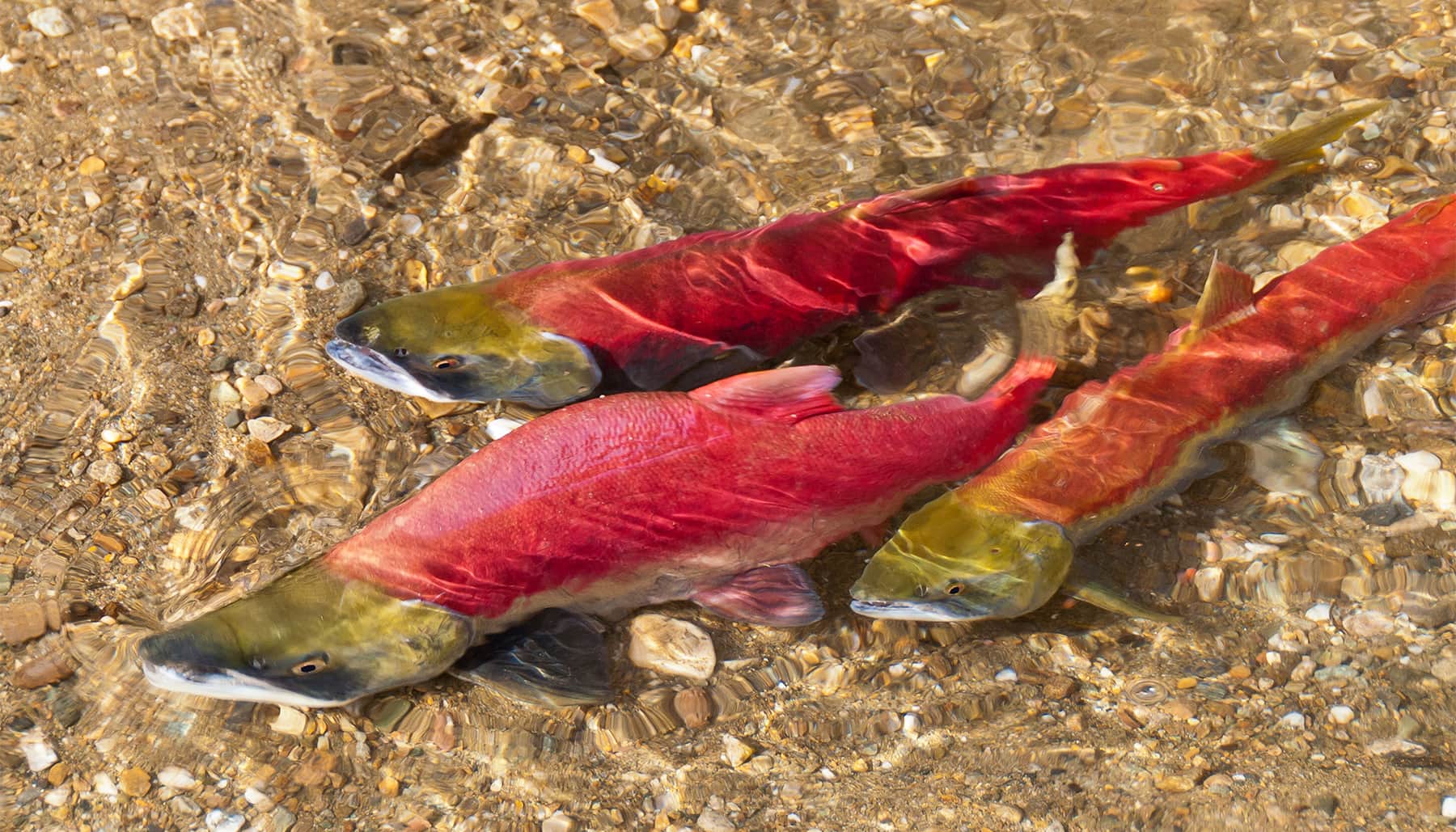
Last Friday, the U.S. Army Corps of Engineers cleared the way for permitting a huge mine at the headwaters of two major rivers that feed into Bristol Bay, Alaska—home to the world’s largest sockeye salmon fishery and one of the most prolific Chinook salmon runs.

The Canadian-owned Pebble Limited Partnership (“Pebble”) would extract gold, copper and molybdenum—materials of extremely high value, found in everyday items such as seatbelts, cell phones and electrical wires—through a new open pit mine.

The Seattle Aquarium strongly opposes the Bristol Bay Pebble Mine. Healthy oceans, fishing and Indigenous communities and local economies depend on wild and clean rivers and waterways. These will all be harmed if the Pebble Mine is developed. The science clearly shows the dangers posed by developing the mine are too great to allow the project to proceed. And yet, the Trump Administration is determined to do so, as it continues its relentless efforts to roll back environmental projections—from the National Environmental Policy Act to the Endangered Species Act—and ignores the call for environmental justice.

In the final environmental impact statement released last week, the Corps concluded that the mine “would not be expected to have a measurable effect on fish numbers” or “result in long-term changes to the health of the commercial fisheries.”

The science does not back up that finding. Mining in these rivers would cause both environmental and economic damage. The EPA’s earlier scientific assessment found that the mining activities would destroy more than 80 miles of streams and 3,500 acres of wetlands and generate billions of gallons of mine pollution. The surrounding marine ecosystem, $1.5 billion-dollar fishing industry, and over 14,000 jobs—including jobs held by fishermen from Washington state—that depend on these fish would be put in jeopardy.

We stand with Alaska Natives, fishing communities and others who have been opposing this mine for years. The salmon runs in Bristol Bay are essential to the health of the surrounding ecosystems and sustainable economies. We call on the EPA to follow the best available science and the principles of environmental justice and invoke a veto under Section 404(c) of the Clean Water Act.

If you’d like to take action, consider contacting your elected official and asking them to speak out against the Pebble Mine. Here in Washington, Senator Cantwell and Representative Kilmer have already done so—so please thank them if you are their constituent! You can also post your concerns on social media and tag @EPA and @USACEHQ.

Taking action for ocean policy: Report from the 2020 state legislature

It’s Earth Action Week! And, if it wasn’t clear before, it’s becoming all the more obvious that there are many different actions we can all take to care for our natural world as well as each other—all of which feels especially urgent during the current pandemic.

One critically important, collective action is supporting strong policies that protect clean air, clean water and the wildlife we all love. At the Seattle Aquarium, we continue to raise our voice on many important policy issues. Join us as we look back at what we did during the 2020 Washington state legislative session to advocate for science-based measures to protect our marine environment.

Wins for a healthy ocean

We worked closely with partners to pass the Reusable Bag Bill, with bipartisan support! This builds on 37 local bag ordinances in Washington and is a critical step in protecting marine wildlife. We thank Senator Das and Representative Peterson for sponsoring this bill and working so hard to get it passed.

We also made strides in the fight against climate change. The Seattle Aquarium worked alongside Environmental Priorities Coalition partners to help pass the climate pollution limits bill, which updates Washington state’s greenhouse gas reduction goals to reflect the latest science. By 2050 the state aims to be 95% below our 1990 emissions level.

Work on “Healthy Habitats, Healthy Orcas” resulted in a budget directive to move things forward. A group of experts will come together to shape a plan for a “net ecological gain” standard to protect salmon and reverse the trend of habitat loss in our region.

What did the Seattle Aquarium do? We went to Olympia in January with nine of our Youth Ocean Advocates, who met with legislators and helped build support for the Reusable Bag Bill! We were involved in the drafting of bills and we testified in support of bills when they came up for hearings. And we want to extend a huge thank you to everyone who participated in our action alerts. Demonstrations of constituent support really help get bills passed!

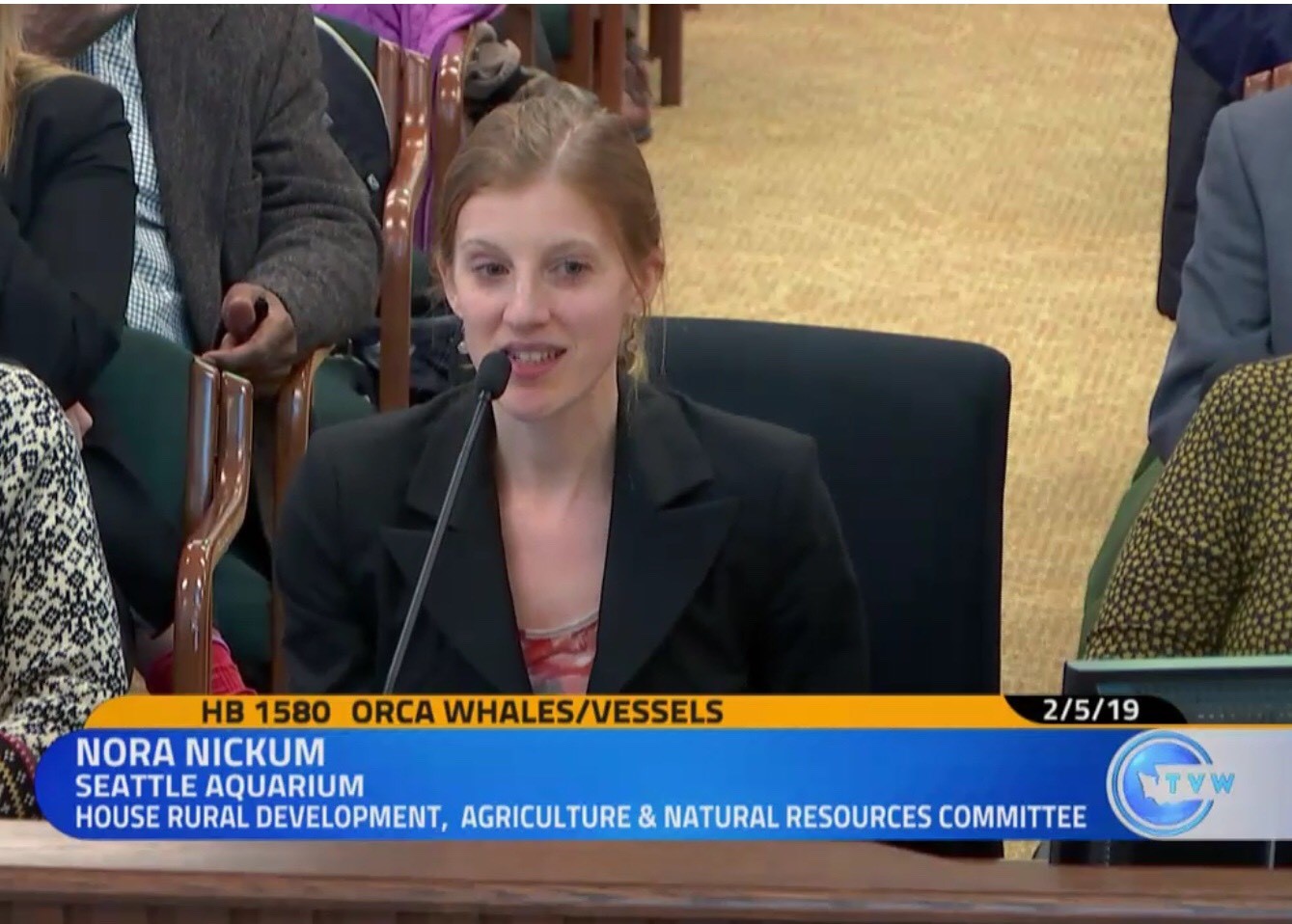
Seattle Aquarium Ocean Policy Manager Nora Nickum testifying for protections for our local orcas during the most recent state legislative session.
Seattle Aquarium Ocean Policy Manager Nora Nickum testifying for protections for our local orcas during the 2019 state legislative session.

Looking ahead

The Styrofoam ban did not pass this year. We had constructive conversations and helped the bill gain an incredible amount of momentum. It’s important to reduce Styrofoam use because it’s so lightweight that it’s frequently blown from disposal sites and travels easily through gutters and storm drains and into the ocean. We’re ready to help get a Styrofoam ban across the finish line next year!

Requiring recycled content in plastic bottles will also need to be revisited in the future. We worked hard to pass a bill requiring that beverage containers sold into Washington state have minimum post-consumer recycled plastic content, tiered up each five years, up to at least 50% by 2030. Unfortunately, this bill had implementation costs associated with it, and Governor Inslee had to veto it—along with more than 140 other expenditure items—because of the growing fiscal threat posed by the COVID-19 (coronavirus) outbreak. We will work with partners to bring this bill back in a future legislative session, as it will help build a market for recycled plastic and keep more bottles out of the landfill and ocean.

The Senate failed to pass the Clean Fuel Standard. The update of the state’s greenhouse gas limits will only lead to change if we have the tools to achieve those targets. Transportation is responsible for nearly half of our climate and air pollution in Washington, and our state is the only one on the West Coast without a clean fuel standard. We will continue to work with our partners to push for meaningful climate action.

Support emergency funds for the aquarium

The coronavirus crisis has impacted many people, businesses and nonprofits across our community. Like other sectors of the economy, aquariums and zoos are facing significant hardships in the face of COVID-19. We’ve all had to reduce operations and make difficult staffing decisions while facing the unique challenge of retaining sufficient staff and supplies to care for our animals. This will further strain budgets at a time when guests are not coming through our respective doors.

Federal policymakers need to hear directly from you about the need to include aquariums and zoos, as well as museums and similar entities, in COVID-19 relief and economic stimulus packages.

Please contact Congress to express your support for assistance for zoos, aquariums and museums in economic stimulus legislation.

YOUR SUPPORT IS MORE IMPORTANT THAN EVER

Please consider a gift that will help us continue providing the best care for all our animals, support our staff, advance science-based policies to protect marine wildlife, and expand our at-home engagement and learning opportunities during our temporary closure.

A gift of any size makes a difference.

Make a GiftJoin or Renew Your Membership

Speaking up for ocean health: 2020 priorities in the Washington legislature

The Washington state 2020 legislative session is about to begin, and the Seattle Aquarium will again be advocating for science-based measures to protect our marine environment. This year, we will be working hard to reduce plastic pollution, protect orcas and accelerate actions to address climate change. As a new member of the Environmental Priorities Coalition, we will be doing so in close partnership with 23 other like-minded conservation organizations.

Reducing plastic pollution

Plastic is becoming ubiquitous in marine ecosystems. Plastic accounts for 92% of all marine debris, which is often gobbled up by fish and other animals. Sea turtles ingest plastic bags that they confuse for jellyfish, and sea birds eat marine litter they have mistaken for prey. If we don’t make drastic reductions in the amount of plastic we use and dispose of every day, scientists predict that by 2050 there will be more plastic than fish in the ocean by weight.

The Seattle Aquarium will continue our efforts from last year and keep fighting for crucial actions to combat pollution from single-use plastics (plastic products used just once before being discarded). This includes the reusable bag bill, which will eliminate single-use plastic bags. We will also support a new ban on Styrofoam, among other important environmental protections.

Saving our southern resident orcas

Last year, we helped pass four key orca recovery bills to protect our struggling southern resident orcas, but much more action is needed. Right now, only 73 of the endangered southern resident population remain, and they greatly depend on shrinking salmon populations. The Seattle Aquarium will be working with our partners to pass the Healthy Habitat, Healthy Orcas bill, which is based off a recent Orca Task Force recommendation. If passed, this bill would help change the trend of development-related salmon habitat loss through a new standard called, “net ecological gain,” benefiting the orcas as well as many other species. (Look for another blog post soon that will dive more deeply into the concept of net ecological gain!)

Mitigating climate change

Did you know that our oceans and forests are fighting climate change every minute of every day? They help to absorb carbon dioxide and remove it from the air through a process known as carbon sequestration. But climate change also brings new risks to these ecosystems.

This year, we are supporting two new pieces of legislation that would help mitigate climate change. The first would update the state’s limits on climate pollution to reflect current science. The measure would emphasize the importance of carbon sequestration by investing in the health of trees, soils and the ocean. The second piece of legislation involves the adoption of a clean fuel standard to cut climate pollution and clean our air.

You’re invited to environmental advocacy day!

On January 30, the Seattle Aquarium policy team and hundreds of other advocates will be in Olympia to show our support for our legislative agenda and many other environmental protections. We hope you will consider joining us! Environmental advocates will have an opportunity to attend issue briefings, learn how to lobby and meet with your elected officials.

Stay in touch

Interested in learning more about ocean-related policy or actions you can take to support our advocacy work? Join our email list to receive the latest updates and breaking news!

Ocean policy in action: Report from the state legislature

The 2019 legislative session has come to a close here in Washington state and we are proud that the Aquarium took an active role in advocating on behalf of the Salish Sea and the many incredible creatures that call it home. More than 2,000 bills were introduced in this Washington state legislative session. The legislators were very busy and so were we!

KEY VICTORIES FOR OUR OCEAN

All four of the key orca recovery bills passed! New laws to help protect our struggling southern resident orcas were a priority for us and for state lawmakers this session. The new laws will:

  • Increase the distance between boats and southern resident orcas, add a go-slow zone around the orcas and create a license program for commercial whale-watching operators. These protections from vessel noise and disturbance will make it easier for orcas to forage and find prey.
  • Prevent toxic pollution by working to reduce certain chemicals that could harm sensitive species like orcas and vulnerable populations like kids.
  • Protect habitat for Chinook salmon—the primary food source for orcas—and forage fish by increasing the state’s ability to enforce existing habitat protection laws.
  • Reduce oil spill risk by establishing tug escort requirements for more oil tankers in the waters around the San Juan Islands.

We also took a key step toward reducing plastic packaging in Washington! A bill passed that requires an assessment of the amount, types, management and disposal of plastic packaging sold into the state. The report must include draft legislation for plastic packaging stewardship. We look forward to supporting that bill in the 2021 session.

What did the Seattle Aquarium do? We went to Olympia to testify in support of three bills and joined letters to legislators on several more. We worked closely with our partners on the Reusable Bag Bill and the Orca Emergency Response package and held multiple press conferences. We also sent out our first three action alert emails. Thank you to everyone who contacted their legislators—showing constituent support was crucial to getting these important bills passed!

MORE WORK TO DO

The Reusable Bag Bill did not make it to a final vote. There was a lot of positive press and the word got out about the benefits for ocean health that would come from eliminating thin, single-use plastic bags. The Seattle Aquarium’s Youth Ocean Advocates also did a great job advocating for this bill. Passing a bill can often be a process over more than one legislative session. We will be working with partner organizations and all of you to get it passed the next time around!

The Healthy Environment for All (HEAL) Act, which we endorsed, did not quite make it across the finish line either. There was some funding in the budget for an Environmental Justice Task Force. We will continue to lend our support to the organizations leading these important environmental justice efforts.

Next, we will be turning our attention to federal policy and will participate in Capitol Hill Ocean Week in Washington, DC in June.

JOIN US

Interested in learning more about ocean-related policy or actions you can take to support our advocacy work? Join our email list to receive the latest updates and breaking news!

Join us for After Hours: New Beginnings on Thursday, April 16, to celebrate spring and all the wonderful changes that come with it.

Today only, your gift will be matched dollar-for-dollar up to $25,000 thanks to the generosity of donors Betsy Cadwallader, J & Tim, and Jess & Andy Peet. Help us reach our $50,000 goal!

End the year with a gift to the ocean.