This site uses cookies. View our Cookie Policy to learn more about how and why.

Regular hours: 9:30 am – 6 pm
Last entry at 5 pm

Speaking up for ocean health: 2023 priorities in the Washington legislature
As the Washington state legislative session begins, the Seattle Aquarium is working with partners to advance science-based policies and funding that will protect ocean health. Read on to learn about some of our top priorities for 2023—and how you can take action, too!
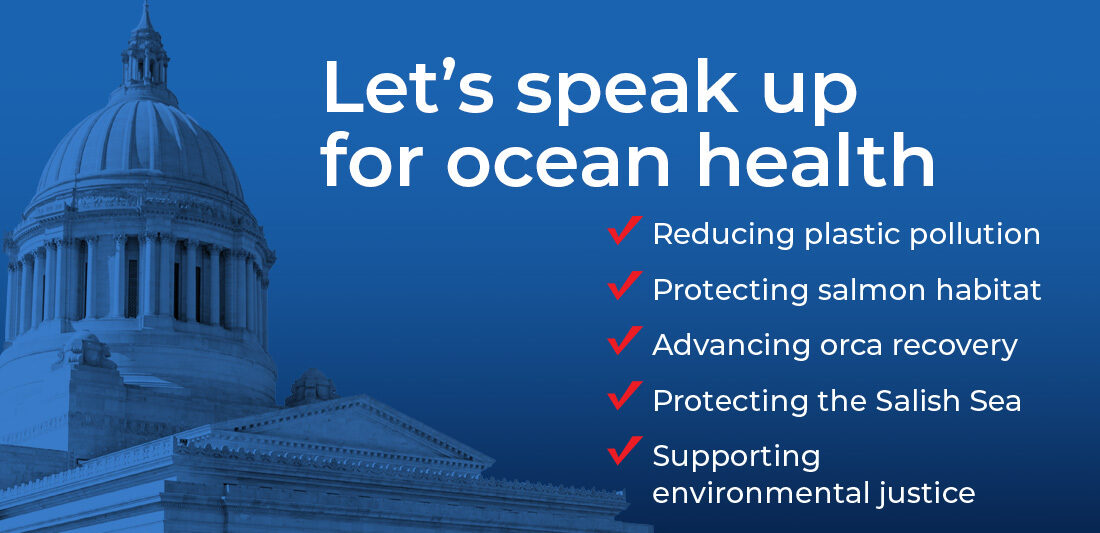
Photo of the Washington State Capitol building with the text "Let's speak up for ocean health" above the floowing list: "Reducing plastic pollution / Protecting salmon habitat / Advancing orca recovery / protecting the Salish Sea / Supporting environmental justice."

Reducing plastic pollution

Waste, including harmful plastics, accumulates in the ocean and on our shorelines, putting marine wildlife at risk. Single-use packaging represents a particularly significant environmental problem—very little of it is recycled. Packaging producers are best placed to change that by switching to readily available alternatives. We are advocating for bills that will incentivize producers to make such changes; modernize and transform our recycling system; and reduce sources of plastic pollution and waste.

The Washington Recycling and Packaging (WRAP) Act (SB 5154/HB 1131) will:

  • Make producers of packaging and paper products responsible for the full life cycle of their products and incentivize them to redesign packaging to be reusable, compostable or recyclable.
  • Ensure all Washington residents with garbage collection services also have access to recycling services.
  • Remove confusion about what is recyclable and what is not, through a harmonized statewide list—and ensure that what we put in our recycling bins will actually be turned into something new.

HB 1085 will:

  • Require bottle refill stations wherever a drinking fountain is required in all new buildings.
  • Eliminate small, hard-to-recycle plastic packaging for personal care products (like mini shampoo bottles and soap wrappers) in lodging establishments, in favor of bulk refillable dispensers or non-plastic packaging.
  • Ban foam-filled floats for docks to reduce a major source of plastic pollution in lakes and marine waters. 

We are also supporting a bill called Right to Repair, which would enable small businesses to repair personal electronic devices like cell phones so people can keep using them instead of buying new ones. This will help limit the need for new materials that may be sourced through harmful practices like seabed mining.

Protecting salmon and nearshore habitat

Salmon are keystone species and critical for Washington ecosystems and communities, as well as for the survival of the endangered southern resident orcas. We are supporting several policies and budget items to recover salmon and protect their habitat, including:

  • Filling data gaps about marine shoreline conditions through regular aerial and on-the-water surveys, which will enable strategic, targeted recovery actions to benefit salmon, orcas and the marine food web (SB 5104).
  • Increasing investments in salmon habitat restoration, including a $41M state investment in the Duckabush River Estuary Restoration project.

Advancing endangered southern resident orca recovery

This small population of orcas is at risk due to lack of prey, pollution and disturbance from vessels. To help ensure the recovery of this iconic and important species, we are supporting:

  • Implementing the Washington Department of Fish & Wildlife’s (WDFW’s) science-based recommendations to give endangered orcas a 1,000-yard buffer from all small vessels so they can forage more successfully (HB 1145/SB 5371).
  • Quiet Sound program funding to reduce underwater noise and other impacts from large commercial vessels on endangered southern resident orcas ($350k/year).
  • Funding for improving oil spill response preparedness in the San Juan Islands and reducing risks to southern resident orcas from oil spills.

Protecting the health and biodiversity of the Salish Sea

We are supporting WDFW’s $47.6M Restoring Washington’s Biodiversity funding package, including $850,000 per biennium to support pinto abalone recovery.

Working with partners and advancing environmental justice

As a member of the Environmental Priorities Coalition (EPC), we also support the other EPC and Partnership Agenda items including investing Climate Commitment Act revenue strategically and equitably and requiring local governments to incorporate climate resilience into comprehensive plans (HB 1181/SB 5203).

Raise your voice!

  • If you live in Washington state, speak up about your priorities for ocean and environmental health. Call the toll-free legislative hotline at 1-800-562-6000 (TTY for hearing impaired: 800-833-6388) between 8am and 7pm, Monday through Friday, to leave a message for all three of your legislators at once.
  • Share your WA legislative district with us so we can reach out to you about supporting targeted policy actions where your legislator could cast a key vote.
  • Sign up to receive occasional action alerts on ocean-related policy issues.
  • Write a letter to the editor to share your view on a bill or budget item that you find particularly important.
  • Discover additional ways you can help the marine environment by visiting our Act for the Ocean page.
A new series on protecting and preserving Puget Sound for all

Through a new campaign developed and produced by the nonprofit Sachamama, the Seattle Aquarium is featured alongside other prominent locals engaged in efforts to address threats to the health of Puget Sound—and the impact those threats could have on the vitality of our communities and economy.

Sachamama is a conservation organization grounded in Latinx cultural heritage and working to build support for a clean energy economy for all, and cultivating sustainable attitudes, behaviors and lifestyles. (Sachamama is a word in the Quechua language, which is spoken in the Amazon and South American Andes regions—it means “mother jungle.”) One of their key initiatives involves protecting the health of our ocean and inspiring conservation action and advocacy throughout Latinx communities.

Now we, along with several others, have lent support to Sachamama on a series of editorials focused on the health of Puget Sound and connections to local communities—including the environmental challenges that threaten our ecosystem and the well-being of our region’s residents.

The series showcases five local champions, their connections to the Sound and the environmental benefits the Sound provides for current and future generations. It’s part of a larger effort in support of 30×30, a global initiative to protect and conserve 30% of land and waters, including the ocean, by 2030.

Seattle Aquarium Senior Manager of Ocean Policy Nora Nickum was featured in Sachamama’s first published editorial, devoted to microplastics. The editorial highlighted our research into the prevalence of microplastics in Elliott Bay as well as partnering with the Plastic Free Washington/Washington Sin Plástico Coalition to pass SB 5323 and SB 5022, both of which will reduce plastic pollution in our local waters. Nora also participated as a panelist in Sachamama’s Facebook Live event focused on microplastics in Puget Sound. Seattle Aquarium Empathy Fellow Gabi Esparza was featured in the editorial as well, describing the important role of empathy in marine conservation and the Aquarium’s initiatives to increase access and inclusion throughout the community.

Other champions featured in the series include Candace Penn, climate change ecologist with the Squaxin Island Tribe Natural Resources Department; Luis Navarro, director of workforce development for the Port of Seattle; Ruby Vigo, coordinator for the Duwamish River Community Coalition; and Noe Rivera, an owner of Rivera’s Shellfish. All are working, in various ways, to ensure that Puget Sound can continue to be a source of life and livelihood for our communities and future generations. We thank Sachamama for their leadership on this exciting project—and inviting us to participate in it.

Supporting climate resilience: Q&A with Nicole Killebrew and Nora Nickum

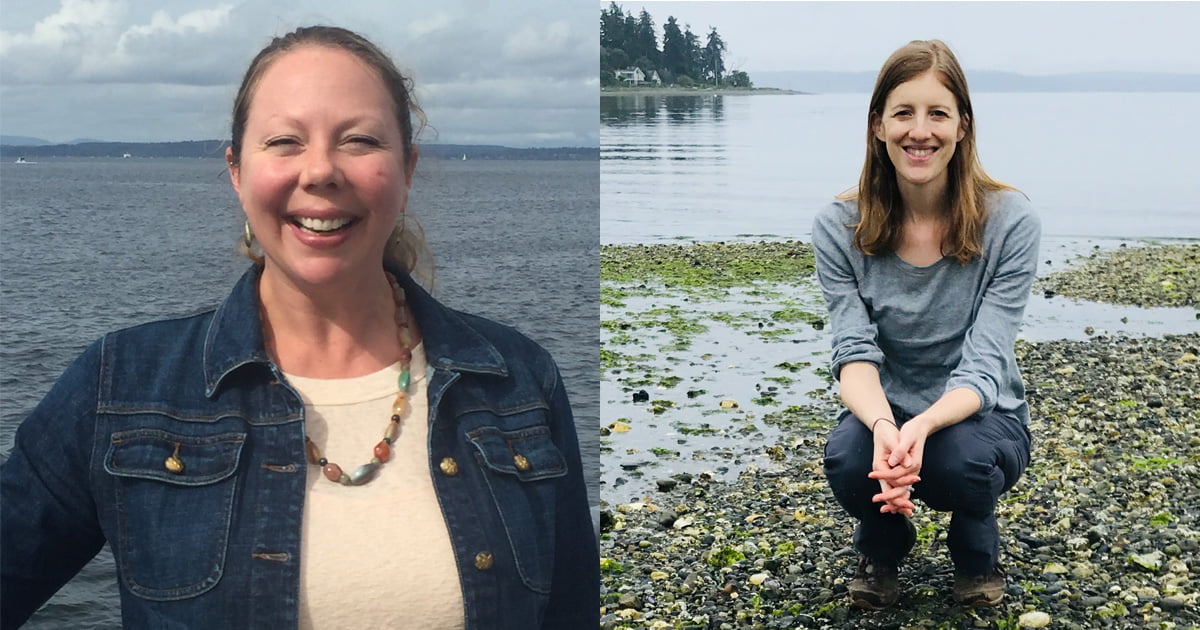
Nicole Killebrew smiling with the ocean behind her and Nora Nickum smiling while kneeling on a rocky beach with the ocean behind her.
Left: Interpretation Coordinator Nicole Killebrew. Right: Senior Ocean Policy Manager Nora Nickum.

From youth engagement to ocean policy advocacy, the Seattle Aquarium is working to advance climate solutions to avert further ocean acidification and ocean warming and build the resilience of marine ecosystems and coastal communities. Climate change is a multifaceted challenge, with impacts at local, state, national and global scales.

Here, Interpretation Coordinator Nicole Killebrew and Senior Ocean Policy Manager Nora Nickum discuss the challenges of climate change, potential policy solutions and opportunities for hope.

Can you describe some of the ways climate change harms ocean animals and our marine environment?

Nicole: Climate change is caused by burning fossil fuels like coal, oil and natural gas. When we burn fossil fuels in excess, that creates a heat-trapping blanket around the Earth, warming the ocean and land. This fuels extreme weather events, alters where animals can live and travel, shifts food availability, and changes the chemistry of the ocean through a process called ocean acidification. The ocean is like our planet’s heart, and just like a heart circulates blood and regulates the body’s temperature, so does the ocean for our planet by circulating heat, moisture and nutrients. Burning fossil fuels puts stress on our ocean and damages the ocean’s ability to keep the climate stable. These climate impacts increase survival stressors on marine animals around the world in a number of ways. Climate change also puts strain on the resilience of marine ecosystems that animals rely on as their home.

Nicole, how has your work as an educator informed the way you speak about climate issues?

Nicole: I’m involved with the National Network for Ocean and Climate Change Interpretation. That work focuses on identifying the core story of climate change and telling that story so that people feel hopeful and empowered to take action. We need to connect people based on their values and things they already care about to collectively work toward solutions. We also need to keep social and environmental justice in mind—there are differences in how different communities are affected by ocean disruptions and climate change. It comes down to raising our voices and rethinking our reliance on fossil fuels as a primary energy source.

Nora, how can policy solutions help build climate resilience across the United States and the world?

Nora: Taking action to reduce emissions and build resilience is urgent to avoid worsening impacts on human communities and ecosystems. We can all make changes in our daily lives to help with that, like taking public transportation instead of driving. But we also need big changes to happen quickly and at scale. That’s where policy plays a key role.

What types of national climate policies does the Seattle Aquarium support and why?

Nora: We’ll need multiple policy solutions to address climate change—but fortunately, there are a lot of good, science-based ideas out there. There are currently several bills in Congress that the Aquarium is supporting. The Blue Carbon Protection Act (H.R. 3906), for example, would mobilize new funding to protect and restore blue carbon ecosystems—like mangroves, tidal marshes and seagrass beds—and increase long-term carbon storage. The Ocean-Based Climate Solutions Act (H.R. 3764) would prohibit the expansion of offshore oil exploration and drilling on most of the Outer Continental Shelf; promote decreases in shipping emissions; and create a grant program to support climate research and resilience with Indigenous and local knowledge. And the Climate Resilience Workforce Act (H.R. 6492) would ensure there’s a skilled and equitable workforce capable of preparing for and responding to climate change. We also support carbon pricing policies that are science-based and center the voices and needs of those disproportionately impacted by pollution, and we advocate for phasing out fossil fuels as rapidly as possible.

I also want to mention the importance of policies to reduce single-use plastics. Plastic is largely made from petroleum and there are greenhouse gas emissions at every stage of the production process. Reducing single-use plastics will also have the benefit of reducing pollution along shorelines and in the ocean.

There are more policies needed, but these are all meaningful steps in the right direction.

What is a story of hope that has resonated with you?

Nicole: One very tangible example was the Seattle Aquarium’s participation in the Community Solar Program. Through the program, community members could purchase solar panels to put on our roof. They receive credits for renewable energy and the power is part of the Aquarium’s general power grid. The program not only supports renewable energy, but also has an additional psychological benefit: What kind of message does it send to the community to look at the roof of the Seattle Aquarium and see it covered with solar panels?

Nora: I find hope in the many ways we can reduce emissions, build climate resilience and protect biodiversity all at the same time. There are so many good ideas and “shovel-ready” projects out there, we just need to prioritize and invest in them. For example, eelgrass beds can store huge amounts of carbon—keeping it from entering our atmosphere as carbon dioxide. They also protect coastlines during storms. And they provide important habitat for forage fish and juvenile salmon. We can realize all of these benefits by protecting and restoring eelgrass beds. This legislative session, we supported a bill in Washington state to ensure the Department of Natural Resources now has the resources to create a collaborative plan to restore or conserve 10,000 acres of eelgrass meadows and kelp forests by 2040.

Do you have advice for someone interested in raising their voice for ocean-climate action?

Nora: Contact your members of Congress to let them know you want to see urgent action on climate change. You could ask them to support any of the specific policies I mentioned earlier. Most importantly, tell them why you care about the climate crisis, which will make your message personal and memorable.

Nicole: There are many ways you can support renewables, including through community solar programs or rounding up your energy bill to have funds go directly toward renewable energy. Puget Sound Energy and Seattle City Light provide that option, and you could ask your energy company to if they don’t already. Beyond renewables, ask questions and reach out to organizations focused on climate action. See how you can get involved!

What do you hope these solutions can achieve in 10 years? Fifty years?

Nicole: It comes back to the core mechanism of why climate change is occurring—we need to shift away from fossil fuels toward a renewable energy system. Reducing our fossil fuel use is a step in that direction. If we can do that, we’ll see a stabilization in the climate system, ensuring the ocean can continue to function in a way that supports marine life and communities around the world. My hope is that people feel empowered to take action and feel connected to our climate system. Together, we can work toward positive change.

Nora: I envision us on a new path where all communities and ecosystems can be resilient and thrive. We can get there if we speak up, prioritize action and investments today, and see not just the problems we need to fix, but all the benefits we can achieve for people, public health, biodiversity, access to nature and more.

Working toward healthy ocean ecosystems: Report from the 2022 state legislative session

Signing in “pro” on key environmental bills, delivering virtual testimony, sharing opportunities to take action with the Washington community, and collaborating with legislators as well as partners across the state—the Seattle Aquarium spent the 60-day state legislative session working hard to advance ocean health priorities. And many of you joined us in speaking up! Read on for highlights from the session and a preview of future efforts.

Session highlights

Progress on healthy kelp forest and eelgrass ecosystems

With the passage of SB 5619, the Washington Department of Natural Resources will now develop a plan to protect and restore at least 10,000 acres of kelp forests and eelgrass meadows by 2040. We testified in support of this bill, which will restore important habitat for all kinds of species in our coastal waters.
 

Supporting salmon habitat

We’re grateful to the state legislature for including $25 million in funding for the Duckabush River Estuary Restoration Project in the budget this year. Going forward, we’ll continue to support efforts to secure the additional state and federal funding needed to restore this vital estuary, which is prime habitat for threatened summer chum and Chinook salmon.

The legislature also passed a bill that ensures adequate funding for removing derelict vessels from local waters (HB 1700). Those vessels can present environmental risks, such as leaking fuel or other hazardous substances or damaging forage fish habitat.
 

Advancing climate action

Alongside crafting a regenerative plan for our own operations and facility, the Seattle Aquarium continued to support bills to address climate change. These included energy performance standards for large buildings (SB 5722) and ensuring that businesses in the fossil fuel industry are financially responsible for oil spills should they occur (HB 1691).

The road ahead

While we were able to make strides on several ocean health priorities, there’s still work to do. The short legislative session made it especially difficult to get some key transformative bills across the finish line.

The Seattle Aquarium will continue to work with our partners toward healthy marine shorelines and producer-responsibility legislation for plastics and other packaging (RENEW Act). We’ll continue to support Indigenous–led efforts to secure protections for riparian habitat along rivers and streams (Lorraine Loomis Salmon Recovery Act). Thank you to Senators Das, Salomon and Rolfes and Representative Lekanoff for your leadership on these pieces of legislation.

In the next legislative session, we’ll also continue to support measures to report embodied carbon emissions in infrastructure projects (Buy Clean and Buy Fair) and to enable small businesses to repair electronics, like cell phones, so they don’t go to the landfill (Right to Repair).

In the meantime, we’ll continue to advocate for national policy priorities—including healthy kelp ecosystems and 30×30 conservation action. Visit our Influencing Policy and Act for the Ocean web pages anytime for the latest news and action opportunities.

Thank you!

We want to send a huge thank-you to everyone who took part in our action alerts and spoke up for ocean health! If you didn’t receive action alerts, please consider joining our policy email list.

A renewed look at all that packaging

A six pack of soda bottles held together by plastic rings and wrapped with labels. Clamshell containers filled with berries. Two boxes of pasta with miniature plastic windows. A variety pack of single-serving yogurts. Apples and bananas, each with a plastic sticker.

Does it ever feel like a trip to the grocery store is awash in unnecessary packaging? Maybe it also leaves you confused about what can go in the recycling bin and what can’t. Then there’s all the packaging from online purchases and restaurant take-out containers, as well as things like toys that may be packaged with a combination of cardboard and different kinds of plastic that can be hard to separate and sort. Even packaging that is recyclable may end up in the landfill—a 2019 study in Washington found that only 58% of jurisdictions have access to curbside recycling collection.

Small pieces of plastic and other packaging add up—to a mounting pollution problem. Each year, millions of tons of plastic enter our ocean. This waste, much of it from single-use packaging, pollutes coastal ecosystems and harms marine life. Hundreds of marine species, including whales, salmon and seals, ingest plastic pellets or become entangled. Plastic pollution impacts deep ocean ecosystems as well as Puget Sound. Seattle Aquarium research finds that microplastics are ubiquitous in local waters.

We live in an era of plastic and other packaging, all designed for just a few minutes of use. In the next 30 years, we’ll produce even more plastic waste—an estimated four times more than we have now. Globally, only 9% of all plastic ever created has been recycled—the rest has been incinerated or discarded, typically ending up in landfills (or worse, out in the environment). And it’s not just plastic we’re concerned about. All kinds of packaging generate greenhouse gas emissions, end up as litter, and can be hard to recycle in the current system.

How do we solve this pollution problem? One important way is addressing packaging and other single-use products at the source. We can all take steps to reduce our environmental footprint by buying in bulk to avoid single-use packaging or choosing used instead of new products whenever possible. In addition to individual actions, however, a critical policy mechanism can help increase recycling, reduce waste and spark transformative change. This policy is called Extended Producer Responsibility.

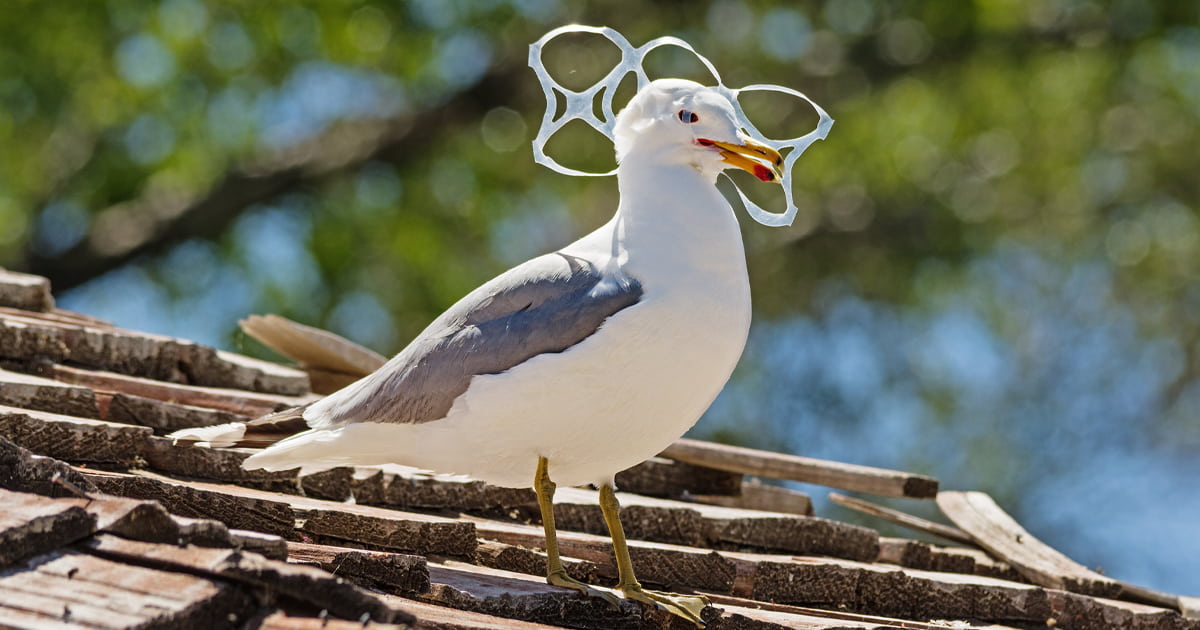
A seagull, with the plastic rings of a six pack of cans stuck around its head, standing on the roof of a building.

How does Extended Producer Responsibility work?

Under producer responsibility, companies that make packaging are responsible for the costs, environmental impacts, and end-of-life of their products. The burden thus falls on those who are designing and making the packaging in the first place—rather than on the end-customer or local government. Those producers have plenty of opportunities to make their packaging more sustainable. They can also label things more clearly and accurately, so people know if and where it’s recyclable or compostable.

Producer responsibility is the norm in Canada and much of the European Union. It’s a proven, successful approach to increase package recycling. Countries with producer responsibility laws have seen recycling rates skyrocket. In 2021, Maine and Oregon became the first U.S. states to pass producer responsibility legislation. Now, Washington has an opportunity to join them.

What is the Seattle Aquarium doing?

Together with our Plastic Free Washington coalition partners, the Aquarium is working to advance the RENEW Act (SB 5697), championed by Senator Das and Representative Donaghy this legislative session to modernize and transform our recycling system and reduce waste. Through producer responsibility and funding to ensure that every Washington resident has access to convenient recycling services, Washington can once again become a leader in responsible recycling and help keep plastic and other litter out of the environment.

The Seattle Aquarium also strongly supports the federal Break Free from Plastic Pollution Act, which would establish similar requirements for packaging producers nationwide. The Act would also support reuse and refill programs; ban non-recyclable single-use products like plastic utensils and carryout bags; and put a temporary pause on new plastic facilities because of environmental justice and public health concerns.

Take action!

  • If you live in Washington, find your WA legislative district and urge your legislators to reduce plastic pollution by supporting the RENEW Act (SB 5697) in the 2022 session. Ask them to support “extended producer responsibility” legislation in our state.
  • Contact your members of Congress and ask them to help advance the Break Free from Plastic Pollution Act (S.984/H.R. 2238) to address plastic pollution across the United States.
  • Choose products with less packaging. Buy used instead of new whenever possible. Buy in bulk rather than singly packaged snacks and other items. Reward corporations that package responsibly.
  • Check out our Act for the Ocean page for additional ways you can help the ocean and marine wildlife!

Speaking up for ocean health: 2022 priorities in the Washington legislature

As the Washington state legislative session begins, the Seattle Aquarium is working with partners to advance science-based policies and funding that will protect ocean health. Read on to learn about some of our top priorities for 2022—and how you can take action, too!

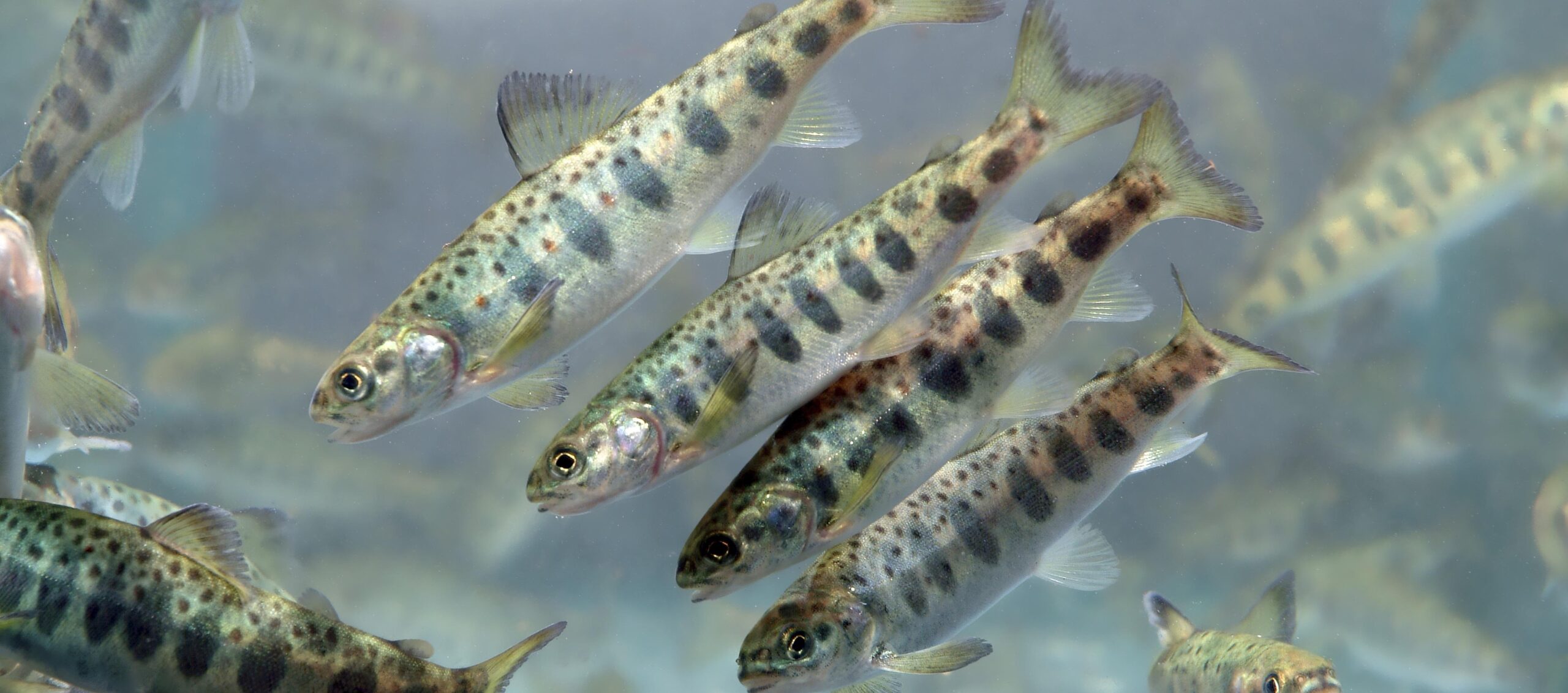
Red colored sockeye salmon swimming in a shallow river on a bright sunny day.

Reducing plastic pollution

Single-use packaging represents a major environmental problem—very little of it is recycled. Waste, including harmful plastics, accumulates in the ocean and on our shorelines, putting marine wildlife at risk. We are advocating for the RENEW Act (SB 5697) to modernize and transform our recycling system and reduce waste from this packaging. The RENEW Act would:

  • Make producers of packaging and paper products responsible for the full life cycle of their products.
  • Require that by 2031, 100% of the packaging and paper products made in or sold into Washington is reusable, recyclable or compostable.
  • Ensure all Washington residents have access to recycling services.

Protecting salmon habitat

Salmon are keystone species and critical for Washington ecosystems and communities, as well as for the survival of the endangered southern resident orcas. We are supporting several policies to recover salmon and protect their habitat:

  • Lorraine Loomis Act for Salmon Recovery (HB 1838/SB 5727) to shade rivers and streams and protect critical waterways, providing salmon the cold water they need to survive.
  • Identifying and addressing structures like old docks and bulkheads that are either unpermitted or have fallen into disrepair so we can restore nearshore habitat for forage fish and salmon (SB 5885).
  • Developing a plan to protect and restore at least 10,000 acres of kelp forests and eelgrass meadows by 2040 (HB 1661/SB 5619).
  • A $50.2 million state investment in the Duckabush River Estuary Restoration Project.

Addressing climate change

Alongside the commitments in our new sustainability master plan, such as building our new Ocean Pavilion to be all electric and offsetting embodied carbon for all construction projects, we are also supporting:

  • Strengthening building energy codes (HB 1770/SB 5669).
  • Expanding energy performance standards for large buildings (HB 1774).
  • Creating a reporting system on embodied carbon and other impacts of the structural materials used in state-funded infrastructure projects (Buy Clean and Buy Fair, HB 1103/SB 5366).
  • Developing a transportation system that prioritizes equity and reduces greenhouse gas emissions.
  • Requiring local governments to incorporate climate resilience into comprehensive plans (HB 1099).

Working with partners and advancing environmental justice

As a member of the Environmental Priorities Coalition, we also support the other EPC 2022 priorities and Partnership Agenda, including Energy for All (HB 1490), led by Front and Centered.

Raise your voice!

  • If you live in Washington state, speak up about your priorities for ocean and environmental health. Email your elected officials or call the toll-free legislative hotline at (800) 562-6000 (TTY for hearing impaired [800] 833-6388) between 8am and 7pm, Monday through Friday, to leave a message for all three of your legislators at once.
  • Share your WA legislative district with us so we can reach out to you about supporting targeted policy actions where your legislator could cast a key vote.
  • Sign up to receive occasional action alerts on ocean-related policy issues.
  • Discover additional ways you can help the marine environment by visiting our Act for the Ocean page

Duckabush Estuary: An important opportunity for recovery

In discussions about conservation, certain habitats tend to come up as particularly important to restore and protect. Coral reefs and mangroves often immediately come to mind but feel far away from us here in the Pacific Northwest. However, there are critical aquatic habitats found right here in Puget Sound, including estuaries! Estuaries are tidal wetland environments where rivers meet salt water; these junctions are important environments for all sorts of species, from migratory birds to juvenile salmon. We now have a chance to restore a key estuary in Washington: the Duckabush River estuary.

Critical habitat

Juvenile salmon spend months in estuaries undergoing a process called smoltification, when they grow and develop a tolerance for salt water. This is a rare superpower—few aquatic species can survive in both salt and fresh water—and the estuarine habitat, at the junction between river and ocean, is needed for salmon to adapt! 

Unfortunately, development has eliminated or degraded 75% of river delta tidal wetlands in Puget Sound. This enormous loss is especially problematic for juvenile salmon and other fish and wildlife that rely on estuaries. Many of those species are listed as threatened under the Endangered Species Act.

Salmon are keystone species, meaning their loss would reverberate throughout their ecosystems. Predators of salmon, such as orcas, birds, bears and people, are directly impacted by declining salmon runs, while other species are impacted in less direct ways. When salmon die after spawning or while traveling up rivers, for example, their bodies provide nutrients to trees and other plants along the riverbed. These trees then provide shade and keep the water cool enough for salmon eggs to survive and provide safe habitat for young salmon as they journey down the river. Trees also sequester carbon and provide habitat for many other animals. This intricate ecosystem interdependency is beautiful, but it’s at risk due to human impacts.

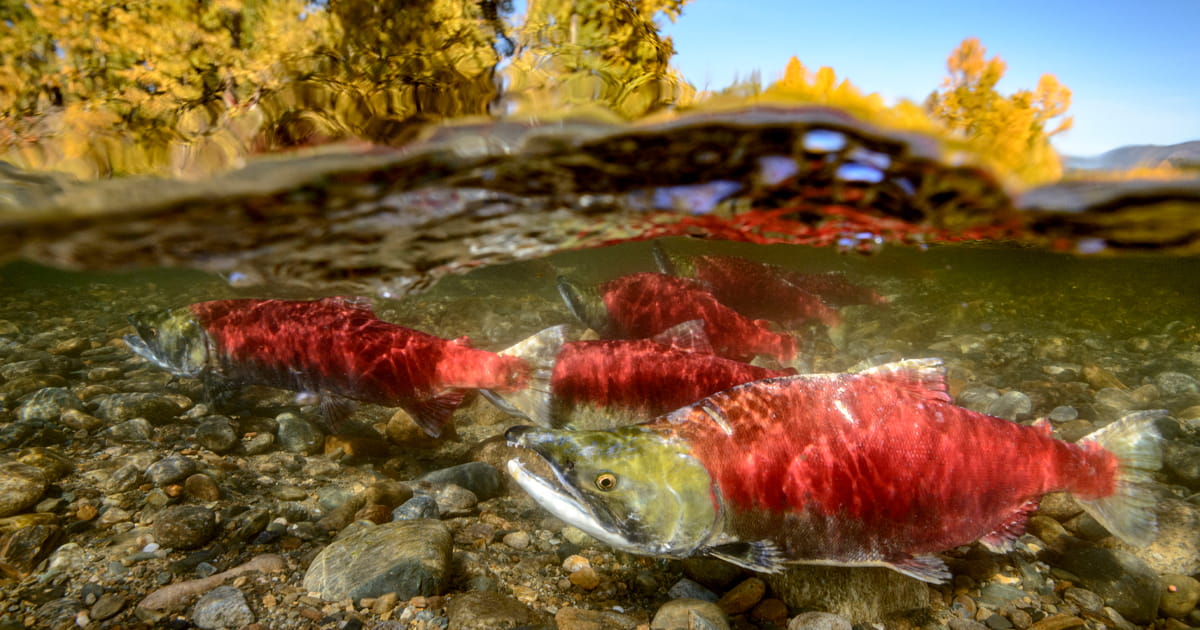
A school of small silver colored salmon in their smolt stage swimming underwater.
Estuaries, like the Duckabush, allow smoltification to occur: a crucial process where young salmon adapt from fresh to salt water.

Duckabush Estuary Restoration Project

The Duckabush River estuary is located on the western shore of Hood Canal. Highway 101 runs right over it, giving drivers access to the Olympic Peninsula. When this segment of the highway was designed in 1931, 12 feet of fill was used to support the new roadbed. Most of us probably aren’t thinking about what’s under the road we drive on, so long as it’s flat and stable. Unfortunately, all the fill, dikes and road infrastructure block water channels and limit critical habitat that fish rely on, including threatened Hood Canal summer chum and mid-Hood Canal Chinook salmon. Water bottlenecks created by the current highway also cause seasonal flooding.

The Washington Department of Fish and Wildlife (WDFW), in partnership with the U.S. Army Corps of Engineers and the Hood Canal Salmon Enhancement Group, has proposed a project to elevate the highway and restore the estuary so that it is once again prime habitat for fish and other species. There is a unique opportunity for a federal-state partnership to share the cost of this project: $50 million in state funding would unlock $30 million in federal funding. Check out this video from WDFW to learn more about what’s being planned.

For this important project to move forward, we need Washington legislators to secure funding in this state legislative session.

Join us in taking action!

Updated February 2023: If you live in Washington state, please call or email your state legislator and ask them to support a $41 million state investment in the Duckabush River Estuary Restoration Project during the 2023 state legislative session! Email your elected officials or call the toll-free legislative hotline at 1-800-562-6000 (TTY for hearing impaired 800-833-6388) between 8am and 7pm, Monday through Friday, to leave a message for all three of your legislators at once. This is an opportunity to make a real difference for threatened salmon and a vital ecosystem.

Help protect endangered orcas from ship strikes

The Seattle Aquarium works on policies to reduce noise and disturbance impacts on the endangered southern resident orcas, which currently number only 75. Quieter waters will make it easier for the orcas to communicate with each other and find scarce salmon, while we all work to restore habitat so that those salmon are more abundant.

We have supported new requirements for slow-speed zones and vessel distance, measures to reduce oil spill risk, and state funding for the Quiet Sound program to encourage large ships to voluntarily slow down, and we’ve asked the Navy to do more to mitigate the potential impacts of sonar testing on the orcas. The Seattle Aquarium is also one of the shore-based marine mammal viewing spots along the Whale Trail.

But there is more that we can do to make the waters safer for the endangered orcas, and we invite you to join us in taking action when you’re outside this summer and beyond.

When ships collide with whales and dolphins, it can cause serious injury and even death. But with timely warnings, shipmasters and pilots can slow down the ship, alter course, increase vigilance or turn off their sounders to reduce disturbance and the risk of hitting a whale. Using the WhaleReport app, we can all help ensure that ship captains know when whales are in their vicinity.

The WhaleReport Alert System (WRAS) was developed in Canada by Ocean Wise and its partners, and a few years ago Governor Inslee’s Orca Task Force recommended expanding it to Washington waters. The WRAS has already delivered over 8,000 alerts to ship operators in Canada and Washington. But the platform needs more real-time sightings reports, especially from here in Washington, to be as effective as possible.

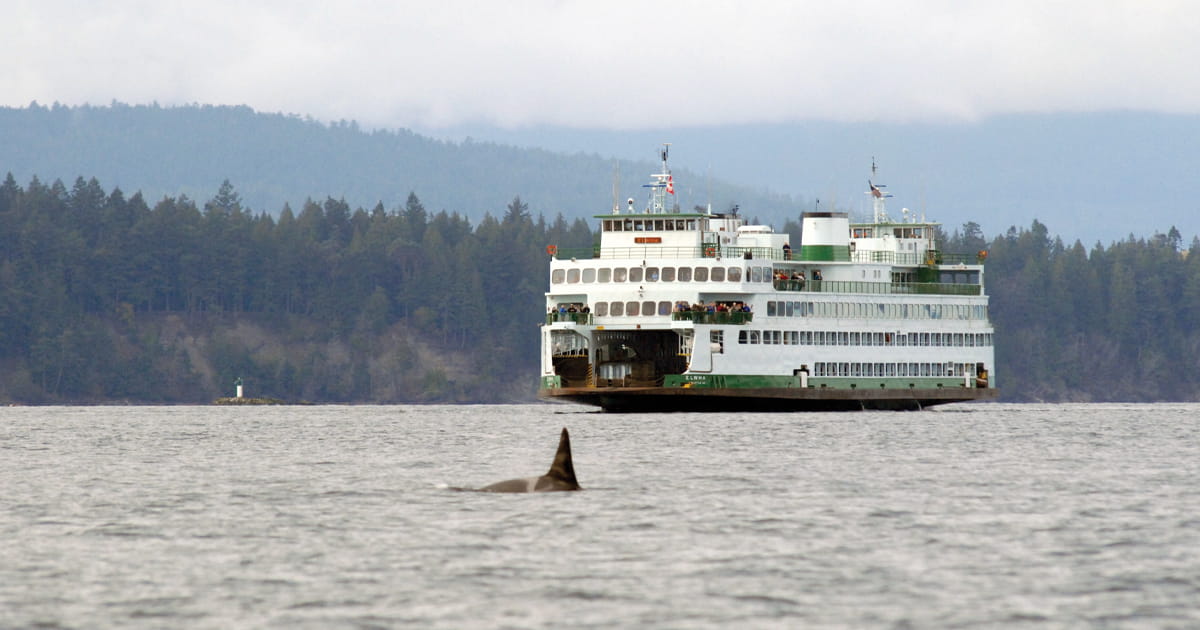
An orca whale's dorsal fin and back breaking the surface of the water. A large Washington State ferry sails behind the orca.
Photo courtesy of The Center for Whale Research.

Here’s how you can help!

If you spot a whale, dolphin, porpoise or sea turtle—from shore, a ferry or a boat—report it via WhaleReport as soon as possible (in addition to any reporting you’d normally do to a local sightings network). It only takes a couple of minutes, and there are two ways you can do it:

  • Fill out the short form at report.wildwhales.org. (The first time you go to the page, it will ask for your details.* If you are on your personal computer, you can ask the browser to store your information so that you only need to enter this information once.)

or

  • Use the WhaleReport app, available for download on iOS and Android smartphones.

Note that sightings data reported to the WhaleReport Alert System is only shared with the operators of large ships, tugs, ferries and government agencies. The data is not available for public use. The Whale Museum is responsible for data collection in Washington state and also uses the reports for conservation-oriented research.

If you would like to learn more about how the system works, visit wildwhales.org/wras.

Thank you for taking action to protect marine wildlife!

*Ocean Wise researchers will only use your contact information to ask you any follow-up questions regarding your sighting reports to aid in our research efforts and will not contact you for any promotional reasons. Your details are protected under Ocean Wise’s Privacy Policy.

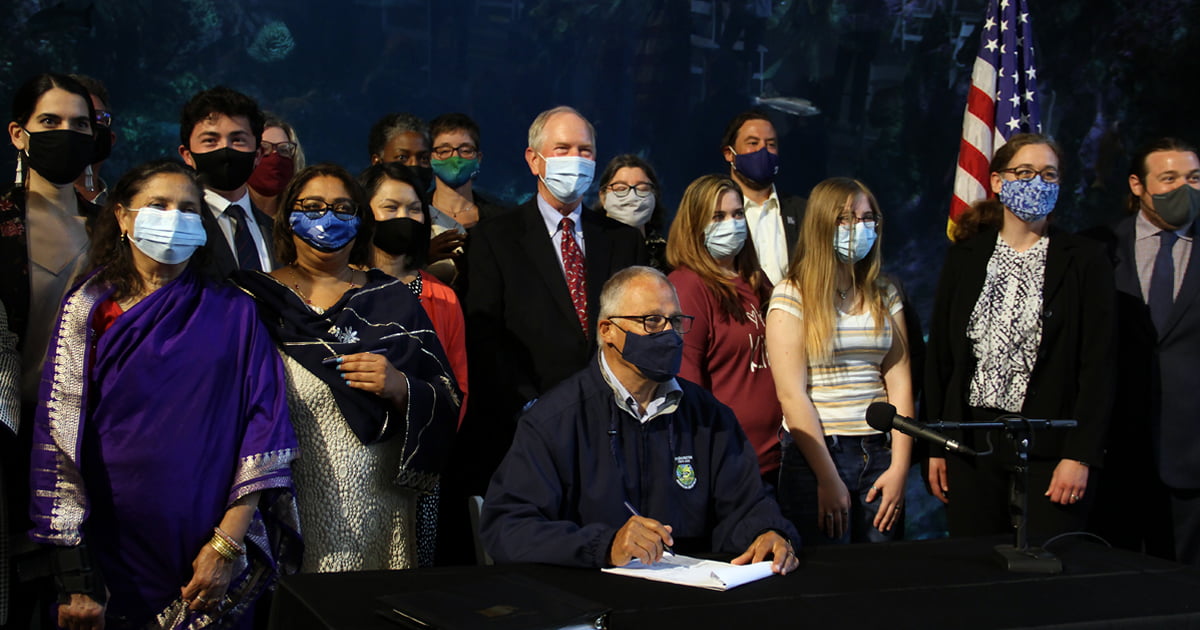
Governor Inslee signs ground-breaking bill at the Aquarium

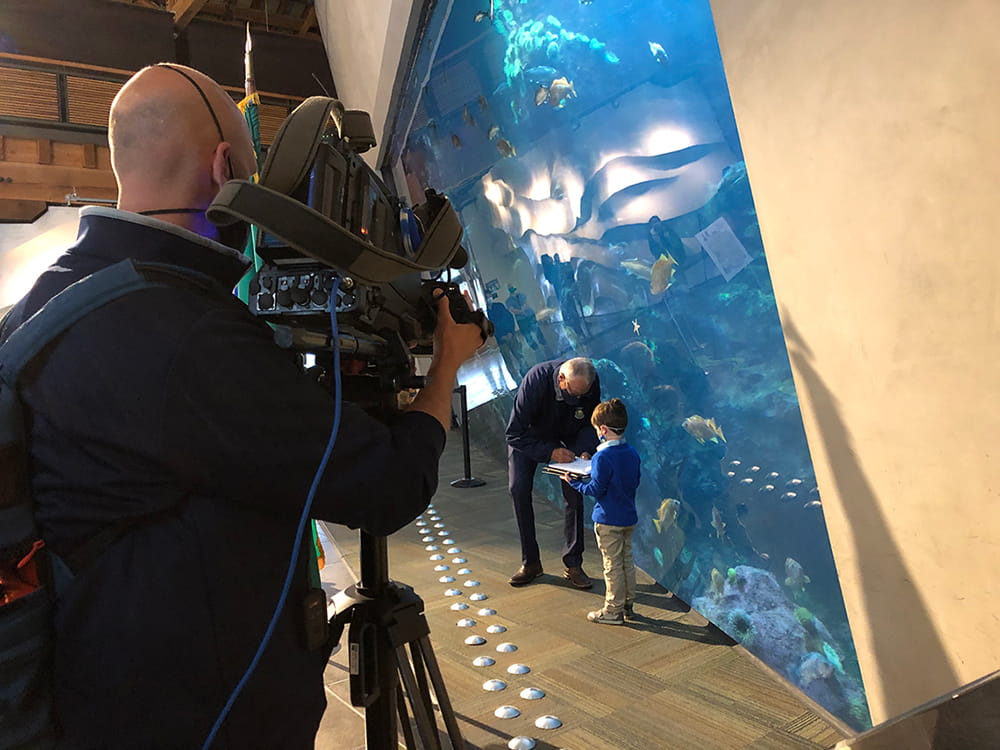
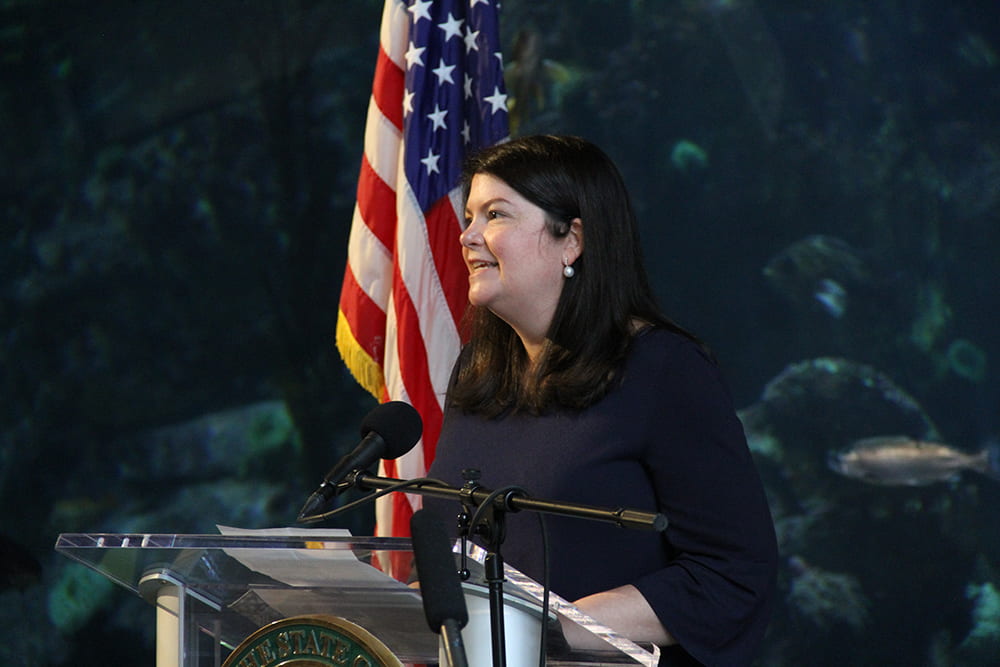
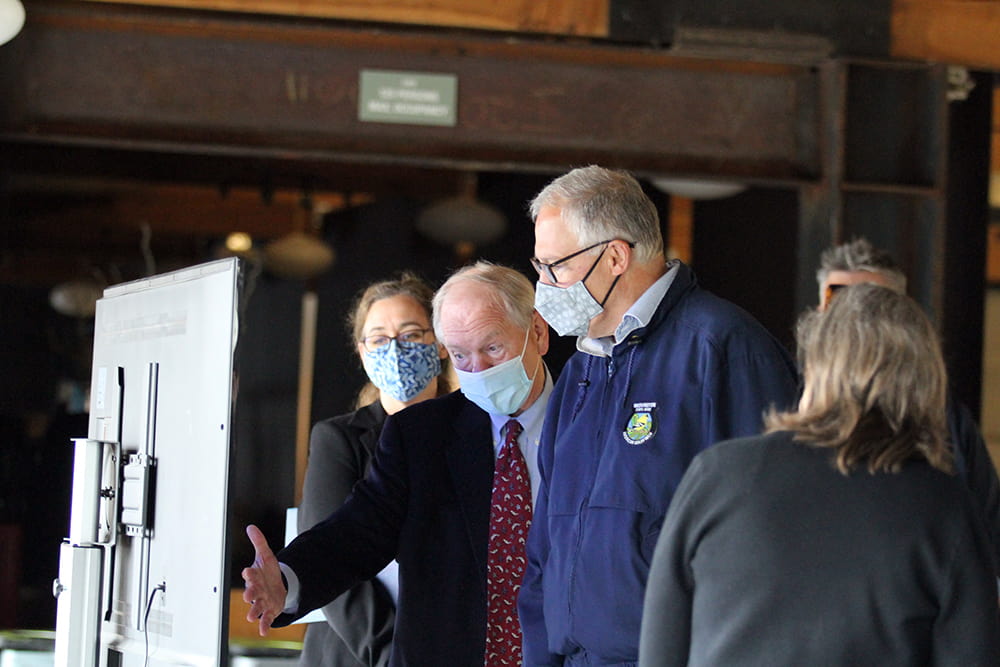
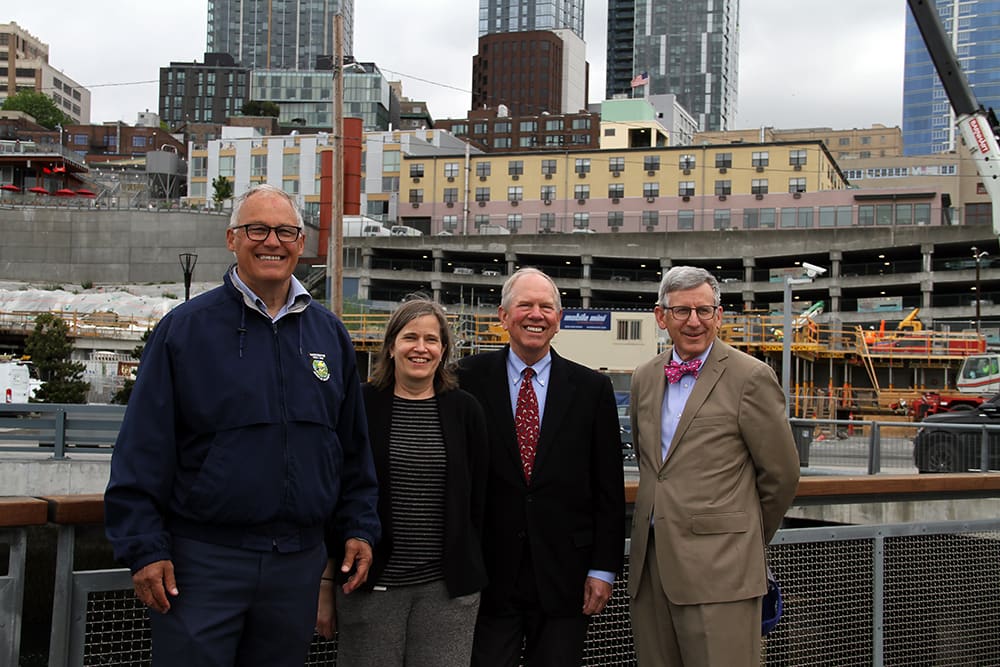
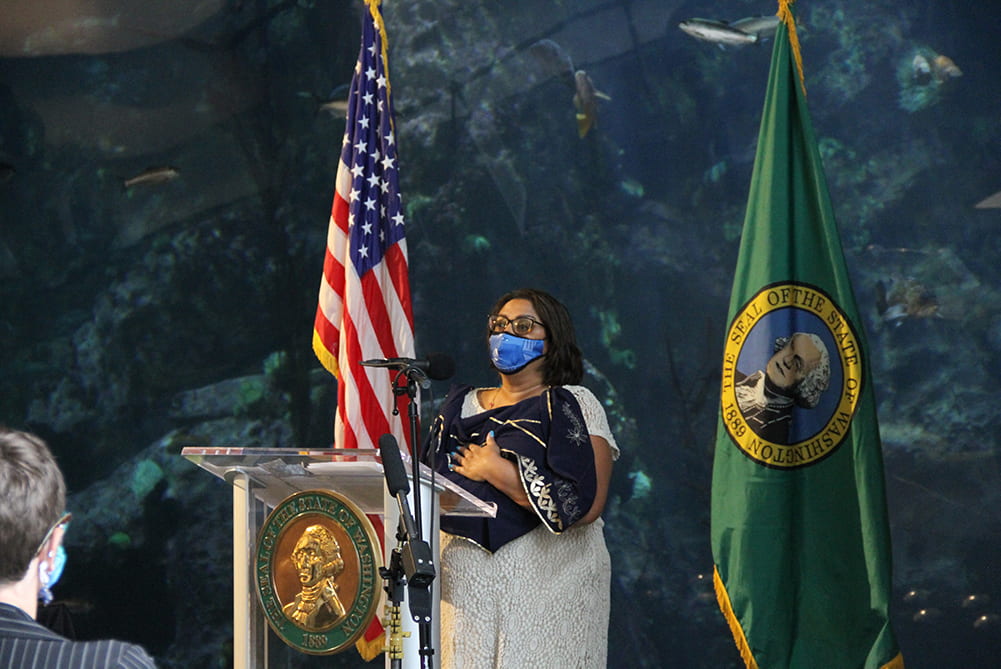
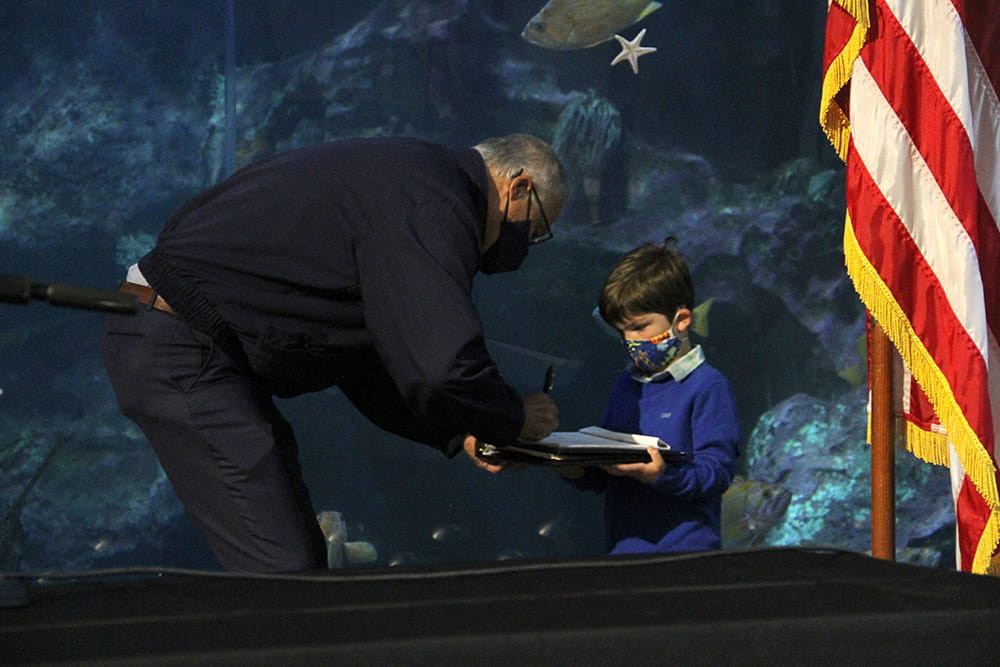
On Monday, May 17, Governor Jay Inslee came to the Seattle Aquarium to sign a new law (SB5022) that will reduce plastic pollution and improve recycling in Washington. The Aquarium worked closely with partners to help pass the bill, which helps protect the health of our ocean by cutting back on harmful and unnecessary single-use plastics. Enjoy a few photos from the big event!

Big wins for ocean health: Report from the 2021 state legislative session

The 2021 legislative session looked different this year due to COVID-19. All legislative committees and votes were held virtually, and the capitol campus was closed to the public. Even with the switch to remote advocacy, the Seattle Aquarium was able to successfully advocate for science-based measures to protect our marine environment. Join us as we take a look back at some highlights from this session.

Wins for a healthy ocean

Reducing plastic pollution

We worked closely with partners to pass Senate Bill 5022, which helps protect the health of our ocean by cutting back on harmful and unnecessary single-use plastics.

  • This bill bans expanded polystyrene foam (plastic foam) food service ware, packing peanuts and recreational coolers starting in 2023.
  • Beginning in 2022, food services businesses may provide single-use utensils, straws, condiment packets and cold-beverage lids only when the customer confirms they want them. This will significantly reduce unnecessary plastic waste. While five other states have addressed plastic straws (through bans or opt-in policies), Washington state is the first to take this action on the other single-use items.
  • Manufacturers of plastic beverage bottles, trash bags and household cleaning and personal-care containers will be required to use post-consumer recycled content. 

Protecting nearshore marine waters

With the passage of SB 5145, Washington state prohibited seabed mining leases for hard minerals—like gold, titanium and more—in state waters. Seabed mining is an emerging global threat that would devastate fragile marine ecosystems. We joined our partners in testifying in support of this bill.

Supporting orca recovery

We are grateful to the state legislature for an operating budget that includes funding for Quiet Sound, which will help reduce underwater noise from ships and make it easier for the critically endangered orcas to find scarce salmon. Our ocean policy manager, Nora Nickum, advocated for this funding in a Quiet Sound op-ed in the Seattle Times with NRDC’s senior advocate for Quiet Seas, Regan Nelson.

A large group of people holding signs.
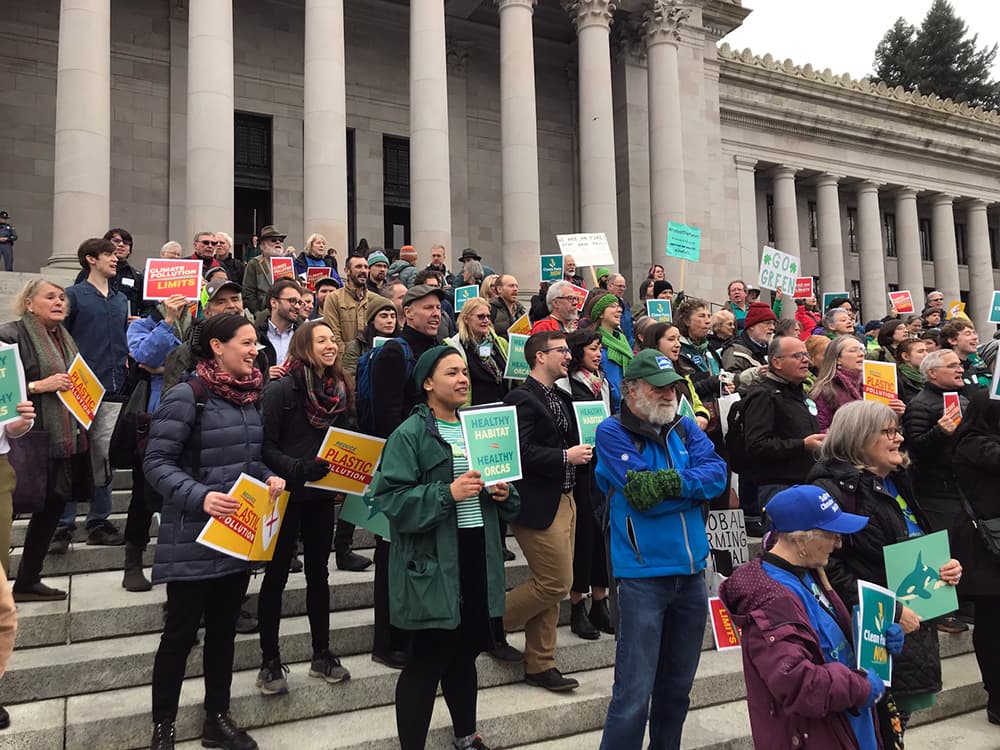
In this pre-pandemic photo, Seattle Aquarium staff join others for Environmental Lobby Day (January 30, 2020) to advocate for healthy oceans.

Advancing environmental justice

The Healthy Environment for All (HEAL) Act (SB 5141) adds an essential racial-equity lens to the environmental program work done by the state, and we were glad to endorse it. It also creates an Environmental Justice Council that will work with state agencies to ensure equitable community engagement. We congratulate Front and Centered on the passage of the HEAL Act—a vital step to ensure a healthy environment for all.

Mitigating climate change

The transportation sector is responsible for nearly half of our climate and air pollution in Washington. We joined partners in urging the legislature to adopt a Clean Fuel Standard (HB 1091) and support a transportation system that prioritizes equity and reduces greenhouse gas emissions. We celebrate the passage of the Clean Fuel Standard, which will protect our climate and clean our air.

Looking ahead

This session was a huge success, but there is still more work to do to protect the ocean.

In the next Washington state legislative session, the Seattle Aquarium and our partners will promote additional measures to reduce plastic pollution and improve our recycling system. We will also continue working to advance salmon recovery and push House Bill 1117 across the finish line. This bill, which would ensure that salmon recovery is integrated with local land use planning under the Growth Management Act, passed the House this year but did not get a vote on the Senate floor in time. 

In the meantime, we will continue our work on federal policy—collaborating with aquariums across the country—in areas like plastic pollution, climate change, orca recovery, coral reef restoration and more.

Thank you

Thank you to Senators Das, Saldaña, Van De Wege and Stanford and Representatives Berry, Fitzgibbon and Lekanoff for sponsoring these important bills to protect the health of our ocean.

We also want to extend a huge thank-you to everyone who participated in our action alerts. Constituent calls and emails helped get bills passed! (If you didn’t receive our email action alerts, please consider joining our policy email list.) 

Join us for After Hours: New Beginnings on Thursday, April 16, to celebrate spring and all the wonderful changes that come with it.

Today only, your gift will be matched dollar-for-dollar up to $25,000 thanks to the generosity of donors Betsy Cadwallader, J & Tim, and Jess & Andy Peet. Help us reach our $50,000 goal!

End the year with a gift to the ocean.