This site uses cookies. View our Cookie Policy to learn more about how and why.

Regular hours: 9:30 am – 6 pm
Last entry at 5 pm

The Seattle Aquarium’s exciting research initiative focused on the ancient, elusive sixgill shark

Did you know one of the world’s largest shark species is not only found in the waters of Puget Sound—but that individuals have also been spotted directly under the Seattle Aquarium’s Pier 59?

Sixgill sharks (Hexanchus griseus) can grow to be up to 14 feet in length. They’re found worldwide, in tropical and temperate waters (such as those of the Pacific Northwest). And they’ve been around for literally millions of years—since before the dinosaurs, in fact.

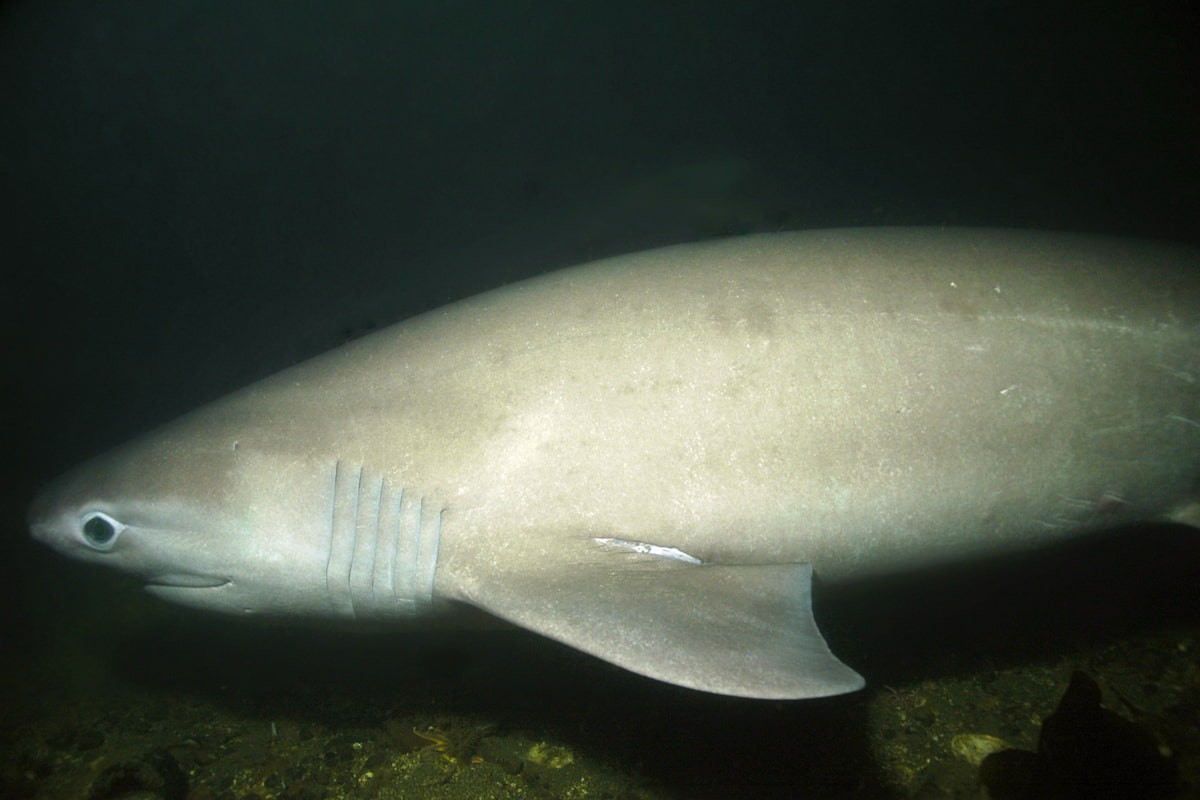
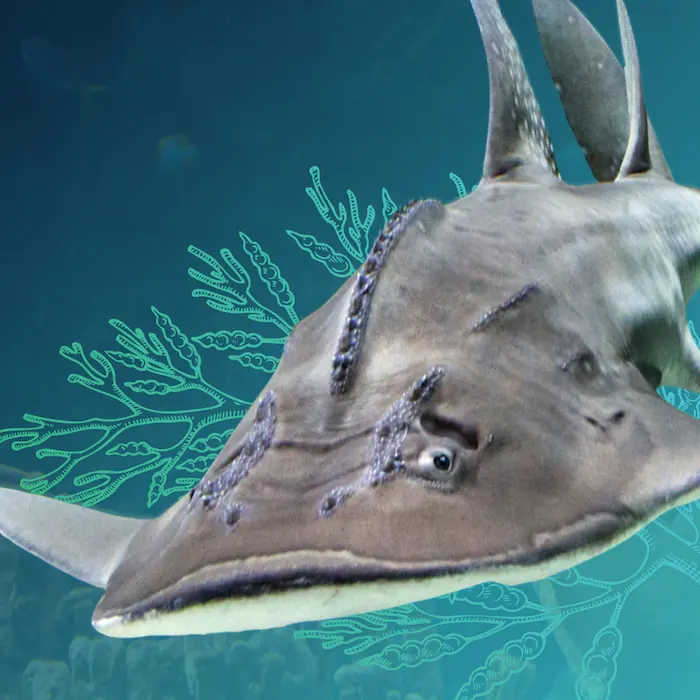
Look closely and you’ll see where sixgill sharks got their name!

However, beyond some of the basics, little is known about this species. Why? Because they tend to live deep in the ocean—up to 9,800 feet, or nearly two miles, below the surface!—and they’re elusive, typically preferring very low-light environments. For these reasons and others, it’s difficult for researchers to study them. But, fascinatingly, they’ve been sighted year-round in our local waters, at depths as shallow as 20 feet, which presents us with a unique opportunity to learn more about them.

Getting to know the sixgill shark

While most of the world’s 500+ shark species have five gill slits, aptly named sixgills have six slits along the sides of their heads. With their six gill slits and dimorphic teeth (which means the top teeth are different from the bottom), they bear a closer resemblance to extinct shark species than living ones—which is understandable, given how ancient they are.

Speaking of ancient: Sixgill sharks are presumed to have long life spans, and it’s thought that they reach sexual maturity later in life (20–25 years for males and 30–35 years for females). These two factors together make them vulnerable to overfishing—in other parts of the world, they’re often caught as bycatch or targeted for food and sport. They’re now classified as Near Threatened by the International Union for Conservation of Nature (IUCN) and included on the Washington state list of Species of Greatest Conservation Need.

Lastly, they’re carnivores, preying on bottom-dwelling fish and invertebrates (or animals without backbones).

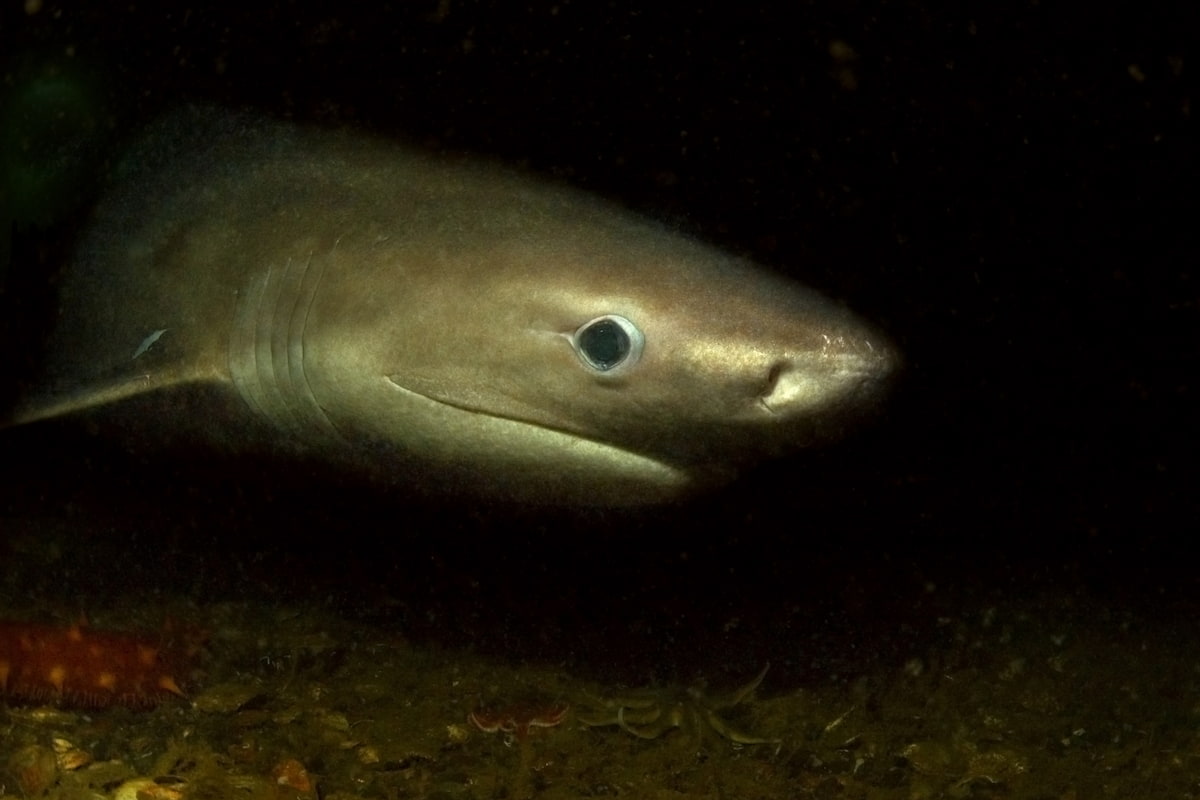
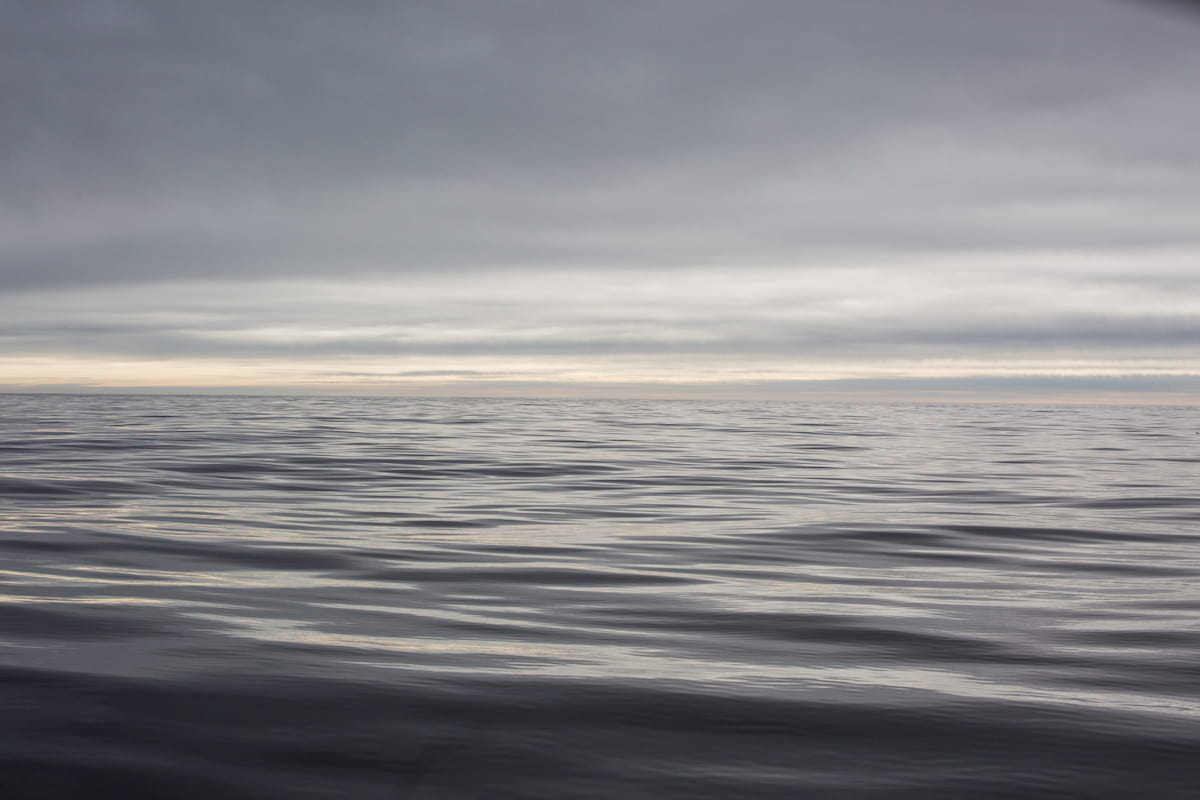
Sixgills are hard to study because they spend most of their lives in deep water and prefer dark conditions—as seen in this photo.

A rare—and unique—opportunity to learn more

Much about the biology and life history of sixgill sharks is unknown. But, using the opportunity presented by their presence in our local waters, the Seattle Aquarium is launching an initiative to increase the body of knowledge about these mysterious creatures. (Or perhaps we should say re-launching. See our FAQ below to learn about our previous work with this species.)

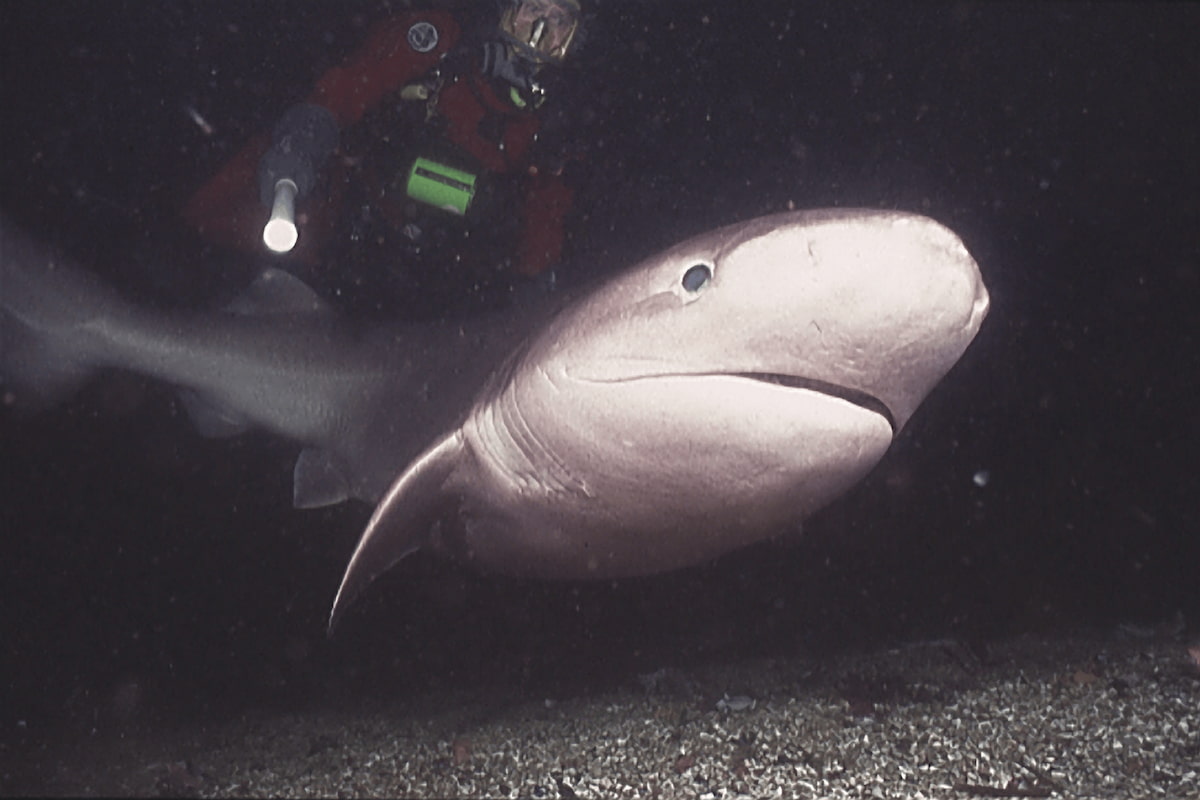
Former Aquarium Dive Safety Officer Jeff Christiansen with a sixgill shark in the early 2000s.

You may be wondering: If these sharks are typically found deep in the ocean, what are they doing in the shallower waters of Puget Sound? Scientists believe females are using our local waters as a birthing area. New Seattle Aquarium research shows that females have birthing site fidelity—in other words, they return to the Salish Sea to give birth multiple times (the amount of time between pregnancies isn’t known). Once the pups are born, the Sound becomes their nursery for another unknown period of time—they remain, it’s believed, because of an abundance of prey.

These young sixgills are referred to as juveniles and subadults. They reside in more southern Salish Sea* sites in the summer and fall, and make small northward migrations in the winter and spring. Their daily movements are typically less than two miles per day: They often rise to shallow water at dusk and descend to deeper water at dawn—likely in search of prey. We think these patterns repeat until they eventually depart for the open ocean.

This consistency of movement and behavior reinforces the strength of our opportunity to study sixgill sharks in Puget Sound.

*Not sure about the difference between Puget Sound and the Salish Sea? Check out our webpage!

Gathering data to increase knowledge and inform management

Through our research, we hope to answer questions about the life history and ecology of sixgill sharks—including migration, growth rates and prey preferences. In addition, given the difficulty of studying these animals, we aim to investigate aspects of their physiology that have never been examined. We also want to understand human impacts, such as how baiting affects sixgill shark movement in Puget Sound.

We’ll share our data and results with the scientific community at large, as well as relevant partners and conservation agencies to help inform management of the species.
"When people think of Puget Sound, they usually picture orcas and other marine mammals. Many are surprised to discover that large sharks live right here in our backyard. I’m excited to seize the opportunity to learn more about these elusive predators thanks to advances in research methods and technology that allow us to further explore a species that remains largely understudied.

Our goal is to answer as many questions as possible—everything from human impacts to physiology to their potentially important ecological role in Puget Sound. We’re collaborating with agencies like the Washington Department of Fish & Wildlife, the Big Fish Lab at Oregon State University, Point Defiance Zoo & Aquarium and other researchers to fill gaps in expertise, all while keeping animal health and well-being our top priority."

Summer of discovery

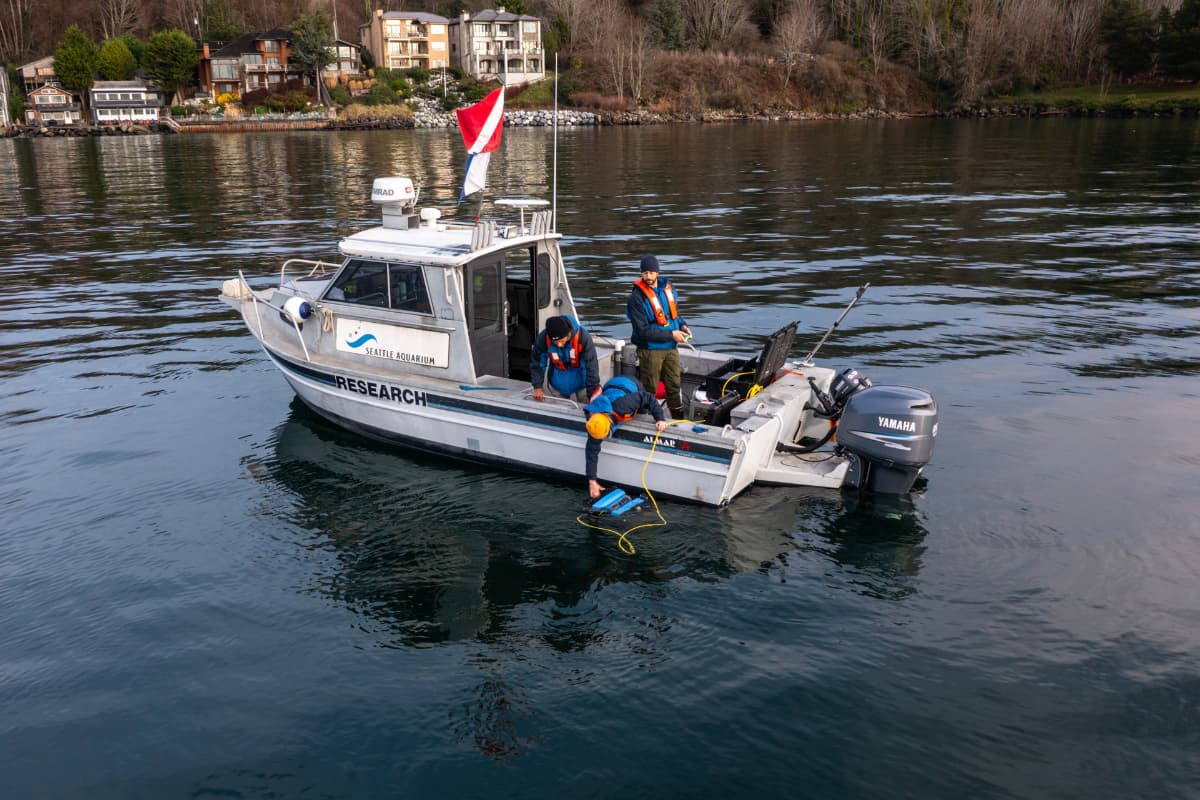
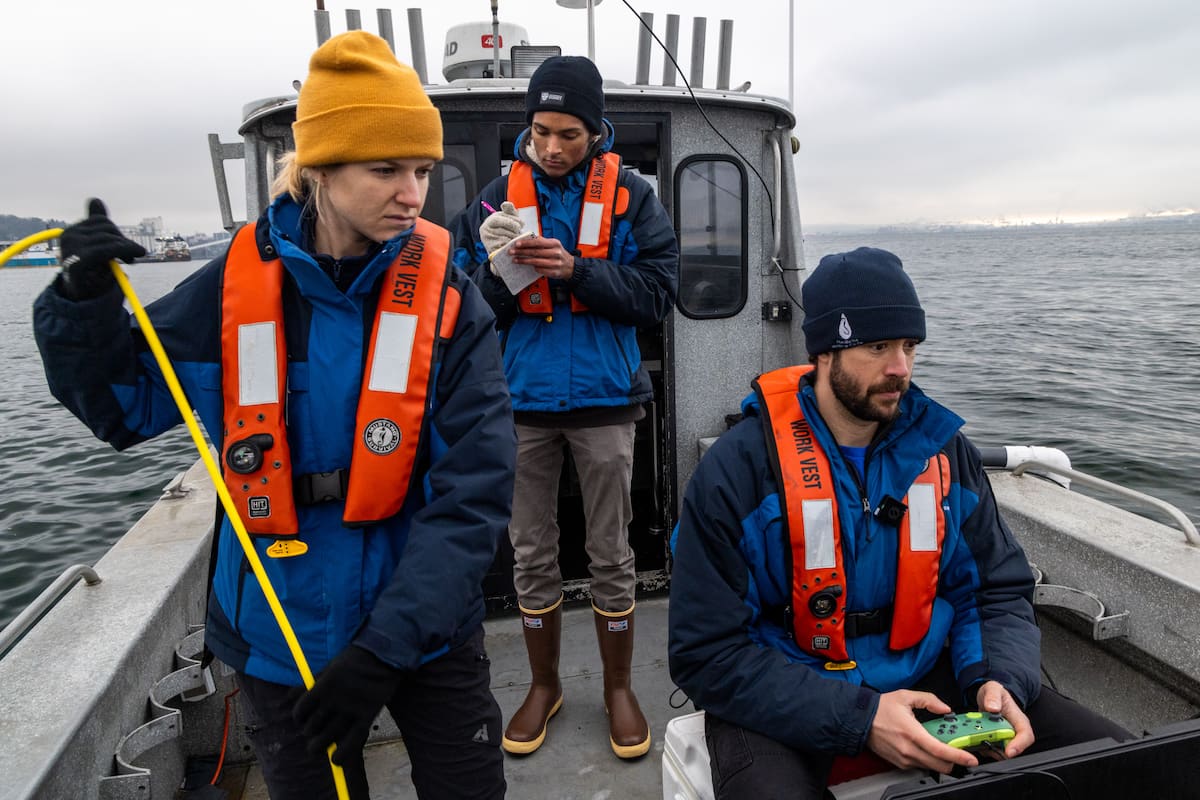
Starting in May, Seattle Aquarium researchers will attempt to study sixgill sharks at three different Puget Sound locations: off Redondo Beach, in Elliott Bay (near the Aquarium) and in the waters off southeast Bainbridge Island. They’ll visit each site once per month through September.

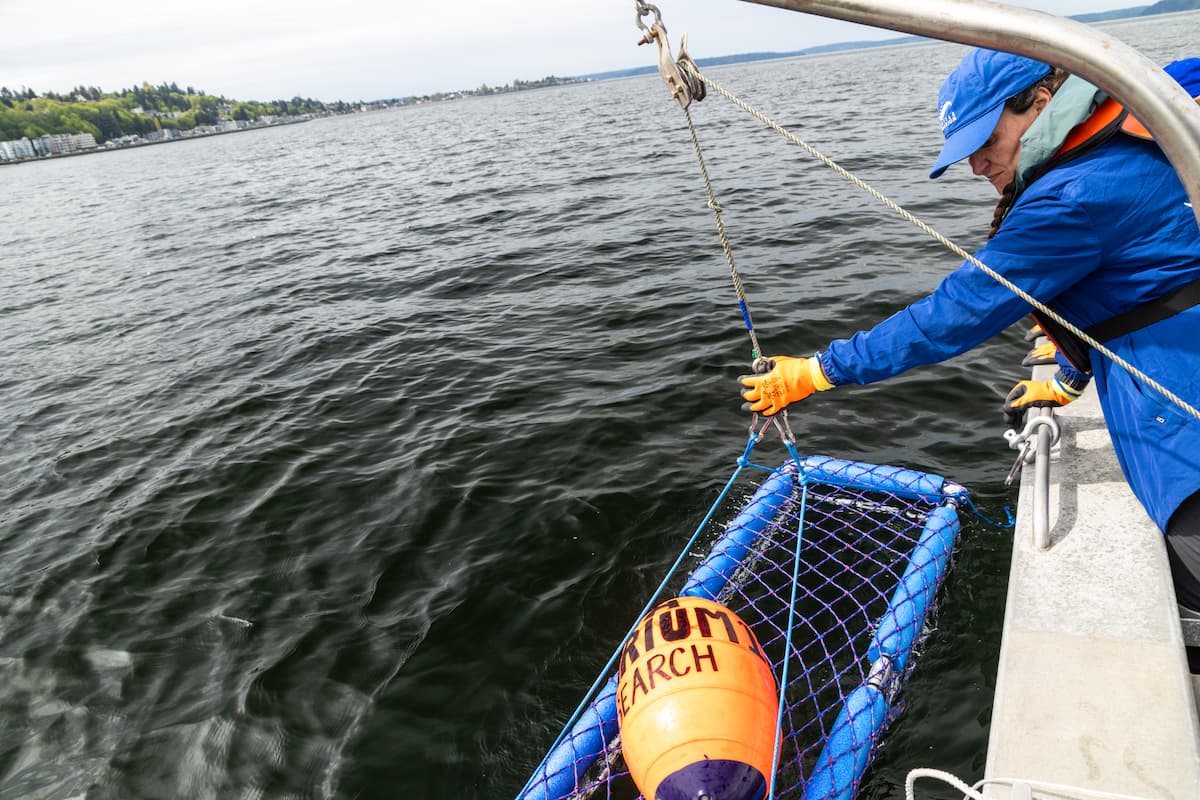
Most research will take place on the Seattle Aquarium’s vessel. Sharks will be carefully brought to the surface, and depending on their size, will either be quickly lifted on board the vessel using a custom-made cradle or secured at its side and placed on their backs to enter a state of natural tonic immobility.*

Once secured, they’ll be examined by our team—which will always include a veterinarian with extensive shark experience. Sharks alongside the boat will be kept partially submerged to ensure proper aeration of their gills; those on deck will be ventilated using seawater passed over their gills.

We created a custom “cradle” to safely hold a shark while our team works quickly to examine it.

Working swiftly over five to 10 minutes, the team will collect measurements, obtain tissue samples and deploy tags that will provide valuable data about movement, feeding ecology and habitat use. They’ll also take photos to assess whether photo identification is a viable method to identify individuals of this species. With all data collected, sharks will be quickly returned to the open water, and we’ll continue to follow their movements from afar. (See our FAQ below for more details.)
"There are lots of questions we would like to try to answer so that we can help identify what these incredible sharks need and how their lives might be affected by the world around them. For example, we have new methods, such as stable isotope analysis, to understand what they’re feeding on using small blood and tissue samples. Those same samples can help us assess the composition and genetic health of this population relative to 10+ years ago. And we can use tags to better understand their ranges and behaviors at the different sites.

Our priority throughout is the health and wellbeing of each individual—our project design is based around their care—but this gives us the opportunity to better understand an elusive species that is heavily dependent on the waters of Puget Sound."

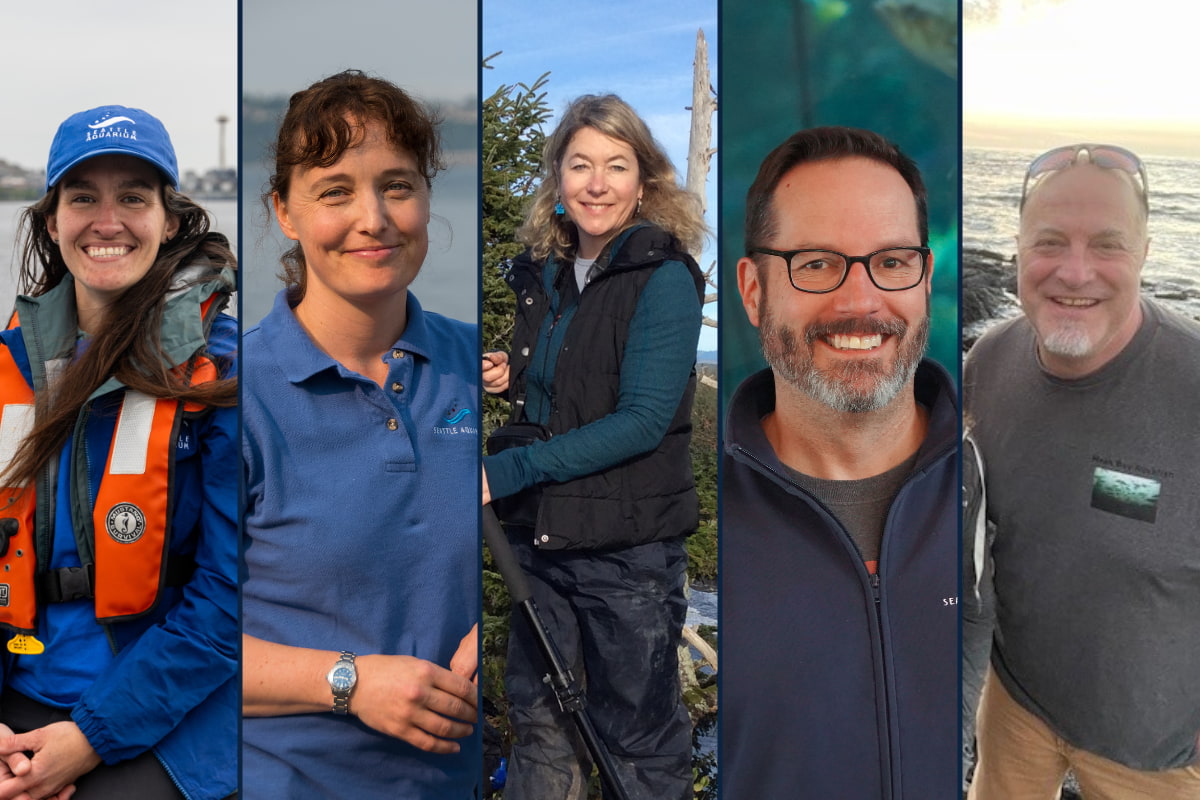
The work will be led by Research Scientist Dr. Dani Escontrela, Director of Animal Health Dr. Caitlin Hadfield, Senior Conservation Research Manager Dr. Shawn Larson, and others. See our FAQ to learn more about the team and why they’re uniquely qualified to lead this project.

From left to right: Research Scientist Dr. Dani Escontrela, Director of Animal Health Dr. Caitlin Hadfield, Senior Conservation Research Manager Dr. Shawn Larson, Director of Animal Operations Tim Carpenter, Dive Program Manager Joel Hollander.

*What’s tonic immobility? It’s a naturally occurring state that activates when sharks are on their backs—they become calm and motionless for a short period of time, creating the opportunity for safe and painless study before they resume normal activity.

Timing is everything

Although recreational divers are currently reporting frequent sightings of sixgill sharks, we don’t know how long they’ll be around—especially since we understand that both males and females eventually leave our local waters for the open ocean, but we don’t know when.

So there’s some urgency in our project, as well as optimism. We hope to encounter a good number of sharks across all three sites, and use what we learn to increase conservation of these fascinating and mysterious animals. We’re excited to discover more about this species and to share our findings with you, as well as the scientific community, as the project progresses!

"The Seattle Aquarium has been interested in sixgill biology, ecology and conservation for over 25 years. Our efforts in sixgill research in the early 2000s taught us that sixgills were once abundant in Elliott Bay and then were not—because they were growing up, reaching adult size and leaving the Sound for the open ocean. We also found that the sixgills were from one population, and related individuals were often found in the same area.

The new research will build on our earlier work and help answer many questions about sixgill biology and ecology that remain unanswered."

FAQs

Q: Can I see a sixgill shark at the Seattle Aquarium?

A: Well…kind of. You can see an illustration of a sixgill (and how you measure up to it!) near the Caring Cove play space on Pier 59. But, to thrive, this species needs plenty of room—far more than any aquarium habitat could provide. So, while you can’t see an actual sixgill at the Seattle Aquarium, your visit will help support the work we’re doing to increase understanding of these amazing, ancient creatures.

(You can, of course, see other shark species that thrive in smaller habitats when you visit us: blacktip reef sharks, Indo-Pacific leopard sharks and dogfish!)

Q: Didn’t the Aquarium study sixgill sharks in the early 2000s?

A: Yes! In the wake of increased local sightings in the early 2000s, we actively studied the species through a research program that ran from 2003 to 2015, with a brief pause between 2005 and 2008.

During that study, bait was placed under Pier 59, and when sharks were encountered, Aquarium divers collected skin biopsies and attached external tags for individual identification. Data collected during this period helped identify genetic relationships between individuals, estimate the abundance of sixgill sharks in Elliott Bay and analyze their feeding behavior. However, a decline in sightings (273 individuals between 2003 and 2005 versus 33 individuals between 2008 and 2015) led to the program’s end, as sixgills were believed to have left Elliott Bay.

Interested in learning more? Check out this video, which features our earlier work.

Q: What qualifies the Aquarium to conduct this research?

A: The Seattle Aquarium has 49 years of experience in shark husbandry and veterinary care*, and an 11-year history of conducting sixgill shark research. Additionally, this project has been collaboratively designed with partners from the Washington Department of Fish & Wildlife, Oregon State University Big Fish Lab and Point Defiance Zoo & Aquarium, who have significant experience with sharks in the region, including sixgills. Partners will join our research trips to help brainstorm, refine methods and share their expertise with our staff.

*Dogfish, small, bottom-dwelling sharks, have been in our care since we opened our doors in 1977. Learn more about them on our webpage!

Individual members of the team also bring a wealth of experience that will benefit this project:

  • Research Scientist Dr. Daniela Escontrela Dieguez completed her Ph.D. at the University of Hawaiʻi, studying coral predators. Her research was fieldwork-intensive, and as such she has familiarity and expertise conducting research on small boats and large ships. During her undergraduate studies, she served as an intern and trip leader with the University of Miami Shark Research and Conservation Program for four years. During her time there, she participated in at least 100 shark research expeditions, where she employed many of the methods that will be implemented in this project, including securing live sharks, collecting various types of data (measurements, tissue samples, tag deployments), and releasing sharks. She has worked with hundreds of sharks from a variety of species, including tiger, bull, hammerhead, sandbar, nurse, blacknose, blacktip, Caribbean reef and lemon sharks.

  • Director of Animal Health Dr. Caitlin Hadfield, MA VetMB DACZM DECZM MRCVS, completed veterinary school at Cambridge University, which was followed by a veterinary internship at the National Aquarium in Baltimore, where she became the senior veterinarian. She moved to Seattle in 2017. She is board-certified through the American and European Colleges of Zoological Medicine and has been working with elasmobranchs for 20 years, including sharks, skates, rays, guitarfish and sawfish. She has conducted clinical research and fieldwork on a wide variety of fish and invertebrate species. She is the primary author and editor for Clinical Guide to Fish Medicine and the head of the Veterinary Working Group and part of the steering committee for the multinational zebra shark recovery project (StAR: Stegostoma tigrinum augmentation and recovery) as well as the Association of Zoos and Aquariums’ Animal Welfare Committee.
  • Senior Conservation Research Manager Dr. Shawn Larson has been involved in sixgill shark research and conservation for 24 years. From 2002 to 2015, Shawn actively participated in the Seattle Aquarium’s sixgill shark research—baiting, filming, tagging and collecting skin biopsies from free-swimming sixgill sharks below Pier 59. She also led population genetics analyses on skin samples collected at the Aquarium and from longline operations of sixgill sharks conducted by various research partners. Shawn has published six peer-reviewed papers on sixgill sharks focusing on genetics, abundance and conservation, as well as edited four books: two on Northeast Pacific sharks, one on sharks in the United States and Canada, and one on sharks in Mexico. She has also led and organized shark community meetings since 2004, starting with the Cowshark Conservation Workshop (2004–2014), which eventually became the Northeast Pacific Shark Symposium (2014–present), held every two years. Lastly, she has been a member of the International Union for Conservation of Nature (IUCN) Species Survival Commission Shark Specialist Group since 2016 and has participated in shark conservation strategies and Red List assessments. 

  • Director of Animal Operations Tim Carpenter has cared for fish and invertebrates in an aquarium setting for over 30 years and has supervised animal care and field work for 25 years. During that time, he has been responsible for planning and conducting diving field work and boat-based trips every summer in coastal and inland Washington waters, while managing the Aquarium’s permitting process for all local collections and field activities. Tim was a key participant in the Seattle Aquarium’s earlier work with sixgill sharks, coordinating on-site and underwater diving and tagging operations, and he was a primary author of the resulting paper on the distribution of these sharks in Puget Sound. He has 30 years of experience using all kinds of collecting and sampling equipment, including longlines, seines, hand collection and other field capture methods for teleosts (ray-finned fishes) and elasmobranchs.

  • Dive Program Manager Joel Hollander is a marine biologist and dive operations leader and has been at the Aquarium since 1998. A key figure in field operations, Joel has been one of the Aquarium’s primary animal collectors for over two decades, specializing in both temperate and tropical species, and has served as primary boat operator since 2005. He was also co-principal investigator on the Aquarium’s earlier sixgill shark research project and has conducted longline surveys for skates, rays and spiny dogfish.

Q: What methods will the researchers use for this project?

A: At each site, the team will deploy fishing lines for short periods of time. While lines are in the water, the team will deploy a baited remote underwater video system (BRUVS), which will help document behavior if sharks are encountered.

If a shark is on the line when it’s pulled back in, the team will quickly either secure it alongside the boat or on the deck using a custom-made cradle (depending on the size of the individual). Sharks alongside the boat will be kept partially submerged to ensure proper aeration of their gills; those on deck will be ventilated using seawater passed over their gills.

In either location, once secured, our team will work as two teams to efficiently collect a variety of data, including:

  • Length and other measurements to help answer questions about growth rates, maturity and body condition.
  • Blood, muscle and fin samples to investigate trophic ecology (e.g., food preferences), blood hematology and biochemistry values, stress indicators, toxicology and genetics.

They’ll also deploy two types of tags:

  • Floy tags will be placed on all sharks and can help answer questions about movement if individuals are sighted by divers or caught by other people. They can also help estimate population abundance if an individual encounters our team again. The tags will have big, visible numbers to help divers and others report sightings using a reporting form.
  • Acoustic transmitters will be implanted in a selection of sharks by one of our veterinarians and will provide data on movement and habitat use.

Lastly, photographs will be taken to assess whether photo identification is a viable method to identify individual sixgills.

The entire data collection process will take five to 10 minutes. The team will prioritize animal health from start to finish—if an individual displays signs of stress, poor ventilation or poor health, it will be released immediately.

Getting to know Flounder, the new harbor seal in our care

Have you heard? There’s cause for a seal-ebration at the Seattle Aquarium because we recently welcomed a new harbor seal into our care. Flounder joined us earlier this year, and he’s been settling in nicely at Pier 60’s harbor seal habitat.

Read on to learn more about how Flounder has been adjusting to life in the Pacific Northwest.

From Florida to the PNW

Flounder was born at the Miami Seaquarium in 2013. When the Seaquarium closed in 2025, the animals that had been living there needed new homes. Because Flounder has lived his whole life in human care, release into the wild wasn’t an option for him.

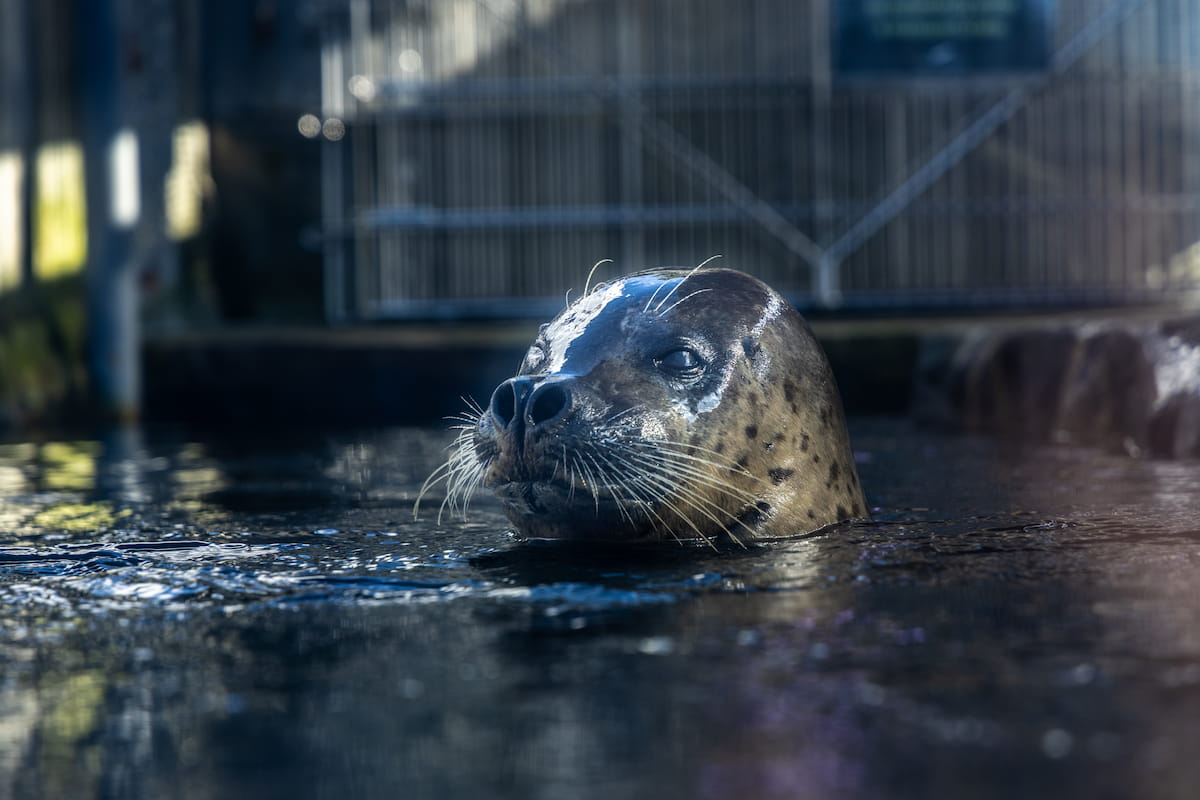
Flounder's head poking out of the water.

Have you heard? There’s a new seal at Pier 60. Meet Flounder!

The Seattle Aquarium was identified as a good match for Flounder because of our long history of working with harbor seals and the fact that our existing seal population consists of two other males of similar age, Casey and Hogan. We were happy to offer Flounder a safe and caring home in the Pacific Northwest.

After he arrived in Seattle, Flounder spent some time at the Aquarium’s off-site Animal Care Center adjusting to, among other things, the temperature changes. Harbor seals can be found near much of the U.S.’s east and west coasts. So, they’re comfortable in a variety of climates. But Flounder was used to the warmer temperatures of Florida’s waters. His new caretakers slowly lowered the water temperature in his habitat over a few weeks to make him comfortable with our chillier climate.

Harbor seals are semi-social. While they live together harmoniously in human care, in the wild they spend most of their time alone. Understanding this, our Animal Care team felt confident that with proper monitoring, Flounder would do well on his own temporarily, before introducing him to his new habitat-mates.

The new guy

Flounder joined Casey and Hogan in the Aquarium’s harbor seal habitat in February, and so far, it’s been smooth sailing. The seals’ caretakers report that everyone has been getting along great.

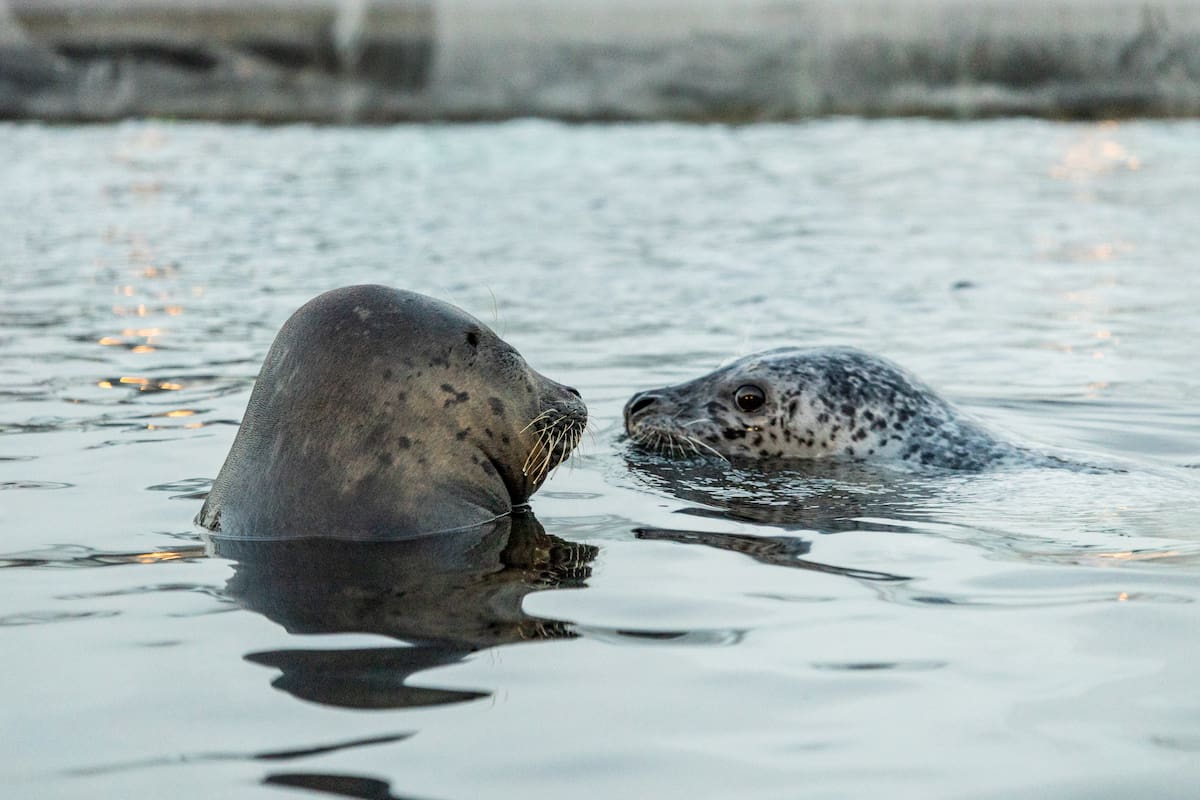
Flounder and Casey poking their heads out of the water.

Our Animal Care team reports that Flounder is getting along swimmingly with his new habitat-mates.

Whenever they introduce a new animal, the Animal Care team looks for signs of distress, like a loss of appetite or any antisocial behavior. Fortunately, Flounder and his new habitat-mates have been getting along well and cooperating during feedings, trainings and health checks. Flounder has also been comfortable exploring his new habitat, another positive sign.

Flounder has received excellent health care since arriving at the Aquarium. Eye conditions are common for seals. Flounder’s caretakers treat his condition, called keratopathy, using eye drops. He patiently allows our animal care staff to administer the drops daily and undergoes regular eye exams with our Veterinary Team. The Animal Care team is also looking to start giving the other seals eye drops as a preventative measure.

Flounder fun facts

The care team has been working on adding more variety to his diet, which currently consists of mostly herring and capelin. But he is now, “fully invested in ice treats,” according to Animal Care Specialist II Lizzy Govas, who works closely with Flounder. This taste for ice treats has helped with introducing new foods.

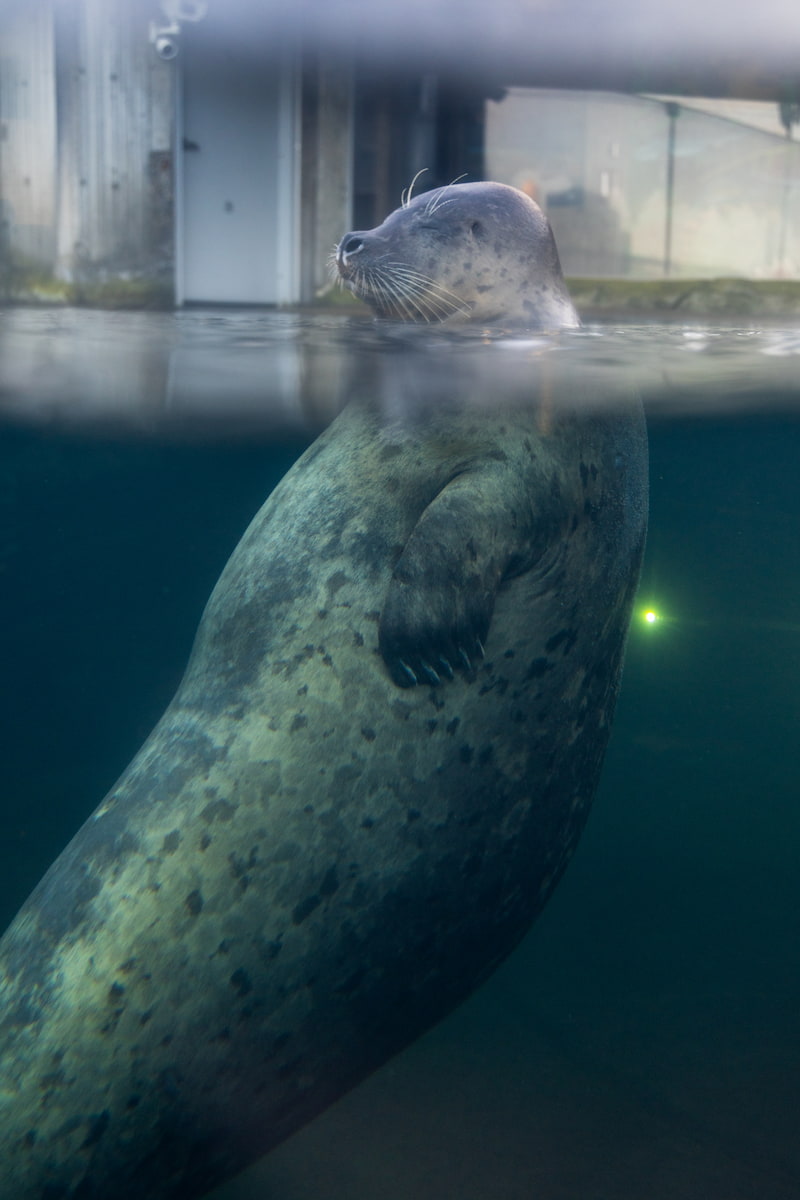
Another one of Flounder’s quirks is his fondness for “bottling,” or floating vertically in the water. This is normal behavior for harbor seals, though it might be surprising for guests who are used to seeing the seals swim and relax horizontally. Senior Animal Care Specialist Jake Smith said Flounder’s former habitat-mates also preferred to bottle.

Flounder bottling in his habitat.

One of Flounder’s preferred behaviors is “bottling,” or floating vertically in the water. It’s one way you can distinguish him from Casey and Hogan when you visit.

Like all animals at the Aquarium, Flounder introduces over a million guests a year to the wonders of marine life. And when you come to the Aquarium, not only are you connecting with thousands of lovable animals—you’re also supporting ocean conservation that benefits harbor seals and many other species in our shared marine ecosystem. Come visit today!

Tired of doomscrolling? Try kelp scrolling!

We all spend a lot of time on our phones these days. But what if that screen time could help kelp forests?

Welcome to Kelp Quest, a chance for you to participate in the Seattle Aquarium’s marine research.

First, a little refresher. Kelp is a type of algae that provides critical food and habitats to many animal species, including sea otters and salmon. Kelp is also disappearing at an alarming rate. Figuring out how to reverse kelp’s decline is so important that the Aquarium has a research team dedicated to protecting kelp forests. Our Coastal Climate Resilience (CCR) team studies the conditions that contribute to bull kelp thriving or declining in certain areas of the local seafloor, and we share all our research publicly to inform action to protect kelp forests.

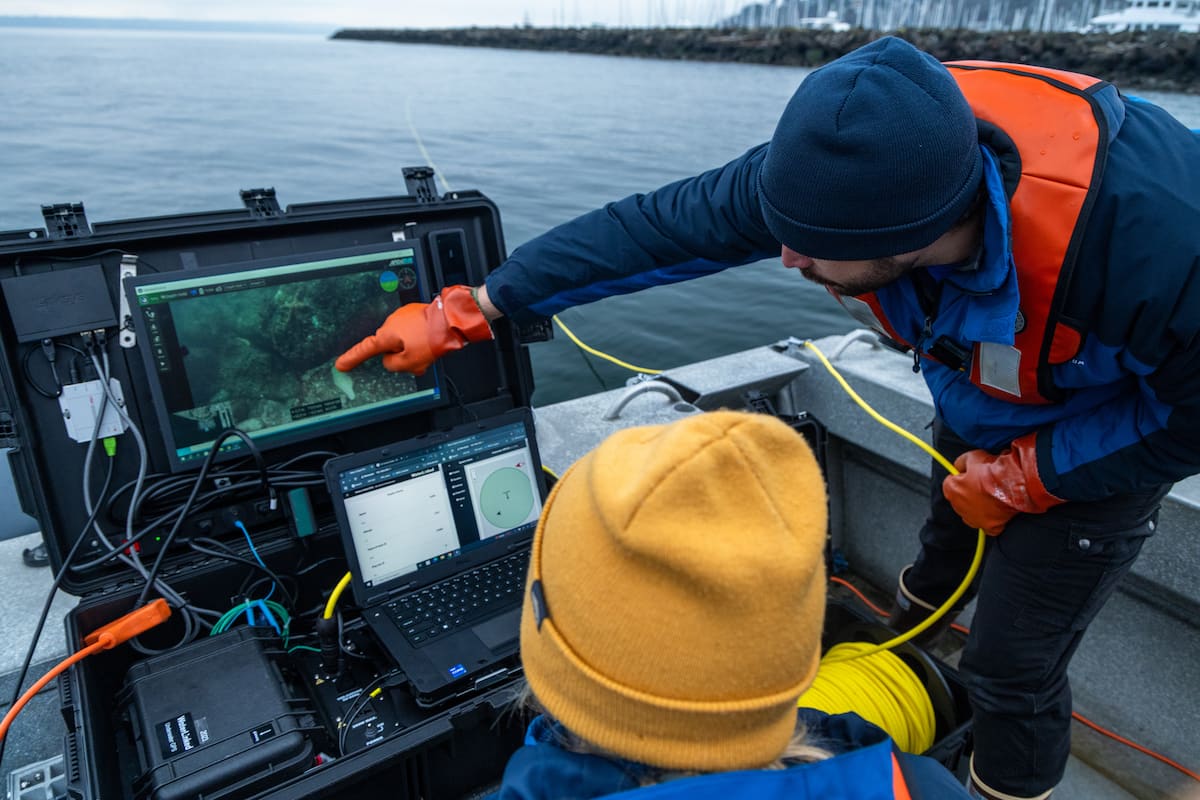
The Aquarium’s research team collects images of the seafloor—and we need your help to sort through the data!

You might be familiar with the Aquarium’s remotely operated vehicles (ROVs). Our CCR team has used two of these relatively lightweight and nimble vehicles to take tens of thousands of images of the seafloor. The team has trained a machine-learning model to identify the animals, algae, objects and seafloor found in our massive library of images.

Models like the one we use are designed for maximum efficiency and low computational cost. These types of models have been around since the 1950s and are frequently used in scientific and environmental research to find patterns in large sets of data. But the Aquarium’s model is still learning and makes mistakes.

That’s where you come in! Anyone with access to the internet can contribute to Kelp Quest by reviewing and interacting with the collected images.

Diving into Kelp Quest

“None of us were born as kelp experts. We all learned through exposure to animals and algae. This approach leverages our natural ability to recognize details and patterns while supporting ocean conservation.”

There are two ways to help. In the “Yes/No” workflow, you can confirm or refute the model’s guess of what is pictured in the image. And in the “Multiple Choice” workflow, you’ll label the image yourself.

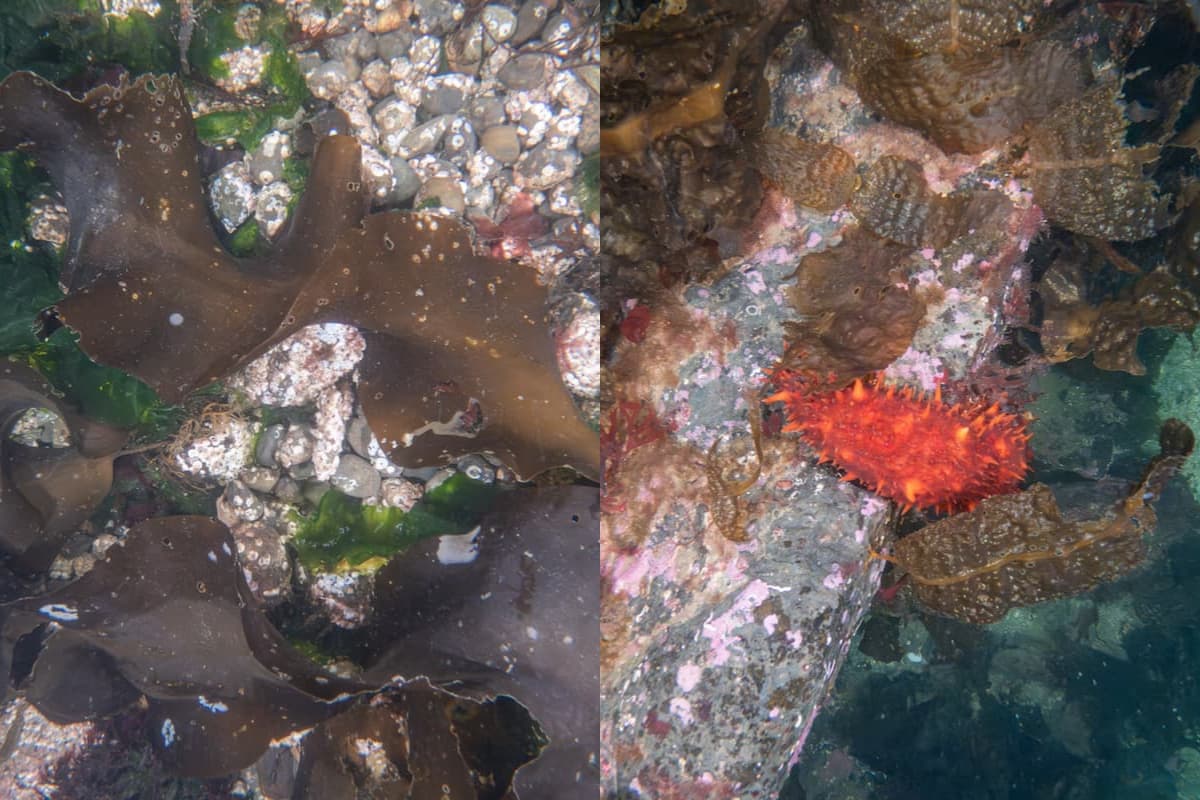
Examples of the types of images you’ll help sort.

Don’t worry if you’re no marine expert! The CCR team has developed a handy “Field Guide” that goes over all sorts of things you might encounter, from kelp and other algae to rocks and car tires. The CCR team is also very active in the project’s “Talk” forum, where volunteers can discuss interesting findings or troubleshoot hard-to-identify images.

By helping label these images, not only are you supporting this project, but you’re also helping train our model to be more accurate, further supporting future marine research.

Science is a team sport

“We really want to make our research as collaborative as possible to boost kelp forest conservation efforts. The more hands we have on this project, the faster we can uncover ecological insights that will better inform conservation."

Kelp Quest is hosted on Zooniverse, a platform built around the idea that many people (including those with no formal training) can collaborate on research projects together. Many of the projects on Zooniverse require going through large amounts of data, something that would take small research teams ages, even with computer assistance.

But with nearly three million registered volunteers around the world, that work can be done much quicker. And as Zooniverse itself points out, humans are uniquely good at pattern recognition, often even better than computers, as is the case in Kelp Quest.

As an open-source and open-access research project, Kelp Quest is set up in a way that supports the idea that science is a team sport. Open source means the computer code we use to run the model is publicly available for anyone to use and improve. And open access means we make the results of our research (including the model) publicly available whenever possible.

We make our findings available to help promote kelp conservation and further research.

In keeping the project open like this, the CCR team hopes to encourage collaboration and transparency in their work. One of the unexpected benefits to this is that some volunteers have already reached out to get involved with the project or to suggest ways to improve it.

Salish Sea superstar

“Kelp forests and the species that rely on them are beautiful, ecologically important and increasingly vulnerable to human impacts and climate change. We hope Kelp Quest will connect people to this underwater world while directly contributing to research and management decisions that advance kelp forest conservation and restoration.”

At the core of this research is the question: What factors contribute to kelp forests thriving or declining?

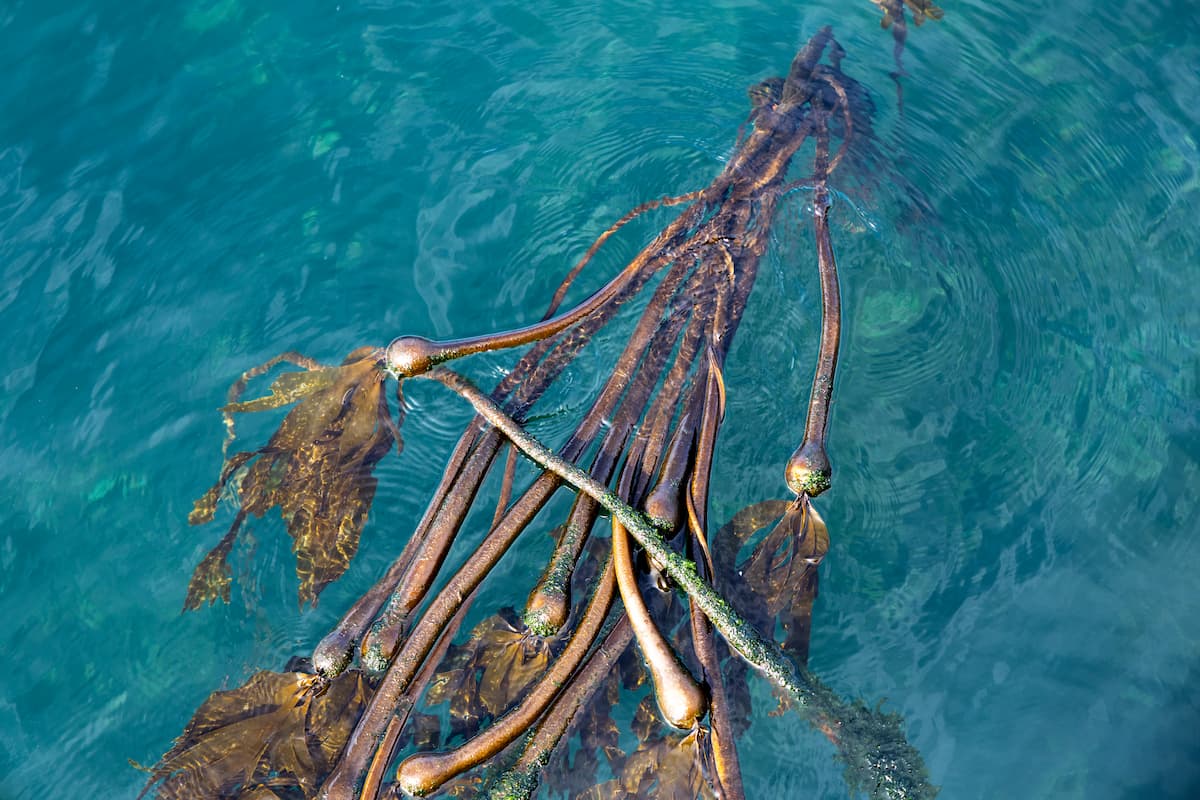
Bull kelp is a key player in many of the Pacific Northwest’s nearshore ecosystems.

And that’s an important question when it comes to Puget Sound’s marine ecosystem. Like the coral reefs found in warm waters, kelp forests are hotbeds of biodiversity. They serve as habitats for many species, including nurseries for young salmon and rockfish.

These mighty undersea forests also protect shorelines and enrich coastal communities. And the Pacific Northwest’s Indigenous communities have used kelp and stewarded coastal ecosystems since time immemorial.

Whenever you engage with the Seattle Aquarium, be it online or in person with a visit, you directly support vital marine conservation work. Talk about being “kelpful!”

Meet the team

Want to know more about the dedicated scientists leading the project? Read on!

(From left to right) Megan Williams, Reid Thomson and Zachary Randell conduct field research in Seattle’s Elliott Bay.

Dr. Zachary Randell, Ph.D.

Senior research scientist

Zach grew up in Anchorage, Alaska, and started scuba diving there when he was 15. His passion for ocean exploration led him to pursue scientific scuba diving at the University of California, Santa Cruz and complete a dissertation at Oregon State University, focusing on long-term kelp forest dynamics, underwater experimentation and dynamical modeling. He has always been eager to explore underwater, and this project allows him and his team to use cutting-edge ROVs and data analysis to study the ocean in new ways.

Megan Williams, M.S.

Research scientist

Megan grew up in Seattle, where sailing and exploring tide pools fostered an early appreciation for the beauty of Puget Sound. That connection to the marine environment led her to James Cook University in Australia, where she studied how coastal ecosystems respond to change. She has played a key role in advancing the CCR team’s spatial analysis and machine learning work and brings a strong field perspective to the team. She remains inspired by Washington’s rugged, green waters and is committed to protecting the natural places that shaped her life for future generations.

Reid Thomson, B.S.

Research technician

Despite his upbringing in the Midwest, Reid developed an unwavering passion for marine life at an early age. Summers spent constantly in and around lakes and streams fused with a love of nature documentaries to drive his fascination with the mysteries held by even larger bodies of water. Reid’s curiosity led him to pursue a degree in marine science at Boston University, where he refined his passion toward a career in marine research. He has a particular fondness for fieldwork that helps him explore Washington’s beautiful, rugged coast.

Youth Ocean Advocates join Lobby Day in Olympia

On January 19, our Youth Ocean Advocates (also known as YOAs) teen volunteers traveled to Olympia to join the Seattle Aquarium and its partners in the Plastic Free Washington coalition for Lobby Day, advocating for policies that would reduce plastics in our environment. Nearly 70 Washingtonians joined to discuss with legislators how bills like the amended plastic bag ban (HB 2233/SB 5965) and the Recycling Refunds Act (HB 1607/SB 5502) will reduce waste and marine plastic pollution.

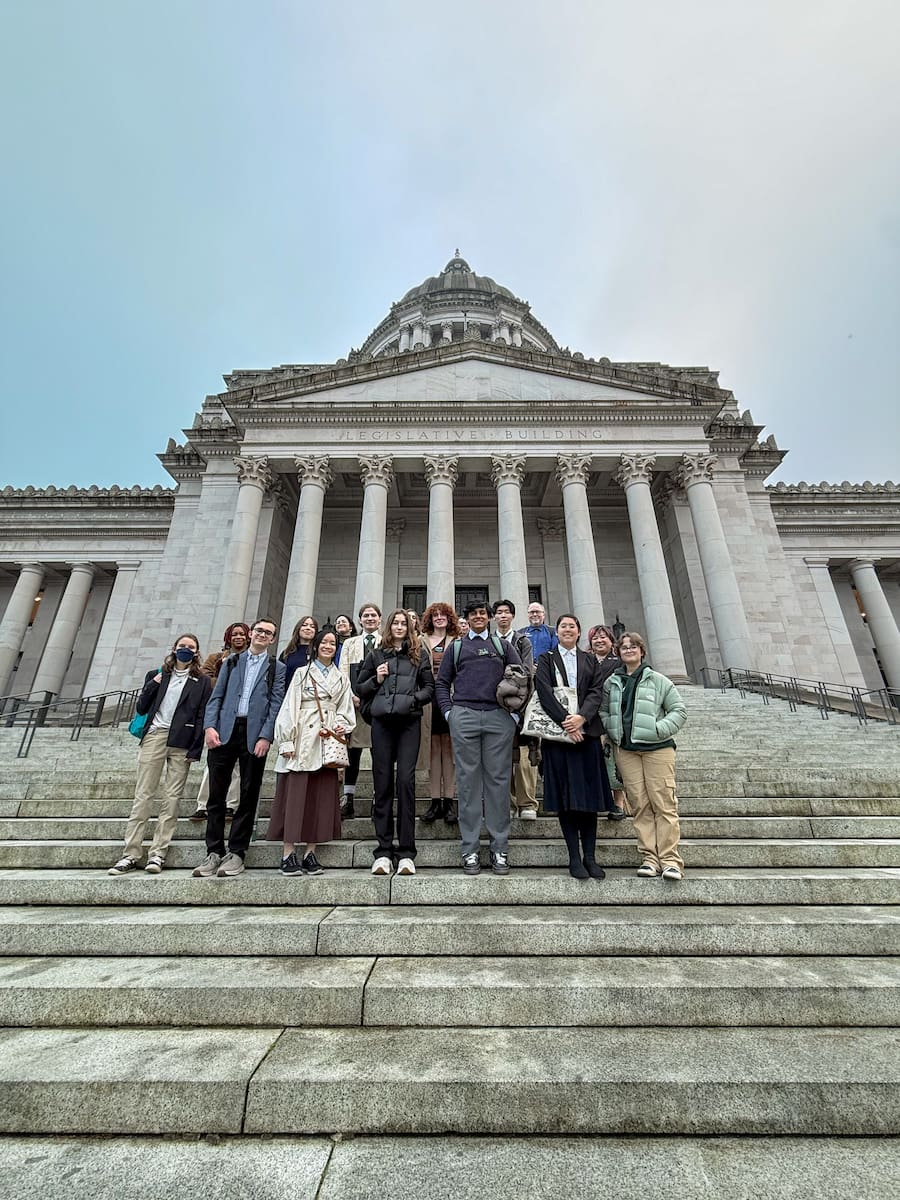
Youth Ocean Advocates standing on the steps of the Capitol Building.

YOAs on the steps of the state Capitol Building.

HB 2233/SB 5965: Closing a loophole for plastic bags

Plastic bags are a major source of litter and pollution in our ocean. Washingtonians use nearly two billion plastic bags every year (yes, that’s billions, with a “b”)! In 2020, Washington passed a bill eliminating single-use, thin plastic bags. The amended plastic bag ban would close a loophole and ban all plastic bags, including the thicker “reusable” plastic bags often provided at grocery store checkouts or for restaurant to-go orders.

HB 1607/SB 5502: Refunds for container recycling

Like plastic bags, beverage containers are a major source of pollution along our highways and in our waterways. The Recycling Refunds Act (also known as the Bottle Bill) would improve recycling rates of beverage containers, with evidence from Oregon and British Columbia suggesting an 80–90% increase! Consumers would pay a 10-cent deposit on most beverage containers, which would be refunded when they bring their containers to convenient drop-off locations. Beverage brands would form a “producer responsibility organization” (PRO) to fund and implement the program. The PRO will cover 100% of the state’s costs, including oversight, administration, education and enforcement.

Power of the people—and YOAs

Volunteers organized over 30 meetings with state legislators to encourage support of the priority bills addressing plastic pollution, like the two mentioned above. Together, 12 YOAs attended 15 meetings. YOA Vasilisa said, “I learned a bit more about the process of advocacy, how laws are created and how constituents can communicate with their respective [state] representatives. I attended because I was curious about this process [policy advocacy] and wanted to help contribute to the Aquarium/Puget Sound and its animals as much as possible.”

YOAs got an opportunity to meet legislators and speak about their passion for the marine environment and their personal reasons for wanting to pass the Bottle Bill and the amended plastic bag ban. In one meeting with a state senator, YOA Alex was asked how her work impacted the world, a question she wasn’t expecting. After some thought, she replied, “I do not think there is a single visitor who leaves the Aquarium without loving the ocean a little more.” Later, further reflecting on the senator’s question, she realized that, while she can’t remove all the plastic pollution from the ocean or all the toxics in the Salish Sea, she can reach the hearts of visitors in her talks and interactions. She notices, “the eyes of a 6-year-old widen, an introspective tilt of the head, or a teenager look down to hide their wonder. This moment where, to them, the world gets a little bigger. The senator himself experienced this…leaning back in his chair, peering through his glasses, seeing not us, but the adoration and respect we have for the marine world. This is inspiring marine conservation.”

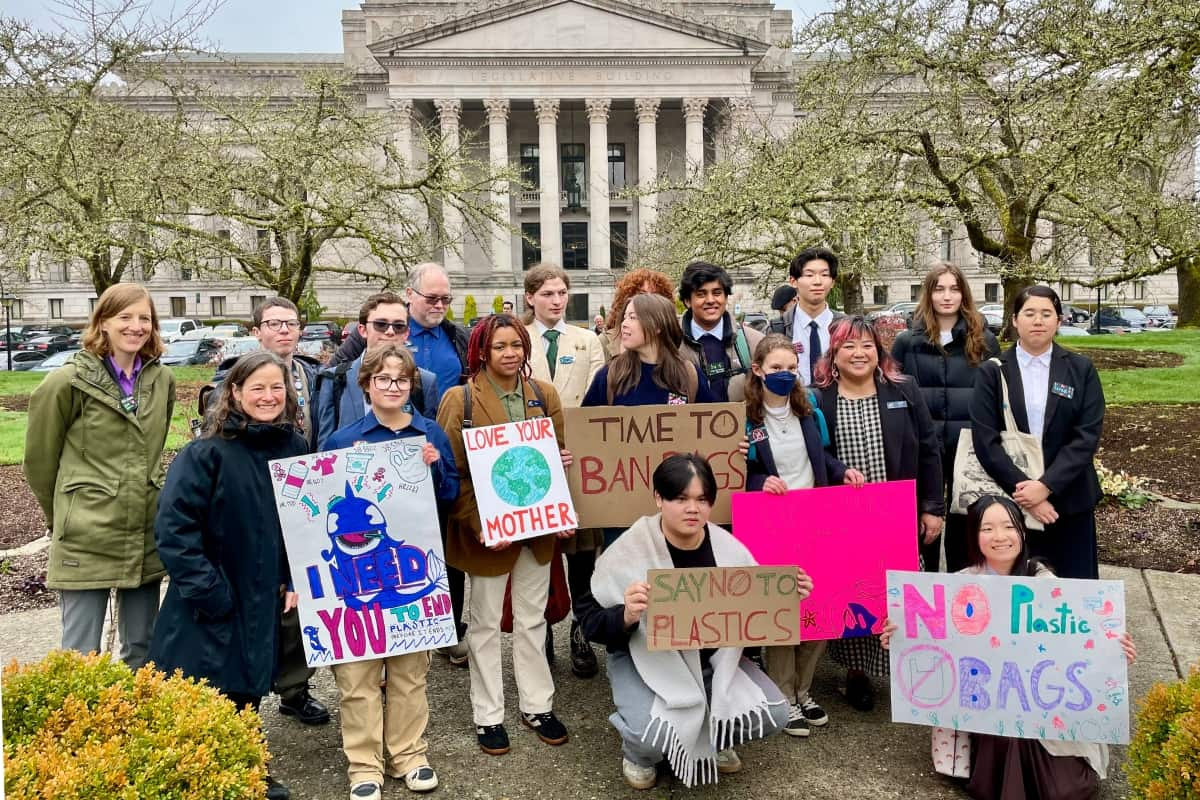
Youth Ocean Advocates holding signs in front of the Capitol Building.

YOAs raising their voices at the rally at Lobby Day on January 19.

More YOA highlights from Lobby Day

In addition to meetings with legislators, YOAs attended a public hearing in the House Environment & Energy committee. One of the bills in the hearing would ban 6PPD, a tire chemical that becomes 6PPD-Q, a chemical that’s highly toxic and lethal to salmon, particularly coho salmon. Four YOAs were brave enough to testify in support of the bill, signing up and preparing testimony on their own. Their testimonies were met with appreciation from the committee, and they met the bill sponsor, Representative Zach Hall (District 5). YOA Sid, reflecting on his decision to attend Lobby Day and his experience testifying said, “I attended because I care deeply about conservation and environmental policy. Healthy ecosystems support both people and wildlife, and I feel a responsibility to speak up when preventable pollution threatens that balance. Once I started speaking, my nerves settled, and I felt proud to share the science and the real risks to salmon and water quality. Overall, the experience strengthened my confidence and made me even more committed to conservation and policy work.”

The YOAs also attended a rally, where they heard from Representative Lisa Parshley (sponsor of the House version of the amended bag ban), who shared her passion for tackling plastic pollution and her appreciation for those who spent their day advocating for the bill. They also attended a tour of the Capitol Building, learning about the history and design, followed by a quick trip to the gift shop, where, so we’ve heard, some marine stuffed animals were purchased as mementos of the trip by a few of the YOAs.

Three Youth Ocean Advocates holding handmade signs calling for less plastic.

Handmade signs help amplify the message.

Get involved!

Learn more about our 2026 legislative priorities and how you can help advocate for our marine environment at the state and federal levels. You can also get notified about action opportunities by signing up for our policy action alerts.

If you or a high schooler you know wants to participate in advocacy opportunities like the ones described in this story, please go to the YOA webpage for more information. Recruitment for the new cohort of Seattle Aquarium Youth Ocean Advocates begins with orientation sessions in March.

Seeing green: spotlight on the Aquarium’s recent regenerative work

From taking public transportation to taking shorter showers, the choices we make every day impact our one shared ocean. The Seattle Aquarium participates enthusiastically in that work. We’re committed to being a regenerative aquarium—one that gives back more to the environment than we take from it. We use our regenerative plan as a guide in this work.

This past year, the Aquarium made some exciting changes that allow us to operate our campus more sustainably—all while maintaining the highest quality of care for the animals here. From lowering our seawater usage to investments in renewable energy, read on to learn about this thrilling work.

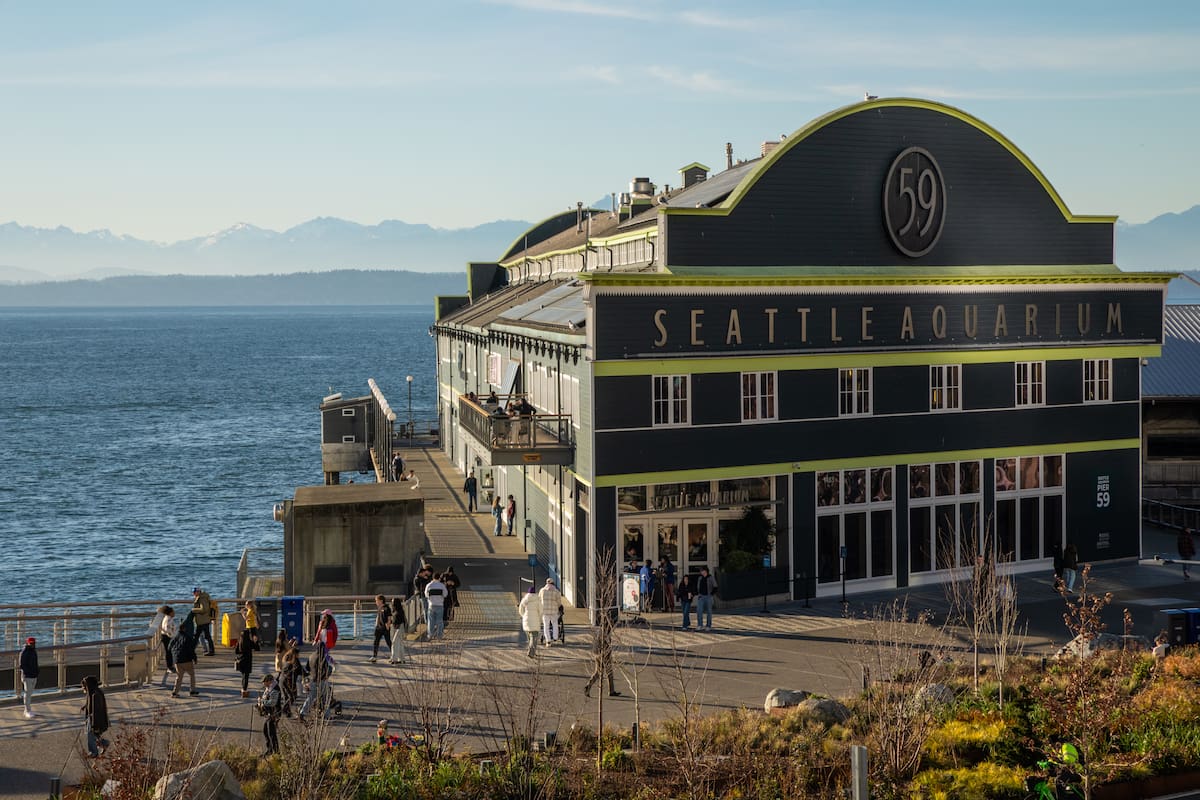
The Seattle Aquarium's Pier 59.

The Seattle Aquarium sources its seawater from Elliott Bay right below Piers 59 and 60.

Quenching the thirst for seawater

Seawater may look abundant on our beautiful blue planet, but just like all other natural resources, it has to be handled with care.

The Seattle Aquarium has the unique ability to source the seawater for our habitats from Elliott Bay. For the habitats in Piers 59 and 60, which house animals native to the Salish Sea, water comes in from Elliott Bay, is treated, flows through the habitats and then back out to the bay.

This past year, our staff began gradually experimenting with reducing how much seawater enters our habitats. After every reduction, the water quality and animals in each habitat were carefully monitored for any changes in wellbeing. So far, we’ve managed to reduce seawater usage across the piers by about 24%.

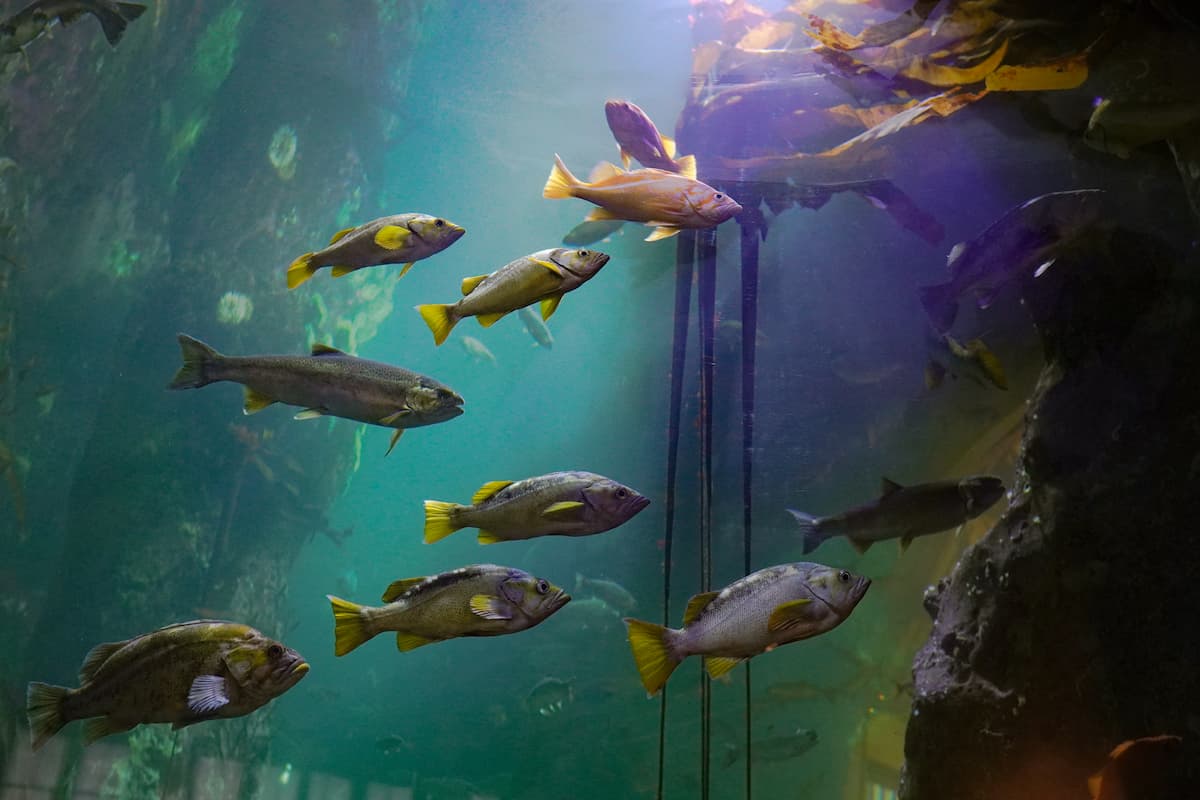
Rockfish swimming in the Window on Washington Waters habitat.

Flow improvements in Window on Washington Waters and other habitats contributed to strong reductions in seawater usage.

Less seawater pumping means less electricity usage—a serious regenerative win. And it also puts less stress on the pumping equipment, which means it will likely last longer.

And the project has allowed our teams to get a better understanding of the actual needs of our habitats, which means we can also be more accurate and resilient when planning for emergencies.
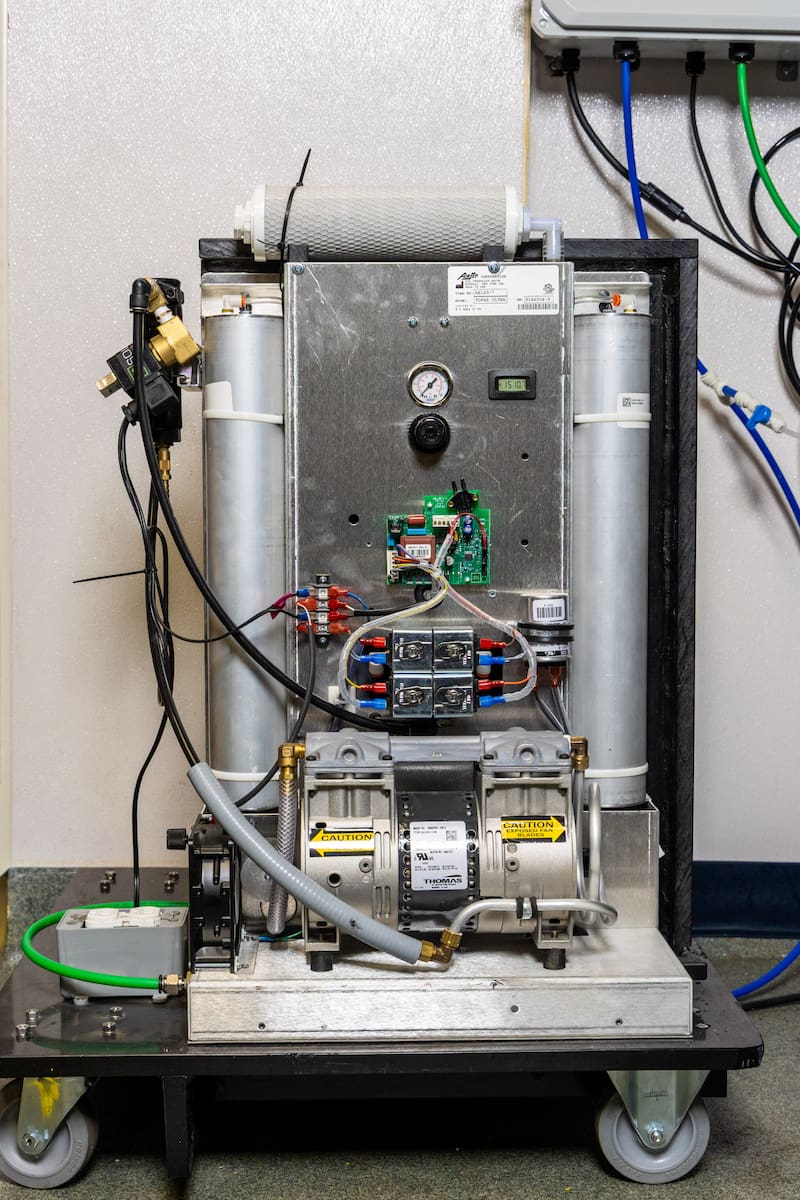
Oxygen concentrator: a breath of fresh air

Did you know the amount of oxygen in seawater naturally fluctuates throughout the year? But the oxygen needs of our animal population remain the same. So, we often have to supplement the water with more oxygen.

For the past several years, the Aquarium has used large cylinders of liquid oxygen for this task. They work fine, but our team noticed some ways the system could use improvements. For one, the Aquarium empties oxygen tanks and receives replacements on a weekly basis, the transportation of which results in greenhouse gas emissions.

Enter, the oxygen concentrator. This machine works by taking in normal, everyday air and isolating the oxygen, filtering out nitrogen and other gases. That oxygen is then added into the Aquarium’s water and flows through our habitats.
The Aquarium's oxygen concentrator.
The oxygen concentrator installed in Pier 59 allows us to more efficiently and accurately adjust oxygen levels in the water of our habitats.

Unlike the liquid oxygen tanks, which require human monitoring and intervention, the oxygen concentrator has a sensor and can automatically adjust its output levels to meet the habitats’ needs in real time and to consistently maintain optimal oxygen levels 24/7.

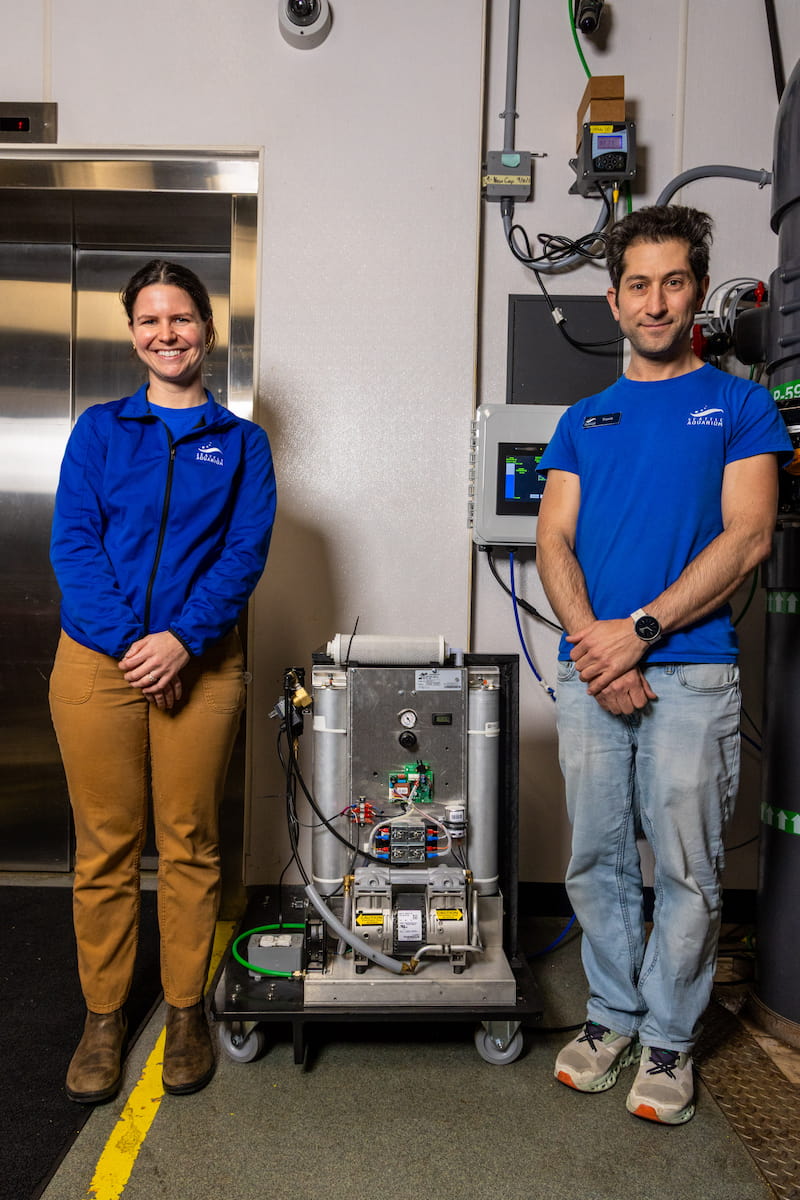
The oxygen concentrator is currently in use for the water that goes to Pier 59’s Window on Washington Waters, Crashing Waves and most of Life on the Edge. The team facilitating the changes—led by Senior Water Quality Specialist Juliette Mason and Regenerative Manager and Life Support Technician II Travis Snyder—is looking forward to expanding the project in 2026 to reach the piers’ other habitats.

Juliette and Travis standing on either side of the oxygen concentrator.

Senior Water Quality Specialist Juliette Mason (left) and Regenerative Manager and Life Support Technician II Travis Snyder lead the oxygen concentrator project.

Because the Ocean Pavilion is a closed-loop system, it operates with a water treatment system that maintains oxygen levels as the water recirculates, so an oxygen concentrator isn’t necessary there.

A powerful investment in renewable energy

In 2025, the Seattle Aquarium signed a power purchase agreement with Seattle City Light. Essentially, this means we agree to purchase solar power from a newly built facility to replace our current electrical use, thus adding additional renewable energy capacity to the local electric grid. The agreement is scheduled to go into effect soon and last for 15 years.

This power purchase agreement represents one step in our regenerative journey. In past years, the Aquarium has done a lot of work to more sustainably run our campus, from designing the Ocean Pavilion to be fossil fuel free to making changes in Pier 59 that dramatically reduced our natural gas usage.

To engage in regenerative work is to live focused on the future. And with a team full of dedicated conservationists supported by our thoughtful community, the future of sustainability is looking bright at the Seattle Aquarium. Follow along with our progress on our Sustainability page!

Living history: The Muckleshoot Tribe, canoes and the Salish Sea

There’s something new to discover on the Ocean Pavilion’s public rooftop—that is, in addition to the native plantings and sandblasted images designed by, respectively, traditional ecological knowledge-keeper Valerie Segrest (Muckleshoot) and Owen Oliver (Quinault/Isleta Pueblo).

A recently installed sign offers an overview of the types of canoes used by members of the Muckleshoot Tribe to traverse the waters of the Salish Sea—and beyond—for thousands of years, as well as a glimpse into the importance and tradition of canoe culture.

The newly installed sign anchors stunning views of the Salish Sea from the Ocean Pavilion’s rooftop.

The placement of the sign on the rooftop is intentional. As Muckleshoot Tribal Council Chair Jaison Elkins noted upon the announcement of our partnership with the Tribe in 2024, “This partnership reflects the Tribe’s deep connection to the Seattle waterfront where our ancestors celebrated the return of the salmon since time immemorial.”

To learn more about the history and significance of q̓il̕bid (“canoe” in the Muckleshoot language) culture, we recently spoke with several members of the Muckleshoot Tribe, who generously shared their thoughts with us.

Q: Can you tell us more about the Tribe’s history of traveling by water?

A: “Traveling by water was how we would get around, and I was told that’s why we have our paddle songs. When we would visit other tribes, we would sing so that they would hear us and the tribes would know who we were by which song we were singing.”
—Salena Jackson, Performance and Regalia Specialist

Eagle Spirit on the Canoe Journey leaving Lummi Island, headed for Samish Island. Photo courtesy of Adrian Markantonatos.

Q: The new sign features seven types of canoes, each with a specific purpose. What does that range say about the Tribe’s connection to water? How has that connection shifted over time?

A: “The variety of canoes speaks to the significant relationship we have, and historically have had, with water and the waterways. Just like how you’ll see different types of vehicles driving down the highway, each with a specific purpose—those waterways were our traditional highways, so in the same way, there would be a dynamic range of canoe styles.

We’ve lived in this area for thousands of years in such close proximity to the water, that it made sense to travel this way. It’s even reflected in our language—directions are given in relation to where the water is. As for the shift, we’ve seen a lot of changes but we’ve also held onto parts of our identity—one of those being our relationship with the water.”
—Sam Obrovac, Cultural Arts Coordinator, Muckleshoot Tribe

Muckleshoot carving team and Adult Work Training Program participants working on a cedar-strip canoe to give away at Canoe Journey 2023, Muckleshoot, Auburn, Washington. Photo courtesy of Sam Obrovac.

Q: The sign notes that the canoes are considered to be living beings. Can you tell us more about that?

A: “We treat the canoes like they’re living; we give them names that fit them because the canoes have a spirit. We introduce ourselves to them when we get on, and I’ve had a lot of conversations with those canoes. I talk to them just like a person. They’re like our babies; we take care of them and they care of us. Just like a newcomer in a family—the new canoes are our babies, and they go through cycles in their lives. Our new canoe, tubšedad, has a mind of his own.”
—Autumn MaGee, Canoe Family Manager

Napolean Ross blessing a shovel-nose canoe on the Green River.

Q: What else would you like people to know/understand about the Muckleshoot Tribe’s q̓il̕bid (canoe) traditions?

A: “This is how we hunted, this is how we fished, this is how we lived—reconnecting with that way of life is contagious and it keeps growing. Being out on the water and hearing those strokes, hearing the animals, hearing the water—that’s my peace.”
—Corey Ward-Jerry, Cultural Food Specialist

Canoe practice on Eagle Spirit at Gene Coulon Park, Renton, Washington. Photo courtesy of Corey Ward-Jerry.

Q: What opportunities do you see through the Tribe’s partnership with the Seattle Aquarium?

A: “I see a lot of learning opportunities for our youth to engage with this field of knowledge—having them potentially lead into careers in marine biology, or even just connecting with their natural environment. The idea that what we do affects the rest of the world and how we have to take care of the water.”
—Stephanie James, Culture Program Director

“Our ancestors tended to this land and defended this land. They have given us strength and wisdom, which empower us to continue inhabiting and caring for our lands while gathering resources, traveling the Salish Sea and fishing these waters. We are resilient; we are Muckleshoot.”

We thank Salena, Sam, Autumn, Corey and Stephanie for contributing their wisdom and perspectives—as well as Sam, who closed with these beautiful words: “Witnessing this cultural resurgence, back to our Salish customs and identities, is a beautiful thing. It really is healing and powerful to see, and there are lots of additional people to thank who either held onto knowledge or went out and got it to share with the rest of us.”

To learn more, visit the Muckleshoot Tribe website and explore the collection of videos related to the annual Canoe Journey. Then, plan a visit to the Seattle Aquarium and make a stop on the rooftop to see the new sign. While you’re there, take a moment to gaze out at the waters of the Salish Sea and imagine the many generations of canoes that have crossed its waters.

Join us for After Hours: Family Matters on Thursday, May 21, when the Aquarium when remains open late just for adults 21+!

Today only, your gift will be matched dollar-for-dollar up to $25,000 thanks to the generosity of donors Betsy Cadwallader, J & Tim, and Jess & Andy Peet. Help us reach our $50,000 goal!

End the year with a gift to the ocean.