This site uses cookies. View our Cookie Policy to learn more about how and why.

Regular hours: 9:30 am – 6 pm
Last entry at 5 pm

“Like human nurses—but in the veterinary field:” All about vet techs at the Seattle Aquarium
This story is part of our series, The Doctor Is In—highlighting our veterinary team’s expertise in service of animal wellbeing.

Veterinary technicians—or vet techs—are an integral part of the veterinary care team here at the Seattle Aquarium. But what does it mean to be a vet tech, and what kinds of education and experience are needed to work as a vet tech in an aquarium setting? Lindy McMorran, BS LVT Cert AqVN /T, and Erika Russ Paz, BS LVT, recently sat down with us to share some details.

First things first: What's a veterinary technician?

“It’s like a human nurse—but in the veterinary field,” explains Lindy. Similar to a nurse in a clinic or hospital, Lindy and Erika might spend a typical day at the Aquarium running anesthesia during a procedure, dispensing medications, taking x-rays, maintaining supplies and equipment for the Aquarium’s Veterinary Care Center and scheduling exams. They may also be found working with animal care staff to train behaviors that help with animal care, such as the ability to give an injection or take a blood sample with an animal’s cooperation.

Both women have Bachelor of Science (BS) degrees—Lindy’s in marine biology; Erika’s in marine science with a minor in biology—and licensed veterinary technician (LVT) credentials. Earning the credential requires about two years of full-time studies, followed by a national exam and state test. (Details, including alternative criteria, can be found on the Washington State Department of Health website.)

Most vet techs go on to work at the kind of veterinary clinic where you might take a pet dog or cat, so the curriculum focuses on their care. Although much of the core training applies to animals of all kinds, “there was no training that was specific to aquatic animals,” notes Lindy.

For vet techs in aquarium settings, that’s where hands-on experience, internships and/or additional courses—not to mention a passion for the marine environment—come in.
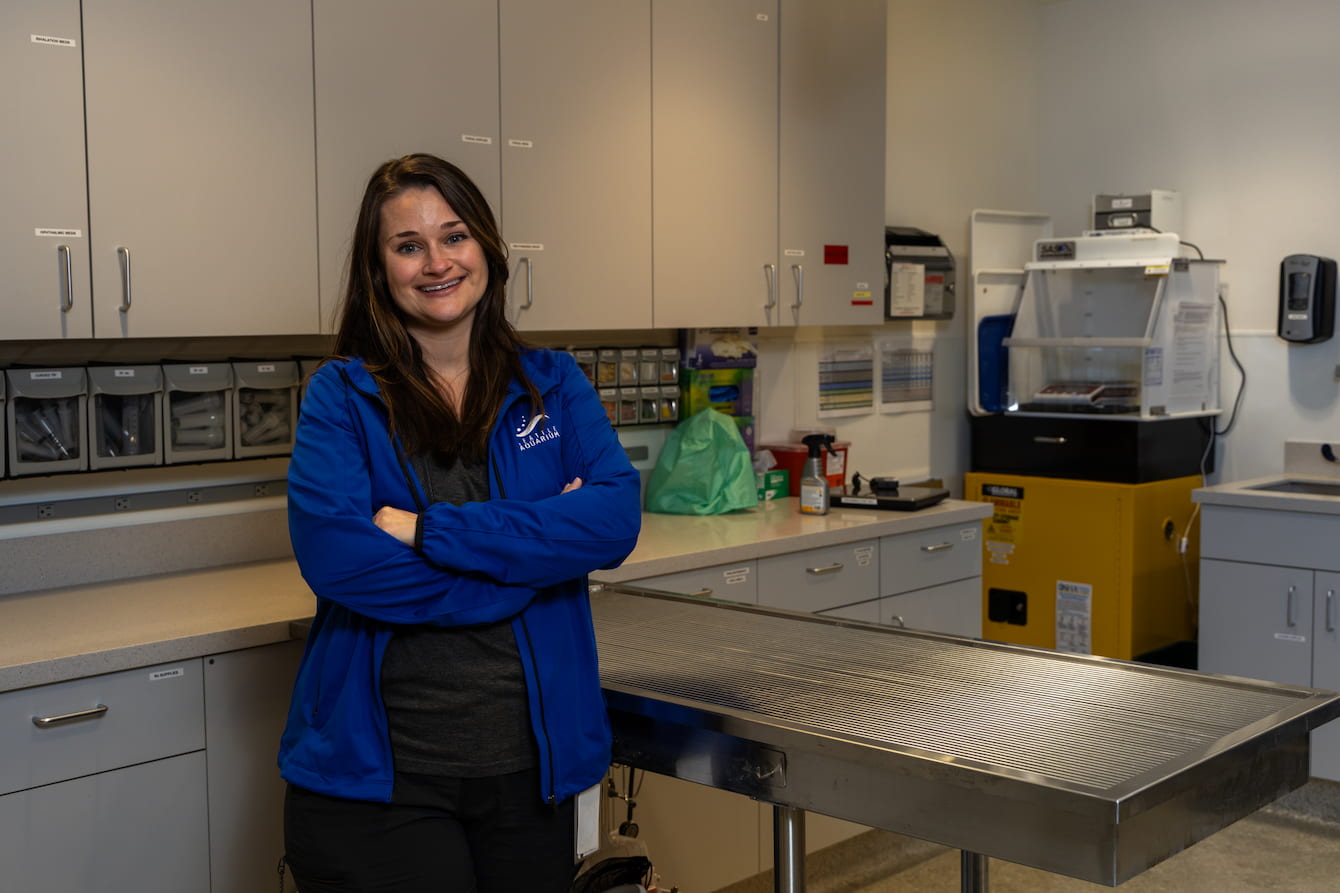
Erika Russ Paz standing in the Seattle Aquarium's Veterinary Care Center. She has straight brown hair and wears a blue Seattle Aquarium jacket.
Erika Russ Paz, our newest vet tech, makes use of our Veterinary Care Center to help fish, invertebrates, birds and marine mammals stay healthy.

Says Erika, describing highlights of the path that brought to her to the Aquarium, “I worked as an educator and marine science camp counselor at an aquarium during college. I also interned at an aquarium and as a wildlife rehabilitator. And, after graduation, I spent time as an observer in Alaska, collecting data to help manage our fisheries. I worked with PAWS, caring for a wide variety of species from the Pacific Northwest, as well. ”

That’s in addition to seven years in a general veterinary practice before joining our team early this year. “A background in marine science and biology, along with a passion for the ocean and care of animals, ultimately led me to the Aquarium,” Erika comments.

Specialties: Not just for human nurses

“Human nurses can have specialties, like oncology or pediatrics. Veterinarians can have those same kinds of specialties,” Lindy says. “But for vet techs, specialties are less common.”

Like Erika, Lindy augmented her schooling by working with marine animals—for example, as a volunteer for SR3, a local organization focused on marine mammal rescue and rehabilitation, and here at the Seattle Aquarium. She’s been focused on aquatic animals since 2007: as an intern, a lab assistant, an instructor and more.

Through her years of specific experience with aquatic animals, Lindy recently earned a new credential, Certified Aquatic Veterinary Technician, from the World Aquarium Veterinary Medical Association (WAVMA). She’s just the second person in the continental United States to achieve the certification, which became available from WAVMA at the beginning of 2023, joining select others from around the world.

Put simply, the new credential recognizes Lindy’s expertise with marine animals. “It’s one of the only ways a vet tech in the aquarium field can prove their experience,” she notes. “For instance, there is no board certification specialty for vet techs in aquatic medicine, but there is one for zoos.”

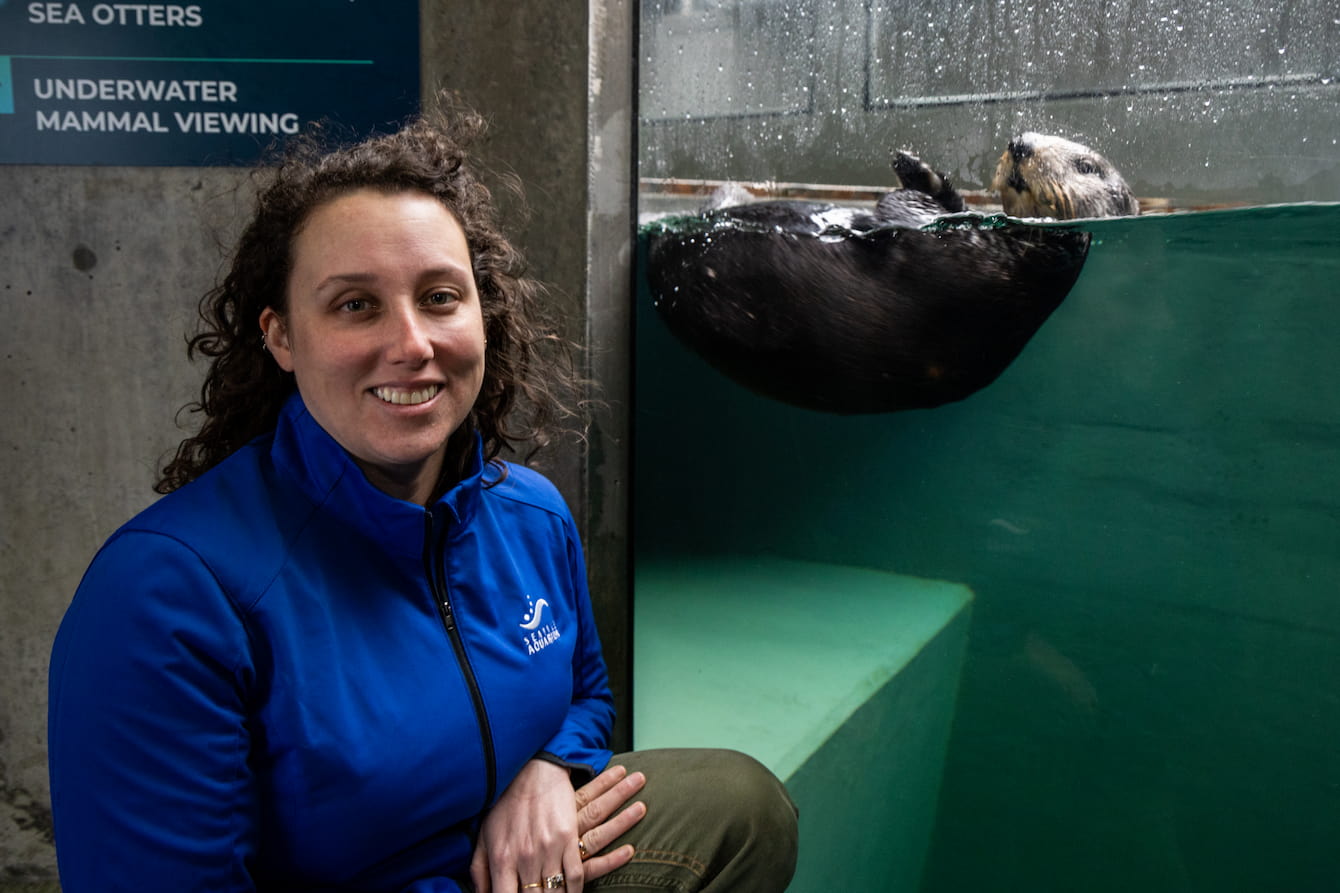
Lindy McMorran crouching next to the sea otter habitat at the Seattle Aquarium. Lindy has long, curly hair and wears a blue Seattle Aquarium zip-up. Sekiu the sea otter swims behind her.
Caring for adorable sea otters is just one perk of Veterinary Technician Lindy McMorran's role.

Broad experience + passion = a well-rounded, expert team

“Growing our veterinary team and seeking people with diverse backgrounds and areas of expertise helps ensure that each animal receives the individual care they need, which benefits their wellbeing,” comments Lindy.

That adaptability, always important, is even more so as the Aquarium expands with the opening of the new Ocean Pavilion this summer. Interested in learning more about veterinary care at the Seattle Aquarium? Check out our web story devoted to the full team.
The doctors (and techs) are in: Getting to know the Seattle Aquarium’s veterinary care team

This story is part of our series, The Doctor Is In—highlighting our veterinary team’s expertise in service of animal wellbeing.

Providing medical care for the animals at the Seattle Aquarium—soon to be nearly 18,000 with the opening of the Ocean Pavilion!—is far from a one-person endeavor. Working to provide excellent animal health and wellbeing requires skill and expertise from a well-rounded veterinary team, one that is required to be available any time of the day or night, every day of the year.

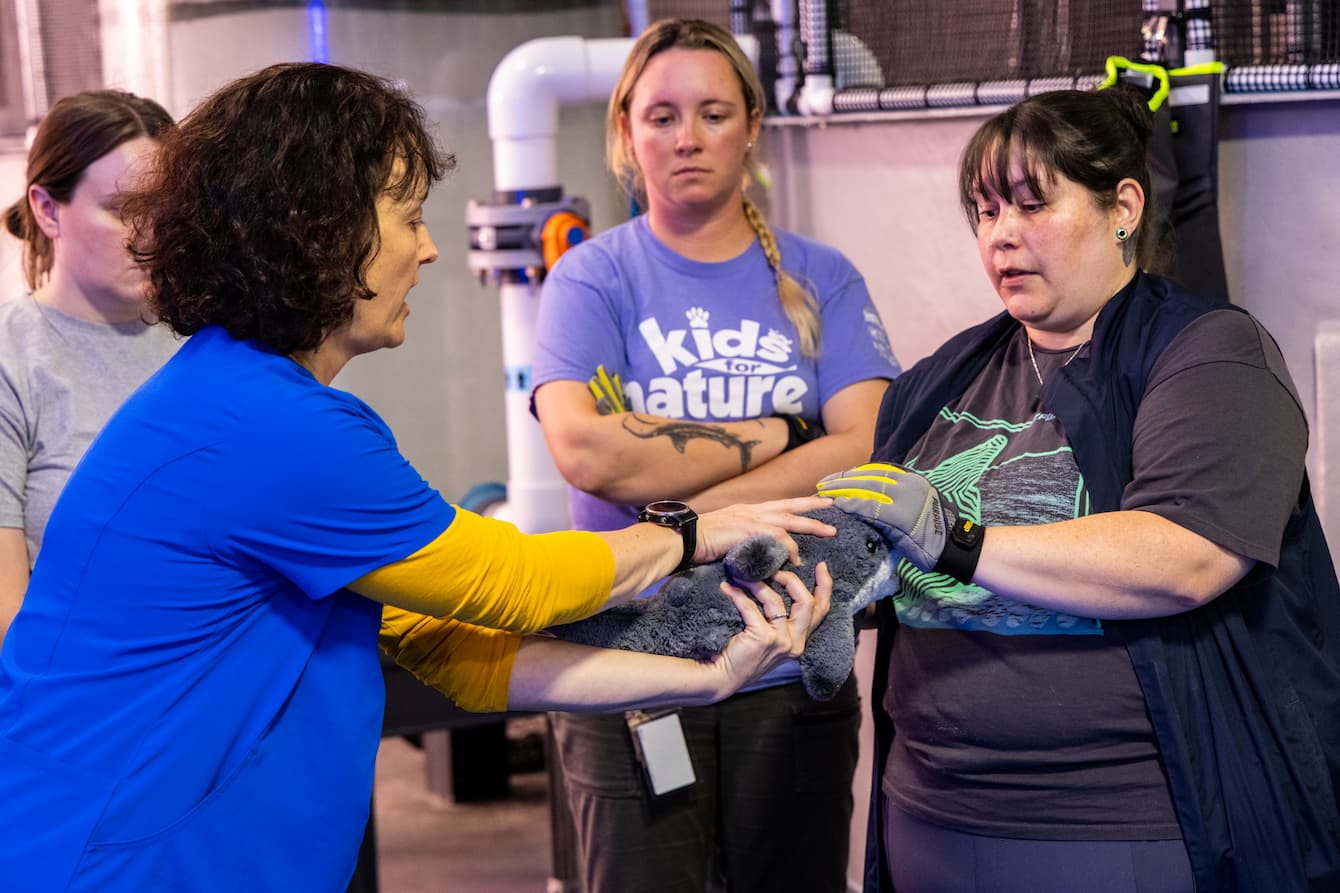
Four members of the Seattle Aquarium animal care team standing in a half-circle. Dr. Caitlin Hadfield is uding a shark plushie to demonstrate how to properly hold a shark during a medical exam.
Dr. Hadfield (left) demonstrates shark handling techniques with the Animal Care Center team ahead of a medical exam.

The Seattle Aquarium’s veterinary care team is currently composed of six people:

  • Two full-time veterinarians—Our director of animal health and team leader, Dr. Caitlin Hadfield, MA VetMB MRCVS DiplAZCM DiplECZM and Dr. Sasha Troiano, DVM MS CertAqV;
  • Two relief veterinarians, who are available to step in when our staff veterinarians are unavailable and/or extra support is needed—Dr. Brian Joseph, DVM MFAS CertAqV and Dr. Alicia McLaughlin, DVM CertAqV; and
  • Two veterinary technicians*—Lindy McMorran, BS LVT Cert AqVN/T and Erika Russ Paz, BS LVT.

*Not sure what a veterinary technician is? Be on the lookout for our upcoming web story, in which we’ll introduce you to Lindy and Erika and share some highlights of what they do—as well as details about a prestigious new credential that Lindy recently earned!

Initials = hard-earned credentials

Did you happen to take in the initials following our vet team’s names? They’re credentials—each one representing extensive education and certification.

For instance, staff vet Dr. Sasha Troiano and relief vets Dr. Brian Joseph and Alicia McLaughlin have doctorates of veterinary medicine, or DVMs. The three also have certified aquatic veterinarian (CertAqV) credentials from the World Aquatic Veterinary Medicine Association (WAVMA), indicating their extensive experience working with aquatic animals. In addition, Dr. Troiano has a Master of Science (MS) degree; Dr. Joseph has a Masters of Fisheries and Aquatic Sciences (MFAS) degree.

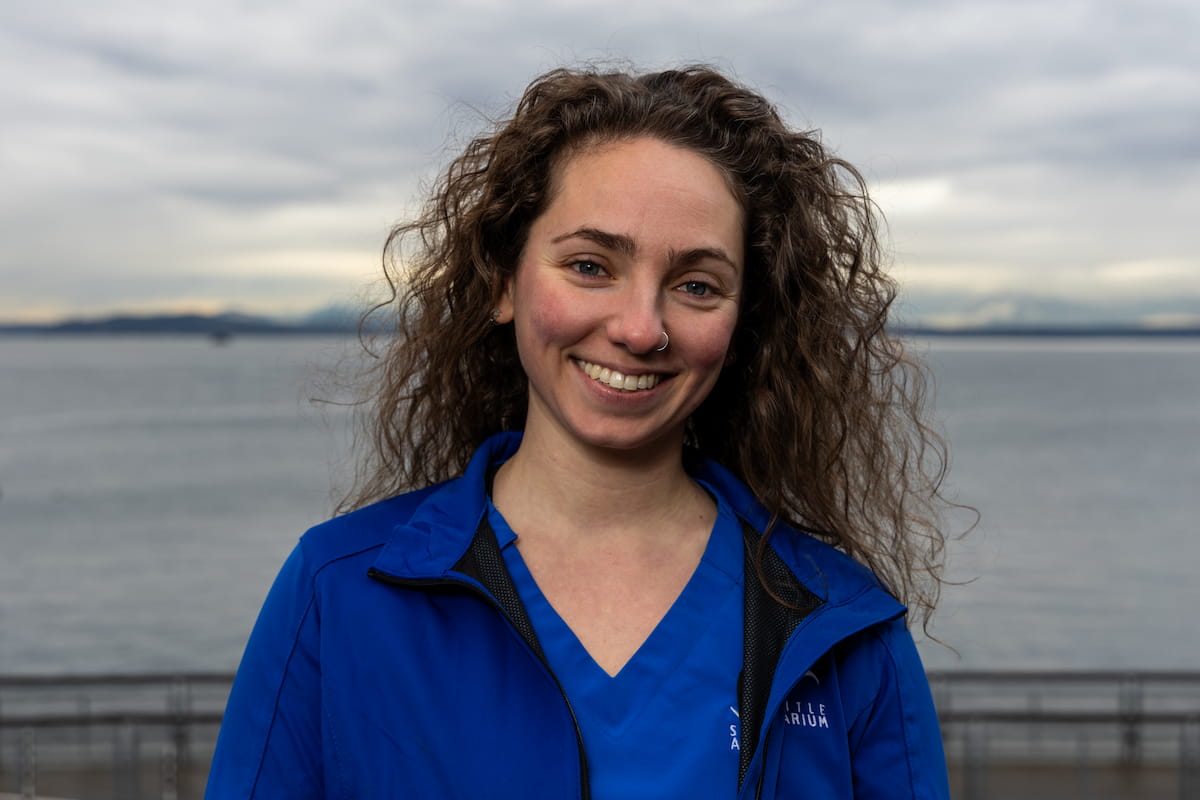
A photo of Dr. Sasha Troiano. She has long, curly brown hair and wears a blue shirt and rain jacket. She is standing on a pier in front of the Puget Sound.
Dr. Sasha Troiano

Lindy McMorran and Erika Russ Paz have Bachelor of Science (BS) degrees—marine biology for Lindy; marine science with a minor in biology for Erika—and licensed veterinary technician (LVT) credentials. In addition, Lindy recently received a certified aquatic veterinary nurse/technician (CertAqVN/T) credential from WAVMA—more on that in our upcoming web story!

As for Dr. Hadfield’s credentials, we’ll let her explain them in her own words:

  • MA: “I did a bachelor’s degree in zoology that included a master’s.”
  • VetMB: “Then I did my vet degree, which goes by those initials at University of Cambridge —the initials vary a bit by school.”
  • MRCVS: “That means I’m in good standing as a member of the United Kingdom’s Royal College of Veterinary Surgeons. It’s an odd requirement from England!”
  • DiplACZM: “These letters are for board certification. This was my first one, with the American College of Zoological Medicine—that’s what the ‘ACZM’ is for. Qualifying to take the exam requires years of clinical experience and publications. That’s followed by a challenging exam—in my case, I specialized in aquatics for my second day of exams, while day one had everything from red-eyed tree frogs to rhinos.”
  • DiplECZM: “I was also able to get certified with the European College of Zoological Medicine—the ‘ECZM’ in the title—and become a ‘diplomate’ of that group.”
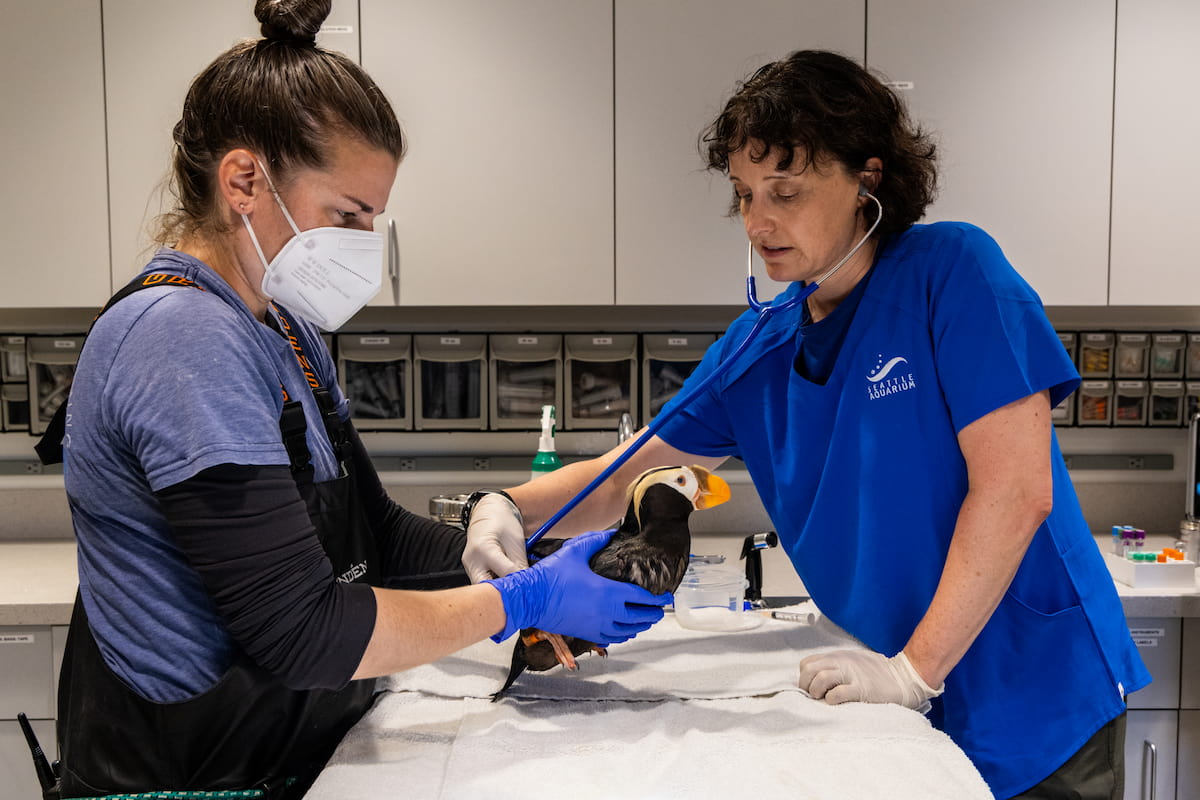
Sara Perry and Dr. Caitlin Hadfield standing on either side of an examination table. Sara is gently holding a tufted puffin just above the examination table while Dr. Hadfield presses a stethoscope to the puffin's back.
Supervisor of Birds & Mammals Sara Perry (left) and Dr. Hadfield examine a tufted puffin in the Aquarium's Veterinary Care Center.

Benefitting animal wellbeing beyond the Aquarium's walls

Members of the Aquarium’s veterinary, water quality and animal care teams share their expertise with the larger community in many ways—for instance, serving in leadership roles with the Association of Zoos and Aquariums (a nonprofit, independent organization that accredits zoos and aquariums, including the Seattle Aquarium, worldwide); helping to rescue and rehabilitate stranded animals; participating in research on wild populations; making presentations; collaborating on and authoring papers and articles—and even co-authoring an entire textbook on fish medicine.

That’s right: On top of her regular duties, Dr. Caitlin Hadfield found time to co-author the 624-page Clinical Guide to Fish Medicine. Written for vets, vet techs, biologists and fish enthusiasts, it’s now required reading for zoological board exams.

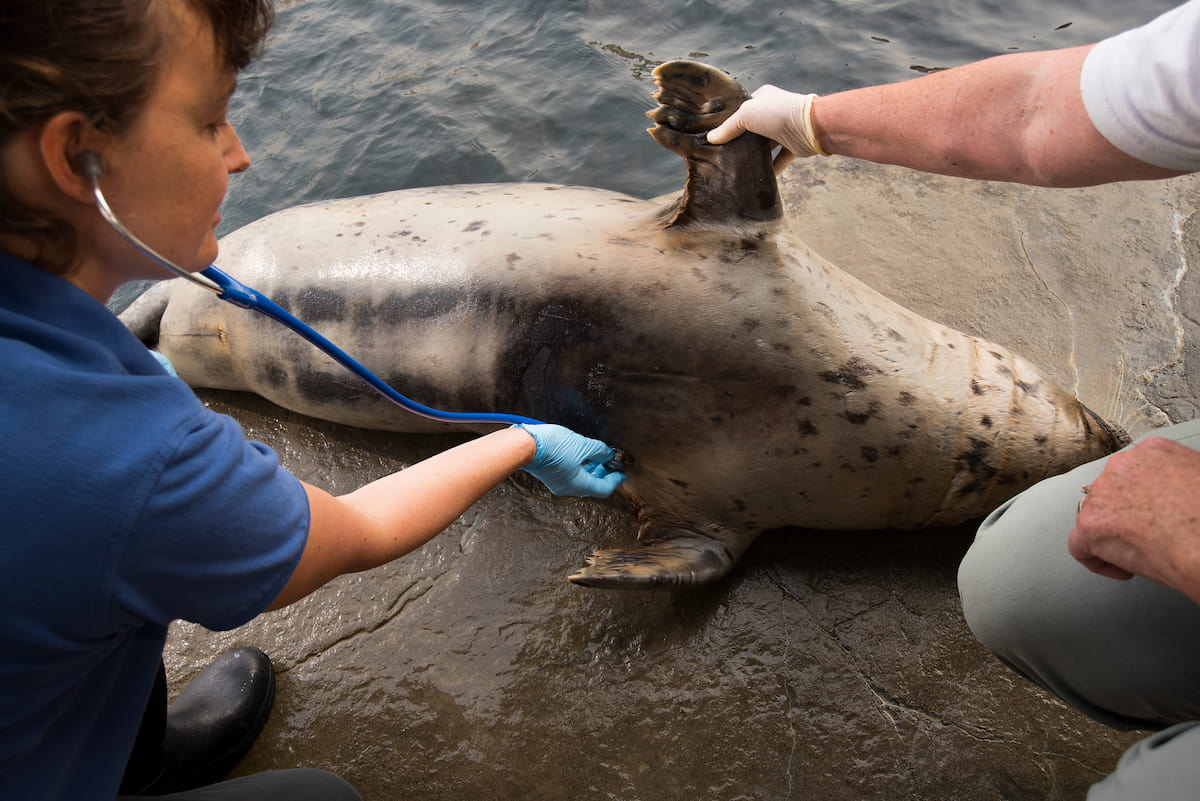
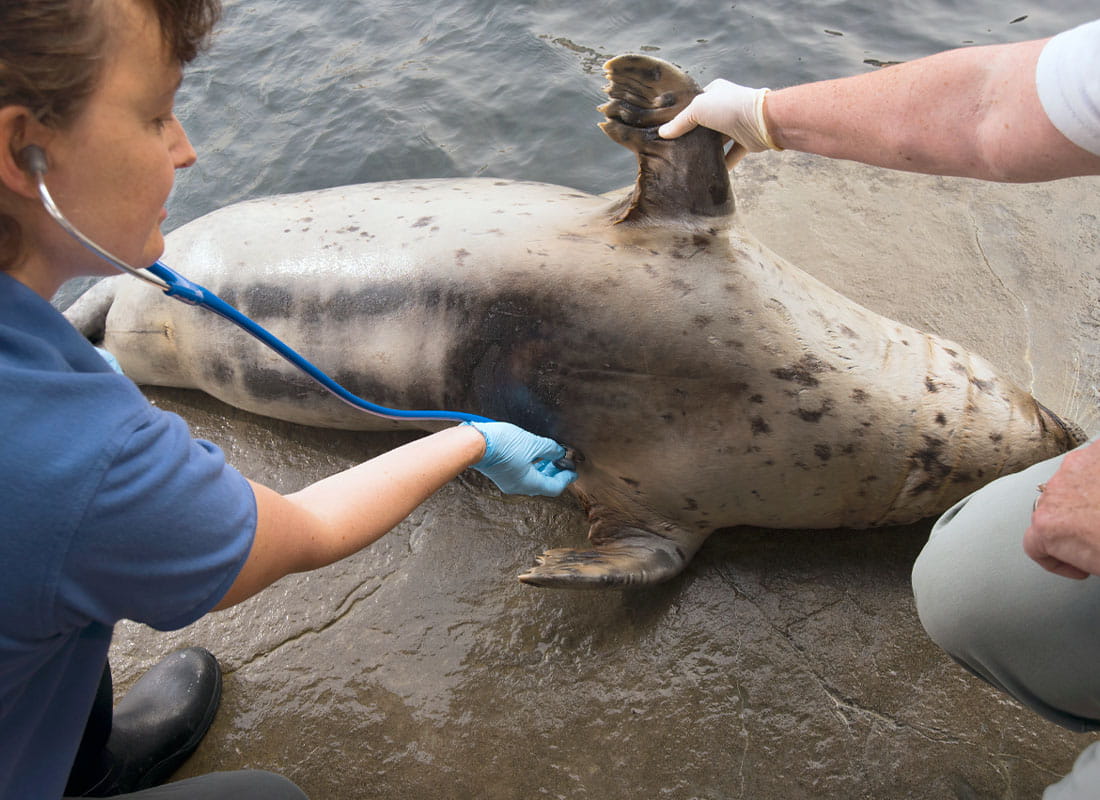
Dr. Hadfield crouching next to harbor seal Barney. Barney is laying on his left side; Dr. Hadfield is holding a stethoscope to his chest. A second veterinary technician is gently lifting Barney's flipper out of the way.
Dr. Hadfield listens to a harbor seal's heartbeat.

What kind of exams are those? “Just like your dentist and knee surgeon have done additional exams to confirm their specialization, there are boards for vets who specialize in zoological medicine or specific types of animals,” Dr. Hadfield explains. “Boards require a lot of extra studying and difficult exams. It’s great to be on the required reading list because it ensures a steady stream of readers! But more importantly, it helps set high standards for health care of fish.”

The book was the first of its kind. “There are textbooks that provide practical information on clinical medicine of domestic species—like dogs and cats—that vets can refer to through the day while at work, but that resource just didn’t exist for fish,” notes Dr. Hadfield. “There are good textbooks on fish, but they are focused on specific aspects of fish medicine or particular diseases and aren’t as useful in a busy clinical setting. So we submitted a proposal to the publisher and they accepted.”

A true team effort

For any team to be successful, each member must bring something different and valuable to the table—and that’s definitely the case at the Seattle Aquarium. “I’m really proud of the team’s diverse skills and how we work together and learn from each other,” comments Dr. Hadfield. “We provide care whenever it’s needed: any time of day or night, any day of the year,” she adds, “so we need a team that can be one voice for animal care and wellbeing, and support the wellbeing of the staff and volunteers we work with. That’s a big task given the variety of species in our care.”

And that variety is increasing in a big way with the opening of the Ocean Pavilion this summer. Interested in a behind-the-scenes look at some of the species you’ll find there—and a chance to see Dr. Hadfield and other Seattle Aquarium team members in action? Check out episode six of our Animal Care Stories series. And if you’re curious about what it takes to become an aquarium vet, dive into this great conversation with Dr. Hadfield!

New series goes behind the scenes at our Animal Care Center

Visitors to our Ocean Pavilion will experience underwater life on the other side of the planet. They’ll witness tropical reef ecosystems that face similar challenges to our local waters and meet extraordinary creatures who represent what’s at stake if we don’t work together to regenerate a healthy ocean.

As the Ocean Pavilion rises along our waterfront, we’re welcoming and caring for its future residents in our new state-of-the-art offsite Animal Care Center.

Introducing Animal Care Stories

Our new series takes viewers behind the scenes to see how our dedicated animal care team is preparing for the Aquarium’s historic expansion.

In the first three episodes, our team begins to move animals from the existing Aquarium piers to the Animal Care Center. The team shares their diligent planning efforts and their excitement about the role each animal will play in Ocean Pavilion ecosystems.

It Takes an (Aquatic) Village

At the Aquarium and the Animal Care Center, experts work together across multiple teams. 

  • Animal care team: Aquarists are specialists on the fish and invertebrate species in their care. Nimble, observant and deeply committed, they get to know Aquarium residents on an individual level by caring for them every day.
  • Veterinary team: Every animal at the Aquarium—from tiny to very large—receives attentive and compassionate medical care from our full-time veterinary team. The approximately 110 species who will call the Ocean Pavilion home will receive the same excellent standard of care as our current residents.
  • Water quality team: Our expert water quality team carefully monitors animals’ environments around the clock. They use special instrumentation to track the level of dissolved oxygen, pH, temperature and other conditions in Aquarium habitats. As animals travel to the Animal Care Center, the team uses technology to monitor their trip in real time and does additional testing upon arrival for a holistic picture of water quality.

"The animals we care for are individuals with their own quirks and personalities. My favorite task is feeding; you’re making that connection and providing hands-on care."

Beyond Ocean Pavilion

Even after the Ocean Pavilion opens, the Animal Care Center will provide space for important conservation work. Its facilities will allow us to grow our species recovery programs, including our participation in the global ReShark coalition, dedicated to recovering threatened shark and ray species, and our program to restore pinto abalone in the Salish Sea. It’ll also be home to our plastic pollution research and rehabilitation efforts for stranded or injured marine animals, like Shi Shi the sea turtle. 

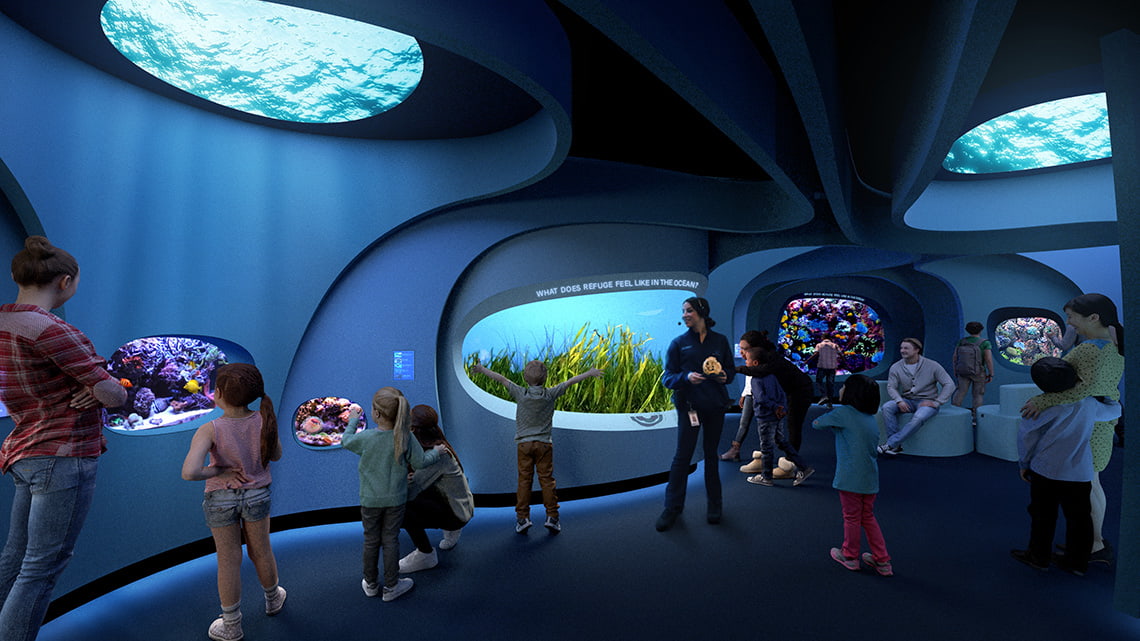
Rendering depicting guests viewing different animal habitats in the future Ocean Pavilion.
The Animal Care Center provides vital space to care for new animals that will live in Ocean Pavilion habitats, like those pictured above. The center also supports our broader animal care and conservation work.

Saying goodbye: End-of-life animal care at the Seattle Aquarium

In a recent series of blog posts, we described what it’s like to care for the 12,000+ animals that live at the Aquarium and how we aim to provide the best lives possible for them. This post is devoted to the final stage: end-of life care and, when necessary, euthanasia—which means producing a humane death that is rapid, avoids pain and minimizes any distress. While many of the animals in our care die of natural causes, euthanasia is a critical and compassionate element of the care we provide. No animal can live forever, and we want the animals in our care to pass as peacefully as possible when it’s time.

Waves crashing against a series of small rocks along an ocean shoreline during sunset.

The Seattle Aquarium has carefully developed a comprehensive set of lifelong care and euthanasia policies and protocols as well as quality-of-life assessments to guide the process of determining when humane euthanasia is called for. These policies and protocols are in alignment with the U.S. Department of Agriculture’s Animal Welfare Act and Animal Welfare Regulations, as well as the standards set forth by the American Association of Zoo Veterinarians and the Association of Zoos & Aquariums. They apply to all animals at the Aquarium, from fur seals to sea stars, as well as rescued animals that we care for (such as sea turtles). These decisions are not taken lightly and always involve veterinary and animal care staff.

Emergency euthanasia and planned euthanasia for health and welfare reasons are two categories of humane euthanasia described in the Aquarium’s policy:

  • Emergency euthanasia may be the most humane and compassionate choice if an animal is in acute distress and we can’t relieve that distress. An example might be a rescued sea turtle with severe injuries from a boat strike that we can’t fix. These situations are always hard, but we do everything we can to minimize pain and suffering. Fortunately, emergency euthanasia is rare at the Aquarium.
  • It’s more common that euthanasia decisions are planned. This is because we monitor our animals closely and usually know when an animal is getting toward the end of its life. This is often due to symptoms that are affecting quality of life and where there are no additional diagnostic, treatment or management options.

“Our harbor seal, Q, was diagnosed with cancer in early 2021,” says Senior Veterinarian Dr. Caitlin Hadfield. “The cancer responded really well to chemotherapy, and he was his normal happy self for several more months. The cancer came back, and we went into what is called rescue therapy. We used his individual quality-of-life assessments, other monitoring and regular discussions with his animal care professionals to help understand how he was doing. We knew that the rescue therapy was unlikely to give him much time, and so we were ready to provide a peaceful euthanasia when we saw signs that he wasn’t thriving.” Q was humanely euthanized in June of 2021.

Regardless of the reason, when euthanasia is deemed necessary, the Seattle Aquarium is committed to always providing appropriate methods that are in the animal’s best interest and that cause the most rapid, painless and distress-free death as possible. 

While the decision to humanely euthanize an animal can be emotionally difficult, it’s also one that needs to be made when the situation calls for it—and we’re grateful for the clear policies and protocols, aligned with governing bodies and best practices in animal care, that help guide us.

Expert care for hundreds of species and thousands of animals

The Seattle Aquarium is home to nearly 400 species and over 12,000 individual mammals, birds fish and invertebrates. And, just like humans, these species have their own distinct care needs that change as they age. “All animals at the Aquarium have care plans that are customized to their species and the needs of the individuals or groups,” says Senior Veterinarian Dr. Caitlin Hadfield, MA VetMB DAZCM DECZM.

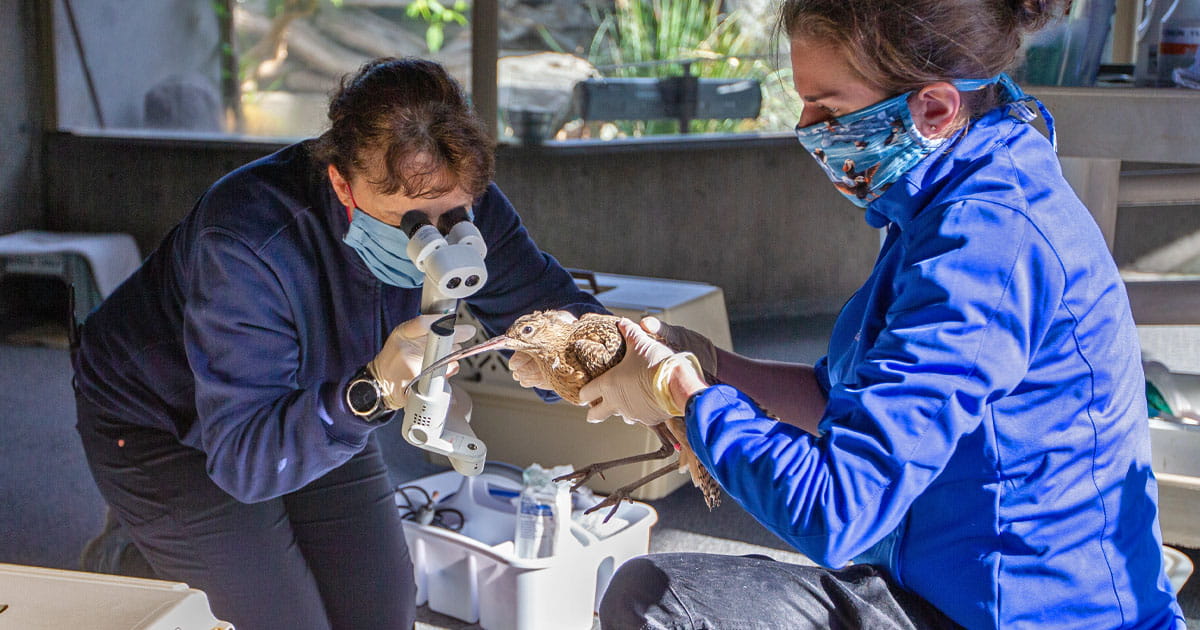
A Seattle Aquarium staff biologist holds a bird in their hands as a staff veterinarian performs an examination on the bird.
Regular health checks, careful observation and daily monitoring help the team provide the best care for the Aquarium's animals.

Being responsible for so many species and individuals means that animal care at the Seattle Aquarium is a team effort. Our veterinary and husbandry staff monitor the health of the animals every day and work together to provide the best life possible for them. “That’s the essence of good animal welfare,” notes Dr. Hadfield. 

What’s it like being the doctor in charge for so many mammals, birds, fish and invertebrates? “It’s a mixture of routine preventative care—like wellness exams and environmental quality assessments—and reactive care, where we respond to changes we’ve seen in the animals or their environment,” says Dr. Hadfield. “With so many animals, we rely heavily on our professional staff and animal records to identify anything of concern, then work together to understand the situation and identify the best solution if needed. Because of the variety of species, I often reach out to colleagues with different fields of expertise so that, together, we can provide a great quality of care.”

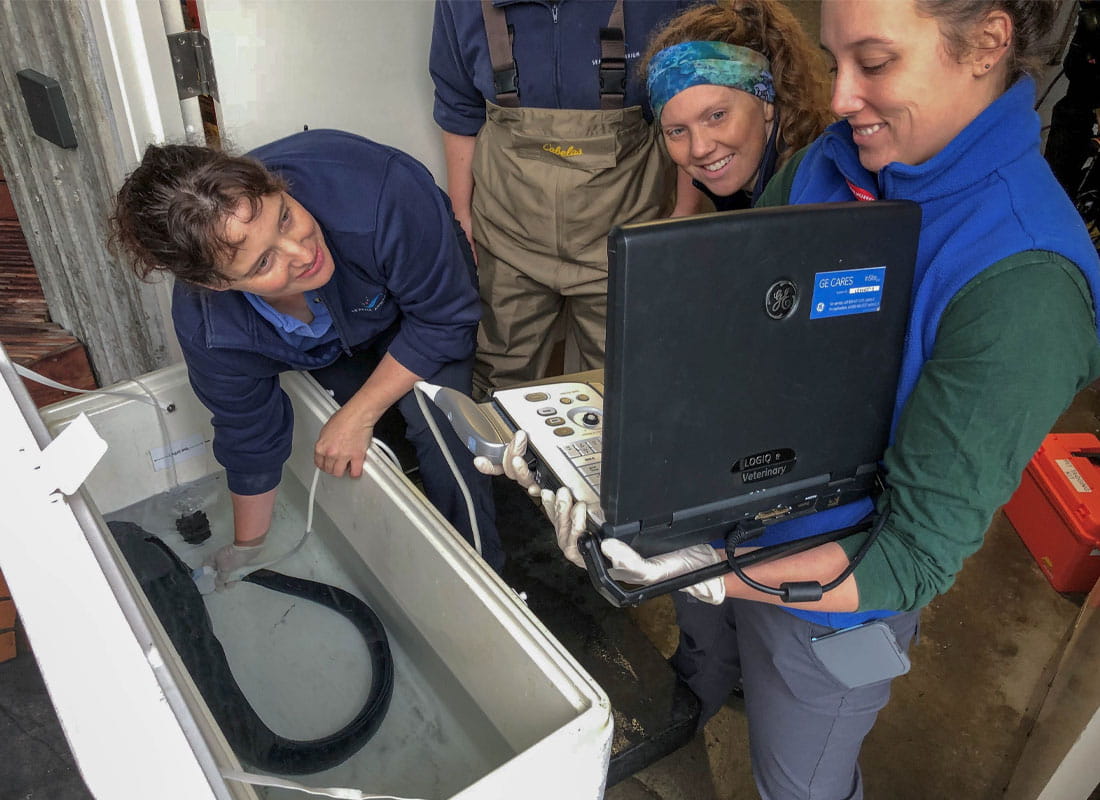
Seattle Aquarium staff stand next to a large tub holding a wolf eel. A veterinarian holds an ultrasound wand against the eel while everyone watches a portable monitor.
Senior Veterinarian Dr. Caitlin Hadfield performing an ultrasound exam on a wolf eel as part of a routine health check.

Long (long!) lives

Here’s a fast fact: The average life span of a male Pacific harbor seal (Phoca vitulina vitulina) in the wild is 26 years1. Longtime Seattle Aquarium favorite Barney is now 36 years old, well above the average in the wild population. “Like any elderly animal, including us humans, he has some health issues, but is enjoying life,” says Dr. Hadfield. 

Barney is just one example of how animals in human care at zoos and aquariums accredited by the Association of Zoos & Aquariums (AZA), including the Seattle Aquarium, tend to live significantly longer lives than those in the wild. “Over the Aquarium’s history, lessons learned and the application of new, innovative technologies designed for animal care have enabled our team to provide a good quality of life well beyond the expected life span for their counterparts in the wild,” notes Director of Life Sciences Grant Abel.

Speaking of Barney…where did he come from?

Visitors often ask about the origins of the Aquarium’s birds and mammals (and not in the “birds and bees” way!). Barney was born right here, in 1985—as was sea otter Aniak, in 2002. In fact, every marine mammal and bird in our care was either born in a zoo or aquarium, like Barney and Aniak, or rescued and deemed non-releasable by the U.S. Fish and Wildlife Service or the National Marine Fisheries Service, like sea otters Adaa and Mishka. Rescued animals that are deemed non-releasable either have a health issue or stranded too young to be able to survive in the wild.

A harbor seal laying on its side on the ground, with one person holding up the seal's right flipper, allowing an Aquarium vet to listen to the seal's chest with a stethoscope.
Harbor seals at the Aquarium are trained to voluntarily participate in their own health care.

Stay tuned for our upcoming blog posts for details about how we care for aging animals, as well as the AZA species survival plans for maintaining healthy, genetically diverse populations of animals within accredited zoos and aquariums. 

Lastly, another fast fact: The Seattle Aquarium was first accredited by the AZA in 1979 and, like all accredited members, is subject to a thorough on-site inspection every five years to renew that accreditation.

Join us on Thursday, January 22 for After Hours: Winter Warmth! For this 21+ event, the always warm and bright Ocean Pavilion will be open late for adult guests.

Today only, your gift will be matched dollar-for-dollar up to $25,000 thanks to the generosity of donors Betsy Cadwallader, J & Tim, and Jess & Andy Peet. Help us reach our $50,000 goal!

End the year with a gift to the ocean.