This site uses cookies. View our Cookie Policy to learn more about how and why.

Regular hours: 9:30 am – 6 pm
Last entry at 5 pm

Tired of doomscrolling? Try kelp scrolling!

We all spend a lot of time on our phones these days. But what if that screen time could help kelp forests?

Welcome to Kelp Quest, a chance for you to participate in the Seattle Aquarium’s marine research.

First, a little refresher. Kelp is a type of algae that provides critical food and habitats to many animal species, including sea otters and salmon. Kelp is also disappearing at an alarming rate. Figuring out how to reverse kelp’s decline is so important that the Aquarium has a research team dedicated to protecting kelp forests. Our Coastal Climate Resilience (CCR) team studies the conditions that contribute to bull kelp thriving or declining in certain areas of the local seafloor, and we share all our research publicly to inform action to protect kelp forests.

The Aquarium’s research team collects images of the seafloor—and we need your help to sort through the data!

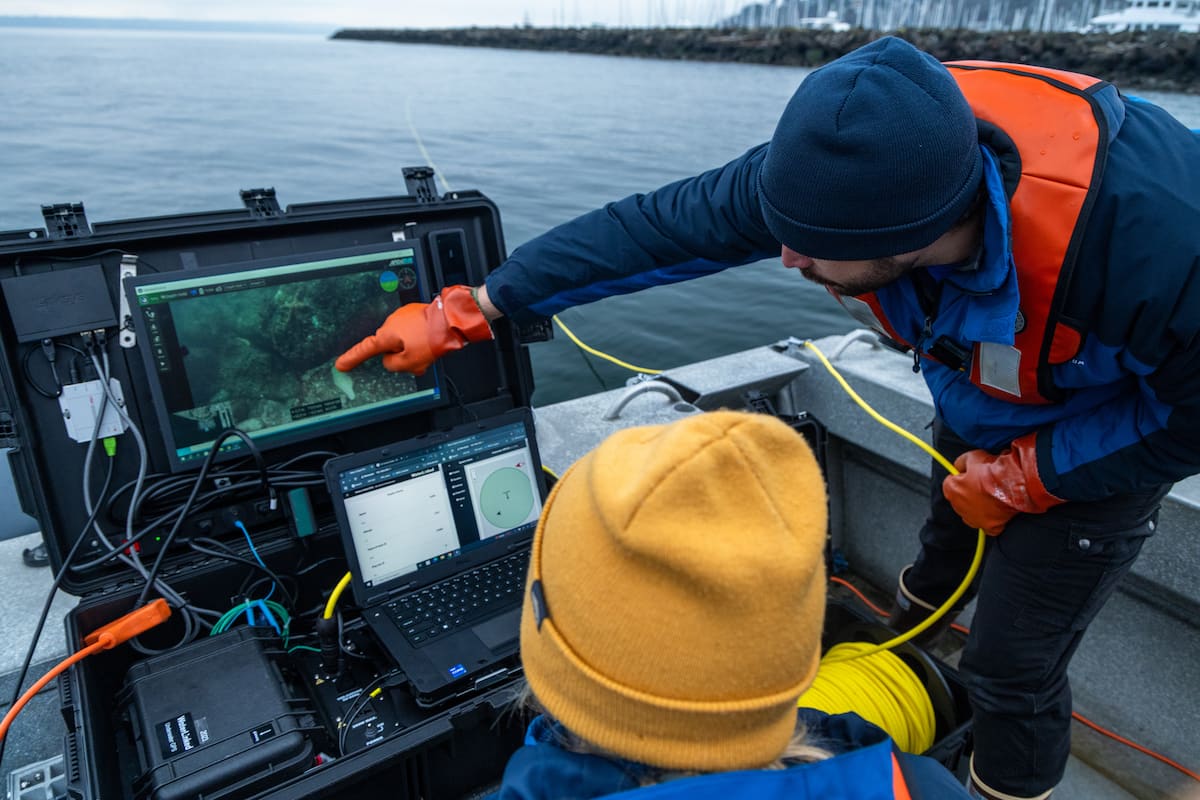
You might be familiar with the Aquarium’s remotely operated vehicles (ROVs). Our CCR team has used two of these relatively lightweight and nimble vehicles to take tens of thousands of images of the seafloor. The team has trained a machine-learning model to identify the animals, algae, objects and seafloor found in our massive library of images.

Models like the one we use are designed for maximum efficiency and low computational cost. These types of models have been around since the 1950s and are frequently used in scientific and environmental research to find patterns in large sets of data. But the Aquarium’s model is still learning and makes mistakes.

That’s where you come in! Anyone with access to the internet can contribute to Kelp Quest by reviewing and interacting with the collected images.

Diving into Kelp Quest

“None of us were born as kelp experts. We all learned through exposure to animals and algae. This approach leverages our natural ability to recognize details and patterns while supporting ocean conservation.”

There are two ways to help. In the “Yes/No” workflow, you can confirm or refute the model’s guess of what is pictured in the image. And in the “Multiple Choice” workflow, you’ll label the image yourself.

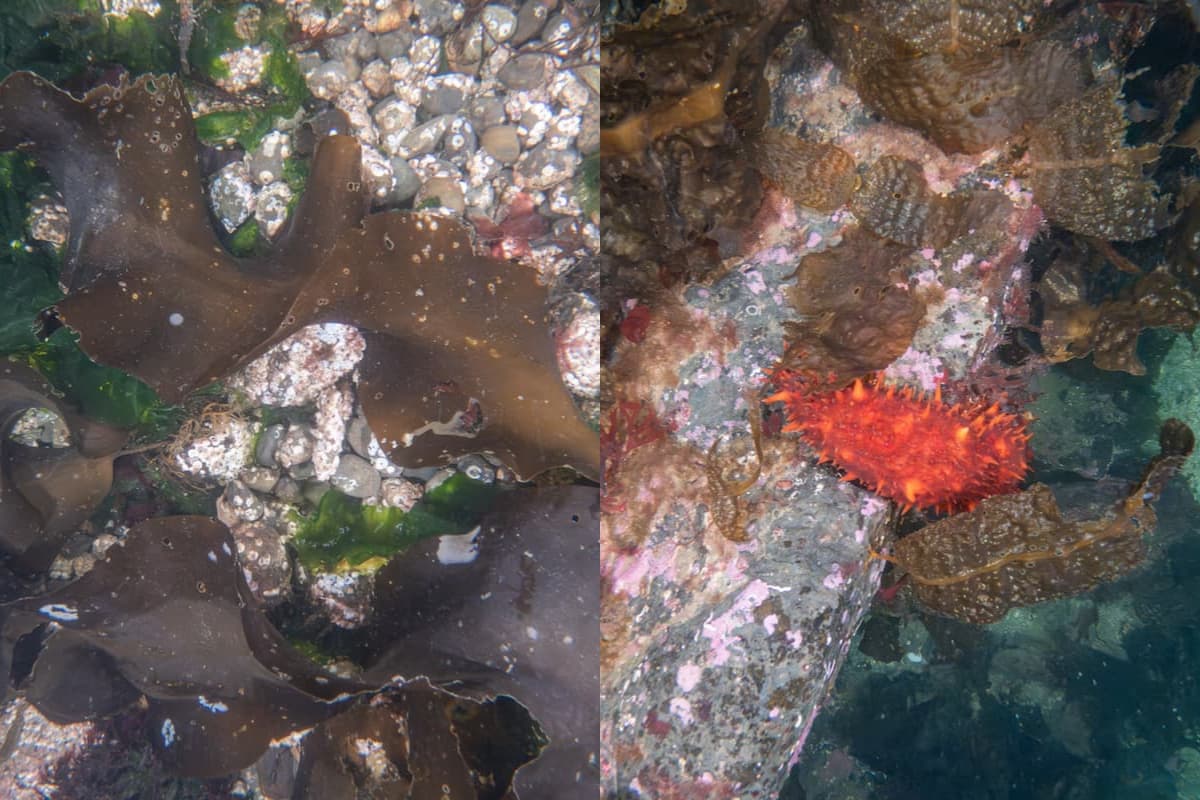
Examples of the types of images you’ll help sort.

Don’t worry if you’re no marine expert! The CCR team has developed a handy “Field Guide” that goes over all sorts of things you might encounter, from kelp and other algae to rocks and car tires. The CCR team is also very active in the project’s “Talk” forum, where volunteers can discuss interesting findings or troubleshoot hard-to-identify images.

By helping label these images, not only are you supporting this project, but you’re also helping train our model to be more accurate, further supporting future marine research.

Science is a team sport

“We really want to make our research as collaborative as possible to boost kelp forest conservation efforts. The more hands we have on this project, the faster we can uncover ecological insights that will better inform conservation."

Kelp Quest is hosted on Zooniverse, a platform built around the idea that many people (including those with no formal training) can collaborate on research projects together. Many of the projects on Zooniverse require going through large amounts of data, something that would take small research teams ages, even with computer assistance.

But with nearly three million registered volunteers around the world, that work can be done much quicker. And as Zooniverse itself points out, humans are uniquely good at pattern recognition, often even better than computers, as is the case in Kelp Quest.

As an open-source and open-access research project, Kelp Quest is set up in a way that supports the idea that science is a team sport. Open source means the computer code we use to run the model is publicly available for anyone to use and improve. And open access means we make the results of our research (including the model) publicly available whenever possible.

We make our findings available to help promote kelp conservation and further research.

In keeping the project open like this, the CCR team hopes to encourage collaboration and transparency in their work. One of the unexpected benefits to this is that some volunteers have already reached out to get involved with the project or to suggest ways to improve it.

Salish Sea superstar

“Kelp forests and the species that rely on them are beautiful, ecologically important and increasingly vulnerable to human impacts and climate change. We hope Kelp Quest will connect people to this underwater world while directly contributing to research and management decisions that advance kelp forest conservation and restoration.”

At the core of this research is the question: What factors contribute to kelp forests thriving or declining?

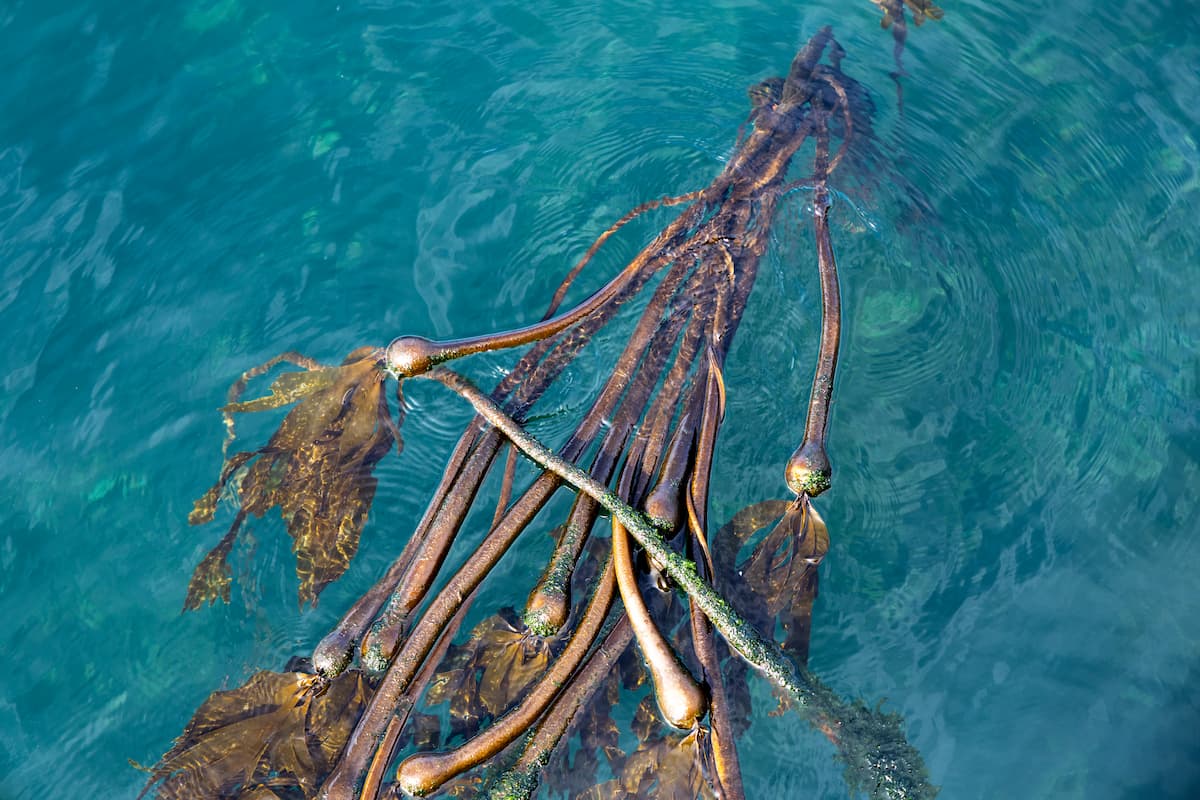
Bull kelp is a key player in many of the Pacific Northwest’s nearshore ecosystems.

And that’s an important question when it comes to Puget Sound’s marine ecosystem. Like the coral reefs found in warm waters, kelp forests are hotbeds of biodiversity. They serve as habitats for many species, including nurseries for young salmon and rockfish.

These mighty undersea forests also protect shorelines and enrich coastal communities. And the Pacific Northwest’s Indigenous communities have used kelp and stewarded coastal ecosystems since time immemorial.

Whenever you engage with the Seattle Aquarium, be it online or in person with a visit, you directly support vital marine conservation work. Talk about being “kelpful!”

Meet the team

Want to know more about the dedicated scientists leading the project? Read on!

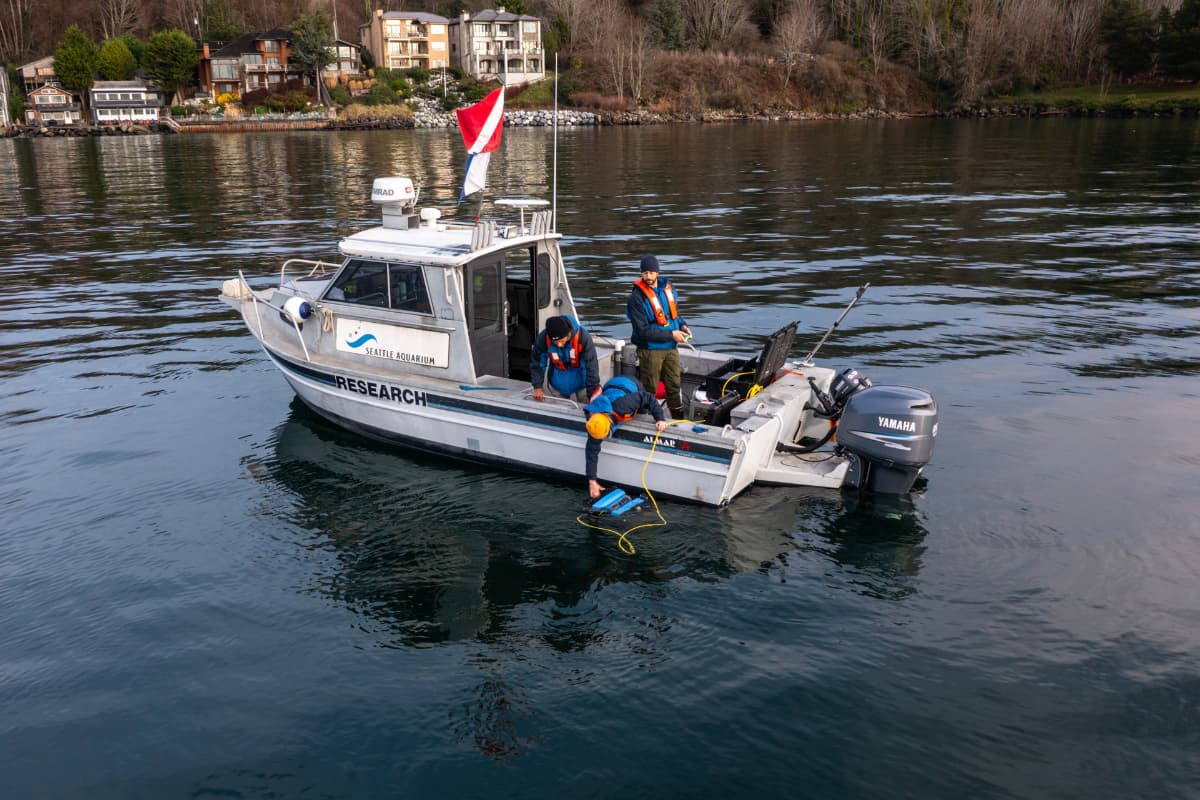
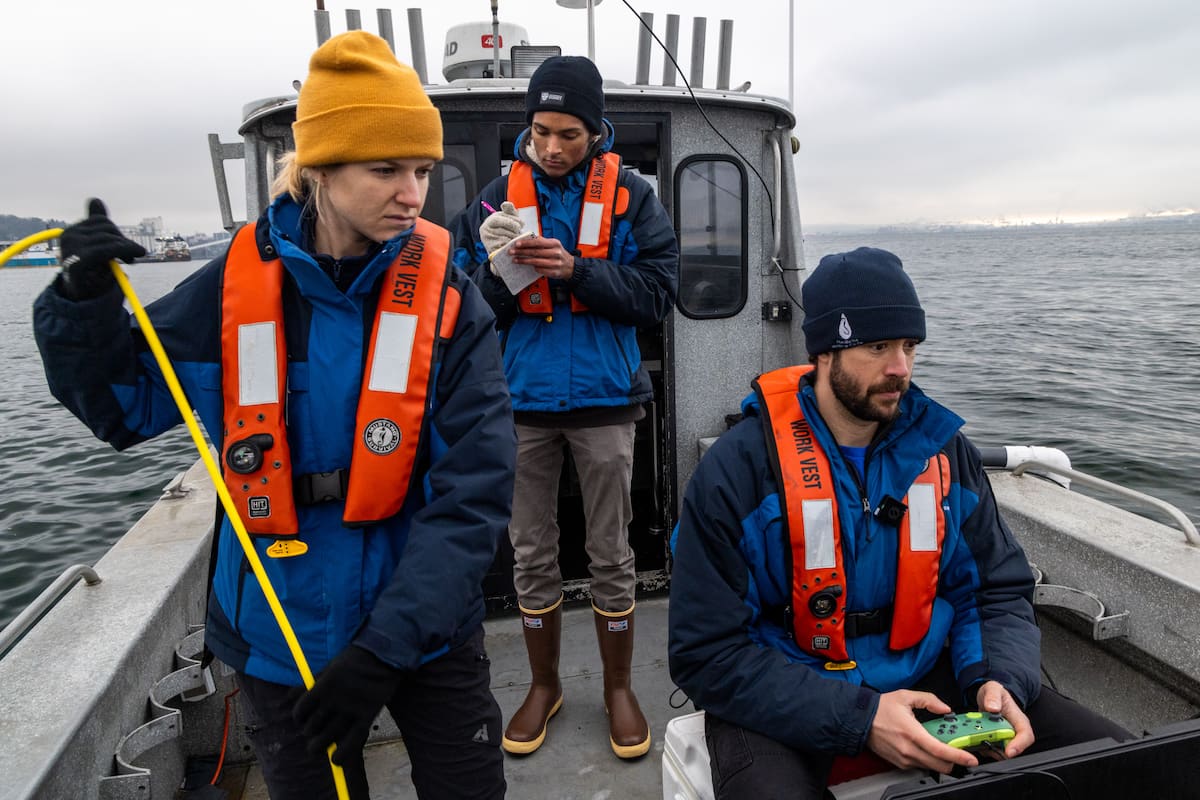
(From left to right) Megan Williams, Reid Thomson and Zachary Randell conduct field research in Seattle’s Elliott Bay.

Dr. Zachary Randell, Ph.D.

Senior research scientist

Zach grew up in Anchorage, Alaska, and started scuba diving there when he was 15. His passion for ocean exploration led him to pursue scientific scuba diving at the University of California, Santa Cruz and complete a dissertation at Oregon State University, focusing on long-term kelp forest dynamics, underwater experimentation and dynamical modeling. He has always been eager to explore underwater, and this project allows him and his team to use cutting-edge ROVs and data analysis to study the ocean in new ways.

Megan Williams, M.S.

Research scientist

Megan grew up in Seattle, where sailing and exploring tide pools fostered an early appreciation for the beauty of Puget Sound. That connection to the marine environment led her to James Cook University in Australia, where she studied how coastal ecosystems respond to change. She has played a key role in advancing the CCR team’s spatial analysis and machine learning work and brings a strong field perspective to the team. She remains inspired by Washington’s rugged, green waters and is committed to protecting the natural places that shaped her life for future generations.

Reid Thomson, B.S.

Research technician

Despite his upbringing in the Midwest, Reid developed an unwavering passion for marine life at an early age. Summers spent constantly in and around lakes and streams fused with a love of nature documentaries to drive his fascination with the mysteries held by even larger bodies of water. Reid’s curiosity led him to pursue a degree in marine science at Boston University, where he refined his passion toward a career in marine research. He has a particular fondness for fieldwork that helps him explore Washington’s beautiful, rugged coast.

Getting to know Ruby, the new southern sea otter in our care

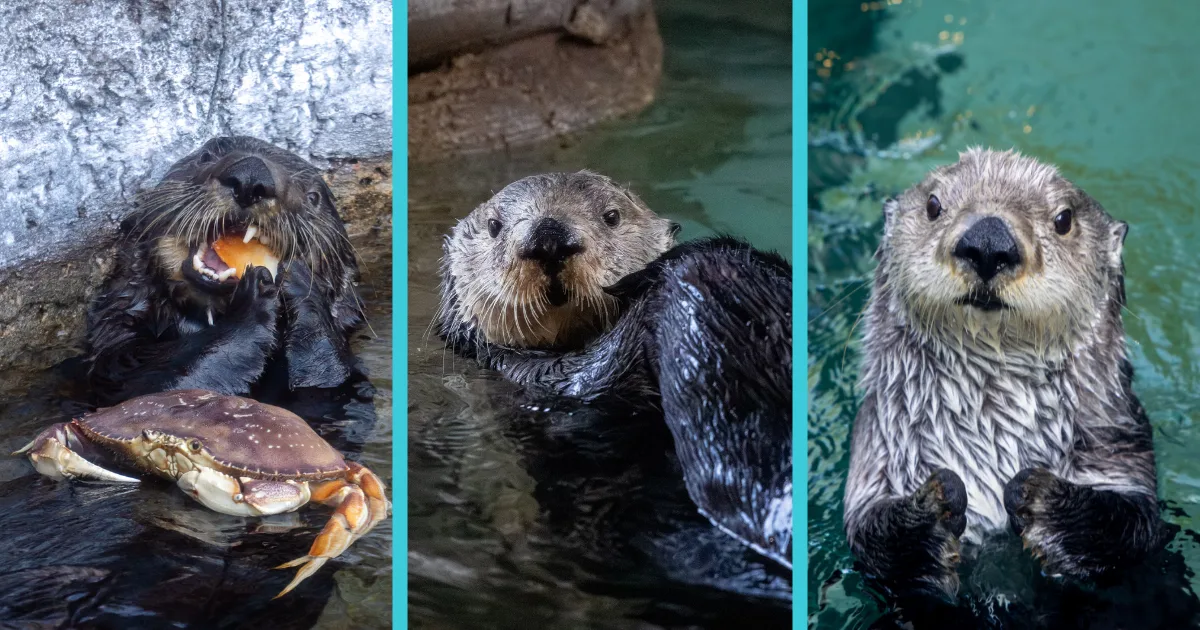
Have you heard the news? The northern sea otters in our care, Mishka and Sekiu, have a new habitat-mate! Ten-year-old southern sea otter Ruby joined us on November 19, moving from her former home at the Monterey Bay Aquarium (MBA).

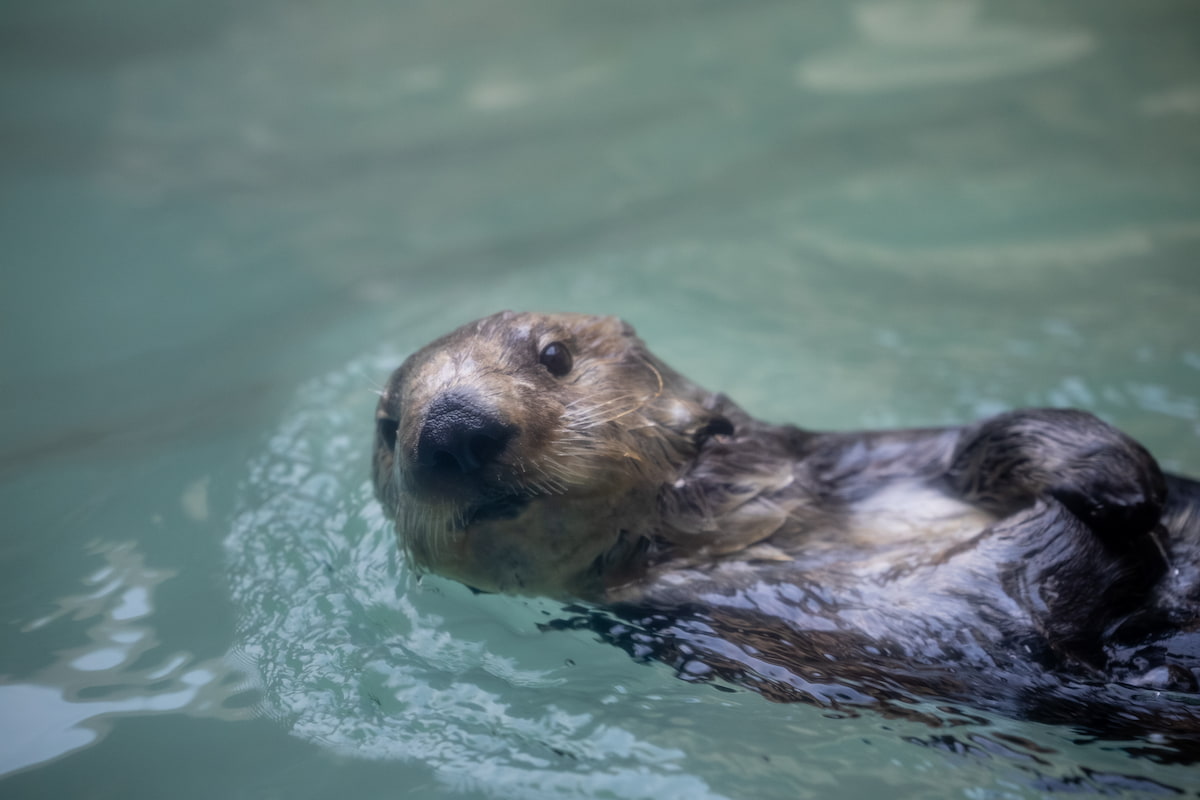
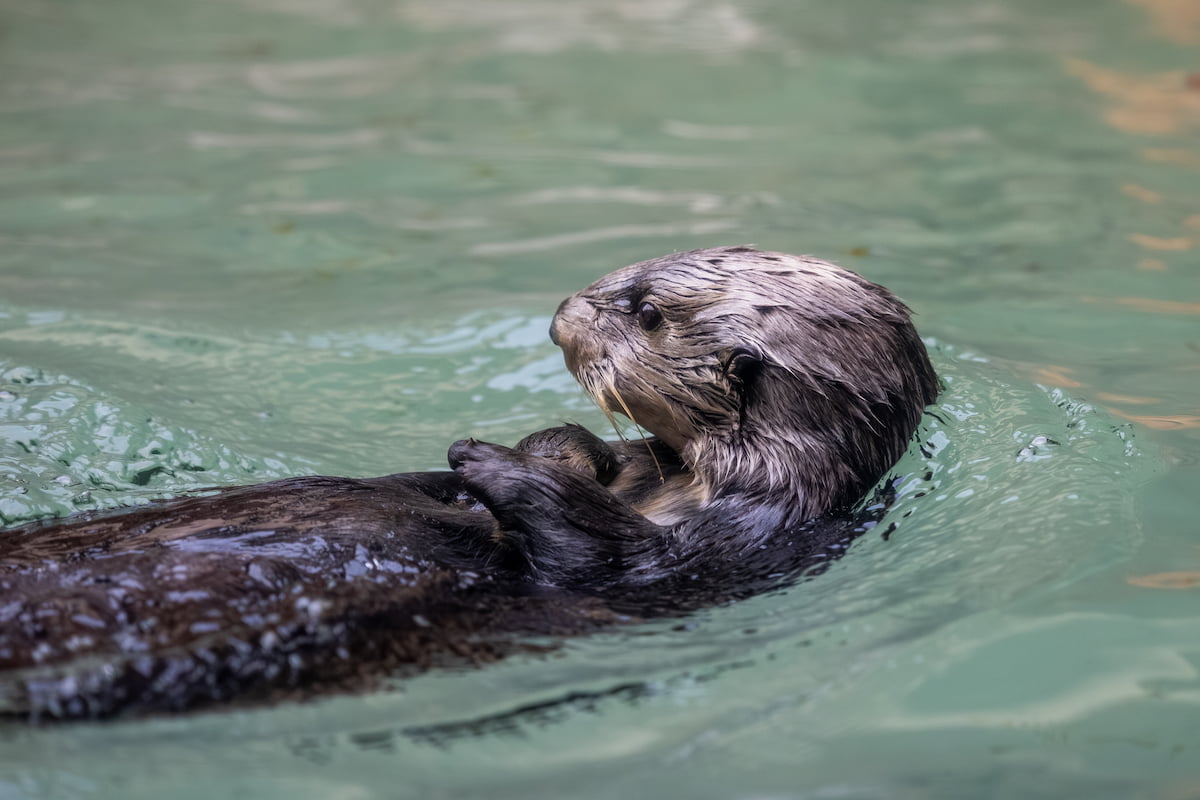
Ruby floating on her back.

Welcome, Ruby!

Starting (very) small

Ruby was found, stranded, as a newborn pup in September of 2015. Weighing just 1.9 pounds, she was one of the smallest pups her rescuers had ever seen.

She was raised behind the scenes at MBA in their sea otter surrogacy program. After several attempts at having her live on her own in the wild, the team at MBA found that she had become dependent on humans for food. She was ultimately deemed non-releasable by the U.S. Fish and Wildlife Service and went on to join MBA’s sea otter habitat in 2022—where she charmed guests and became a beloved ambassador for her species.

Ruby swimming in the sea otter habitat.

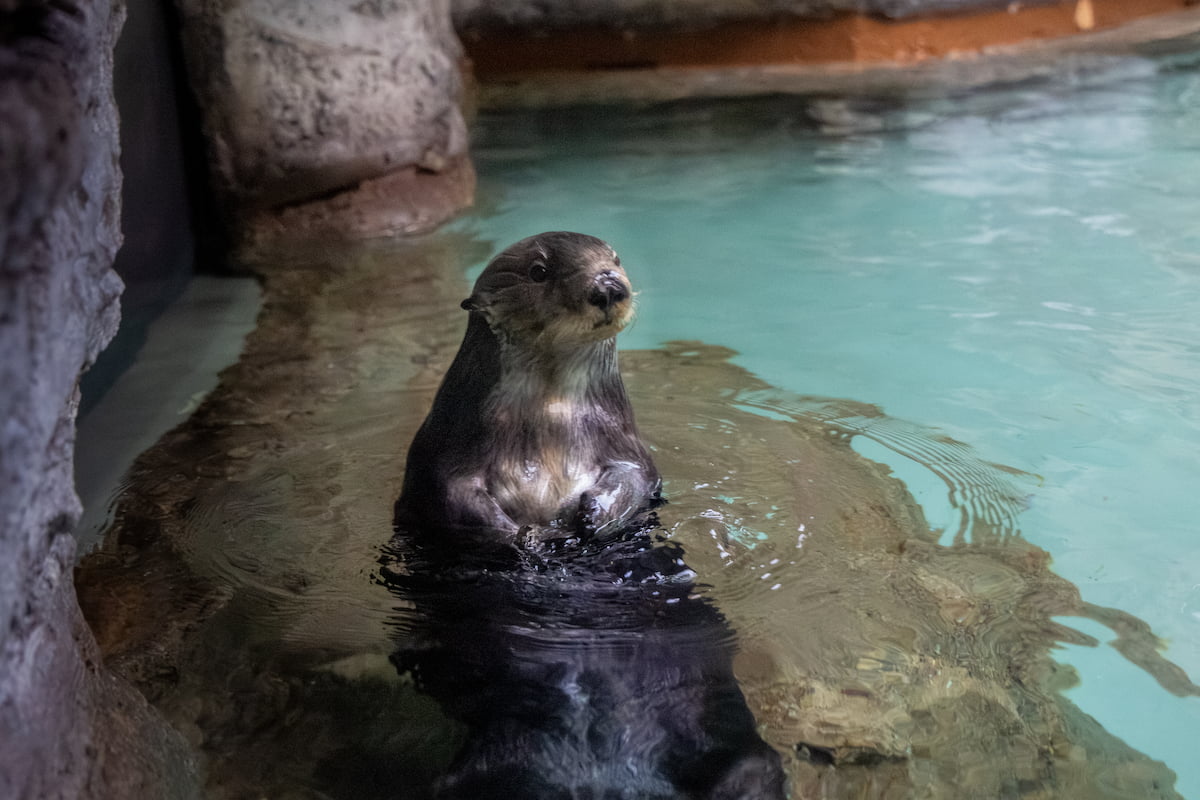
Ruby getting to know her new habitat at the Seattle Aquarium.

From Monterey to Seattle: A true west coaster

For months, our care team worked closely with MBA’s, shadowing their care of Ruby, learning about her history, likes and dislikes, social needs and more. Collaboratively, the teams decided that our otter population would be a great fit for her.

As we mentioned above, Ruby is the first southern sea otter in our care. Southern sea otters are considered a distinct population. And, while southern and northern otters don’t share wild habitats, they do happily cohabitate in zoos and aquariums—their care needs are identical.

(What’s the difference between northern and southern sea otters? It basically comes down to two things: their range and their size. Northern sea otters have a range from Washington state to British Columbia and Alaska. Southern sea otters are found in California. And northern sea otters are larger, with males weighing up to 100 pounds and females up to 70—while southern males top out at about 65 pounds with females around 45 pounds. For context, Ruby’s current weight is 44 pounds; with Mishka at 50 and Sekiu at 54.)

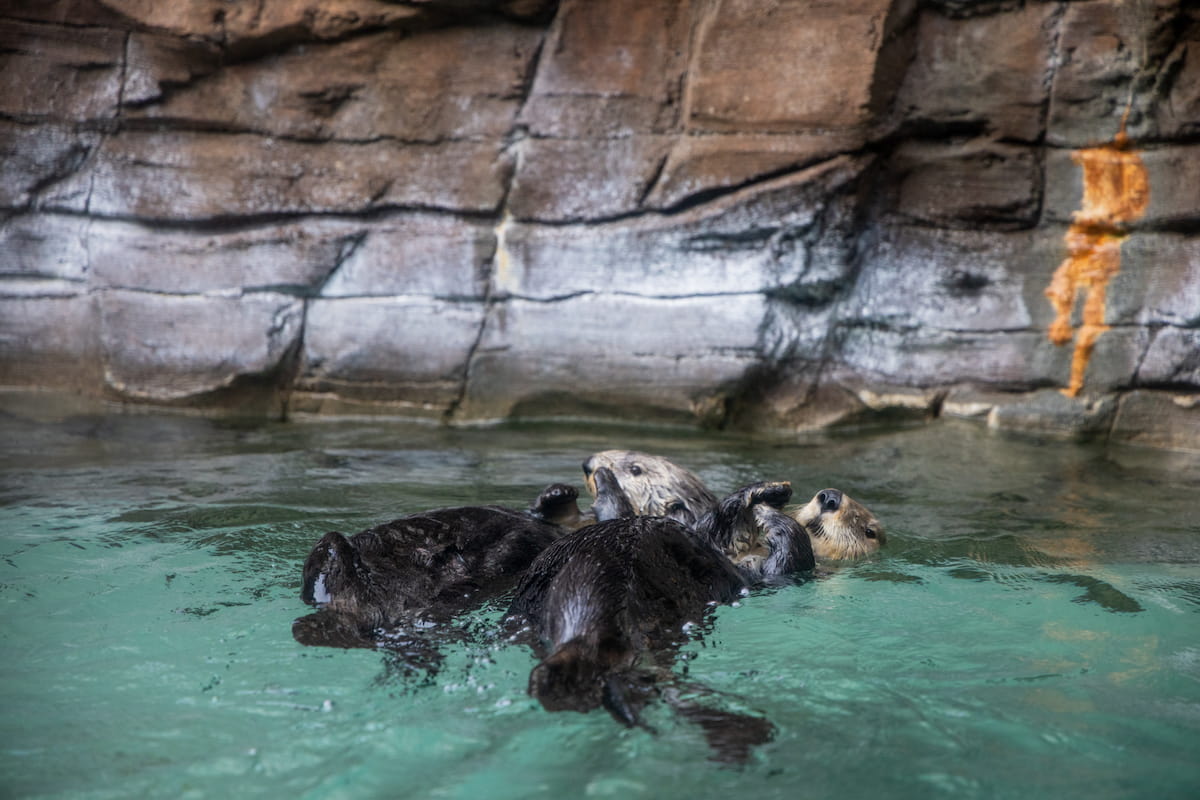
Ruby and Sekiu floating on their backs together.

Ruby relaxing with Sekiu.

Settling in

After making the journey to the Seattle Aquarium on November 19, Ruby was quickly introduced to her new habitat—and then to Mishka and Sekiu. In short, things have been going swimmingly!

Comments Senior Animal Care Specialist Kelli Lee, “When introducing an animal into a new habitat, we expect them to be active and explore every inch. After they’ve had a chance to check out their space, we look for behaviors that show they’re comfortable, such as resting and eating. For sea otters specifically, we also look to see that they’re grooming, since that’s essential for staying warm.” (Learn more about how amazing sea otter fur is on our sea otter webpage!)

Kelli continues, “When introducing sea otters, we expect them to interact with each other by sniffing each other’s faces and heads. Then, after this typically brief interlude, we continue to make sure they’re all grooming, eating and resting.”

“They’ve been cohabitating well,” says Animal Care Specialist Michelle Munoz. “Ruby tends to follow Sekiu the most. You can see her resting with Sekiu in the main habitat, and at night, Mishka and Sekiu will haul out on deck by their mats, so Ruby will join them.”

Ruby floating on her back.

Ruby, we’re so glad you’re here!

Welcome to the Emerald City, Ruby!

Ruby’s preferences quickly became clear to her caregivers. Notes Kelli, “Ruby enjoys interacting with enrichment, such as puzzle feeders, a lot. Her favorite food is shrimp and her least favorites are surf clam siphons and stomachs.” (Can you blame her?)

She adds, “When spending time outside of feeding sessions, she likes to rest in areas of the water that are shallow, such as the arch between the two habitats.” Want to see what she’s up to? Check out our live webcam!

In the weeks and months to come, we’ll continue working with MBA as we learn more about Ruby. “Getting her comfortable in the space is our priority so she can do all the things a sea otter does—like grooming and eating,” comments Michelle. “Building a relationship with Ruby will help us work with her in the long run and also allows us to start training new behaviors with her!”

A decades-long commitment to sea otter conservation

For 30+ years, the Seattle Aquarium has led in the research of sea otters in Washington and contributed to recovery efforts with partners and collaborators around the world. We also have a long history of caring for individual northern sea otters who are unable to live in the wild.

Ruby’s arrival represents our continued commitment to sustaining and recovering sea otters, from California to Alaska and beyond. As a nonprofit, this work—both in the field and right here at the Aquarium—is only possible thanks to the support of our community. Every visit to the Aquarium supports this work and our conservation mission overall. We thank you!

We can’t wait for you to meet Ruby. Plan your visit today!
Dive down memory lane with us to celebrate Barney’s 40th birthday!

Editor’s note: This story was originally published in September 2024 for Barney’s 39th birthday, as he approached the human equivalent of 100 years old. Barney passed in March 2025. To celebrate his life and legacy, we’re republishing this story on what would have been his 40th birthday.

Barney the harbor seal was born right here at the Seattle Aquarium on September 14, 1985! And he’s been stealing the hearts of staff and guests alike ever since, while inspiring millions to help protect his beloved and charismatic species.

In his golden years, Barney enjoyed the simple things in life, like a nice nap in the sunshine, getting his teeth brushed daily and eating some of his favorite snacks, including all things fish. He was also a fan of his birthday celebrations, as you’ll see in the photos below. Dive down memory lane to revisit some of those celebrations with us as we commemorate Barney’s extraordinary life!

2024

Centennial celebration—happy 39th, Barney!

According to the Association of Zoos & Aquariums (AZA), of which we’re proud to be an accredited member, the median life expectancy for harbor seals in zoos and aquariums is about 25 years. At 39, Barney has lived well beyond that. In fact, his biological age is about the equivalent of a 100-year-old human!

Give him—and his caretakers—some love on our Facebook or Instagram to mark the occasion.

2023

38 years young!

Barney’s 38th birthday bash was complete with a “cake” made from ice and 38 frozen fish!

2022

37 looks good on you

We welcomed harbor seal Casey earlier in 2022, and all three “roomies”—Barney, Hogan and Casey— dug into a delicious, fish-filled ice treat together.

2021

Having his cake and eating it too

Barney rang in his 36th birthday by tucking into a towering ice treat “cake.”

2020

Pandemic party

While we couldn’t invite the public to celebrate with Barney because of our temporary, pandemic-related closure, our incredible animal care team made sure he felt the birthday love.

2015

Just another enriching birthday

Animals at the Aquarium receive enrichment every day (read more about it on our webpage). Special occasions, like Barney’s 30th, give our animal care team a fun reason to get creative with it.

2013

28 and looking great!

In 2013, Barney celebrated his birthday with cake in his habitat’s new haul-out space*! Generous support from people like you allowed us to renovate and expand the harbor seal habitat back then.

*What’s that? Space that the seals use to go onto dry land to nap, groom, cooperatively participate in their own health care and, in Barney’s case, eat a birthday treat.

Your gift today will make a difference too: Please consider a donation of $19.85, $39 or any amount on behalf of Barney’s birthday!

2012

Awww, you shouldn’t have

Shown here in the habitat’s previous haul-out space, Barney looks ready to devour the ice treat that our animal care team prepared for him.

2011

Stealth celebration

What’s better on your 26th birthday than a delicious ice treat, just waiting for you to notice it as you casually swim by?

2010

Blow out the candles!

Here’s a throwback to Barney’s 25th! Our animal care team went all out with an ice treat complete with “candles” for him to crunch and munch.

1985

Baby Barney’s birth day

Photo: Seattle Post-Intelligencer

How’s this for a sweet, vintage photo of newborn Barney alongside his mom, Clyde? For perspective on how long ago that was in terms of other Pacific Northwest icons, Barney was born the same year that downtown Seattle’s tallest skyscraper, Columbia Center, opened; two years before the band Nirvana was formed; and 15 years before the Kingdome was demolished. Just our humble opinion, of course, but we think he’s the best and most charming icon of the bunch. Happy, happy 39th to beloved Barney!

Helping hands: lending expertise to marine mammal rehabilitation in California

This spring, a toxic algal bloom has sickened hundreds of California sea lions, elephant seals and other marine animals along the Southern California coast. The team at the nonprofit Marine Mammal Care Center (MMCC) in Los Angeles has been hard at work, rescuing and rehabilitating animals who have become too sick to survive on their own. And they recently called on our own Senior Veterinary Technician Lindy McMorran to assist in their life-saving efforts.

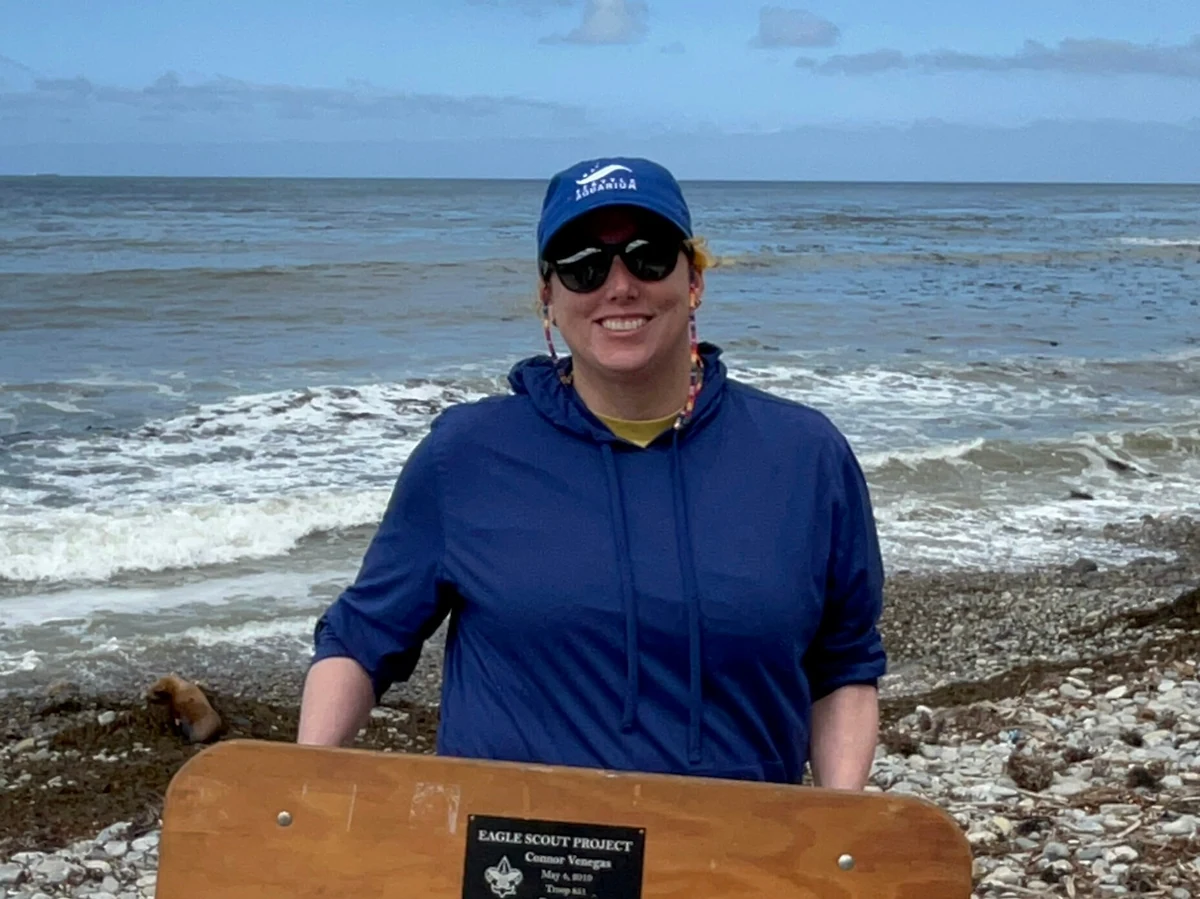
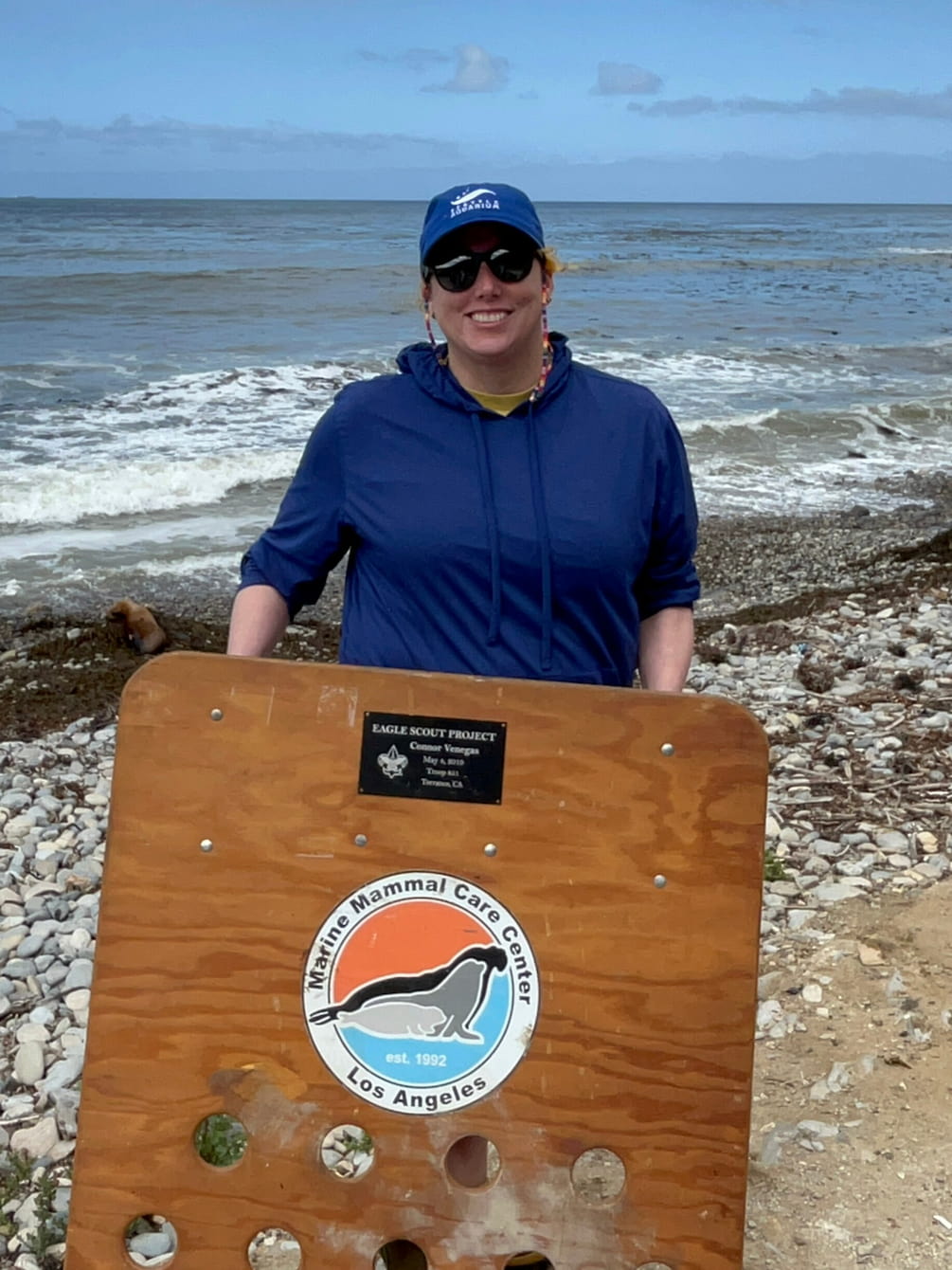
Lindy standing on a beach. She is wearing a blue hat and jacket, and she is holding a wooden herding board.

Senior Veterinary Technician Lindy McMorran on the beach after releasing a rehabilitated California sea lion back to the ocean.

Domoic acid—not part of a healthy diet

The cause of all the illness? Domoic acid, a neurotoxin that’s produced by harmful algae called Pseudo-nitzschia. In the right conditions, the algae can multiply quickly, causing a bloom. The algae contain toxins; when ingested in sufficient quantity, they can sicken marine mammals or birds that eat them. Without human intervention, domoic acid in marine mammals can result in seizures, unusual behaviors and, ultimately, death.

Such blooms have become relatively common and they’re on the increase—this is the fourth year in a row that the experts at the MMCC have needed to respond to animals on Southern California shorelines following a bloom. Adding to the concern, this year’s bloom started earlier than the previous ones; the MMCC has already had more patients (meaning marine mammals) come through their hospital in 2025 than in all of 2024. Scientists suspect that climate change and warming seas are the root cause of the increase in these harmful algal blooms.

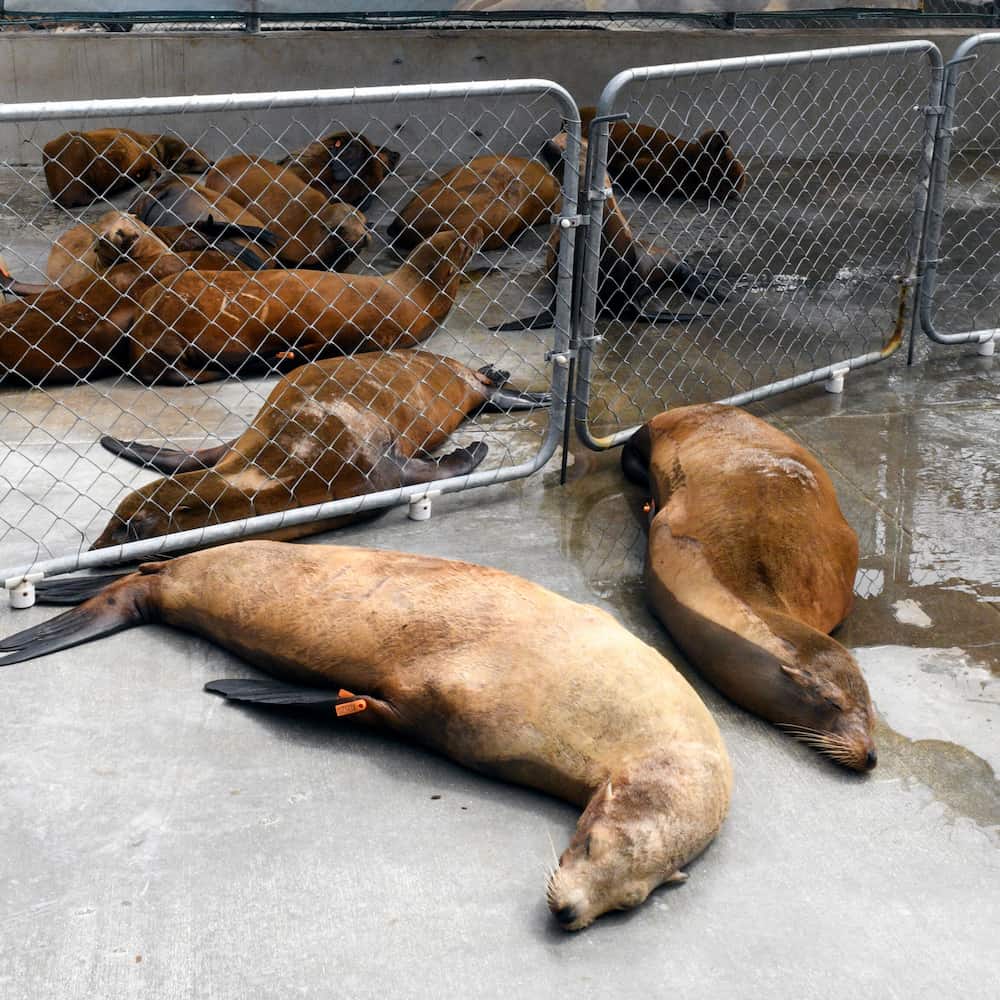
California sea lions resting on the ground.

California sea lion patients in care at the MMCC.

The MMCC (and Lindy!) to the rescue

The best hope for animals with domoic acid poisoning is to provide supportive care to assist with recovery, flushing the toxin from their systems and helping to manage the symptoms. But first, the animals must be rescued from the beach and brought to an authorized rehabilitation facility, such as the MMCC’s hospital.

“Animals might stay for as little as a few weeks to multiple months,” says Lindy. Recovery time depends on a number of factors, including the animal’s species, weight, age, severity and chronicity of symptoms, and more. “If they’re older or have had a longer exposure to domoic acid, it’s tougher on them,” Lindy adds.

An ideal skill set to help during the crisis

Lindy is uniquely qualified to assist in these efforts. As a veterinary technician, she’s been trained to work with a variety of animals but she’s concentrated her work on marine animals in particular. Before joining us at the Aquarium, she did a sea turtle rehabilitation internship in Florida and helped with marine mammal rehabilitation in Northern California. She also volunteered with SR3, a local organization focused on marine animal rescue and rehabilitation. And, impressively, she was the second person in the continental U.S. to earn a new credential, Certified Aquatic Veterinary Technician, from the World Aquarium Veterinary Medical Association (WAVMA), in 2023. (Check out our web story to learn more!)

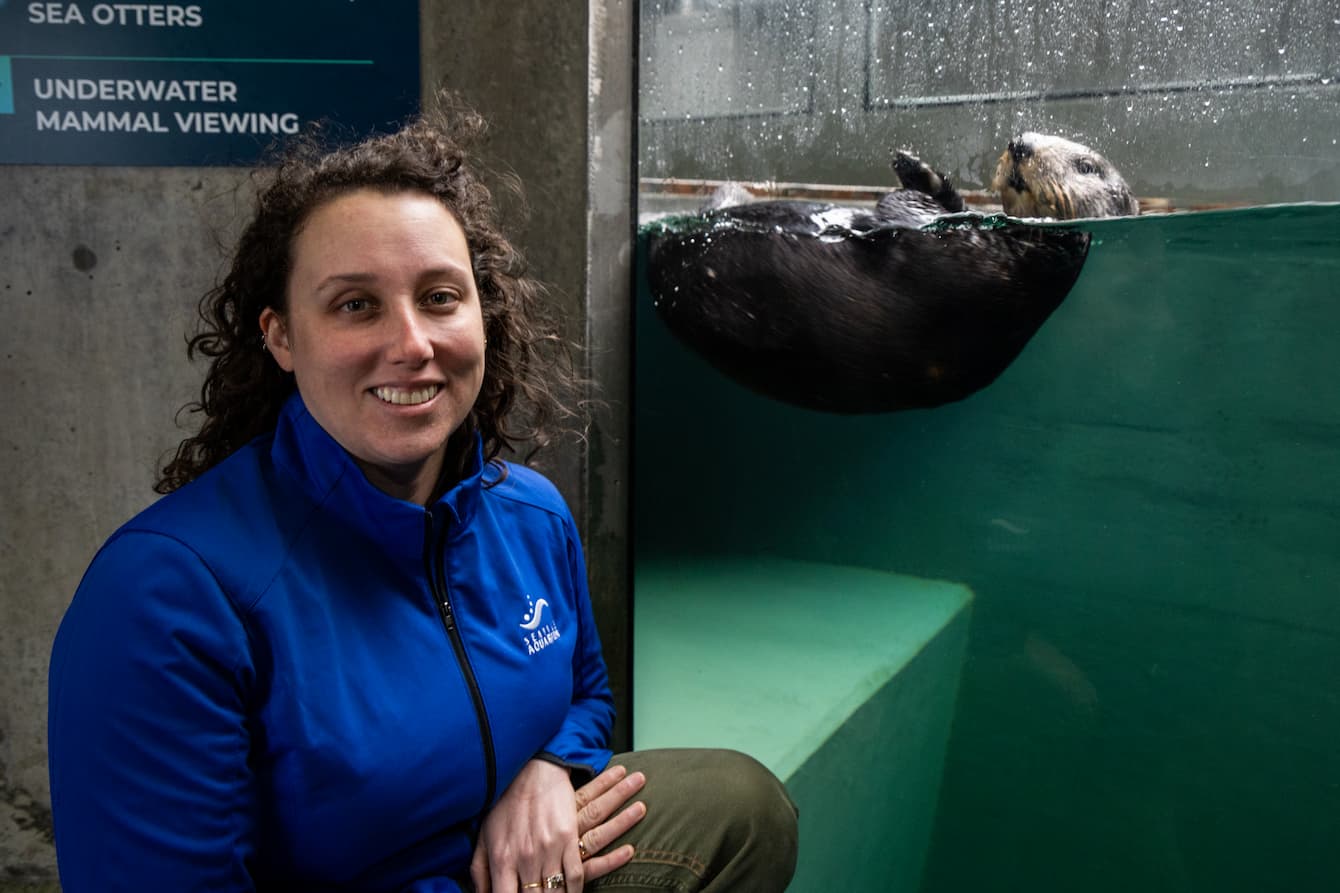
Lindy crouching next to the sea otter habitat at the Seattle Aquarium. Sekiu the sea otter swims behind her.

Lindy at the Seattle Aquarium’s sea otter habitat.

A day in the Lindy life

“There was no day that was the same,” says Lindy, speaking about her week with the MMCC. “I assisted with exit exams and medical procedures, processed lab samples, did a lot of cleaning—whatever was needed, I was happy to help. It allowed the team to catch their breath a bit and that was wonderful to see.”

“By the time I arrived on May 12, they were already admitting fewer patients than in the previous few weeks and were working on releasing patients who had been rehabilitated,” she continues. “What was impactful was seeing the shift. On my first day, we had over 80 patients; by the last day, it was more like 50.”

“We typically see about 300 patients per year, and that’s what we budget for. By April we had already over 400 patients. MMCC’s capacity is stretched when these mass strandings occur, and without the support of our network of partners we would struggle to care for our patients. Organizations like the Seattle Aquarium stepped up for us in a time of need and we are so grateful for their help.”

Releasing recovered animals—the very best part

Lindy was also able to assist with releases, one of the most rewarding aspects of her time with the MMCC. Animals who have received a clean bill of health are brought to a beach in crates and, after a team member opens the door, what happens next is up to the individual. “Each animal has their own exit,” comments Lindy. “Some stay, some bolt to the water, some exit and then need to take a nap on the beach,” she laughs. “It’s a great reminder that they’re all unique.”

“Due to the hard work and dedication of MMCC’s staff and volunteers, we were able to release about 25 animals while I was there,” she concludes. “I was grateful for the opportunity to provide a little help during a challenging time.”

Lindy McMorran assists with the release of a California sea lion. Herding boards are used to help direct animals toward the water, protecting the animals and any nearby people.

A cautionary tale

“Algal blooms are an increasing concern,” says Lindy, “And the kind of thing that’s taking place in Southern California could also happen in the Pacific Northwest.” As we noted at the top of this story, climate change and warming ocean waters are thought to be behind the increase in harmful algal blooms.

The good news is that each of us can make a difference for ocean health. A few ideas: Contact your legislators to urge support for legislation that protects the ocean and its inhabitants. Use public transportation, fly less, and limit your use of single-use plastics. Sign up for coastal/beach cleanups, as well as opportunities along rivers, streams and creeks—most of which drain into Earth’s one ocean. Looking for other ideas? Check out our act for the ocean webpage or ask one of our friendly interpreters on your next visit to the Aquarium!

Farewell to Barney

It’s a very sad day at the Seattle Aquarium as we say goodbye to Barney the harbor seal. As we shared last September, in a story commemorating his birthday, Barney was quite old: At 39, he was roughly the equivalent of a 100-year-old human—and one of the oldest known harbor seals in human care.

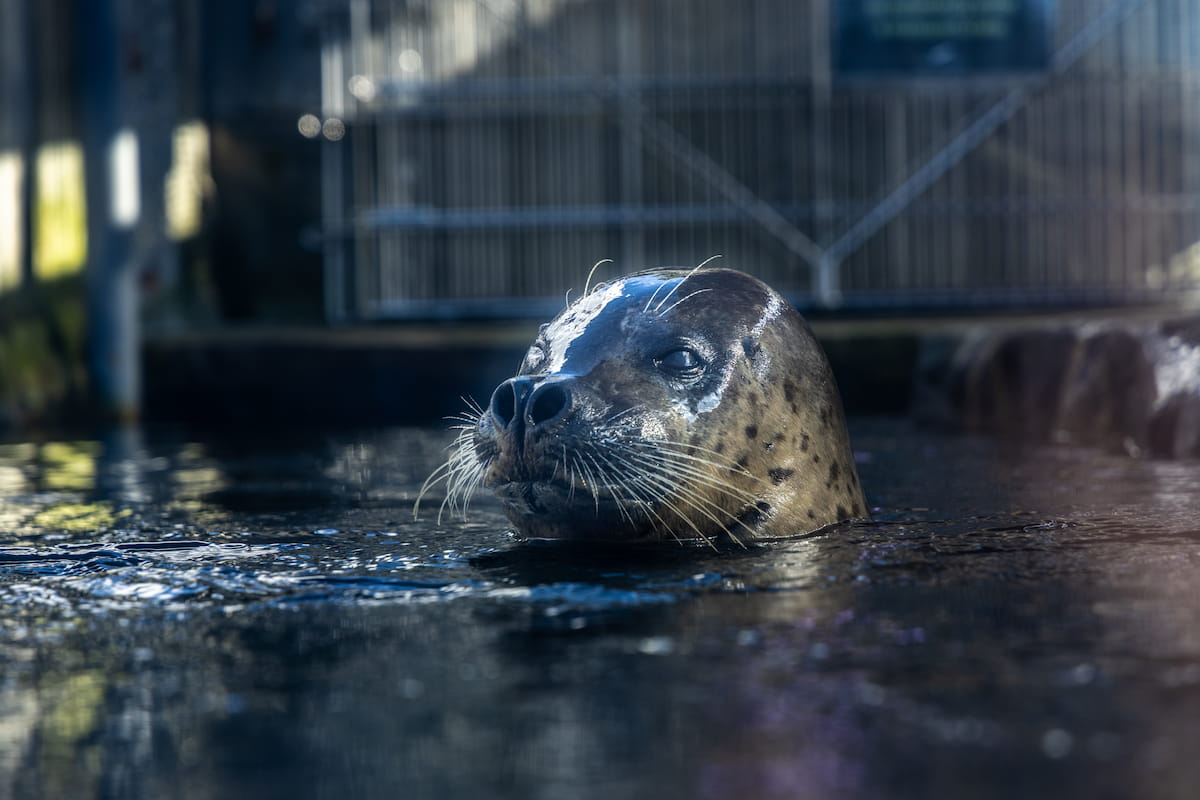
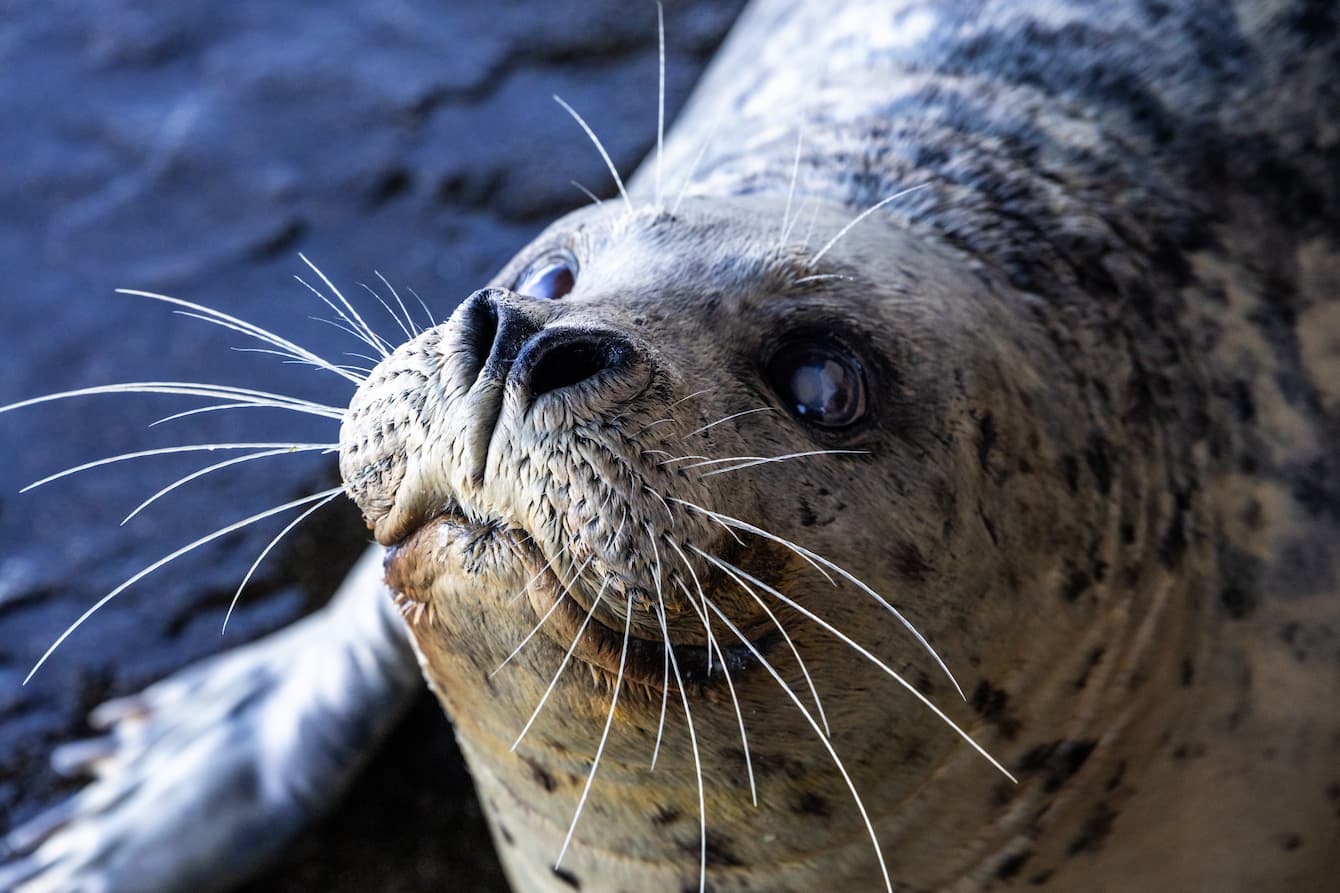
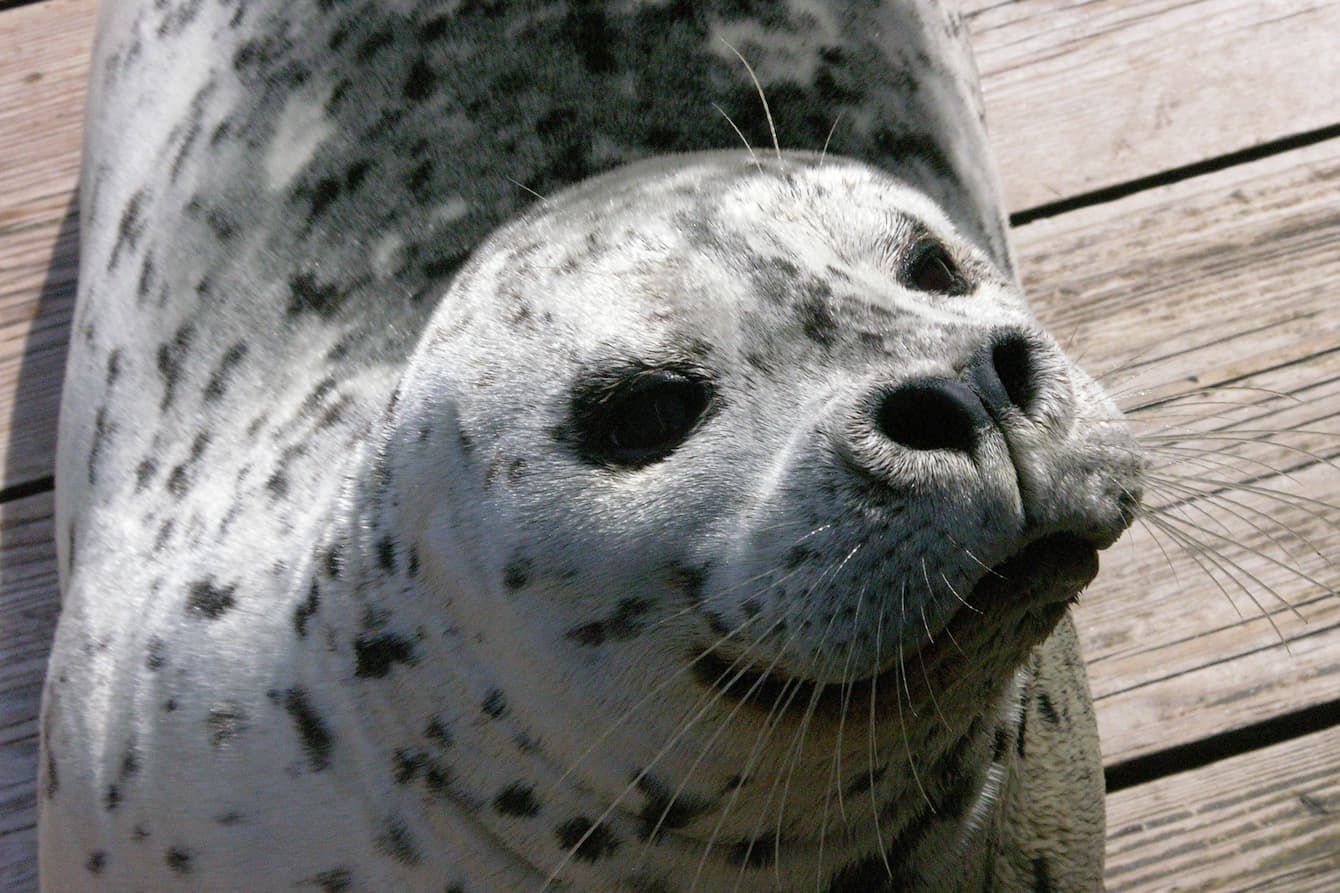
Harbor seal Barney looking up and smiling.

Beloved by many, Barney will be deeply missed and remembered always with love.

Director of Animal Health Dr. Caitlin Hadfield and members of our veterinary and animal care teams had been working closely with Barney for years, making sure he was as happy and comfortable as possible. Just like many elderly humans, he developed some age-related health issues over time but overall had been doing well.

Recently, however, he showed an acute decline. Based on his prognosis and how he was feeling—his quality of life—the team made the difficult decision to humanely euthanize him on the morning of March 14. “We know that many in the community will join the Aquarium’s staff and volunteers in mourning this loss. Barney will be remembered and missed,” says Aquarium President and CEO Bob Davidson.

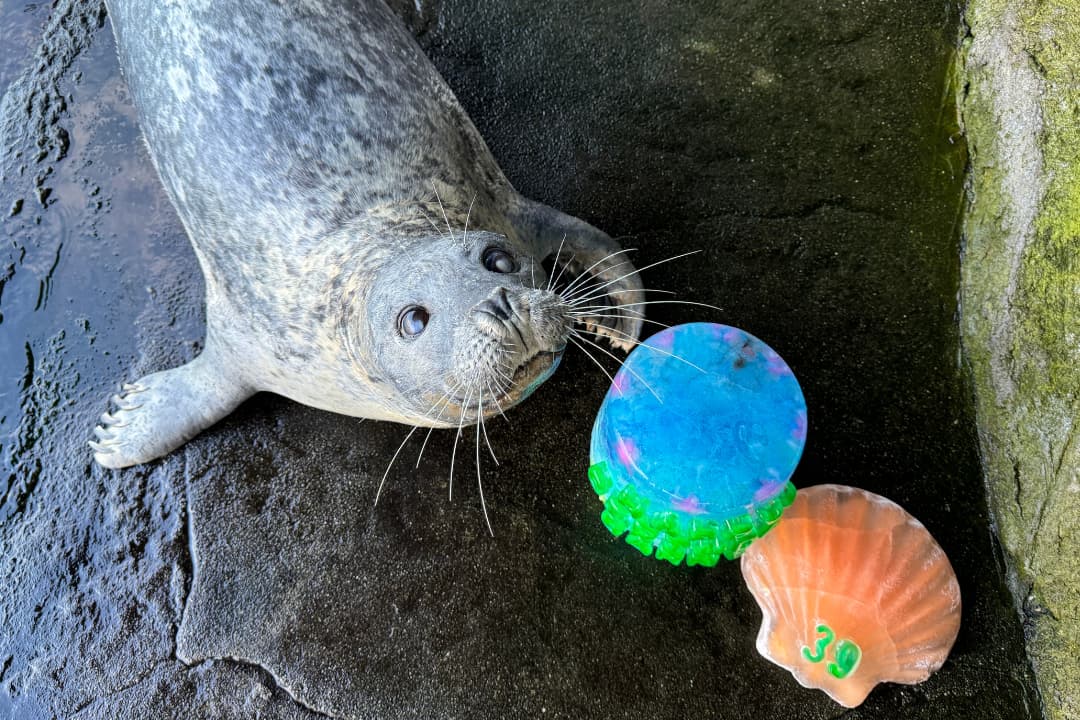
Harbor seal Barney lying down next to two ice treats and looking up into the camera.

Barney getting ready to tuck into his 39th birthday ice treat on September 14, 2024.

Barney was the first harbor seal to be born here at the Aquarium, in 1985. He shaped many caregivers over his long life and was cherished by all, particularly for his easygoing and inquisitive nature. “I knew Barney for 19 years and my appreciation of him only grew as time passed,” comments Animal Care Specialist Cheryl Becker. Dr. Caitlin Hadfield, who had worked with Barney since joining the Aquarium in 2017, notes, “Barney had great trust in his human caregivers and his home. He had a number of health concerns over the last few years and we learned a lot from each other. I’m proud of the care the animal care staff provided, and that we were able to help ensure that his end of life was peaceful.”

Barney will be remembered as a wonderful, one-of-a-kind ambassador for the Seattle Aquarium. “He inspired a stronger curiosity about the ocean in millions of people—a curiosity that inspired action for conservation of our marine environment,” says Bob Davidson.

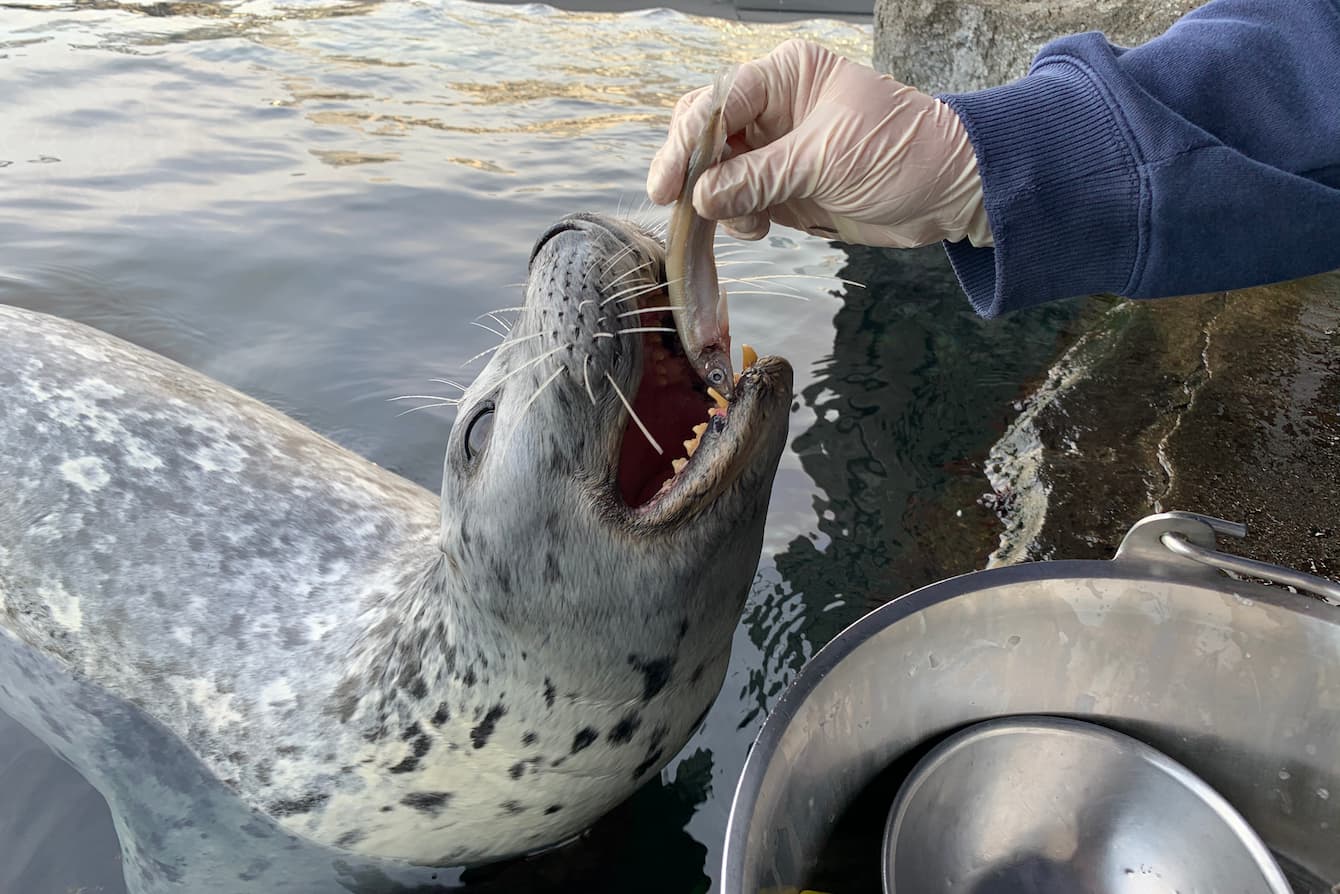
Harbor seal Barney being fed a small fish.

Even at his advanced age, Barney clearly relished his favorite foods.

“In my childhood bedroom is a box filled with my most precious memories. Paramount among them is a series of photos of me as a child at the Seattle Aquarium, including one where I’m smiling beside a harbor seal who happens to be Barney! In many ways, subtle and overt, he played a role in shaping who I am. Choosing a career in animal care, grounding my purpose in life to bring people’s focus and empathy to conservation, staying committed to being silly in my age and, of course, only eating what I want. In the two decades since the photos were taken, I had the immense pleasure of playing a small role in caring for Barney. Thank you, Barney, for watching me grow, encouraging me to learn, allowing me to try to pay it all back in fish—thank you Barney, thank you.”

Barney was a beloved icon here at the Aquarium and, over his nearly 40 years, touched the hearts of countless visitors, volunteers and staff. Says Supervisor of Birds and Mammals Mariko Bushcamp, “Barney and I were the same age and I knew him for nearly half my life.” She speaks for all of us when she adds, “You’ll leave a big hole—but thank you for all the memories, Barn.”

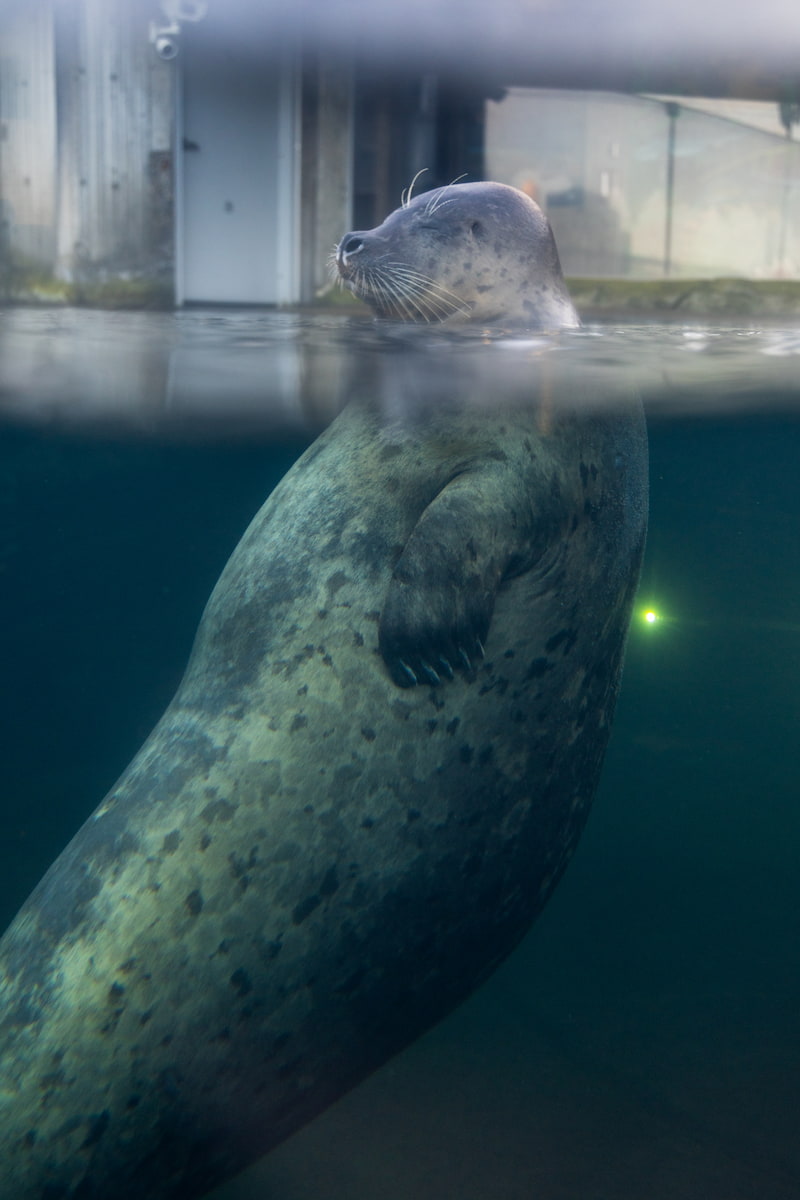
Harbor seal Barney laying in the sun.

Barney enjoying a moment in the sun.

Health care for feathered friends at the Aquarium: A birds-eye view

This story is part of our series, The Doctor Is In—highlighting our veterinary team’s expertise in service of animal wellbeing.

It’s not just marine mammals at the Aquarium who are trained to cooperatively participate in their own health care. The birds entrusted to us participate in their own care too. How do they do it? By eating!

“Animal care staff can closely monitor food consumption to help assess health,” says Supervisor of Birds and Mammals Sara Perry. “We count how many and what type of fish or bug each bird eats during the day. Overall behavior during a feeding can tell us a lot about the wellness of the bird as well.”

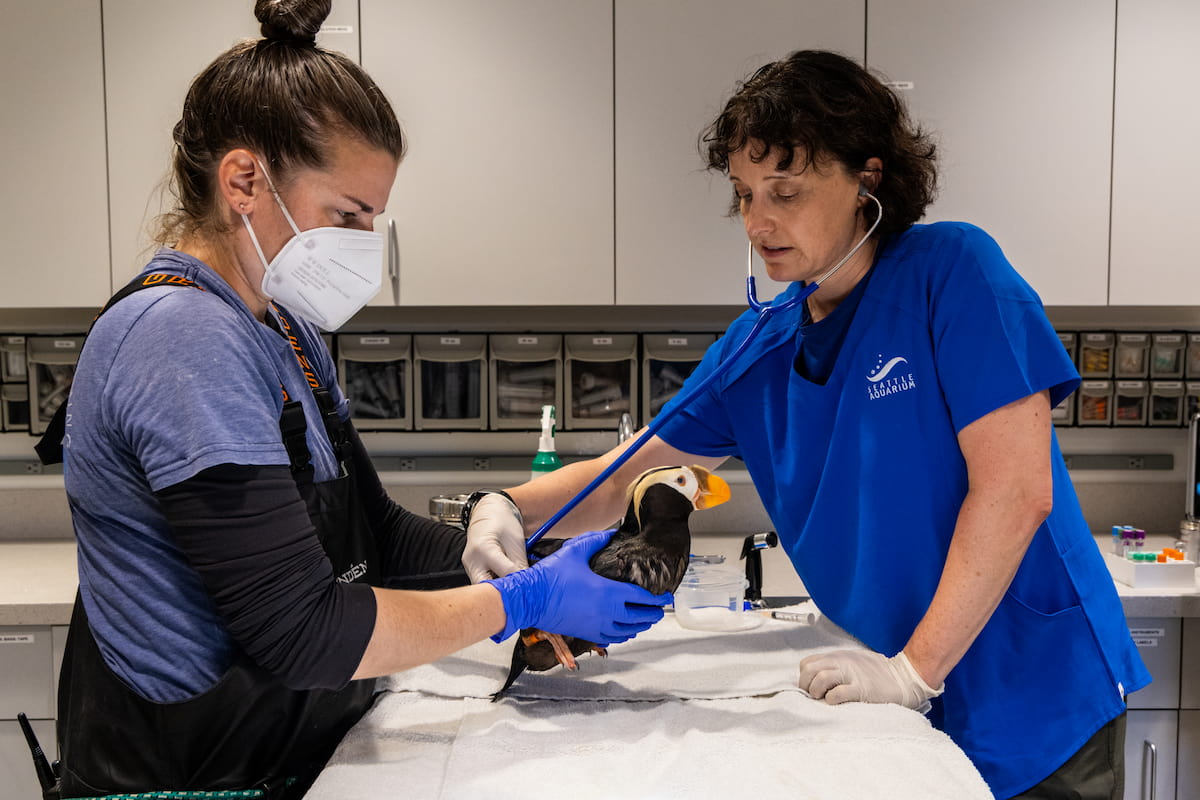
Sara Perry and Dr. Caitlin Hadfield standing on either side of an examination table. Sara is gently holding a tufted puffin just above the examination table while Dr. Hadfield presses a stethoscope to the puffin's back.
Supervisor of Birds and Mammals Sara Perry (left) assists Director of Animal Health Dr. Caitlin Hadfield (right) with a health check on a tufted puffin.

Working toward the clean plate club

When feeding alcids (including the common murres, rhinoceros auklet and tufted puffins in our care), staff can also deliver specific vitamins or necessary medications, expertly hidden in a tasty fish. It’s similar to how parents of young children may “hide” vegetables in a favorite food!

The comparison to human children doesn’t stop there: Animal care staff often need to be creative and patient when feeding birds. “They’re not like a sea otter who will usually eat anything at any time, or a seal who just gulps fish down. Ask any of our staff, feeding the birds takes finesse!” Sara laughs. “We rely on our knowledge of each bird, their behavior and their preferences—depending on time of year—and apply it to a group setting.”

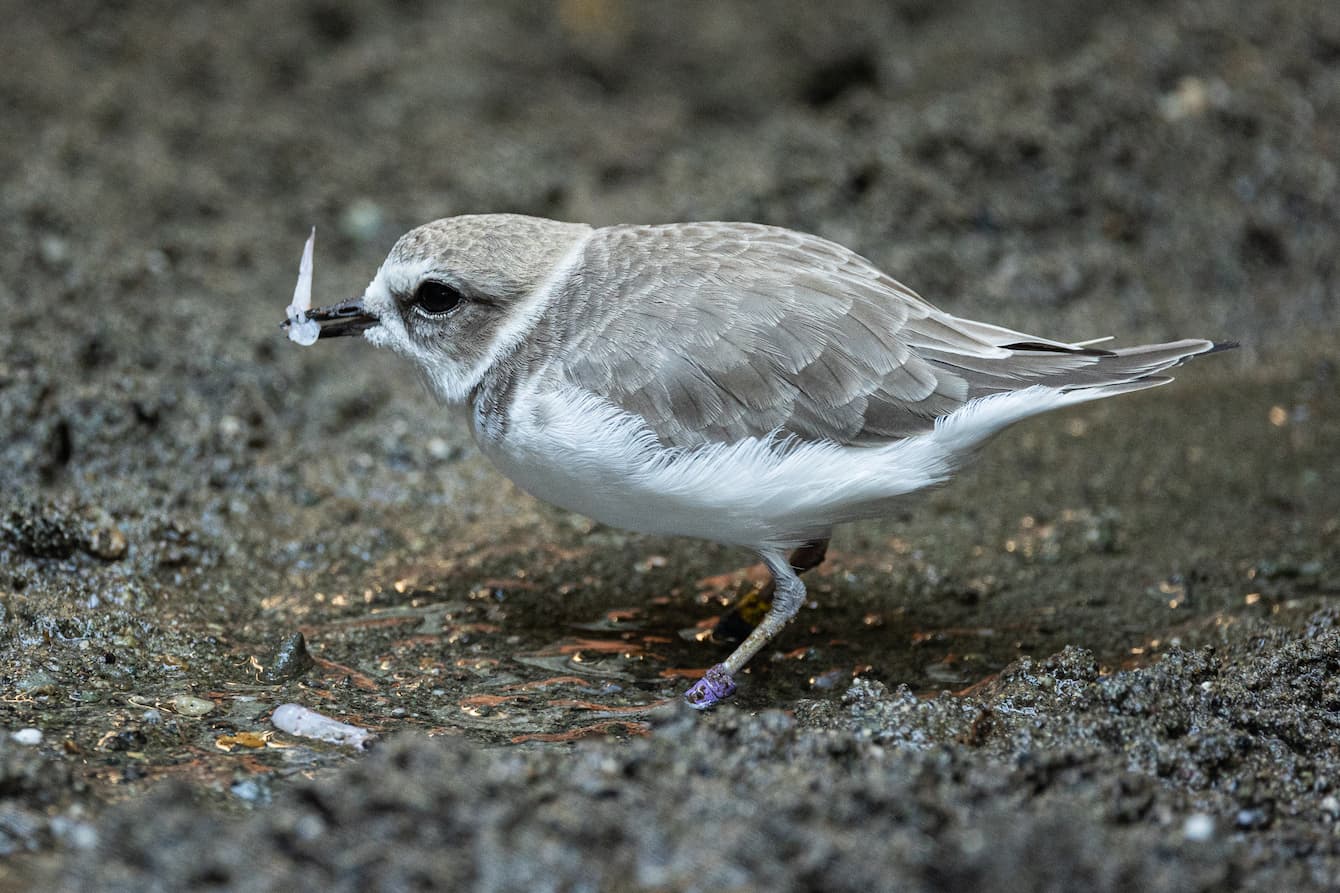
Crush the western snowy plover eating a small, translucent shrimp.
Crush the western snowy plover enjoying a shrimp breakfast.

"You look like you haven't aged a bit!"

Here at the Seattle Aquarium, we have a good number of elderly birds in our care. But it’s hard to know that just by looking at them. Why? Birds don’t show graying of feathers as they age, unlike the graying or lightening of hair and fur of mammals (including us humans!)—so it’s not possible to estimate age based on that indicator.

Birds do show other age-related changes that are seen in mammals, though. For instance, their mobility and vision may deteriorate over time, their appetites may change, and they may rest more than younger birds. “Our Aquarium staff know each bird as an individual, which allows us to adjust feeding and spaces to help the older ones,” comments Director of Animal Health Dr. Caitlin Hadfield. “It’s all in the name of taking the best possible care of each bird at the Aquarium for their whole lives.”

Did you know?

All the birds (and mammals) at the Seattle Aquarium fall into one of two categories—they were either born at a zoo or aquarium or they were rescued and have been deemed non-releasable according to the guidelines established by government agencies such as the U.S. Fish and Wildlife Service and policies such as the Migratory Bird Act.

Providing the very best care and quality of life for the animals entrusted to us—at all stages of their lives—is a vital part of our mission, Inspiring Conservation of Our Marine Environment. Learn more about birds at the Aquarium on our website or, better yet, plan a visit with us soon!

Urchins, anemones and sea stars, oh my! Invertebrate care at the Seattle Aquarium

This story is part of our series, The Doctor Is In—highlighting our veterinary team’s expertise in service of animal wellbeing.

Invertebrates—animals without backbones—are found in every habitat at the Seattle Aquarium. And, like all animals entrusted to us, they need expert care to thrive. “Our goal is to provide great quality of life in an enriching environment for the animal’s whole life,” says Director of Animal Health Dr. Caitlin Hadfield, MA VetMB MRCVS DiplAZCM DipECZM, “And that goes for all the animals under our care.”

“All the invertebrates get checked by Aquarium staff at least once every day,” she comments, “Their environmental conditions are checked as well—that includes evaluating the water and the systems that support it.” Although some invertebrates may seem like fairly simple animals on the surface, managing their care, says Dr. Hadfield, presents some interesting challenges. One of them stems from tracking the number of animals of each species because some, like corals, can be colonial. “It gets tricky,” says Dr. Hadfield. “Do we track this as one animal—a coral head certainly looks like one structure—or as the thousands of polyps that make up that structure?”

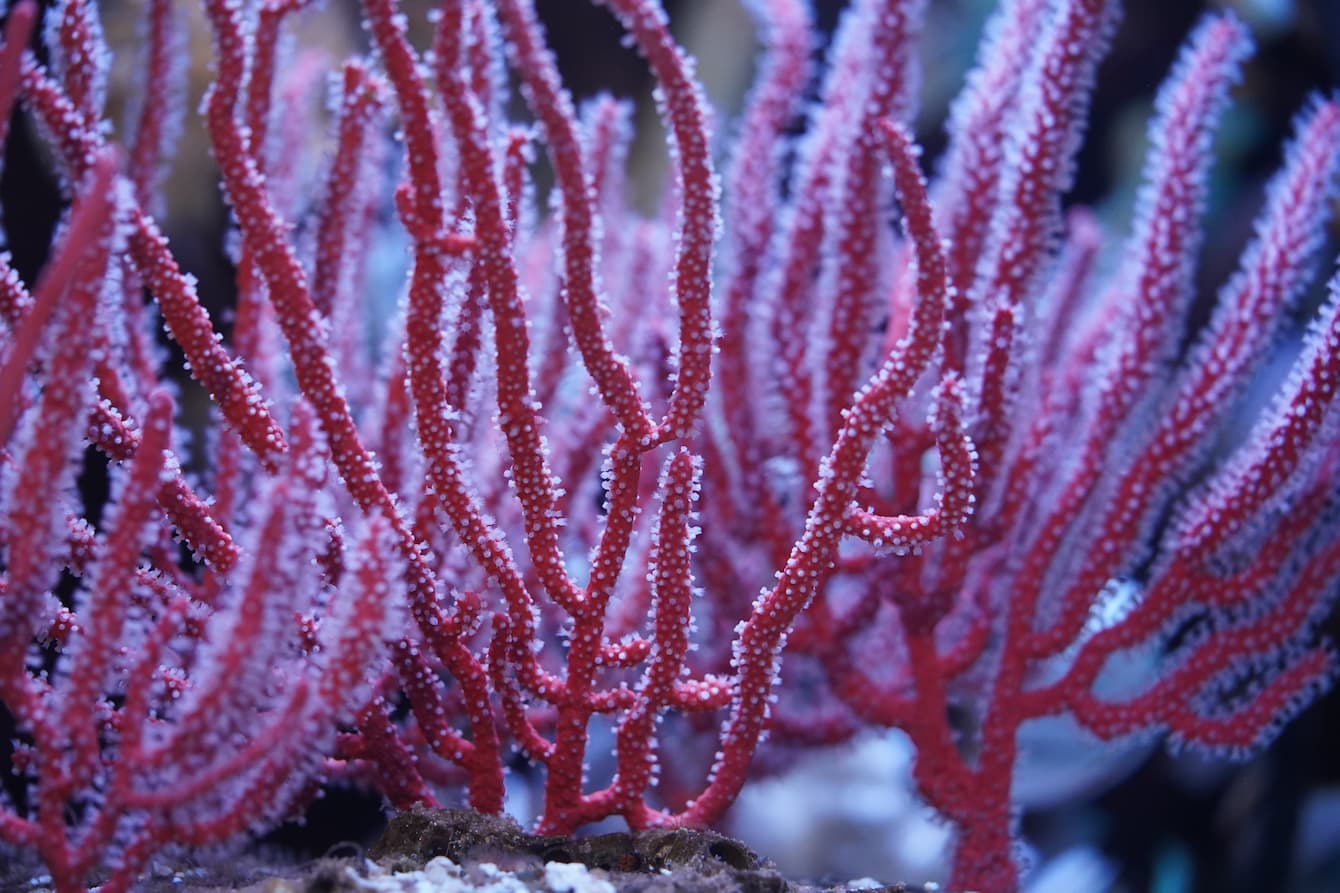
A small colony of pink swiftia coral.
Almost all corals are colonial organisms, meaning that what may look like a single animal is actually many—sometimes hundreds of thousands!—of animals, called polyps, living together.

Even invertebrates need primary care providers

Regardless of how they’re counted, invertebrates, like all the animals at the Aquarium, are part of our preventative medicine program. Aquarium biologists are on the front lines of animal care, making careful observations of each animal at least once a day. “Our staff are experts at evaluating the animals they’re caring for and are able to identify subtle changes in their appearance or behavior,” says Dr. Hadfield. Because all animal care staff have the training and experience to make these evaluations, each animal at the Aquarium has the equivalent of a PCP, or primary care provider, who has the best understanding of their health history and needs.

Routine exams, in many cases, are also part of the Aquarium’s preventative medicine program (yes, even for invertebrates!). “A big part of that is reviewing the animal’s history,” says Dr. Hadfield. “For that, we rely on the knowledge of our animal care specialists and the information in our record systems.” Along with that review, an invertebrate checkup might involve a physical exam, fluid collection or ultrasound, depending on the animal’s needs. Sea urchins need their teeth checked, too!*

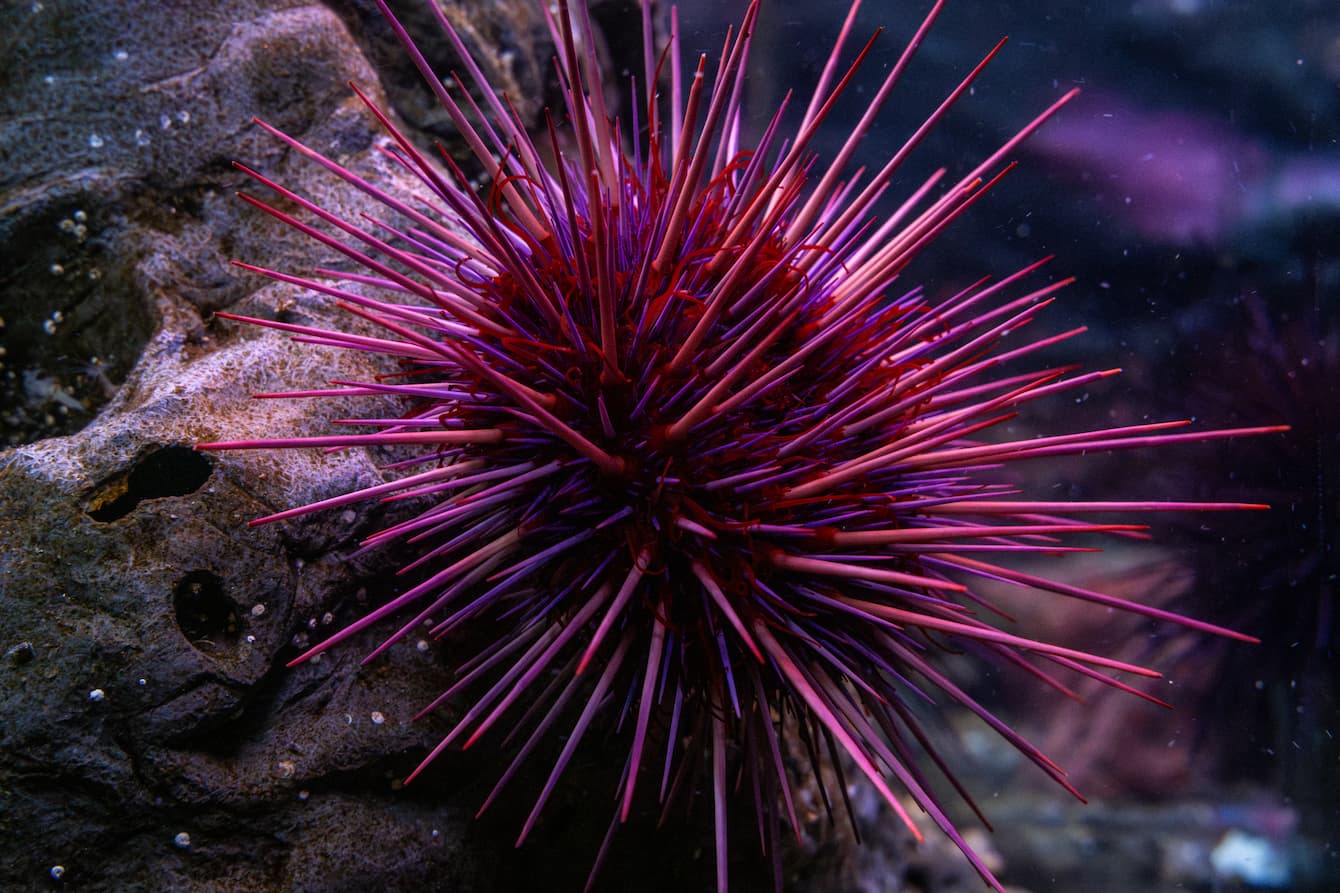
*Surprise­—sea urchins have teeth! They’re arranged in circle at the bottom of the urchin’s body.

A close-up shot of a large purple and red sea urchin.
Have you ever been "hugged" by a sea urchin? Come experience it in the touch pools at the Seattle Aquarium!

All for one, one for all

When doing health checks, it’s important to consider all the animals in a habitat. “If an animal isn’t eating well,” notes Dr. Hadfield, “It could be normal for that time of year or life stage, but it could also be because there’s something wrong with that animal, the other animals around it, or the world it’s living in.” In those cases, animals that show symptoms first can become “canaries in the coalmine” for issues that might affect neighboring animals. Closely monitoring individual animals can keep smaller problems from spreading and becoming bigger.

Providing the very best care and quality of life for all the animals entrusted to us is a vital part of our mission, Inspiring Conservation of Our Marine Environment. Learn more about invertebrates at the Aquarium on our website or, better yet, plan a visit with us soon!

Expert animal care at every age

This story is part of our series, The Doctor Is In—highlighting our veterinary team’s expertise in service of animal wellbeing.

Our highest priority is providing the best possible lives for the animals in our care—nearly 18,000 fish, invertebrates, birds and mammals with the opening of the Ocean Pavilion. At the forefront of this work are our veterinary, water quality and animal care teams, whose members monitor the health of the animals every day.

Director of Animal Health Dr. Caitlin Hadfield, MA VetMB MRCVS DiplAZCM DiplECZM, is the veterinarian in charge: performing routine observations, interpreting records with animal care staff, providing treatments for animals when needed, and undertaking physical examinations routinely and when concerns arise.

Dr. Hadfield crouching next to harbor seal Barney. Barney is laying on his left side; Dr. Hadfield is holding a stethoscope to his chest. A second veterinary technician is gently lifting Barney's flipper out of the way.
Harbor seals at the Aquarium are trained to cooperatively participate in their own health care.

Not surprisingly, some of those issues of concern are related to aging. Geriatric* medicine has become a focus for animal care specialists at zoos and aquariums accredited by the Association of Zoos and Aquariums (AZA)—including yours truly—for the best possible reason: as we continue to learn and share information, animals are living longer and longer lives.

*The term “geriatric” refers to older individuals, whether human or another kind of animal. Just as elderly humans require specialized medical care, other elderly animals do as well.

Caring for aging animals at the Seattle Aquarium

Here at the Aquarium, we have a number of geriatric animals in our care. For instance, Barney the harbor seal turned 38 in 2023, reaching a biological age that’s about the equivalent of a 100-year-old human!

Harbor seal Barney being fed a fish by a Seattle Aquarium enimal care expert.
Geriatric harbor seal Barney showing off his appetite.

And, at age 22, Adaa the sea otter was the oldest sea otter living at an AZA-accredited zoo or aquarium in the U.S. at the time of his passing in 2022. He was also the oldest male sea otter on record in the AZA studbook.*

*What’s a studbook? It’s a document that keeps track of information such as age, significant events like births or deaths, parentage and taxonomy (or the science of classifying and naming organisms). Staff at zoos and aquariums like the Seattle Aquarium work with the AZA to maintain regional studbooks for a wide variety of species. This demographic history is an invaluable tool to help guide conservation projects.

Sea otter Sekiu floating on her back.
Sea otter Sekiu is the daughter of Adaa, who lived to the impressive age of 22 in our care.

Aging is a complex process that refers to changes in all the systems and functions of an animal’s body; however, aging develops at different rates in different species. Some species of Pacific salmon, for example, have a very brief life (chronologically), dying soon after a single spawning event when they are a few years old. Spotted lagoon jellies also have shorter life spans—just three to four months. Rockfish, on the other hand, may live for over a hundred years!

Evolving care over time

The goal of geriatric care is to maintain the best possible quality of life for the individual animal during a time when they would normally be vulnerable to predation or unable to source food for themselves in the wild. Geriatric care at AZA-accredited zoos and aquariums, like ours, is respectful to each individual animal—for their life and its intrinsic value.

What that care involves differs by species and by individual. Our animal care staff work hard to create and maintain environments for aging animals that are safe and easy to use. This can be challenging for the variety of species living together in our larger habitats, such as the Window on Washington Waters and Underwater Dome. In those instances, Aquarium aquarists use their understanding of animal behavior and feeding preferences to provide the best environment possible.

A black and orange striped tiger rockfish.
Some species of rockfish—like this tiger rockfish—can live to be well over 100 years old.

How does care evolve over time for marine mammals at the Aquarium? As these species begin to reach—and exceed—their chronological life expectancy in the wild, animal care staff may begin to adjust how they work with them. For instance, as mammals age, their risk of contracting several age-related eye diseases (such as cataracts and macular degeneration) increases, just as it does in aging humans. If visual acuity (or keenness of perception) is reduced, the Aquarium’s animal care specialists introduce more verbal and tactile cues, such as gently brushing past their whiskers. Arthritis (also known as degenerative joint disease) is also common in all mammals as they age. Just as it does for humans, management may include anti-inflammatories, joint supplements, diet modifications and adapting the environment to meet the mobility needs of the individual.

Providing the very best care and quality of life for the animals entrusted to us—at all stages of their lives—is a vital part of our mission, Inspiring Conservation of Our Marine Environment. Learn more about animals at the Aquarium on our website or, better yet, plan a visit with us soon!

Join us for After Hours: New Beginnings on Thursday, April 16, to celebrate spring and all the wonderful changes that come with it.

Today only, your gift will be matched dollar-for-dollar up to $25,000 thanks to the generosity of donors Betsy Cadwallader, J & Tim, and Jess & Andy Peet. Help us reach our $50,000 goal!

End the year with a gift to the ocean.