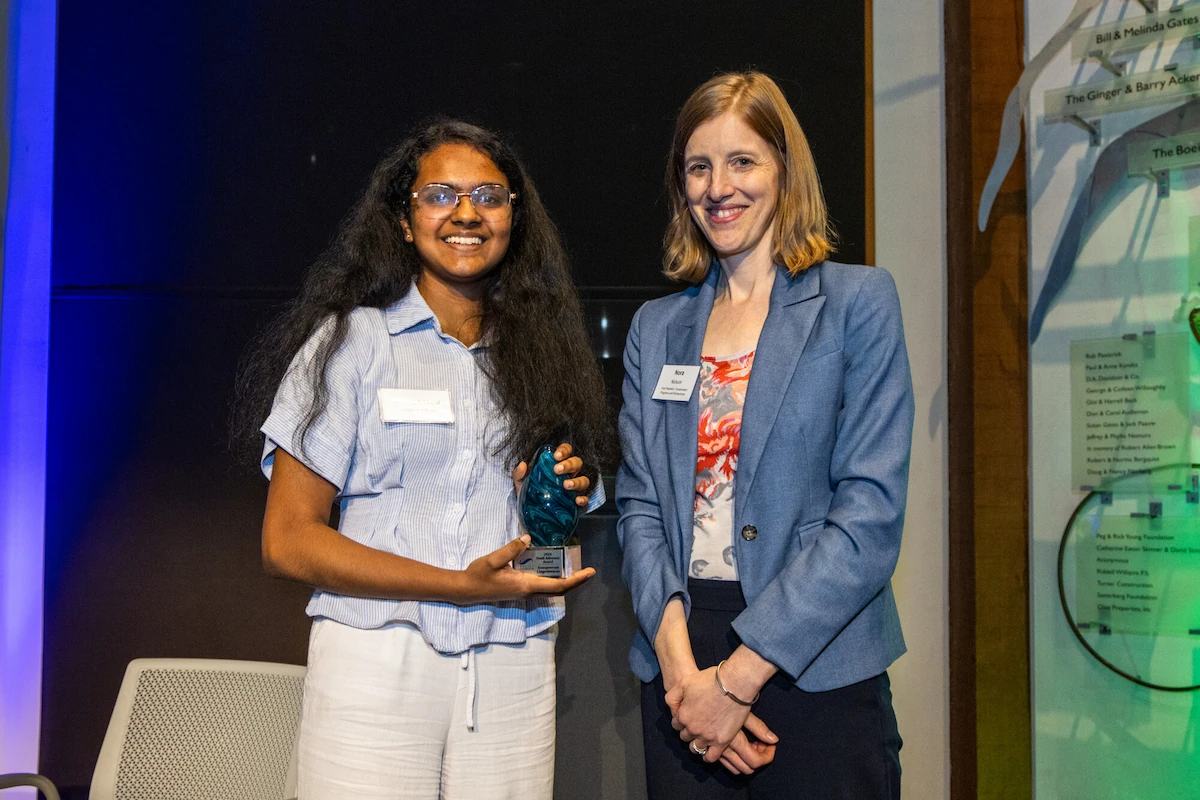
Q & A with Annapoorani Lingeshwaran, winner of our first Youth Advocacy Award
A lab project in 8th grade sparked Annapoorani’s passion for reducing microplastics from water.
Q: What sparked your interest in/passion for reducing microplastics?
A: When I was in eighth grade, we did a lab where we collected two water samples from different sources, performed vacuum filtration and examined the filtration paper afterward using microscopes. I was shocked to see all these multicolored threads on mine, especially because my samples came from sources I drank from regularly.
I remember exclaiming out loud, “I can’t believe I’m drinking this!” I think that was what made me excited about reducing microplastics, because I realized this was probably not great for my body, or anyone else’s.
Q: What directed you specifically to advocating for microplastics filters in washing machines?
A: The second part of that project was writing up an infographic of our results; one section of the infographic was supposed to be about methods to combat microplastics. I was surprised when I realized there was actually a fairly simple solution that already existed: microplastics filters. The more I read about it, the more I realized how effective these filters could be.
That was when I saw an opportunity: advocating against something general can be difficult—but when there’s a concrete, achievable solution, advocacy can become much more focused and likely to create tangible change.
Q: How did your op-ed in The Seattle Times come about? What was that process like?
A: As I was learning more about microplastics, I was surprised at how little most people knew about their source or the simple solutions that existed to combat them. Microfiber filters are an incredibly practical way to remove 90+% of fibers that shed from our clothing, yet before my science class project, I’d never heard of them.
This topic in particular felt ripe for an op-ed because of that actionability. A lot of environmental problems feel too big to solve; this one didn’t. It was somewhere I thought I could make a real impact by drawing attention to it.
I initially planned to write about filters for my high school’s paper, but after I was waitlisted that year, I was pushed to try and find a larger audience. I emailed the op-ed to The Seattle Times, knowing that if it was rejected, I would still be perfectly happy to guest-write the piece for the school paper. To my shock, they responded within the week, saying they wanted to publish it!
After a brief back-and-forth with some edits and questions they had about the piece, it was published to the Times. It was gratifying to hear from people at my school who learned about filters through the piece, and also to read the comments on the article debating my perspective. I think the op-ed did end up accomplishing what I wanted: bringing greater awareness to one of the simple solutions combating our microplastics problem.
Q: After the op-ed was published, you worked with Representative Pollet on the bill to require microplastics filter for washing machines. What was that like?
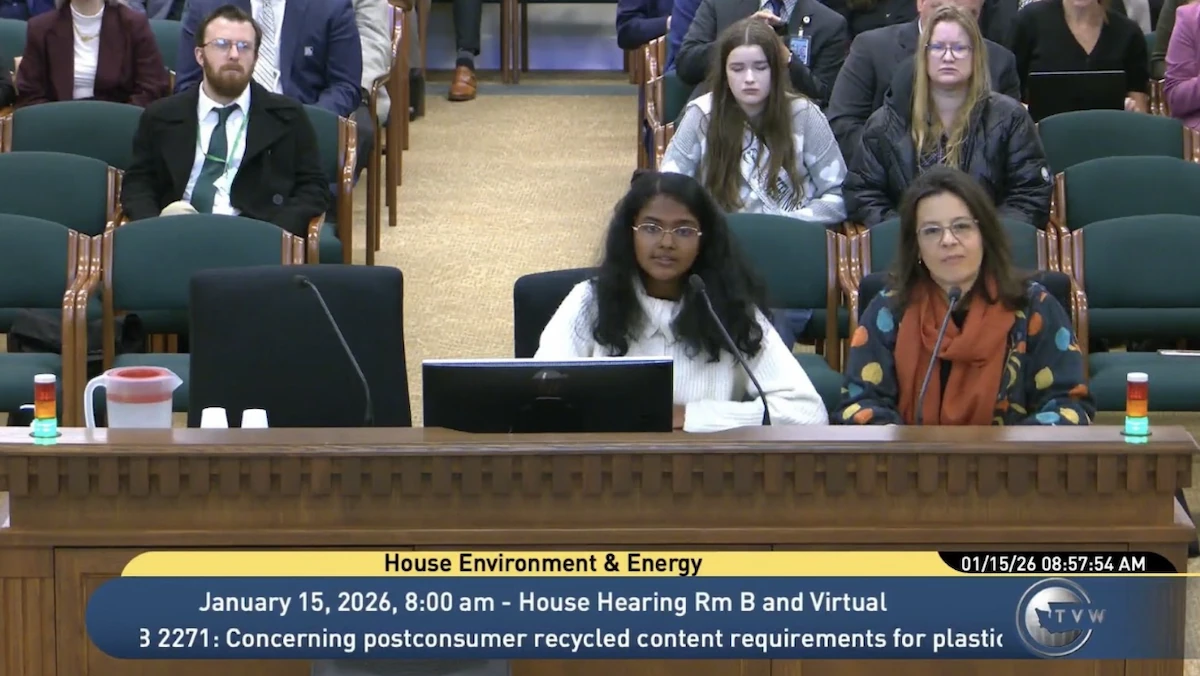
A: It was incredibly exciting and a huge learning opportunity. I’ve always been interested in politics, but actually getting to take part in the process of the legislative session gave me a front-row seat to things I’d only ever read about in the news.
Rep. Pollet invited me to one of his traveling town halls following the publication of the op-ed, and I was struck by how down-to-earth, friendly and willing to listen he was. I admit, I was nervous before the meeting, but he quickly made me comfortable—and we walked away that day with the idea for the bill.
Rep. Pollet helped us through the entire process of getting the bill introduced. He guided me through creating my first-ever fact sheets, my first testimony and more. I’m so grateful that he was willing to take on this idea and present it to the legislature!