Two new policies to reduce packaging waste and plastic pollution
This site uses cookies. View our Cookie Policy to learn more about how and why.

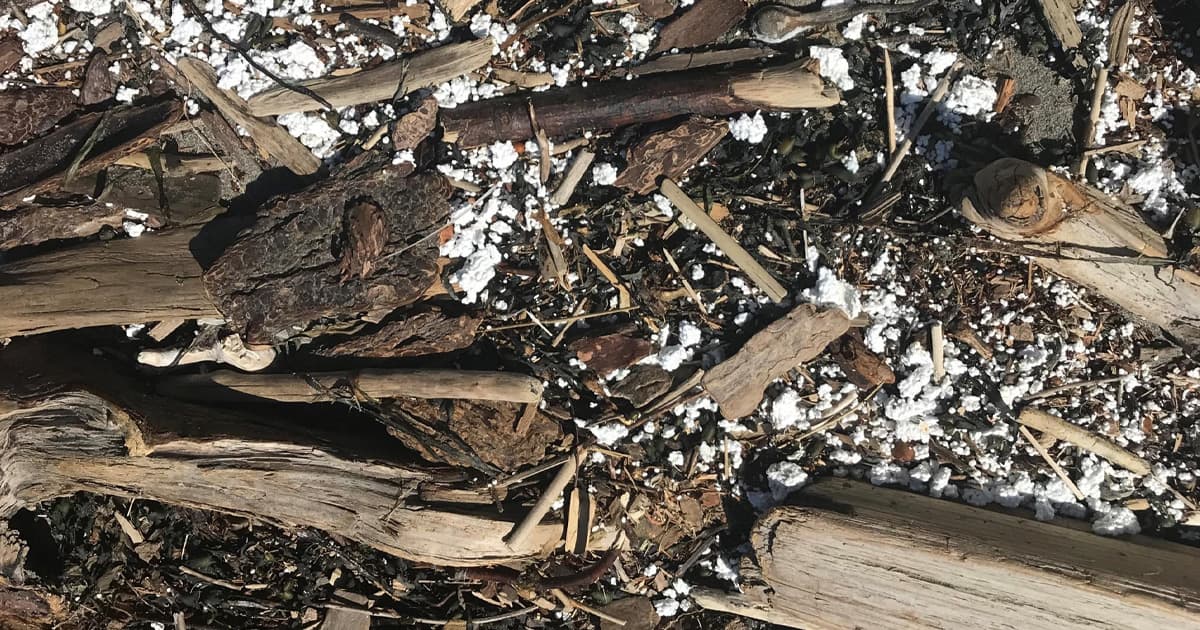
The Seattle Aquarium has been working to reduce sources of plastic pollution in the environment—in 2020 we helped pass the Reusable Bag Bill to eliminate thin, single-use plastic bags in Washington state and in 2021 we worked with our partners to ban certain expanded polystyrene foam products like recreational coolers and packing peanuts.
This year, two of our top priorities for the 2023 Washington state legislative session aim to address the problems of recycling and packaging waste (SB 5154/HB 1131) and plastic pollution (HB 1085).
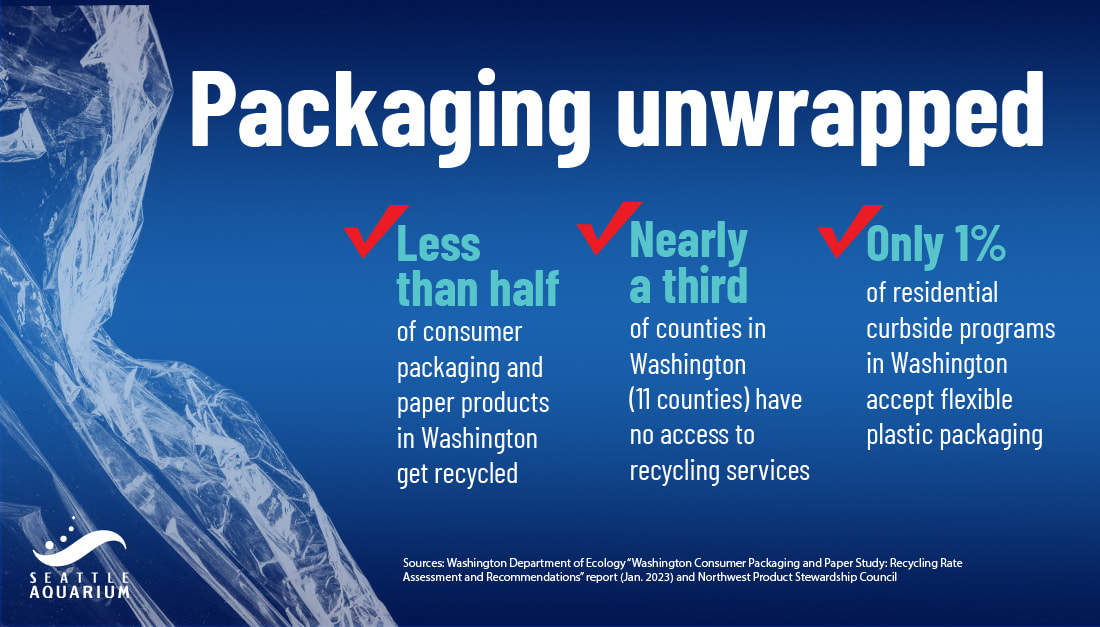
The Washington Recycling and Packaging (WRAP) Act (SB 5154/HB 1131) will establish a producer responsibility program which will reduce unnecessary packaging and paper, fund statewide recycling services, and ensure that materials are actually recycled. Under producer responsibility, companies that make packaging are responsible for the costs, environmental impacts and end-of-life of their products, so the burden doesn’t fall on the end-customer or local government. It’s a proven, successful approach to increase package recycling and the norm in Canada and much of the European Union.
In 2021, Maine and Oregon became the first U.S. states to pass packaging producer responsibility legislation, and Colorado and California joined in 2022. Now, Washington has an opportunity to join them.
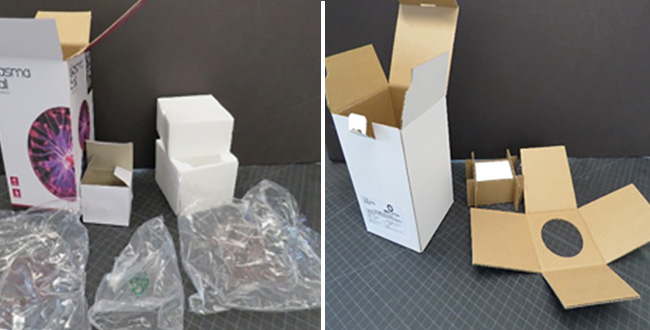
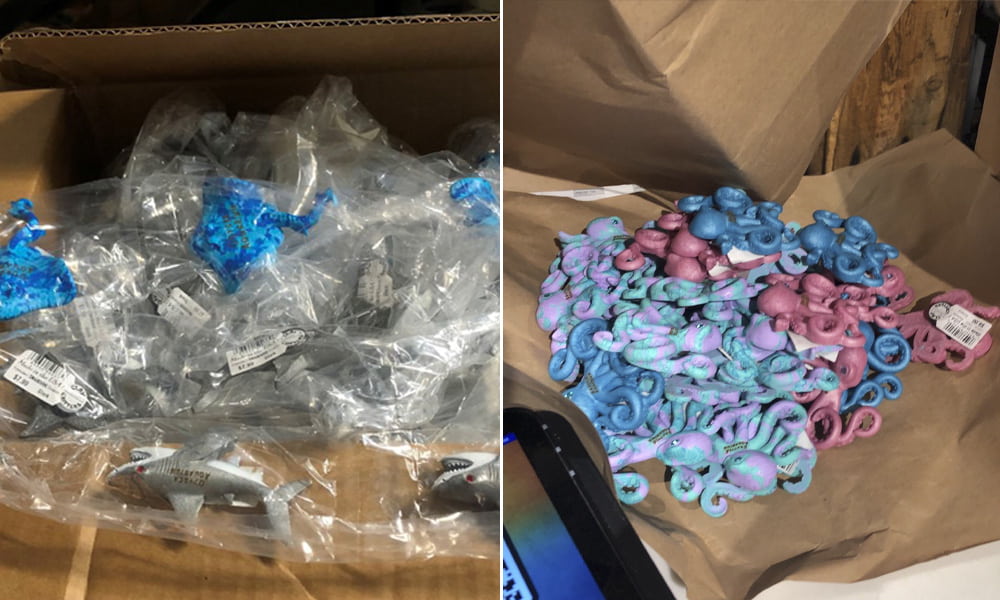
The Seattle Aquarium’s gift shop, operated by our partner Event Network, has been working to reduce the hard-to-recycle packaging and unnecessary packaging waste they receive by reaching out to their individual vendors to collaborate on more sustainable alternatives. Here are a few examples of packaging switches that our gift shop has made so far:
We’re so glad to have Event Network as a partner and sustainability champion, and we’re excited that they have managed to convince producers to switch more than 70 gift shop items to more sustainable packaging. But they have found this way of making change to be time-consuming and resource-intensive. That’s where the WRAP Act can help! The policies in the WRAP Act will address this problem more efficiently statewide by establishing incentives with graduated fees and requiring packaging producers to meet targets associated with things like reusability and recyclability.
HB 1085 will make tangible improvements in reducing plastic pollution by addressing three sources of unnecessary and hard-to-recycle plastic waste: single-use water bottles, mini plastic toiletries and thin-walled or soft-shelled foam-filled floats for docks. Read more about the sustainable alternatives required by this bill in our previous blog post on our 2023 Washington State Legislative Session policy priorities.
We thank Sen. Rolfes, Rep. Berry and Rep. Mena for being the lead sponsors of these bills to transform our recycling system and reduce plastic pollution, and we also extend our thanks to all of the co-sponsors.
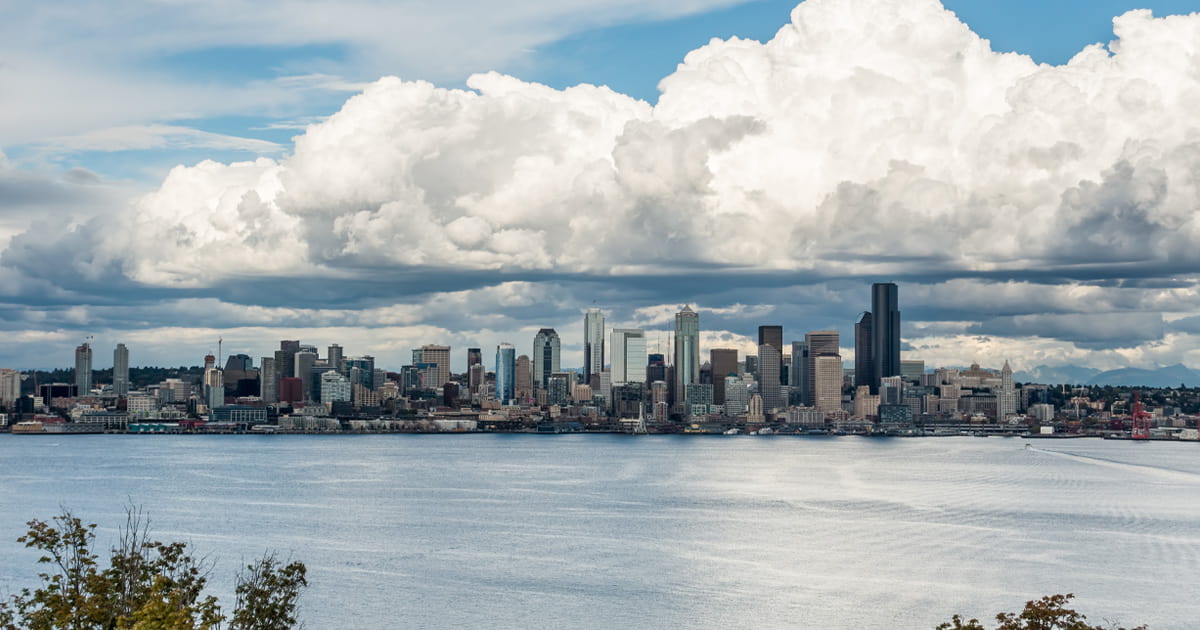
Through a new campaign developed and produced by the nonprofit Sachamama, the Seattle Aquarium is featured alongside other prominent locals engaged in efforts to address threats to the health of Puget Sound—and the impact those threats could have on the vitality of our communities and economy.
Sachamama is a conservation organization grounded in Latinx cultural heritage and working to build support for a clean energy economy for all, and cultivating sustainable attitudes, behaviors and lifestyles. (Sachamama is a word in the Quechua language, which is spoken in the Amazon and South American Andes regions—it means “mother jungle.”) One of their key initiatives involves protecting the health of our ocean and inspiring conservation action and advocacy throughout Latinx communities.
Now we, along with several others, have lent support to Sachamama on a series of editorials focused on the health of Puget Sound and connections to local communities—including the environmental challenges that threaten our ecosystem and the well-being of our region’s residents.
The series showcases five local champions, their connections to the Sound and the environmental benefits the Sound provides for current and future generations. It’s part of a larger effort in support of 30×30, a global initiative to protect and conserve 30% of land and waters, including the ocean, by 2030.
Seattle Aquarium Senior Manager of Ocean Policy Nora Nickum was featured in Sachamama’s first published editorial, devoted to microplastics. The editorial highlighted our research into the prevalence of microplastics in Elliott Bay as well as partnering with the Plastic Free Washington/Washington Sin Plástico Coalition to pass SB 5323 and SB 5022, both of which will reduce plastic pollution in our local waters. Nora also participated as a panelist in Sachamama’s Facebook Live event focused on microplastics in Puget Sound. Seattle Aquarium Empathy Fellow Gabi Esparza was featured in the editorial as well, describing the important role of empathy in marine conservation and the Aquarium’s initiatives to increase access and inclusion throughout the community.
Other champions featured in the series include Candace Penn, climate change ecologist with the Squaxin Island Tribe Natural Resources Department; Luis Navarro, director of workforce development for the Port of Seattle; Ruby Vigo, coordinator for the Duwamish River Community Coalition; and Noe Rivera, an owner of Rivera’s Shellfish. All are working, in various ways, to ensure that Puget Sound can continue to be a source of life and livelihood for our communities and future generations. We thank Sachamama for their leadership on this exciting project—and inviting us to participate in it.
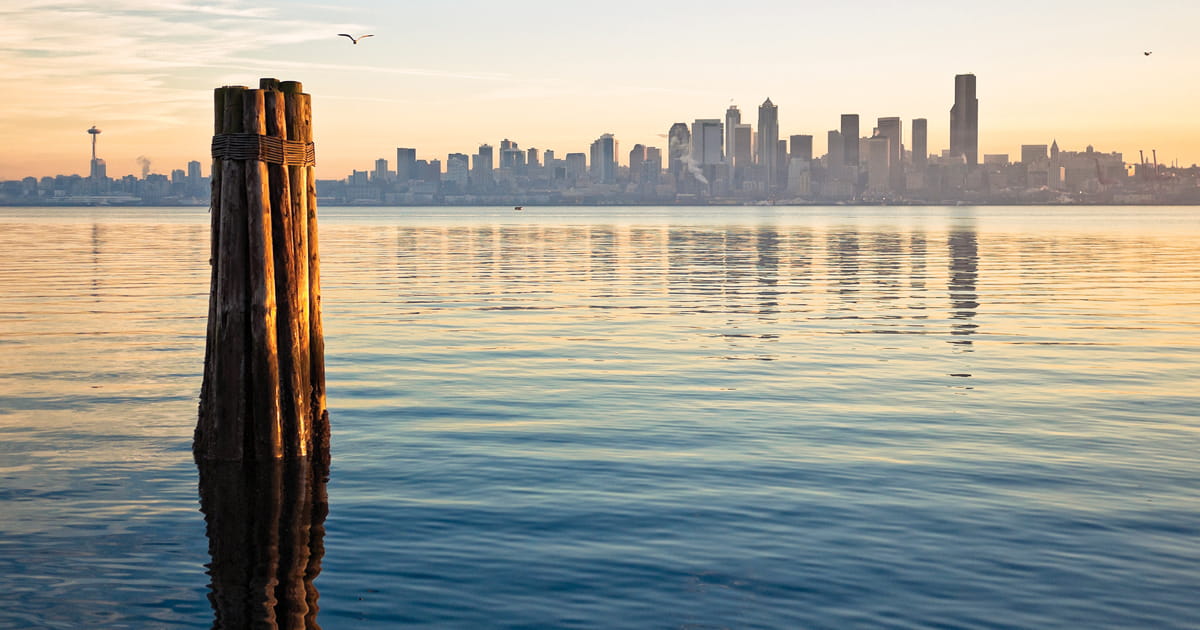
Signing in “pro” on key environmental bills, delivering virtual testimony, sharing opportunities to take action with the Washington community, and collaborating with legislators as well as partners across the state—the Seattle Aquarium spent the 60-day state legislative session working hard to advance ocean health priorities. And many of you joined us in speaking up! Read on for highlights from the session and a preview of future efforts.
With the passage of SB 5619, the Washington Department of Natural Resources will now develop a plan to protect and restore at least 10,000 acres of kelp forests and eelgrass meadows by 2040. We testified in support of this bill, which will restore important habitat for all kinds of species in our coastal waters.
We’re grateful to the state legislature for including $25 million in funding for the Duckabush River Estuary Restoration Project in the budget this year. Going forward, we’ll continue to support efforts to secure the additional state and federal funding needed to restore this vital estuary, which is prime habitat for threatened summer chum and Chinook salmon.
The legislature also passed a bill that ensures adequate funding for removing derelict vessels from local waters (HB 1700). Those vessels can present environmental risks, such as leaking fuel or other hazardous substances or damaging forage fish habitat.
Alongside crafting a regenerative plan for our own operations and facility, the Seattle Aquarium continued to support bills to address climate change. These included energy performance standards for large buildings (SB 5722) and ensuring that businesses in the fossil fuel industry are financially responsible for oil spills should they occur (HB 1691).
While we were able to make strides on several ocean health priorities, there’s still work to do. The short legislative session made it especially difficult to get some key transformative bills across the finish line.
The Seattle Aquarium will continue to work with our partners toward healthy marine shorelines and producer-responsibility legislation for plastics and other packaging (RENEW Act). We’ll continue to support Indigenous–led efforts to secure protections for riparian habitat along rivers and streams (Lorraine Loomis Salmon Recovery Act). Thank you to Senators Das, Salomon and Rolfes and Representative Lekanoff for your leadership on these pieces of legislation.
In the next legislative session, we’ll also continue to support measures to report embodied carbon emissions in infrastructure projects (Buy Clean and Buy Fair) and to enable small businesses to repair electronics, like cell phones, so they don’t go to the landfill (Right to Repair).
In the meantime, we’ll continue to advocate for national policy priorities—including healthy kelp ecosystems and 30×30 conservation action. Visit our Influencing Policy and Act for the Ocean web pages anytime for the latest news and action opportunities.
We want to send a huge thank-you to everyone who took part in our action alerts and spoke up for ocean health! If you didn’t receive action alerts, please consider joining our policy email list.
Speaking up for ocean health: 2022 priorities in the Washington legislature
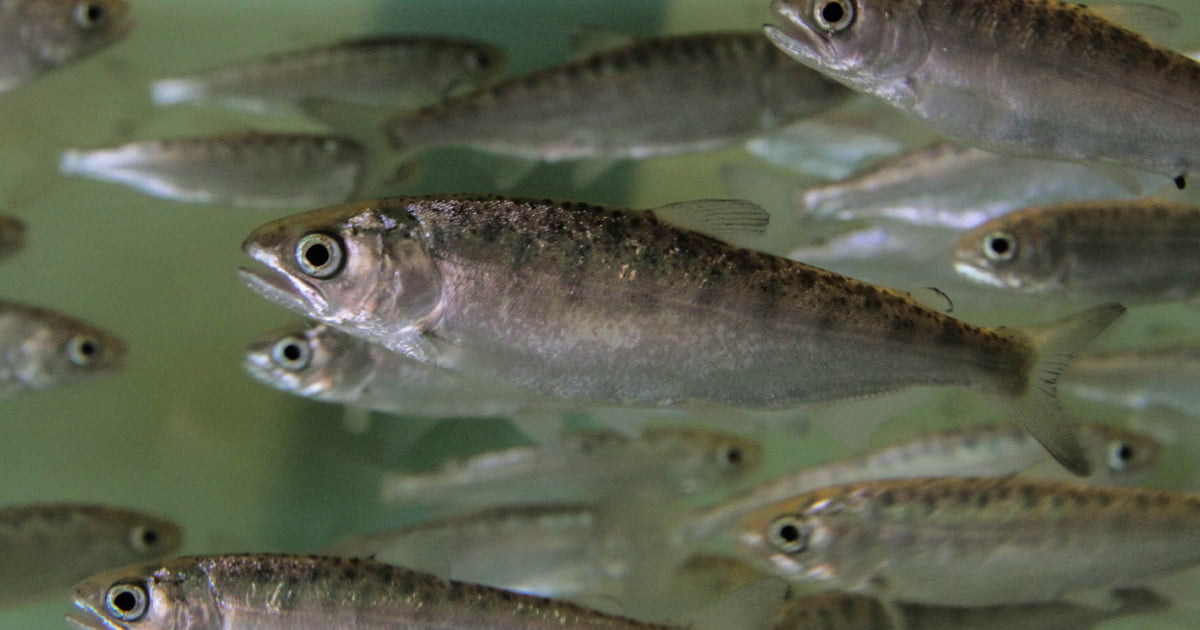
In discussions about conservation, certain habitats tend to come up as particularly important to restore and protect. Coral reefs and mangroves often immediately come to mind but feel far away from us here in the Pacific Northwest. However, there are critical aquatic habitats found right here in Puget Sound, including estuaries! Estuaries are tidal wetland environments where rivers meet salt water; these junctions are important environments for all sorts of species, from migratory birds to juvenile salmon. We now have a chance to restore a key estuary in Washington: the Duckabush River estuary.
Juvenile salmon spend months in estuaries undergoing a process called smoltification, when they grow and develop a tolerance for salt water. This is a rare superpower—few aquatic species can survive in both salt and fresh water—and the estuarine habitat, at the junction between river and ocean, is needed for salmon to adapt!
Unfortunately, development has eliminated or degraded 75% of river delta tidal wetlands in Puget Sound. This enormous loss is especially problematic for juvenile salmon and other fish and wildlife that rely on estuaries. Many of those species are listed as threatened under the Endangered Species Act.
Salmon are keystone species, meaning their loss would reverberate throughout their ecosystems. Predators of salmon, such as orcas, birds, bears and people, are directly impacted by declining salmon runs, while other species are impacted in less direct ways. When salmon die after spawning or while traveling up rivers, for example, their bodies provide nutrients to trees and other plants along the riverbed. These trees then provide shade and keep the water cool enough for salmon eggs to survive and provide safe habitat for young salmon as they journey down the river. Trees also sequester carbon and provide habitat for many other animals. This intricate ecosystem interdependency is beautiful, but it’s at risk due to human impacts.
The Duckabush River estuary is located on the western shore of Hood Canal. Highway 101 runs right over it, giving drivers access to the Olympic Peninsula. When this segment of the highway was designed in 1931, 12 feet of fill was used to support the new roadbed. Most of us probably aren’t thinking about what’s under the road we drive on, so long as it’s flat and stable. Unfortunately, all the fill, dikes and road infrastructure block water channels and limit critical habitat that fish rely on, including threatened Hood Canal summer chum and mid-Hood Canal Chinook salmon. Water bottlenecks created by the current highway also cause seasonal flooding.
The Washington Department of Fish and Wildlife (WDFW), in partnership with the U.S. Army Corps of Engineers and the Hood Canal Salmon Enhancement Group, has proposed a project to elevate the highway and restore the estuary so that it is once again prime habitat for fish and other species. There is a unique opportunity for a federal-state partnership to share the cost of this project: $50 million in state funding would unlock $30 million in federal funding. Check out this video from WDFW to learn more about what’s being planned.
For this important project to move forward, we need Washington legislators to secure funding in this state legislative session.
Updated February 2023: If you live in Washington state, please call or email your state legislator and ask them to support a $41 million state investment in the Duckabush River Estuary Restoration Project during the 2023 state legislative session! Email your elected officials or call the toll-free legislative hotline at 1-800-562-6000 (TTY for hearing impaired 800-833-6388) between 8am and 7pm, Monday through Friday, to leave a message for all three of your legislators at once. This is an opportunity to make a real difference for threatened salmon and a vital ecosystem.
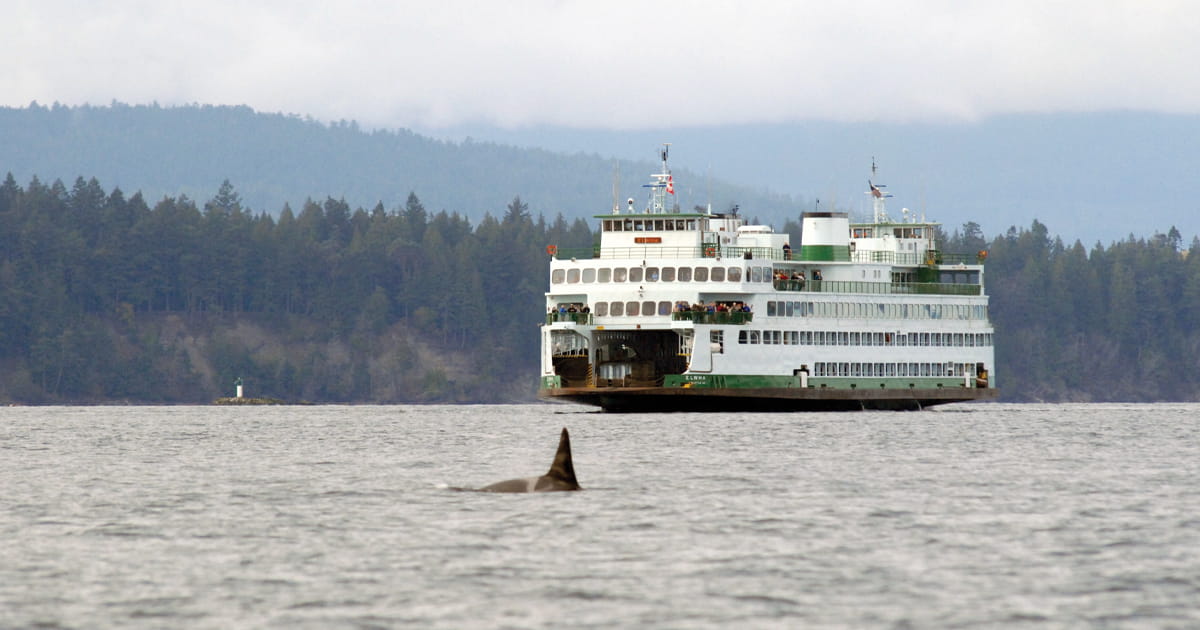
The Seattle Aquarium works on policies to reduce noise and disturbance impacts on the endangered southern resident orcas, which currently number only 75. Quieter waters will make it easier for the orcas to communicate with each other and find scarce salmon, while we all work to restore habitat so that those salmon are more abundant.
We have supported new requirements for slow-speed zones and vessel distance, measures to reduce oil spill risk, and state funding for the Quiet Sound program to encourage large ships to voluntarily slow down, and we’ve asked the Navy to do more to mitigate the potential impacts of sonar testing on the orcas. The Seattle Aquarium is also one of the shore-based marine mammal viewing spots along the Whale Trail.
But there is more that we can do to make the waters safer for the endangered orcas, and we invite you to join us in taking action when you’re outside this summer and beyond.
When ships collide with whales and dolphins, it can cause serious injury and even death. But with timely warnings, shipmasters and pilots can slow down the ship, alter course, increase vigilance or turn off their sounders to reduce disturbance and the risk of hitting a whale. Using the WhaleReport app, we can all help ensure that ship captains know when whales are in their vicinity.
The WhaleReport Alert System (WRAS) was developed in Canada by Ocean Wise and its partners, and a few years ago Governor Inslee’s Orca Task Force recommended expanding it to Washington waters. The WRAS has already delivered over 8,000 alerts to ship operators in Canada and Washington. But the platform needs more real-time sightings reports, especially from here in Washington, to be as effective as possible.
If you spot a whale, dolphin, porpoise or sea turtle—from shore, a ferry or a boat—report it via WhaleReport as soon as possible (in addition to any reporting you’d normally do to a local sightings network). It only takes a couple of minutes, and there are two ways you can do it:
or
Note that sightings data reported to the WhaleReport Alert System is only shared with the operators of large ships, tugs, ferries and government agencies. The data is not available for public use. The Whale Museum is responsible for data collection in Washington state and also uses the reports for conservation-oriented research.
If you would like to learn more about how the system works, visit wildwhales.org/wras.
Thank you for taking action to protect marine wildlife!
*Ocean Wise researchers will only use your contact information to ask you any follow-up questions regarding your sighting reports to aid in our research efforts and will not contact you for any promotional reasons. Your details are protected under Ocean Wise’s Privacy Policy.
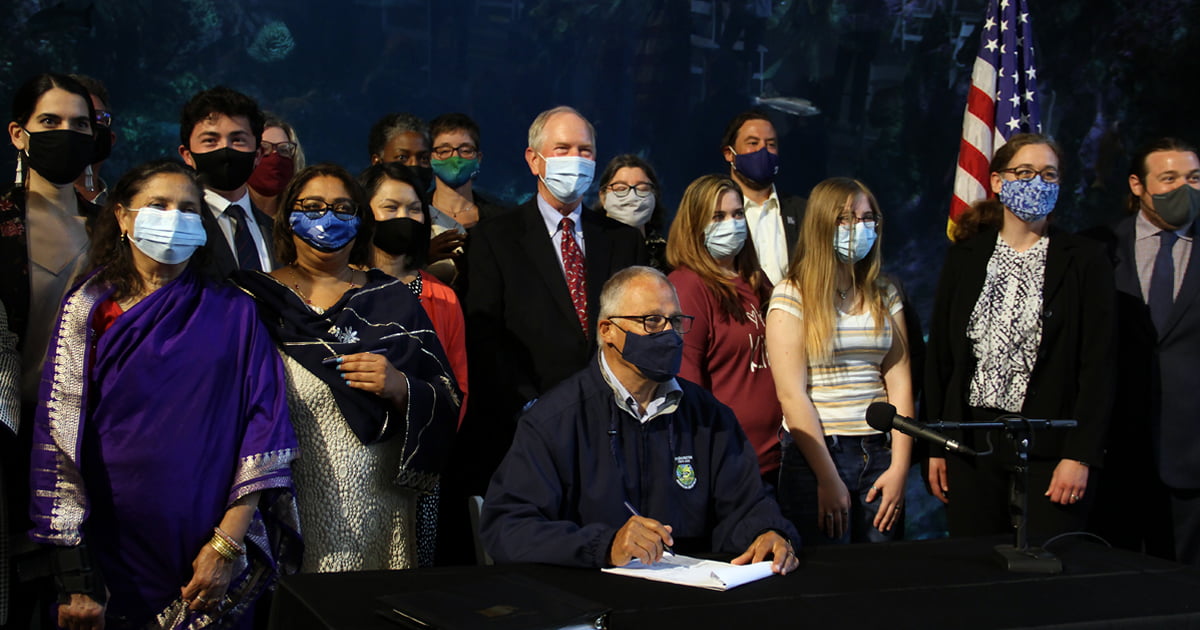
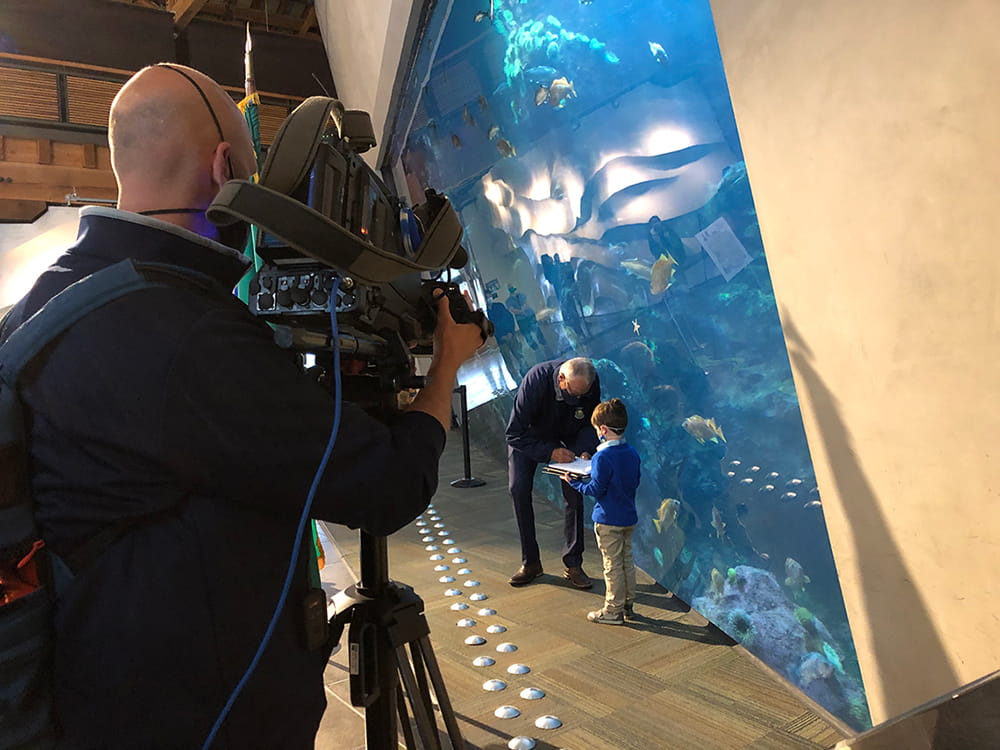
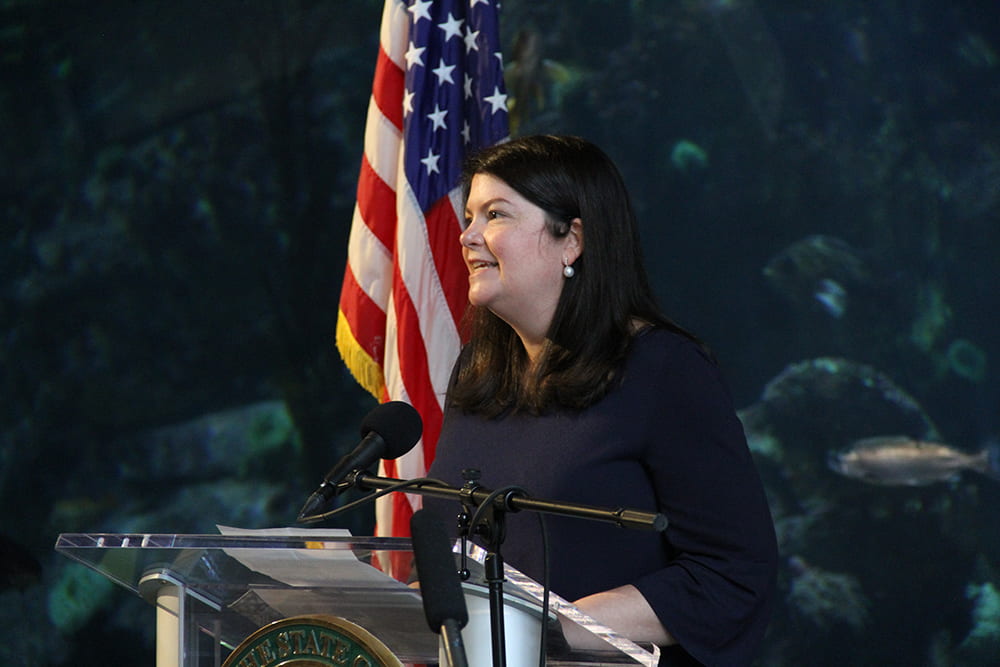
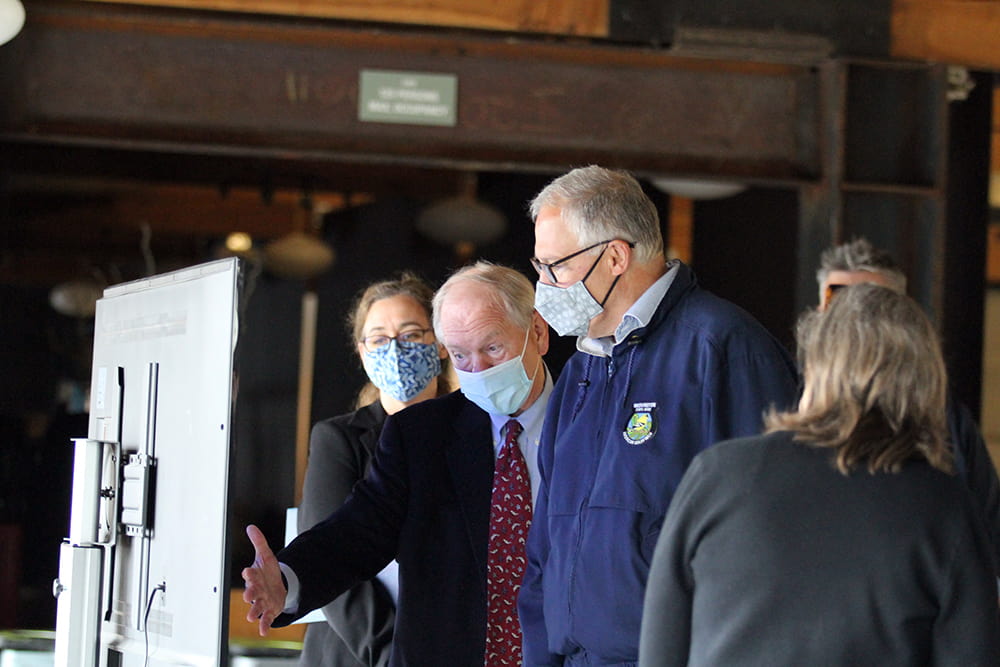
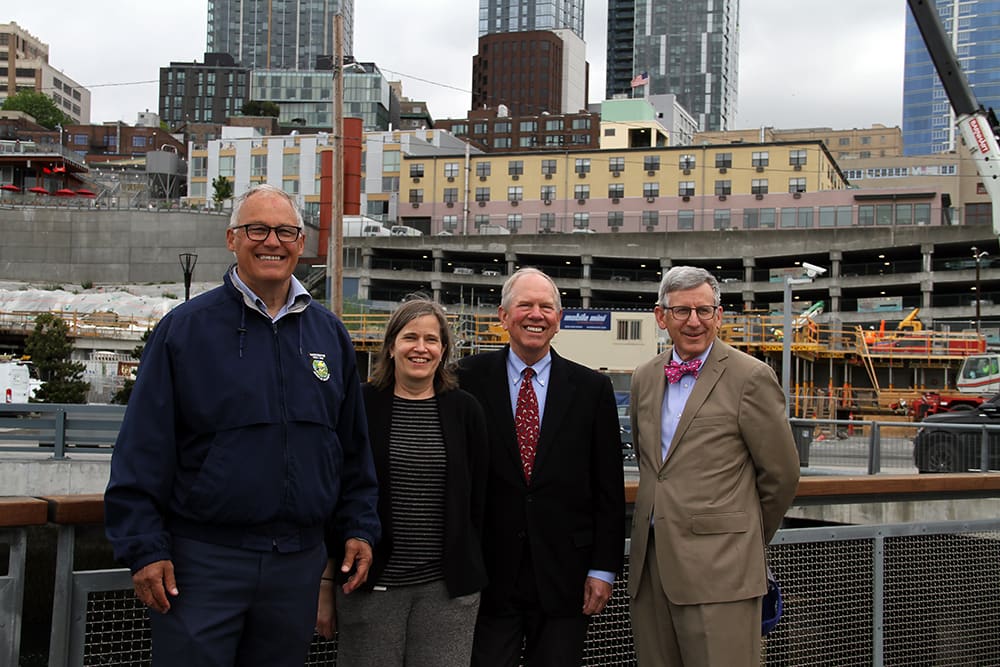
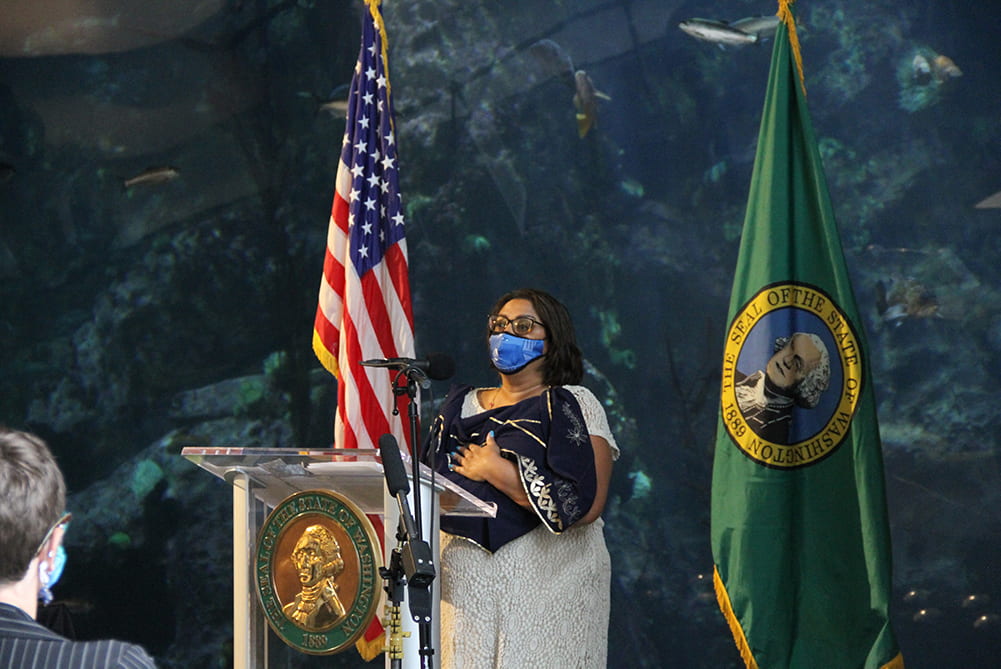
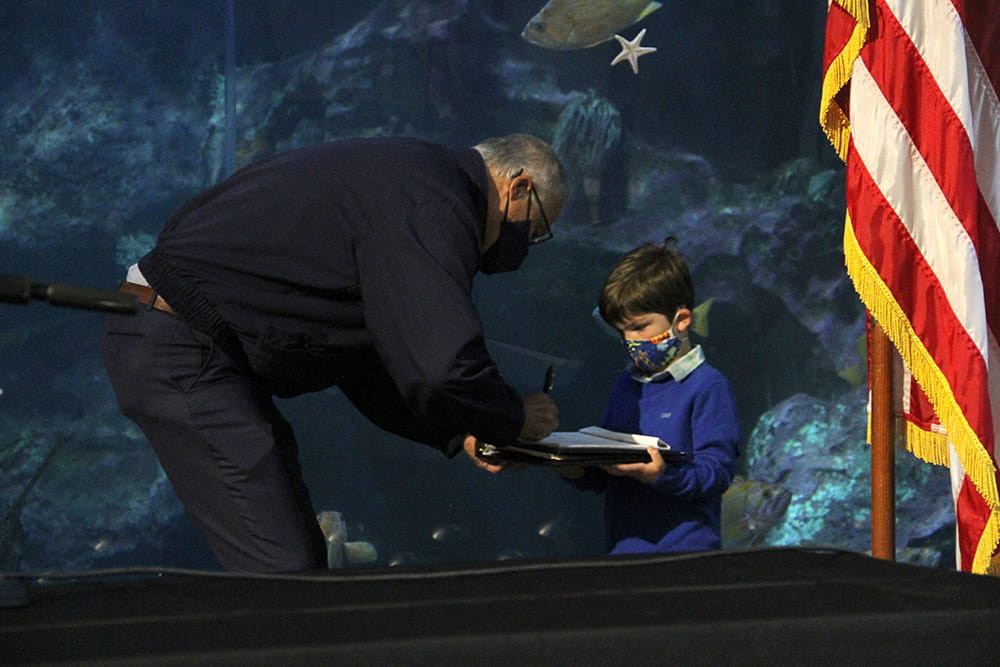
On Monday, May 17, Governor Jay Inslee came to the Seattle Aquarium to sign a new law (SB5022) that will reduce plastic pollution and improve recycling in Washington. The Aquarium worked closely with partners to help pass the bill, which helps protect the health of our ocean by cutting back on harmful and unnecessary single-use plastics. Enjoy a few photos from the big event!
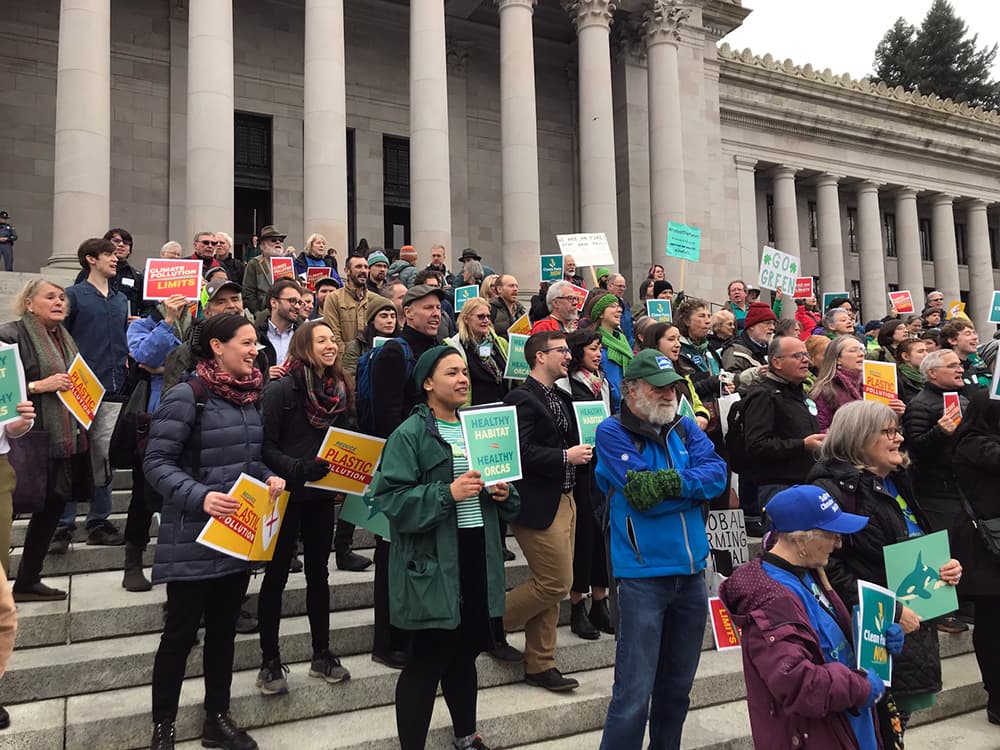
The 2021 legislative session looked different this year due to COVID-19. All legislative committees and votes were held virtually, and the capitol campus was closed to the public. Even with the switch to remote advocacy, the Seattle Aquarium was able to successfully advocate for science-based measures to protect our marine environment. Join us as we take a look back at some highlights from this session.
We worked closely with partners to pass Senate Bill 5022, which helps protect the health of our ocean by cutting back on harmful and unnecessary single-use plastics.
With the passage of SB 5145, Washington state prohibited seabed mining leases for hard minerals—like gold, titanium and more—in state waters. Seabed mining is an emerging global threat that would devastate fragile marine ecosystems. We joined our partners in testifying in support of this bill.
We are grateful to the state legislature for an operating budget that includes funding for Quiet Sound, which will help reduce underwater noise from ships and make it easier for the critically endangered orcas to find scarce salmon. Our ocean policy manager, Nora Nickum, advocated for this funding in a Quiet Sound op-ed in the Seattle Times with NRDC’s senior advocate for Quiet Seas, Regan Nelson.
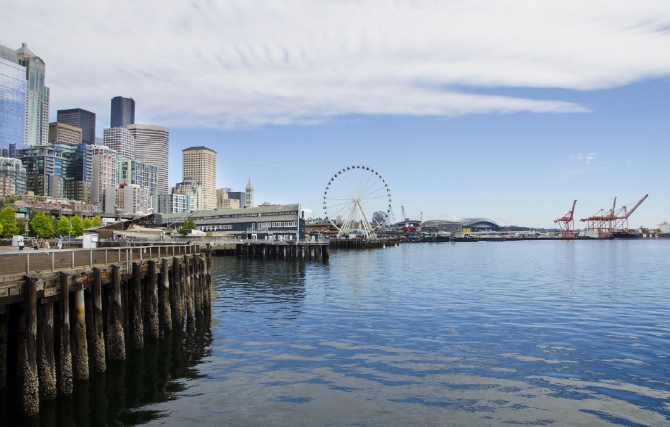
The Healthy Environment for All (HEAL) Act (SB 5141) adds an essential racial-equity lens to the environmental program work done by the state, and we were glad to endorse it. It also creates an Environmental Justice Council that will work with state agencies to ensure equitable community engagement. We congratulate Front and Centered on the passage of the HEAL Act—a vital step to ensure a healthy environment for all.
The transportation sector is responsible for nearly half of our climate and air pollution in Washington. We joined partners in urging the legislature to adopt a Clean Fuel Standard (HB 1091) and support a transportation system that prioritizes equity and reduces greenhouse gas emissions. We celebrate the passage of the Clean Fuel Standard, which will protect our climate and clean our air.
This session was a huge success, but there is still more work to do to protect the ocean.
In the next Washington state legislative session, the Seattle Aquarium and our partners will promote additional measures to reduce plastic pollution and improve our recycling system. We will also continue working to advance salmon recovery and push House Bill 1117 across the finish line. This bill, which would ensure that salmon recovery is integrated with local land use planning under the Growth Management Act, passed the House this year but did not get a vote on the Senate floor in time.
In the meantime, we will continue our work on federal policy—collaborating with aquariums across the country—in areas like plastic pollution, climate change, orca recovery, coral reef restoration and more.
Thank you to Senators Das, Saldaña, Van De Wege and Stanford and Representatives Berry, Fitzgibbon and Lekanoff for sponsoring these important bills to protect the health of our ocean.
We also want to extend a huge thank-you to everyone who participated in our action alerts. Constituent calls and emails helped get bills passed! (If you didn’t receive our email action alerts, please consider joining our policy email list.)

Fossil fuels pose a huge risk to the health of our oceans. When we burn fossil fuels such as oil, coal and natural gas, more carbon dioxide goes into the atmosphere. As the ocean absorbs some of these emissions, the chemistry of the seawater changes. Ocean waters that are more acidic dissolve shells and coral skeletons and make it hard for animals to form new shells. These changes, along with ocean warming and other climate change impacts, harm marine ecosystems and the people who rely on them for their food, livelihoods and well-being.
The transportation of fossil fuels and the accompanying potential for oil spills threaten the waters of the Salish Sea every day. There are proposed projects that would further increase oil handling in Washington state, along with the chance of devastating oil spills from trains, tankers and barges. In a 2019 count by Friends of the San Juans, there were 25 proposed new, expanding or recently completed terminal and refinery projects, which would add 4,232 more vessel transits every year to and from ports in Washington state and British Columbia.
Some types of oil are light and float on saltwater, spreading out very rapidly and making the oil easily accessible to seabirds and mammals at the water’s surface. Other kinds of oils are heavy and sink, causing problems for fish and organisms on the seafloor. Animals are hurt when they inhale oil as they surface to breathe or swallow oil as they try to clean themselves. When birds’ feathers or mammals’ fur get coated in oil, it also undermines their insulation, making it difficult for them to maintain the right body temperature. Oil and gas transport in marine waterways is listed among the primary threats to the sea otter population. And it is estimated that an oil spill of 2,000,000–4,000,000 gallons may kill up to half of the remaining endangered southern resident orcas (1).
Many Seattle Aquarium staff have the federal and local training required to safely handle and care for wild marine animals in the event of an oil spill. Three of our staff are also trainers and provide annual Hazardous Waste Operations and Emergency Response (HAZWOPER-24) classes in the region with a focus on oiled wildlife response.
But we must do more than prepare for the eventuality of a catastrophic oil spill in the Salish Sea. Fossil fuels must be phased out to protect the health of our ocean and the marine species that call it home. The Seattle Aquarium has begun engaging with partners in the Stand Up to Oil coalition, a group of organizations committed to protecting Pacific Northwest communities from the health, safety and environmental threats of oil infrastructure and transport.
Over the last few months, we have raised our voice to oppose new fossil fuel infrastructure in Washington state and ensure that oil spill risks to endangered species are explicitly considered in project-approval processes. These efforts have included:
We invite you to join the Seattle Aquarium in speaking up for the health of our ocean and climate! Get breaking news and urgent action alerts by subscribing to our policy email list.
(1) Lacy, R.C., Williams, R., Ashe, E. et al. Evaluating anthropogenic threats to endangered killer whales to inform effective recovery plans. Sci Rep 7, 14119 (2017).
Although things will look different in the Olympia legislature this year due to COVID-19, the Seattle Aquarium is still gearing up to advance science-based measures to protect the ocean. Keep reading to learn about some of our top priorities for 2021.
Scientists predict that by 2050, if we don’t make drastic reductions in the amount of plastic we use and dispose of every day, there will be more plastic than fish in the ocean by weight.
Last year, we worked with partners to pass the Reusable Bag Bill and help slow the flow of plastic into the ocean.
This year, we’re actively supporting Senate Bill 5022, which includes measures that will protect the health of our ocean by cutting back on harmful and unnecessary single-use plastics:
The Seattle Aquarium supports the Healthy Environment for All (HEAL) Act (SB 5141), a recommendation from the Environmental Justice Task Force which adds an essential racial equity lens to the environmental program work done by the state.
The transportation sector is responsible for nearly half of our climate and air pollution in Washington. We join partners in urging the legislature to adopt a Clean Fuel Standard (HB 1091) and support a transportation system that prioritizes equity and reduces greenhouse gas emissions.
In the context of the multi-billion-dollar budget shortfall resulting from the pandemic, and as a member of the Environmental Priorities Coalition, we also support the Conservation Works priority. This seeks to protect essential environmental programs from budget cuts and promote investments in stimulus projects that tackle climate change, create good jobs, recover salmon and help communities chart their own course for a better future.
Read more about the Environmental Priorities Coalition’s shared legislative priorities.
We support a prohibition on seabed mining leases for hard minerals—like gold, titanium and more—in state waters (SB 5145). This is an emerging threat and would have unavoidable and devastating impacts on marine ecosystems.
The pandemic also makes it essential to support the cultural community, including aquariums, with new funding tools that ensure we emerge strongly from the pandemic. The Aquarium is advocating for legislation that would allow local legislative bodies to establish new cultural access programs either through council and commission vote or through a vote of the people.
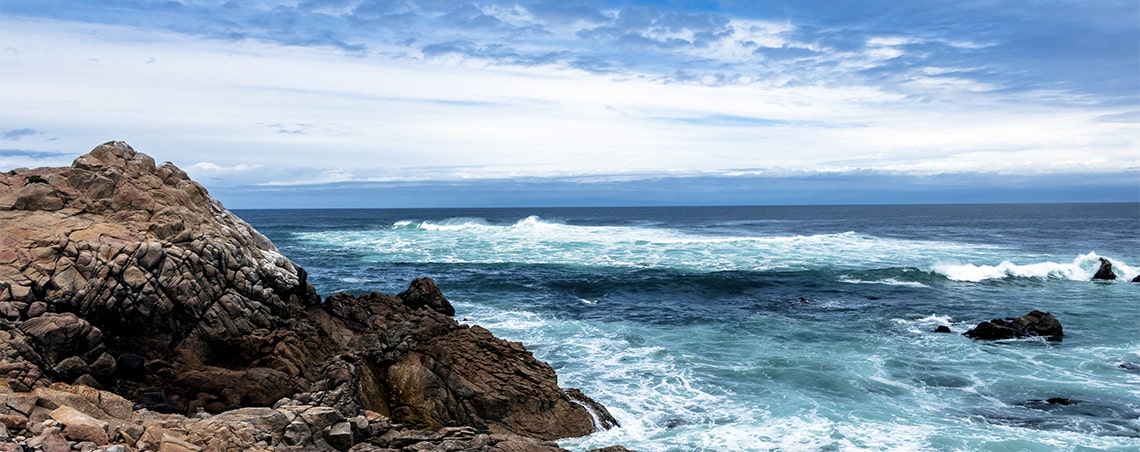
We’re at a turning point in the climate change discussion: The ocean is now fully recognized for the critical role that it can and will play in solving the crisis.
For many years, discussions of climate change have centered on the land. The land is certainly important for climate action–it’s where we live, and where we emit a lot of greenhouse gases from transportation, power plants, farming, construction and more. Meanwhile, talk of the ocean and climate change tended to be limited to worries about sea level rise or impacts to fishing and shellfish production.
However, more and more people—including leaders—have begun to recognize that the ocean and the spectacular diversity of species and ecosystems it contains are impacted by climate change in many other ways. And, crucially, the ocean is a key part of the solution: It can help us address climate change—yet another reason to work hard to protect it.
The ocean absorbs excess heat and carbon from the atmosphere. That has helped to slow the accumulation of greenhouse gases in the atmosphere and delay increases in air temperature. But it has also led to an increase in the frequency and severity of warm water events like El Niño and a measurable decrease in pH, otherwise known as ocean acidification. In turn, these changes wreak havoc on marine ecosystems and the people who rely on them for their food, livelihood, health and well-being.
In 2020, the House Select Committee on the Climate Crisis and various nonprofits put forward action plans for how we can reduce fossil fuel use, protect the ocean and its resources, and lift up the communities most affected by climate change. This week, there was a hearing in Congress on a new Ocean-Based Climate Solutions Act—a monumental step forward in focusing attention on the role of the ocean in climate action.
Investing in renewable energy, protecting eelgrass beds and other habitats and supporting sustainable fishing and aquaculture—all guided by science—have been proven to mitigate the effects of climate change. They also have many other benefits for ecosystems, economies and communities, including ensuring food security and climate resilience for coastal communities. Last year, Dr. Erin Meyer, director of conservation programs and partnerships, had an op-ed in the Seattle Times calling for these kinds of investments and more.
Coastal restoration efforts support vibrant fish populations by providing habitat for juvenile fish, and they also help mitigate the effects of sea level rise. Reefs, salt marshes, forested tidal wetlands and mangroves act as buffers against storms and can store up to four times the carbon per acre than land-based ecosystems.
Well-managed fisheries can provide food security and benefit species throughout the marine food web, beyond just fish. Science-based fisheries management supports everything from plentiful plankton to thriving whales, as well as resilient human communities. And here in Washington, the ocean supports over 60,000 fishing industry jobs. In order to ensure that all of these benefits persist, we’ll need our leaders to ensure that fisheries management considers how habitats will shift and species will need to migrate as the climate changes.
The ocean also provides space for the large footprint needed for renewable energy production, which will help us transition away from fossil fuels. However, offshore energy installation and operation may pose a risk to marine ecosystems and cultural practices. Governments should utilize the best available scientific and socioeconomic data to minimize these and other risks from offshore wind farms and other renewable energy projects in the ocean.
All of these efforts will require people—and a focus on climate justice. Ocean-climate solutions can provide jobs, lift up overburdened communities and advance a just economic recovery that is so urgent right now.
We’re celebrating that the ocean is now part of the U.S. conversation about climate change. Combatting climate change cannot be limited to 30% of the planet’s surface. So far, the ocean has mitigated some of the impacts, but it’s becoming increasingly clear to all that we must act before changes to the ocean are irreversible—and that we need to protect the ocean and its ability to help provide solutions for a brighter, more equitable future.
After Hours Premier: Pride Celebration
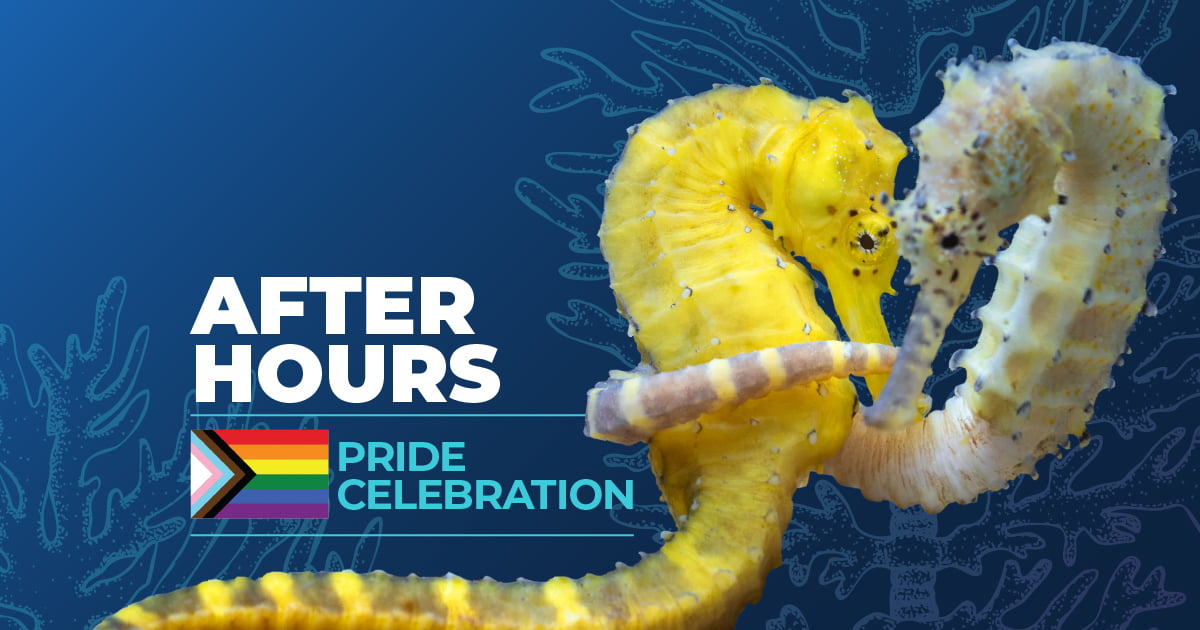
Friday, July 17 | 7–10pm
Join us one evening each month when the Aquarium remains open late just for adults 21+
Today only, your gift will be matched dollar-for-dollar up to $25,000 thanks to the generosity of donors Betsy Cadwallader, J & Tim, and Jess & Andy Peet. Help us reach our $50,000 goal!