This site uses cookies. View our Cookie Policy to learn more about how and why.

Regular hours: 9:30 am – 6 pm
Last entry at 5 pm

Tired of doomscrolling? Try kelp scrolling!

We all spend a lot of time on our phones these days. But what if that screen time could help kelp forests?

Welcome to Kelp Quest, a chance for you to participate in the Seattle Aquarium’s marine research.

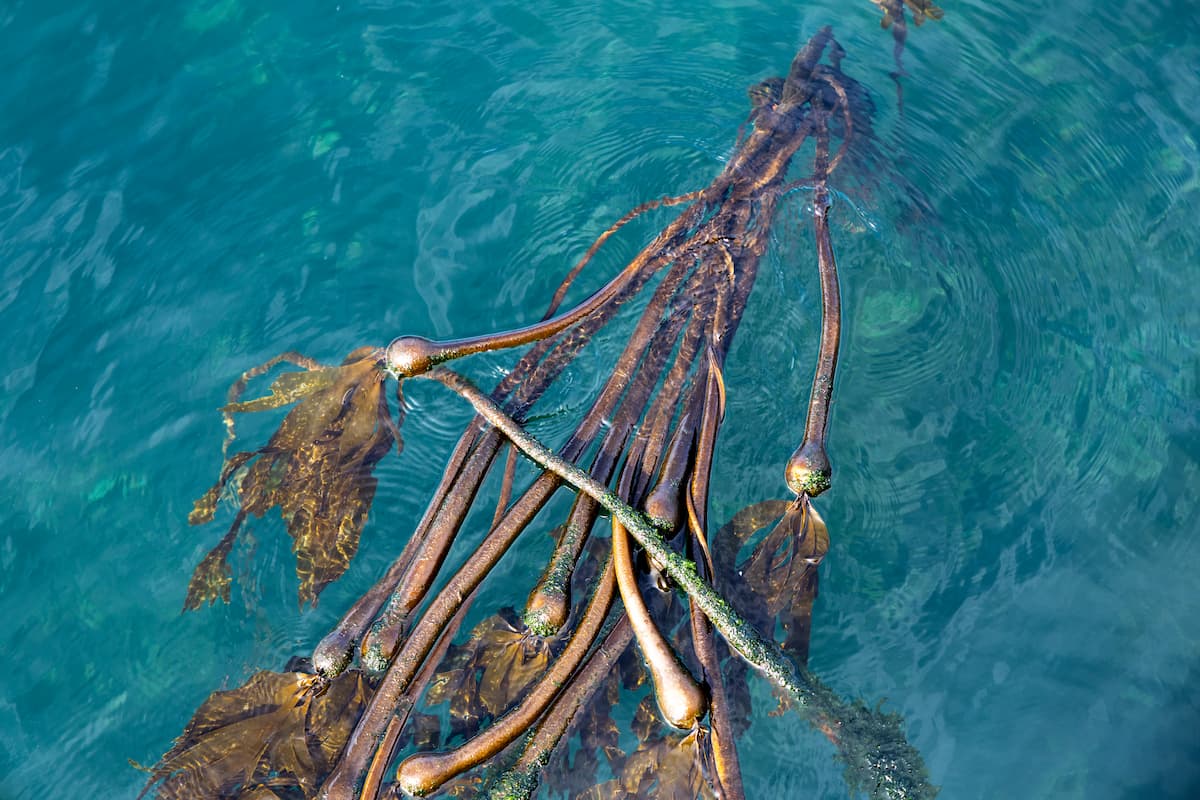
First, a little refresher. Kelp is a type of algae that provides critical food and habitats to many animal species, including sea otters and salmon. Kelp is also disappearing at an alarming rate. Figuring out how to reverse kelp’s decline is so important that the Aquarium has a research team dedicated to protecting kelp forests. Our Coastal Climate Resilience (CCR) team studies the conditions that contribute to bull kelp thriving or declining in certain areas of the local seafloor, and we share all our research publicly to inform action to protect kelp forests.

The Aquarium’s research team collects images of the seafloor—and we need your help to sort through the data!

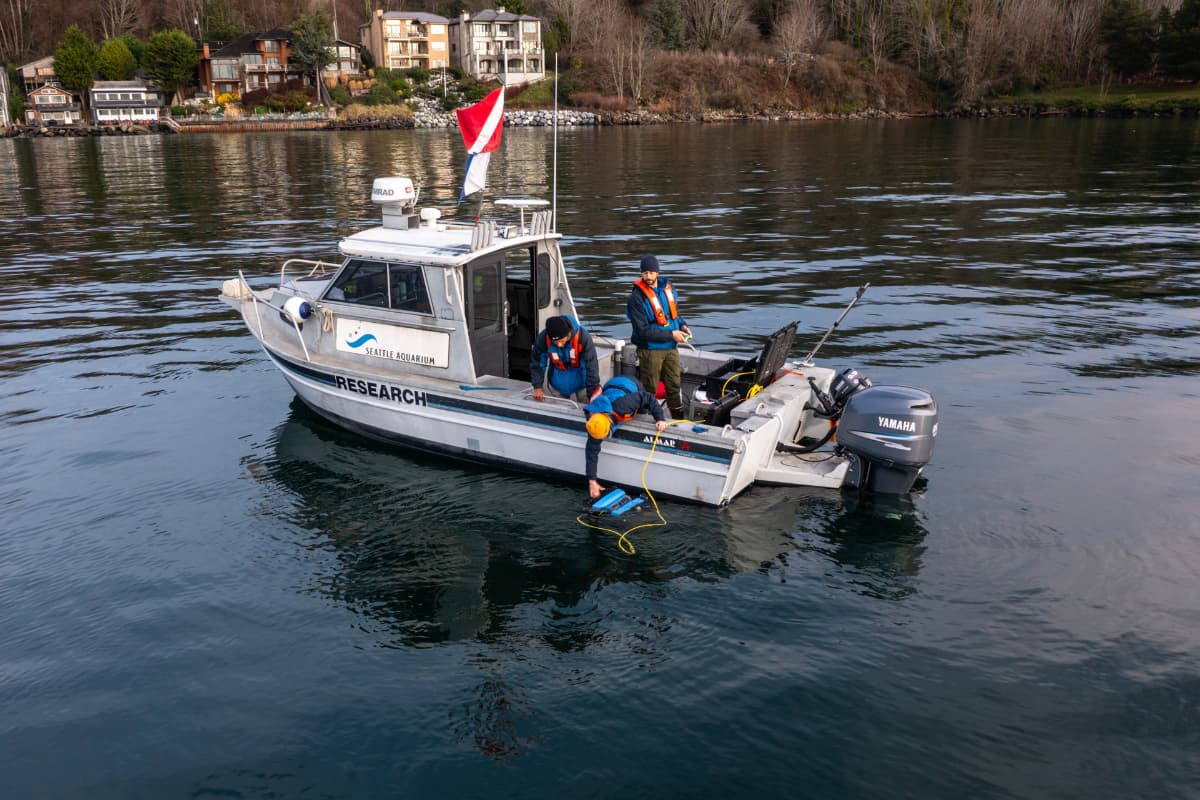
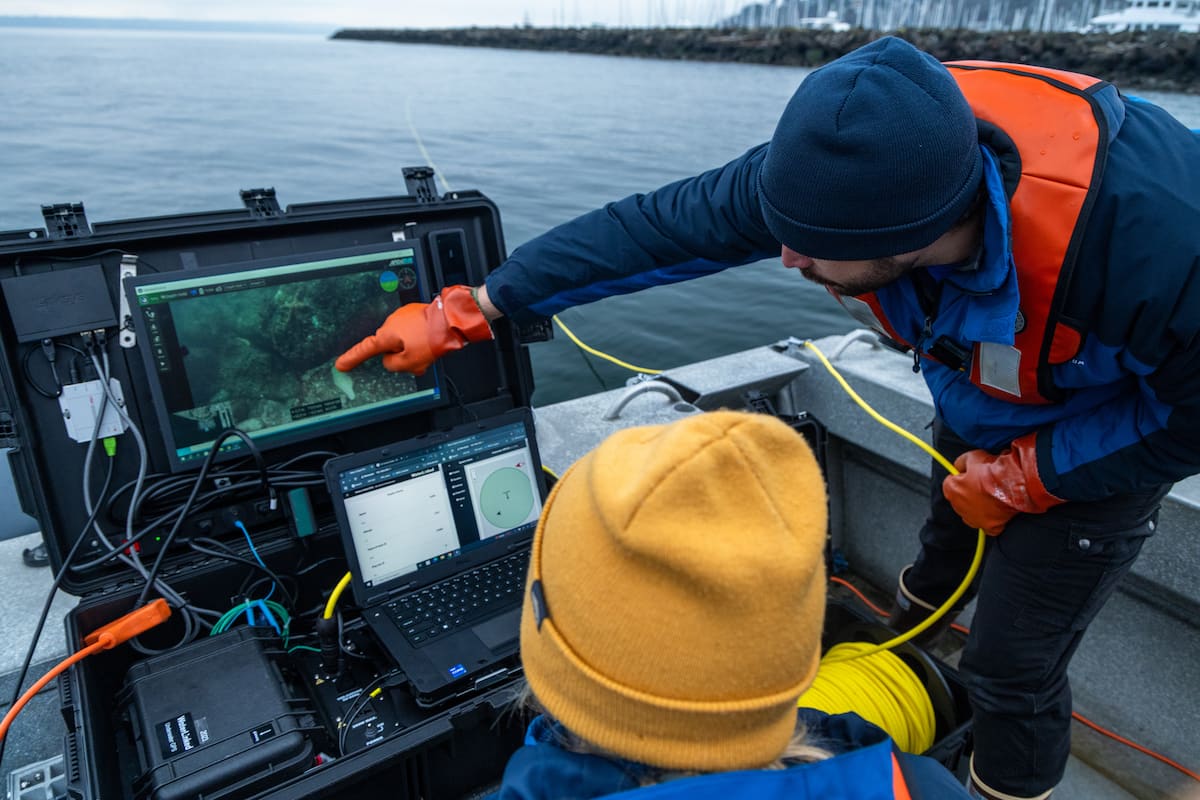
You might be familiar with the Aquarium’s remotely operated vehicles (ROVs). Our CCR team has used two of these relatively lightweight and nimble vehicles to take tens of thousands of images of the seafloor. The team has trained a machine-learning model to identify the animals, algae, objects and seafloor found in our massive library of images.

Models like the one we use are designed for maximum efficiency and low computational cost. These types of models have been around since the 1950s and are frequently used in scientific and environmental research to find patterns in large sets of data. But the Aquarium’s model is still learning and makes mistakes.

That’s where you come in! Anyone with access to the internet can contribute to Kelp Quest by reviewing and interacting with the collected images.

Diving into Kelp Quest

“None of us were born as kelp experts. We all learned through exposure to animals and algae. This approach leverages our natural ability to recognize details and patterns while supporting ocean conservation.”

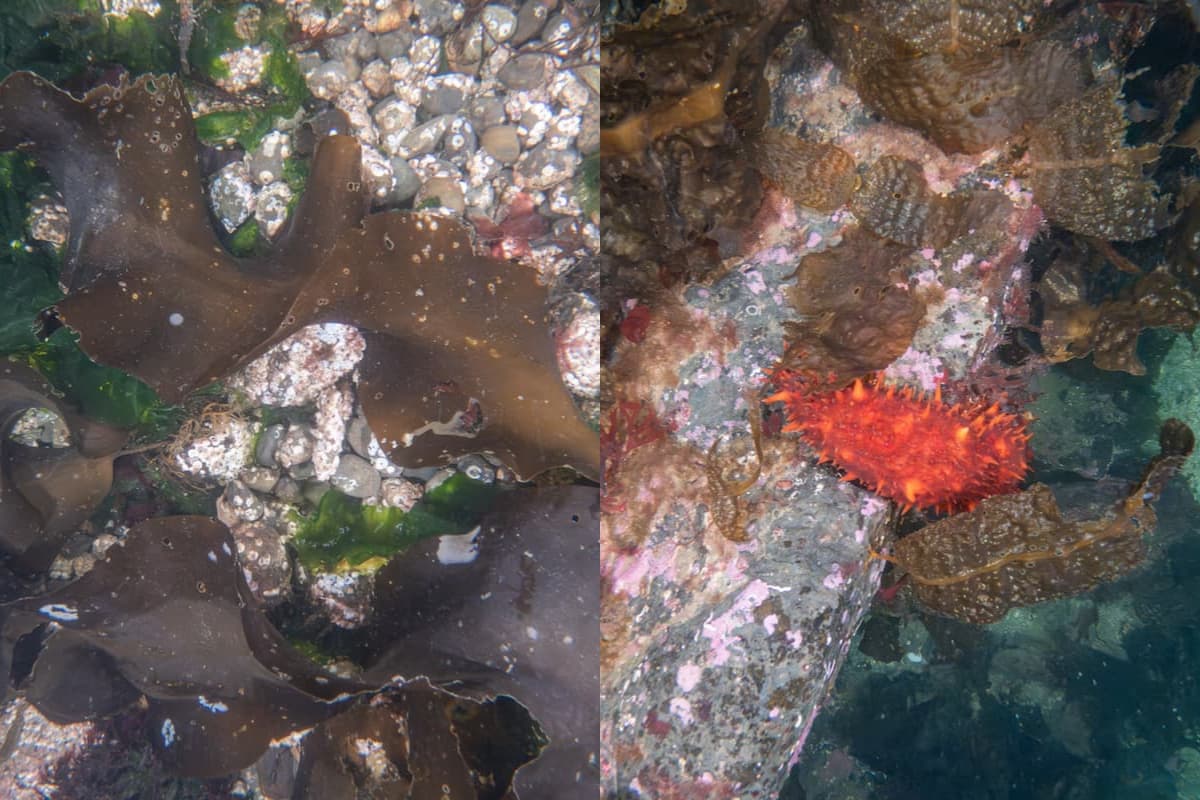
There are two ways to help. In the “Yes/No” workflow, you can confirm or refute the model’s guess of what is pictured in the image. And in the “Multiple Choice” workflow, you’ll label the image yourself.

Examples of the types of images you’ll help sort.

Don’t worry if you’re no marine expert! The CCR team has developed a handy “Field Guide” that goes over all sorts of things you might encounter, from kelp and other algae to rocks and car tires. The CCR team is also very active in the project’s “Talk” forum, where volunteers can discuss interesting findings or troubleshoot hard-to-identify images.

By helping label these images, not only are you supporting this project, but you’re also helping train our model to be more accurate, further supporting future marine research.

Science is a team sport

“We really want to make our research as collaborative as possible to boost kelp forest conservation efforts. The more hands we have on this project, the faster we can uncover ecological insights that will better inform conservation."

Kelp Quest is hosted on Zooniverse, a platform built around the idea that many people (including those with no formal training) can collaborate on research projects together. Many of the projects on Zooniverse require going through large amounts of data, something that would take small research teams ages, even with computer assistance.

But with nearly three million registered volunteers around the world, that work can be done much quicker. And as Zooniverse itself points out, humans are uniquely good at pattern recognition, often even better than computers, as is the case in Kelp Quest.

As an open-source and open-access research project, Kelp Quest is set up in a way that supports the idea that science is a team sport. Open source means the computer code we use to run the model is publicly available for anyone to use and improve. And open access means we make the results of our research (including the model) publicly available whenever possible.

We make our findings available to help promote kelp conservation and further research.

In keeping the project open like this, the CCR team hopes to encourage collaboration and transparency in their work. One of the unexpected benefits to this is that some volunteers have already reached out to get involved with the project or to suggest ways to improve it.

Salish Sea superstar

“Kelp forests and the species that rely on them are beautiful, ecologically important and increasingly vulnerable to human impacts and climate change. We hope Kelp Quest will connect people to this underwater world while directly contributing to research and management decisions that advance kelp forest conservation and restoration.”

At the core of this research is the question: What factors contribute to kelp forests thriving or declining?

Bull kelp is a key player in many of the Pacific Northwest’s nearshore ecosystems.

And that’s an important question when it comes to Puget Sound’s marine ecosystem. Like the coral reefs found in warm waters, kelp forests are hotbeds of biodiversity. They serve as habitats for many species, including nurseries for young salmon and rockfish.

These mighty undersea forests also protect shorelines and enrich coastal communities. And the Pacific Northwest’s Indigenous communities have used kelp and stewarded coastal ecosystems since time immemorial.

Whenever you engage with the Seattle Aquarium, be it online or in person with a visit, you directly support vital marine conservation work. Talk about being “kelpful!”

Meet the team

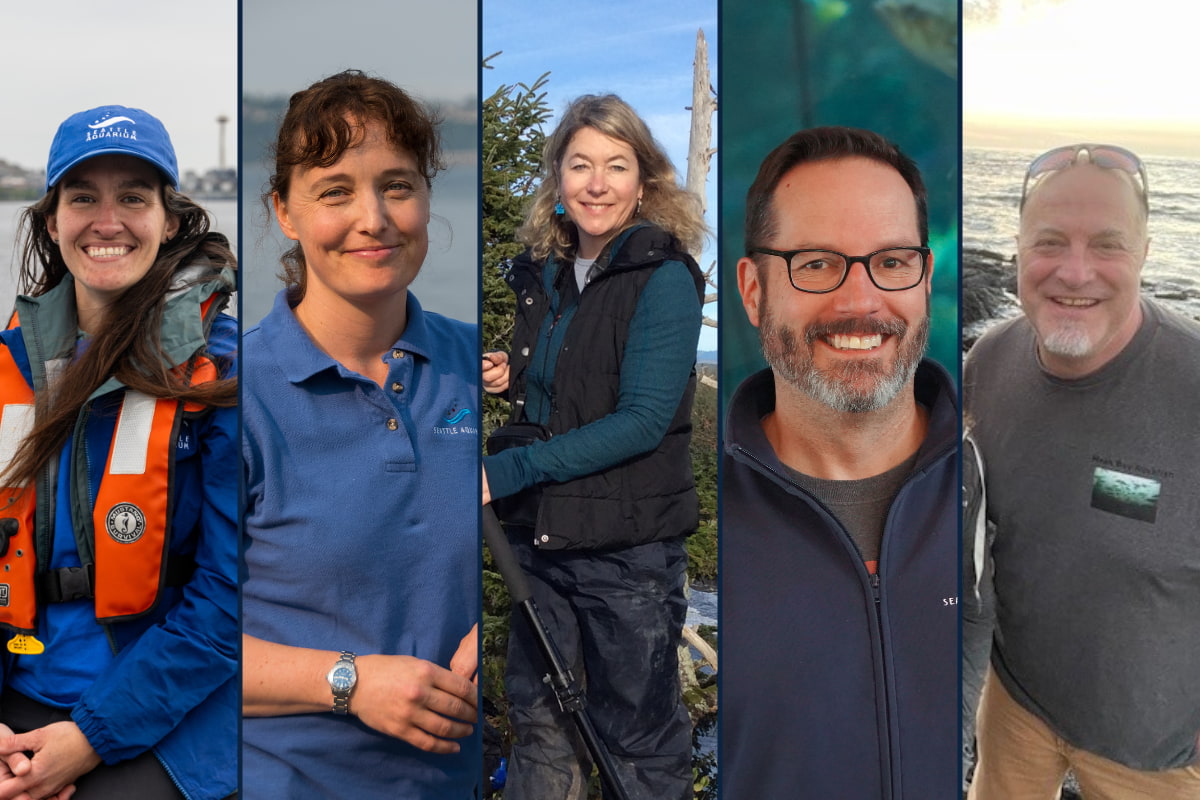
Want to know more about the dedicated scientists leading the project? Read on!

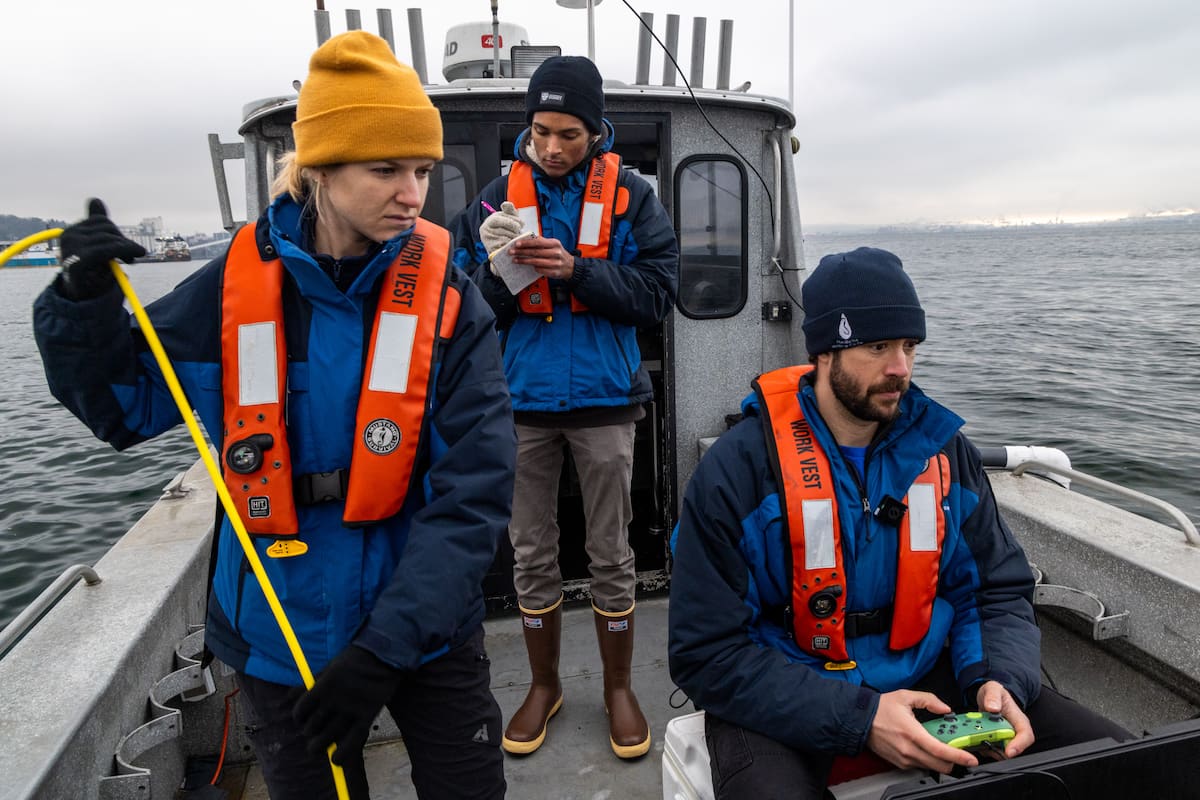
(From left to right) Megan Williams, Reid Thomson and Zachary Randell conduct field research in Seattle’s Elliott Bay.

Dr. Zachary Randell, Ph.D.

Senior research scientist

Zach grew up in Anchorage, Alaska, and started scuba diving there when he was 15. His passion for ocean exploration led him to pursue scientific scuba diving at the University of California, Santa Cruz and complete a dissertation at Oregon State University, focusing on long-term kelp forest dynamics, underwater experimentation and dynamical modeling. He has always been eager to explore underwater, and this project allows him and his team to use cutting-edge ROVs and data analysis to study the ocean in new ways.

Megan Williams, M.S.

Research scientist

Megan grew up in Seattle, where sailing and exploring tide pools fostered an early appreciation for the beauty of Puget Sound. That connection to the marine environment led her to James Cook University in Australia, where she studied how coastal ecosystems respond to change. She has played a key role in advancing the CCR team’s spatial analysis and machine learning work and brings a strong field perspective to the team. She remains inspired by Washington’s rugged, green waters and is committed to protecting the natural places that shaped her life for future generations.

Reid Thomson, B.S.

Research technician

Despite his upbringing in the Midwest, Reid developed an unwavering passion for marine life at an early age. Summers spent constantly in and around lakes and streams fused with a love of nature documentaries to drive his fascination with the mysteries held by even larger bodies of water. Reid’s curiosity led him to pursue a degree in marine science at Boston University, where he refined his passion toward a career in marine research. He has a particular fondness for fieldwork that helps him explore Washington’s beautiful, rugged coast.

Getting to know Ruby, the new southern sea otter in our care

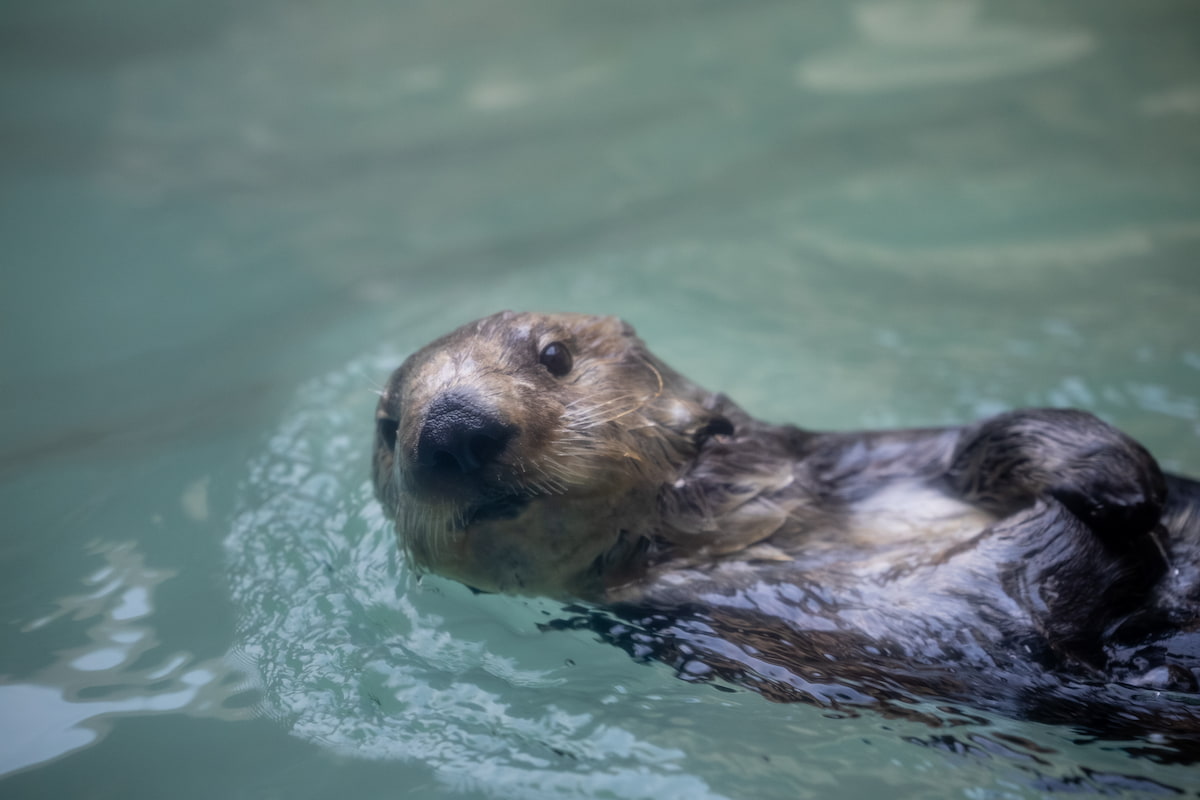
Have you heard the news? The northern sea otters in our care, Mishka and Sekiu, have a new habitat-mate! Ten-year-old southern sea otter Ruby joined us on November 19, moving from her former home at the Monterey Bay Aquarium (MBA).

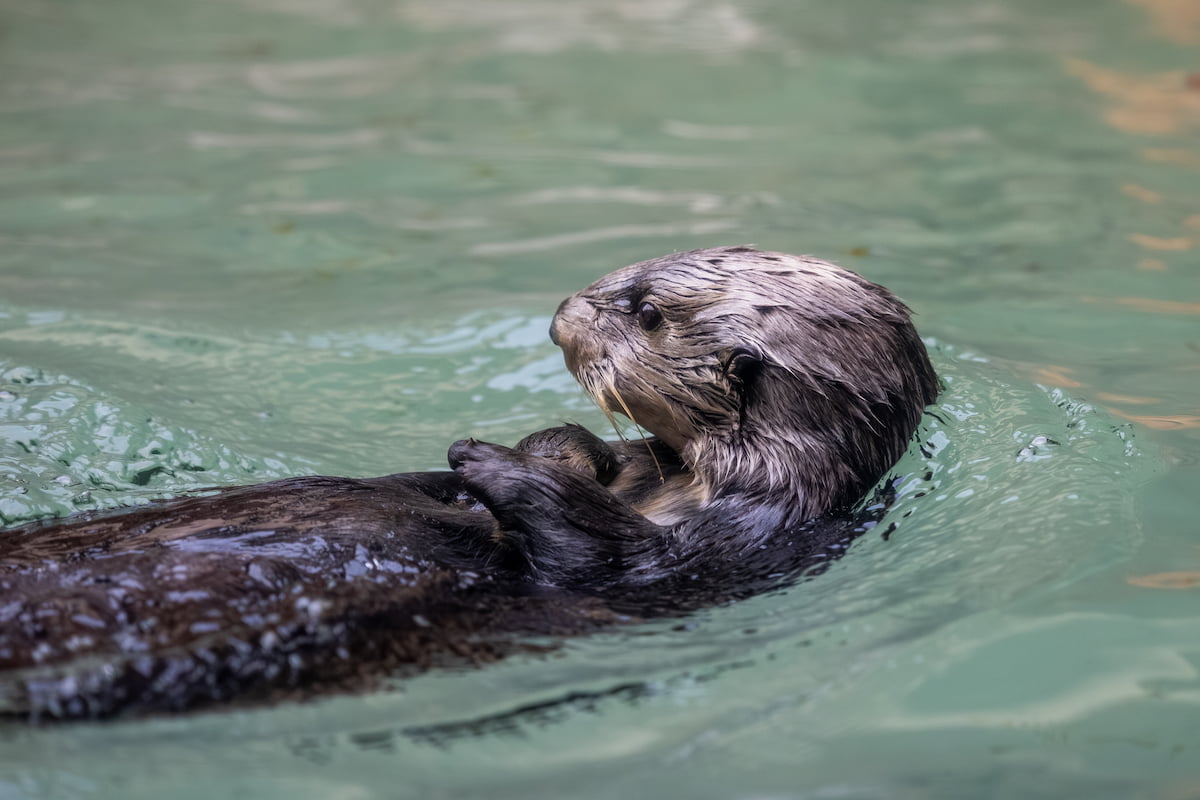
Ruby floating on her back.

Welcome, Ruby!

Starting (very) small

Ruby was found, stranded, as a newborn pup in September of 2015. Weighing just 1.9 pounds, she was one of the smallest pups her rescuers had ever seen.

She was raised behind the scenes at MBA in their sea otter surrogacy program. After several attempts at having her live on her own in the wild, the team at MBA found that she had become dependent on humans for food. She was ultimately deemed non-releasable by the U.S. Fish and Wildlife Service and went on to join MBA’s sea otter habitat in 2022—where she charmed guests and became a beloved ambassador for her species.

Ruby swimming in the sea otter habitat.

Ruby getting to know her new habitat at the Seattle Aquarium.

From Monterey to Seattle: A true west coaster

For months, our care team worked closely with MBA’s, shadowing their care of Ruby, learning about her history, likes and dislikes, social needs and more. Collaboratively, the teams decided that our otter population would be a great fit for her.

As we mentioned above, Ruby is the first southern sea otter in our care. Southern sea otters are considered a distinct population. And, while southern and northern otters don’t share wild habitats, they do happily cohabitate in zoos and aquariums—their care needs are identical.

(What’s the difference between northern and southern sea otters? It basically comes down to two things: their range and their size. Northern sea otters have a range from Washington state to British Columbia and Alaska. Southern sea otters are found in California. And northern sea otters are larger, with males weighing up to 100 pounds and females up to 70—while southern males top out at about 65 pounds with females around 45 pounds. For context, Ruby’s current weight is 44 pounds; with Mishka at 50 and Sekiu at 54.)

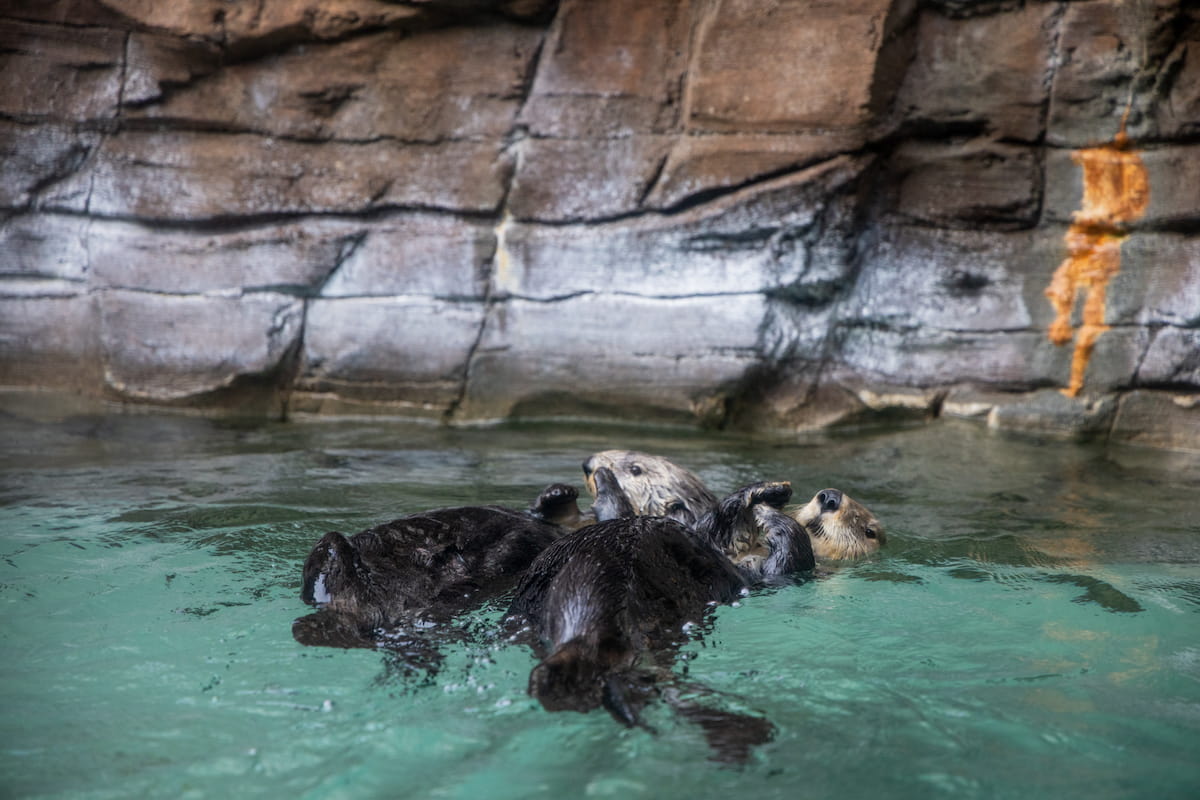
Ruby and Sekiu floating on their backs together.

Ruby relaxing with Sekiu.

Settling in

After making the journey to the Seattle Aquarium on November 19, Ruby was quickly introduced to her new habitat—and then to Mishka and Sekiu. In short, things have been going swimmingly!

Comments Senior Animal Care Specialist Kelli Lee, “When introducing an animal into a new habitat, we expect them to be active and explore every inch. After they’ve had a chance to check out their space, we look for behaviors that show they’re comfortable, such as resting and eating. For sea otters specifically, we also look to see that they’re grooming, since that’s essential for staying warm.” (Learn more about how amazing sea otter fur is on our sea otter webpage!)

Kelli continues, “When introducing sea otters, we expect them to interact with each other by sniffing each other’s faces and heads. Then, after this typically brief interlude, we continue to make sure they’re all grooming, eating and resting.”

“They’ve been cohabitating well,” says Animal Care Specialist Michelle Munoz. “Ruby tends to follow Sekiu the most. You can see her resting with Sekiu in the main habitat, and at night, Mishka and Sekiu will haul out on deck by their mats, so Ruby will join them.”

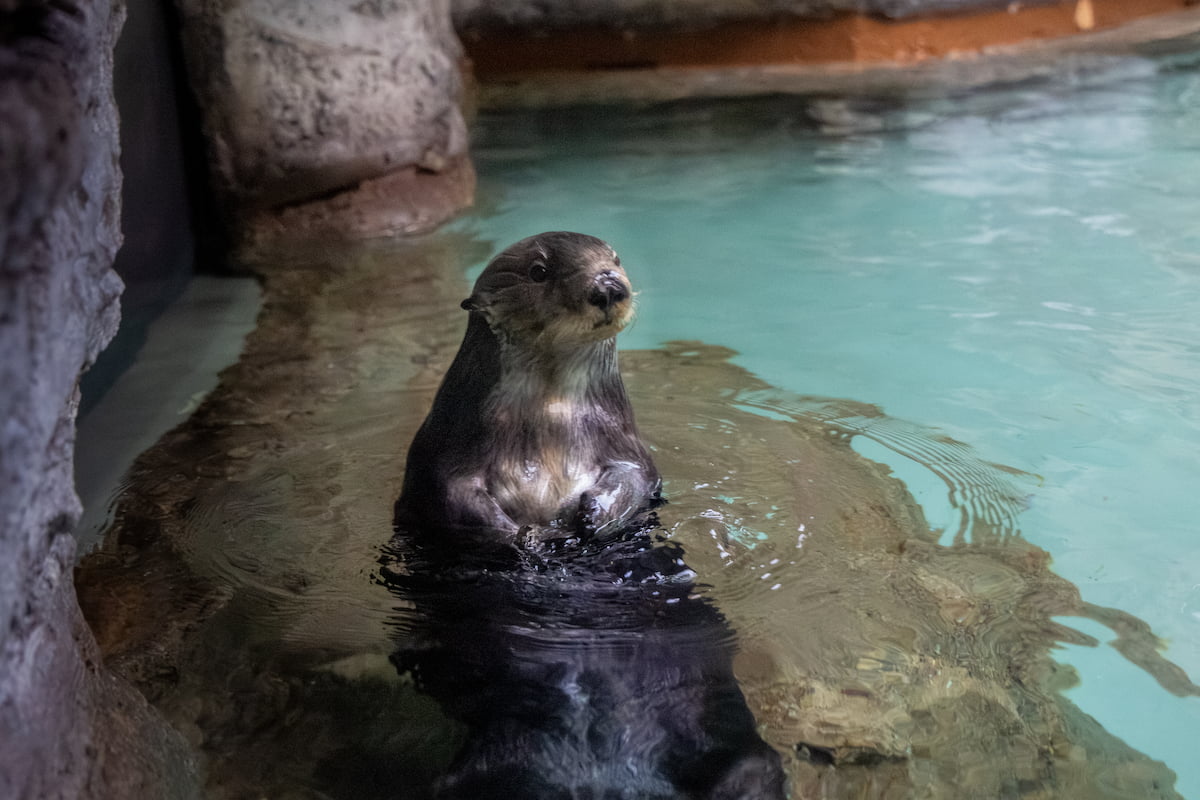
Ruby floating on her back.

Ruby, we’re so glad you’re here!

Welcome to the Emerald City, Ruby!

Ruby’s preferences quickly became clear to her caregivers. Notes Kelli, “Ruby enjoys interacting with enrichment, such as puzzle feeders, a lot. Her favorite food is shrimp and her least favorites are surf clam siphons and stomachs.” (Can you blame her?)

She adds, “When spending time outside of feeding sessions, she likes to rest in areas of the water that are shallow, such as the arch between the two habitats.” Want to see what she’s up to? Check out our live webcam!

In the weeks and months to come, we’ll continue working with MBA as we learn more about Ruby. “Getting her comfortable in the space is our priority so she can do all the things a sea otter does—like grooming and eating,” comments Michelle. “Building a relationship with Ruby will help us work with her in the long run and also allows us to start training new behaviors with her!”

A decades-long commitment to sea otter conservation

For 30+ years, the Seattle Aquarium has led in the research of sea otters in Washington and contributed to recovery efforts with partners and collaborators around the world. We also have a long history of caring for individual northern sea otters who are unable to live in the wild.

Ruby’s arrival represents our continued commitment to sustaining and recovering sea otters, from California to Alaska and beyond. As a nonprofit, this work—both in the field and right here at the Aquarium—is only possible thanks to the support of our community. Every visit to the Aquarium supports this work and our conservation mission overall. We thank you!

We can’t wait for you to meet Ruby. Plan your visit today!

Taking a bite out of food waste: Composting supports sustainability at the Seattle Aquarium Café

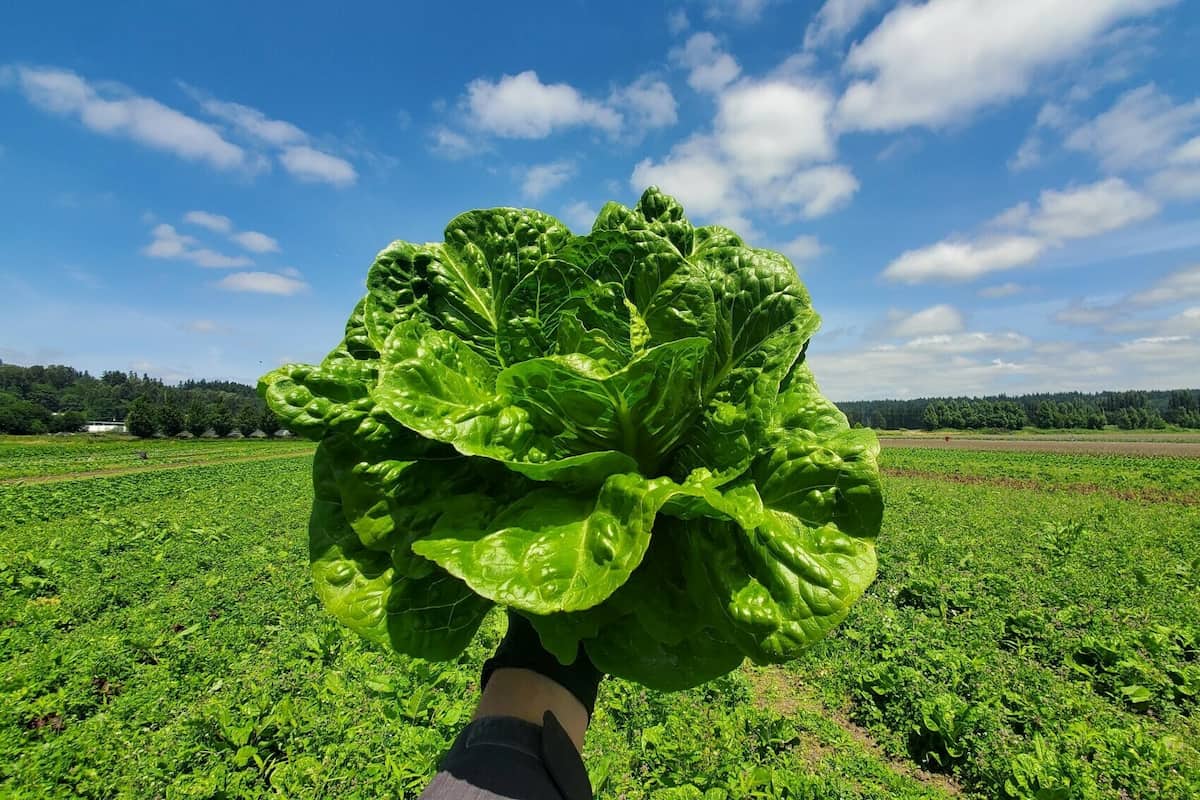
A large head of lettuce being held up in front of a farm.

Compostable packaging from the café ends up helping local farmers grow lettuce and other produce—which then gets served at the café! Photo credit: Sound Sustainable Farms.

When you sit down to enjoy a delicious lunch in the Seattle Aquarium Café, there’s a chance that the lettuce on your burger was grown using “trash” from the Aquarium.

As a part of our vision to become a regenerative institution—one that gives back to the environment more than we take from it—the Aquarium has a complex relationship with “trash.” We know it well. That’s because we work to divert as much “trash” as we can from landfills, with the ultimate goal of becoming a zero-waste facility. Instead, most items on our campus can be recycled or composted.

Composting is a method of breaking down or “recycling” organic matter, including food scraps, into a rich material that resembles soil. Growers use the finished compost to enrich their soils.

OVG Hospitality, which operates the Seattle Aquarium Café, partners with the local composting company Cedar Grove. Cedar Grove provides the compostable packaging for café food and handles the composting process afterward.

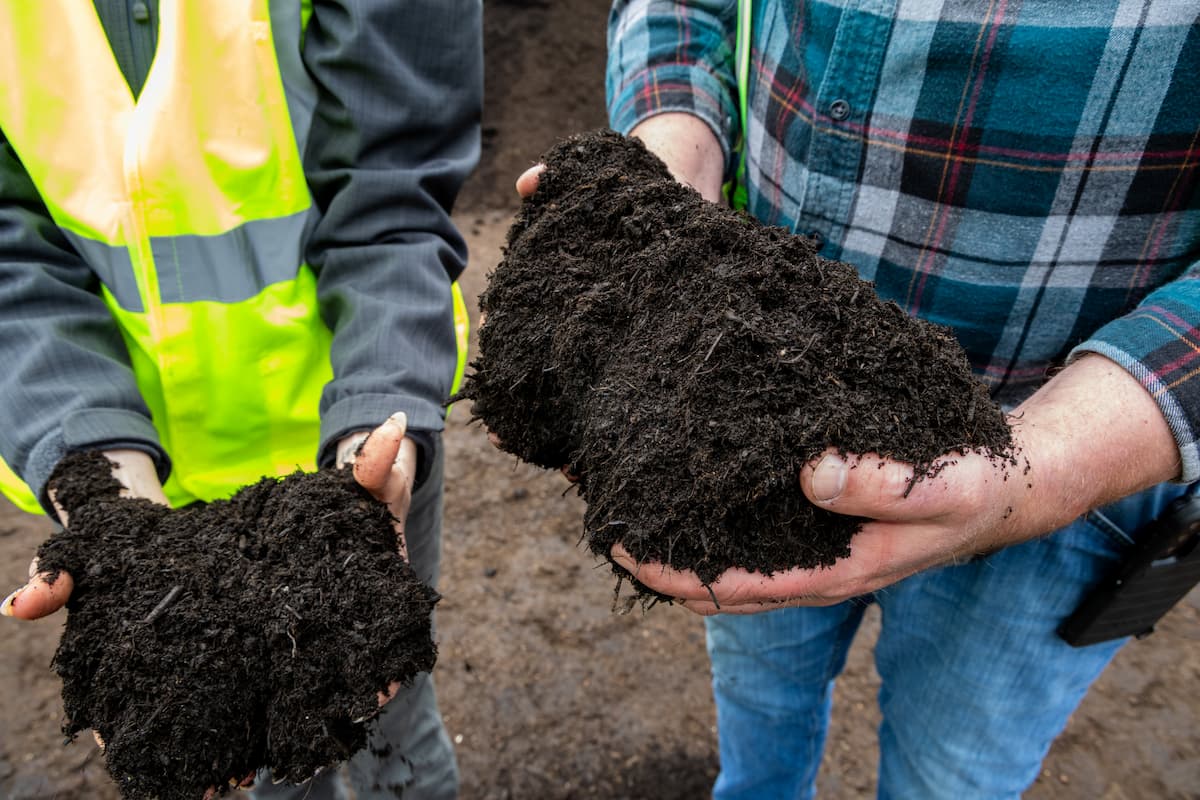
Two people holding large clumps of composted material in their hands.

Finished compost like this is a soil enricher made of broken down organic matter.

When a used compostable fork or cup enters the compost bin at the café, that is just the start of its journey. Cedar Grove picks up the Aquarium’s compostable materials, which also includes other organic waste and paper towels, and takes them to their composting facility. There, it is processed and refined into high-quality compost.

After that, the compost gets put to work at Sound Sustainable Farms, an organic farm in Redmond that is also operated by Cedar Grove, where it enriches the soil for local produce, which can be enjoyed by many businesses and community members.

Available produce at Sound Sustainable Farms varies by season, but the Aquarium mainly purchases leafy greens like lettuce and kale. We strive to source as much produce as possible from them and plan to buy even more as they continue to scale up their operations.

Cedar Grove’s rich compost is also used by other organizations, including the City of Seattle, and can be purchased by anyone. That means the Aquarium’s food waste goes on to support gardens, farms and green spaces across the region. Through the composting process, the Aquarium and our community can participate in “closing the loop” on sustainability, where discarded “waste” can actually be processed and used in a way that allows for future growth.

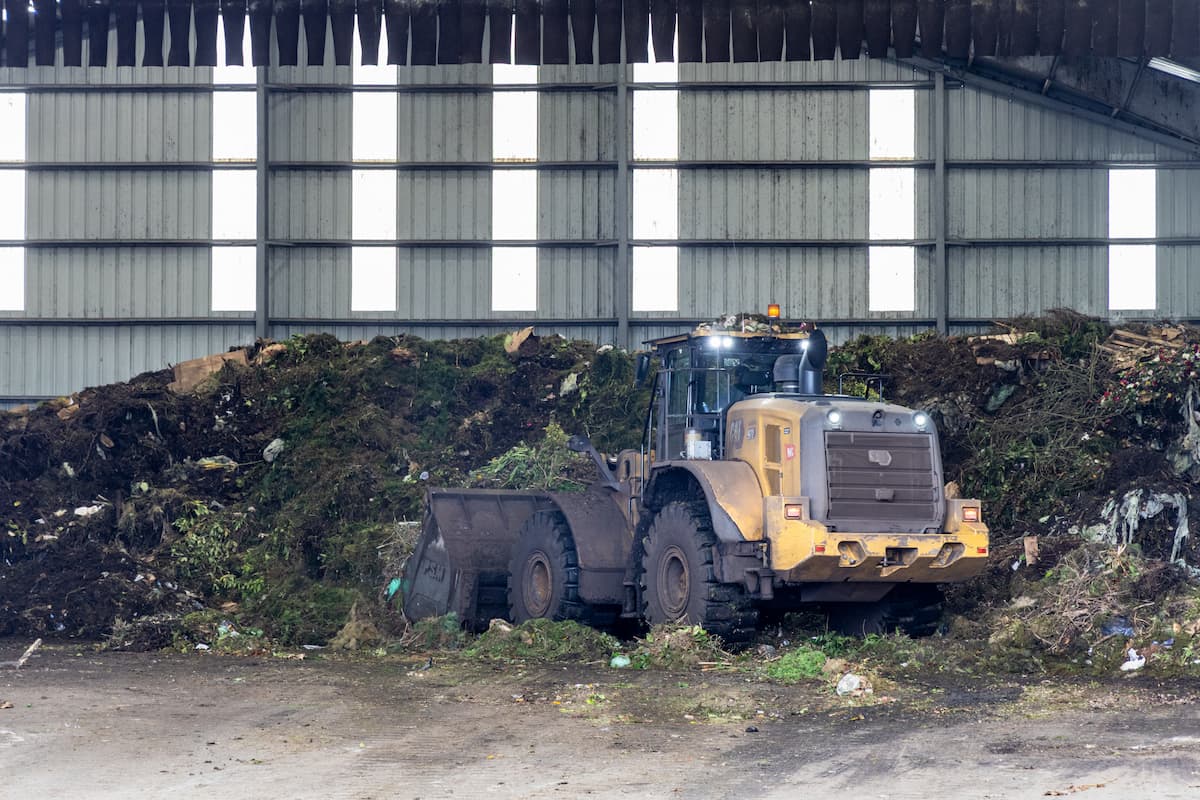
A large truck scooping up food waste.

By composting food scraps, yard waste and other organic matter, Cedar Grove diverts hundreds of thousands of tons of waste from landfills every year.

The Seattle Aquarium Café also recently took another exciting step toward sustainability by swapping out gas-powered food prep equipment for electric appliances earlier this year.

We all have a part to play in caring for the environment, including by making more conscious decisions about the ways we choose, prep, store and dispose of our food and other waste. So, the next time you’re at the Seattle Aquarium, double check before tossing something out. We’ve got some handy signs in the café to help you sort your “trash.” Because that napkin or spoon could have a second life nourishing somebody’s lunch.

Beyond the bin: What happens to our compost?

The next time you dine at the Seattle Aquarium Café, you’ll be asked to put food waste and compostable packaging into one of our green compost bins.

What happens to the contents of that bin after you leave the Aquarium? To find out, we visited a local facility operated by Cedar Grove, which provides the compostable packaging used in our café and processes our food waste.

Air, water, wood and microbes form a composting dream team. Together, they undergo a process of around 49 days that produces compost. Cedar Grove then further ages that compost for 12 to 18 months to allow it to mature into a high-quality product that’s ready to be sold!

Follow along to see how your waste is transformed into nutrient-rich compost that helps plants grow and even filters harmful chemicals from run-off along highways! (Hungry for more? Dive into how your compost also powers your next lunch at our café!)

Journey beyond the bin

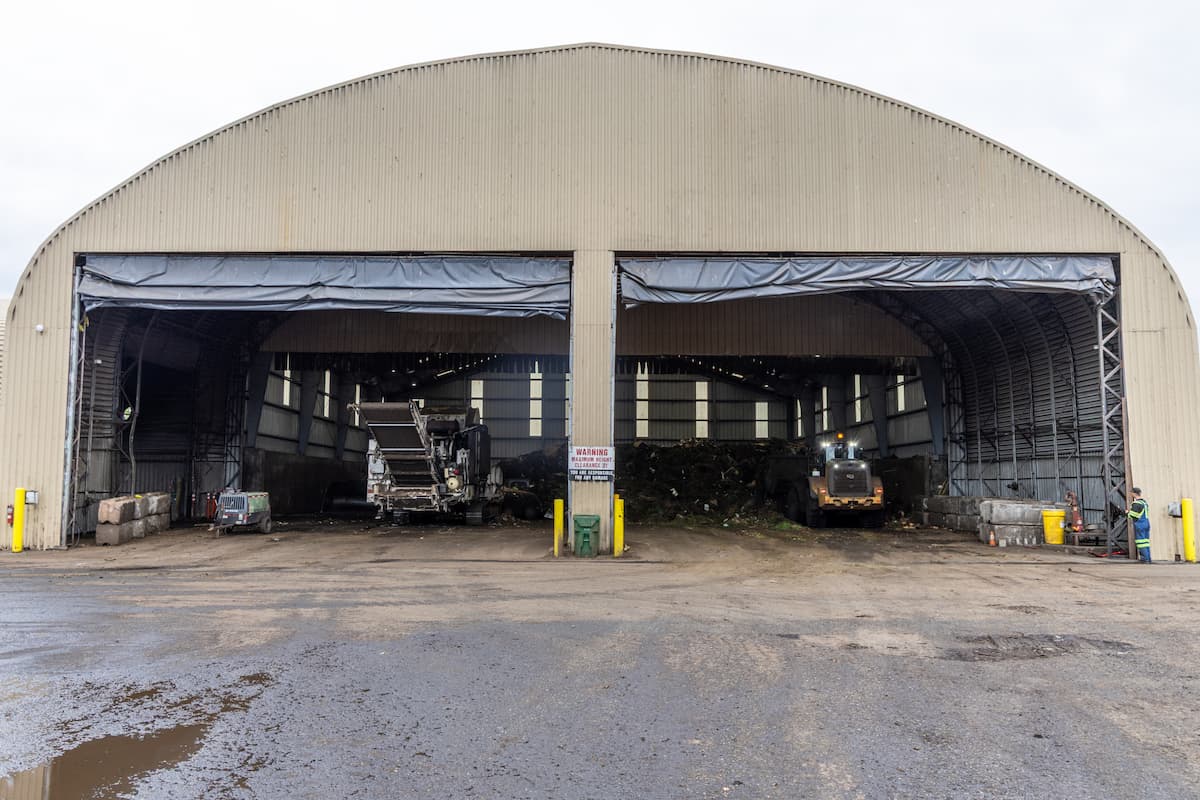
The Everett facility we visited processes between 700 and 900 tons of compost each day. The high volume means that trucks visit this “tipping building” day and night to drop off new yard and food scraps from homes and businesses. A special biofilter in the back naturally filters the odors associated with unloading the material.

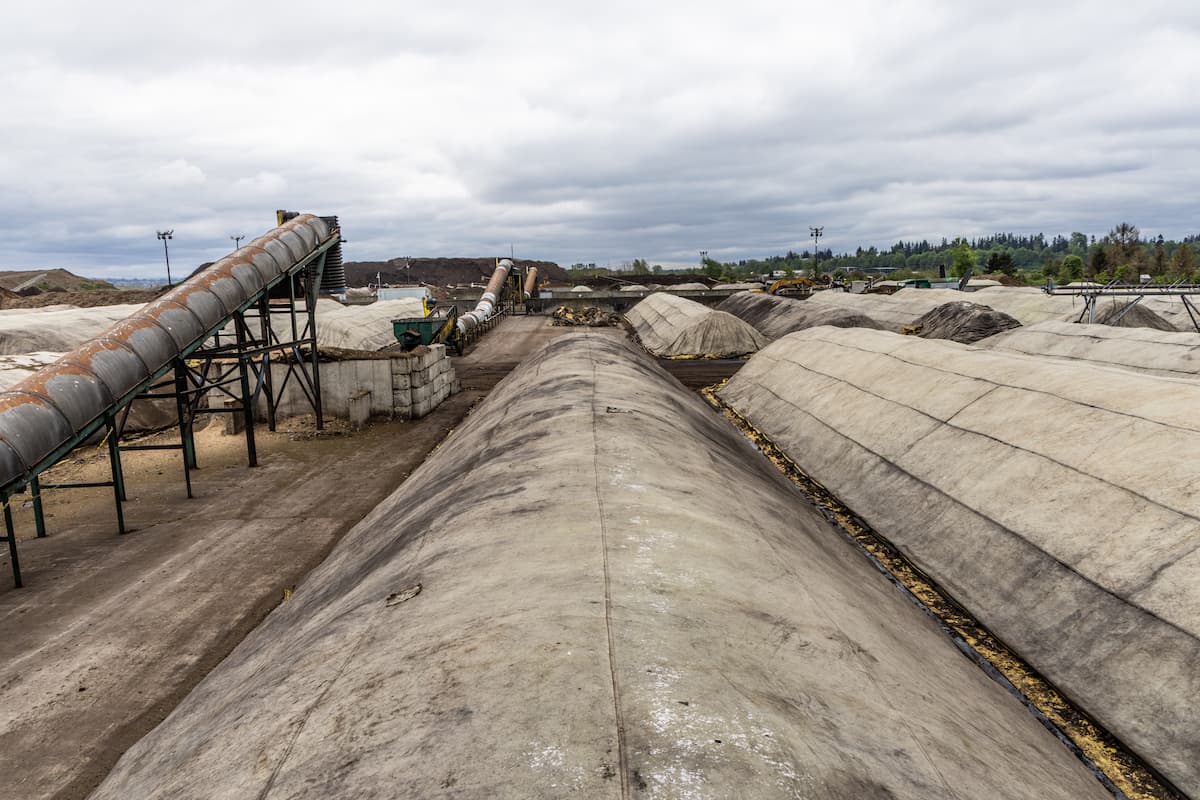
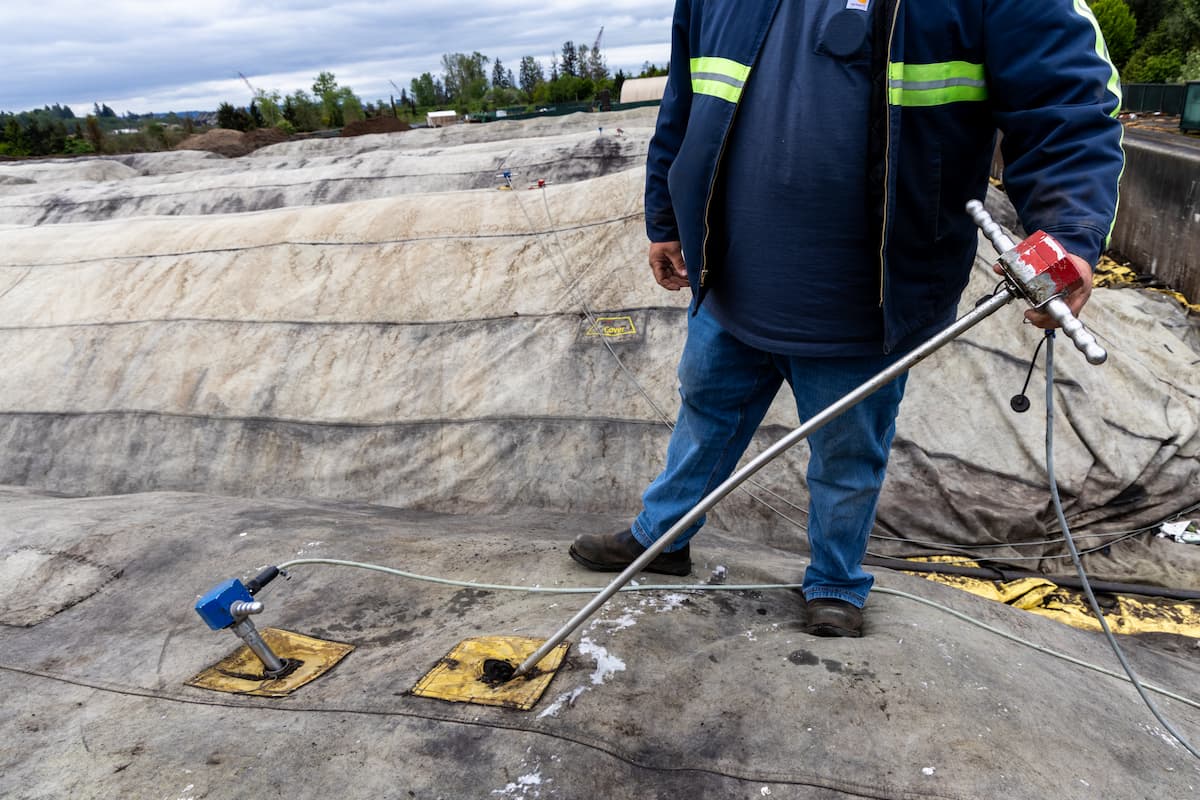
From the tipping building, the fresh material is ground and placed onto an electronic conveyer belt. The material passes under a powerful magnet that removes metal contaminants like nails. Then Cedar Grove shapes it into long rows that are about 10 feet tall and pulls a breathable fabric cover over each row. The cover creates a biosphere where microbes can begin to break down the material. Air and water—microbes’ essential collaborators in this process—are added to the rows.

As microbes work with air and water to break down the waste, temperatures within each row naturally rise to 160 to 180 degrees Fahrenheit. Cedar Grove’s team carefully monitors oxygen levels and temperature using a probe.

Toward the end of the 49-day process, the covering is removed from each near-final compost row. It’s starting to smell less like food waste and more like a forest floor! 

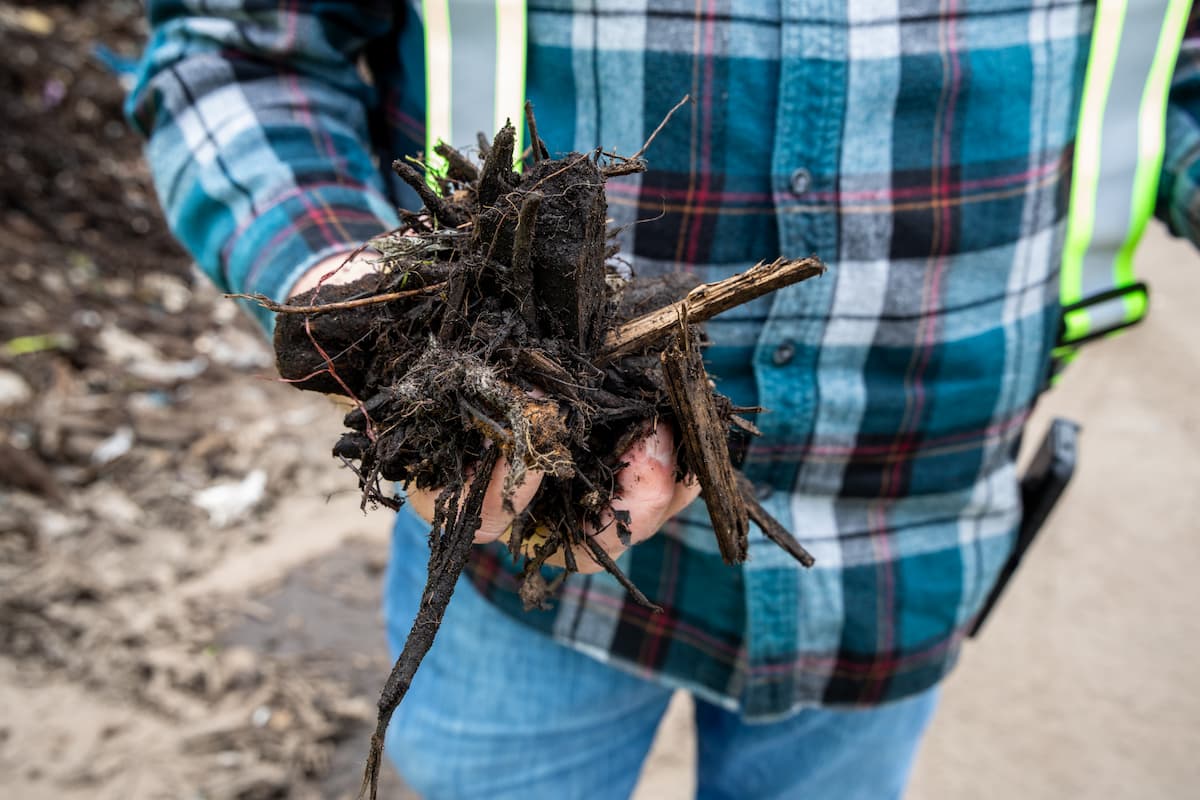
Once the process is complete, the compost is screened for contaminants like plastic. Sometimes it needs one more pass through the system. Here, a Cedar Grove team member holds material that is not ready to use yet even though it has broken down substantially—and will go through these steps again.

Once the final product has been screened and approved by Cedar Grove’s team, it’s ready to sell. Compost that’s ready to sell looks like dark soil, feels velvety and smells woodsy. Cedar Grove turns our compost waste into a variety of soil products that help grow new life, prevent erosion and even line the sides of local highways—where they filter contaminants from runoff including 6PPD, a chemical that’s toxic to coho salmon.

Participating in the life cycle of composting is one of the ways the Aquarium lives its commitment to sustainability. Thank you for doing your part to keep our compost bins free of contaminants and to breathe new life into what would otherwise be waste!

A rosy outlook for rockfish: good news from our research in the Strait of Juan de Fuca

Imagine you’re on a small boat in Neah Bay, located within the traditional waters of the Qʷidiččaʔa•tx̌iq (Makah) on Washington’s remote outer coast. The wind is blowing. Frigid seawater surges around you as the boat rises and falls with the waves.

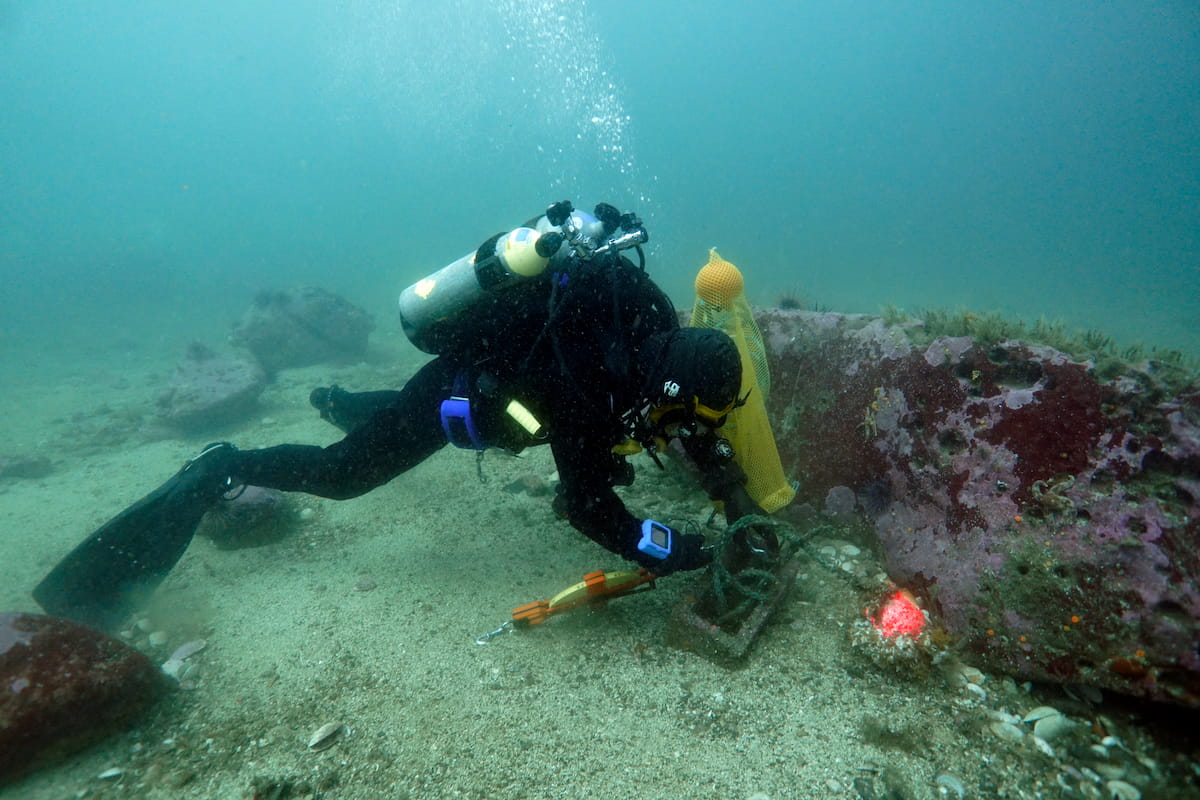
Why are you here? To scuba dive up to 70 feet below the surface and find a concrete marker, only about a foot long, on a seafloor that’s teeming with life: anemones, sponges, sea stars and more.

And that’s just the beginning: That small marker is the starting point for a survey in which you’ll swim about 280 feet (100m) ahead and behind, taking video of everything in your path—including the rockfish you’re there to count—before you run out of air. When you’re done, you’ll surface, climb back into the boat, move to another site and do it all again.

A diver placing a survey marker on the seafloor.

A Seattle Aquarium diver at a survey marker in Neah Bay.

Twenty years (and counting!) of rockfish research

The Seattle Aquarium launched our research study in Neah Bay in 2005—but our dive team has been sustainably collecting fish and invertebrates for the Aquarium’s habitats in those waters since the 1980s.

“It was very ‘fishy’ in the early years,” says Senior Conservation Research Manager Dr. Shawn Larson, who has been on staff at the Aquarium since 1995. “But as time went by, we noticed things were different. It seemed that we were seeing fewer rockfish but there was no way to know for sure. It was clear that population monitoring was needed.”

A memorandum of agreement with the Makah Tribe was signed, stating that the Tribe gives the Seattle Aquarium permission to conduct this research in their waters, and share the data collected to inform ecosystem management. And with that, our rockfish monitoring study was born.

Go below the surface of Neah Bay with our dive team!

Wait a minute: what’s the big deal about rockfish?

There are over 1,000 species of rockfish around the world, with 34 of them in Washington waters (and 14 at the Seattle Aquarium!). They’re important in a variety of ways, such as:

  • As mid- to top-level predators, rockfish help maintain ecosystem balance by controlling populations of their prey, including shrimp, crabs and smaller fish. On the flip side, they’re an important food source for larger species like halibut, lingcod, marine mammals and seabirds.
  • Because they rely on healthy prey to thrive, their health is a good indicator that their ecosystems and prey populations are healthy too.
  • Rockfish do have a bit of an Achilles heel, though. For fish, they live very long lives (over 100 years for some species!). But they also have an extended generation time—meaning the number of years it takes for them to become sexually mature and produce young of their own. These long life spans and slower reproduction rates mean that every individual rockfish is an important contributor to the biodiversity of the ecosystem and that rockfish population recovery is slow.
  • There’s more. Check out our rockfish webpage to learn more about these amazing fish!

Now back to the good news

Results from this long-term research endeavor were recently published in a paper co-authored by current and former Seattle Aquarium staff members (including our own Dr. Shawn Larson), a biologist from Makah Fisheries Management, and researchers from the National Oceanic and Atmospheric Administration (NOAA).

If you’d like to take a really deep dive—including learning about the research methods and the value of using video as opposed to a more traditional slate and pencil—the paper is available to read online.

What we can share in a nutshell (or maybe a clamshell?) is that results from 19 years of research, across five different sites, revealed that the populations of rockfish in Neah Bay are stable—and even, in some species, increasing.

This is extra good news when you consider that rockfish are still legally fished (within limits) in these waters, whereas rockfish fishing in Puget Sound has been closed since 2010. “It shows that co-management of fisheries by the Makah Tribe and the state of Washington is working,” says Shawn.

Sea urchins and a sea star on a large rock underwater. A rockfish swims in the background.

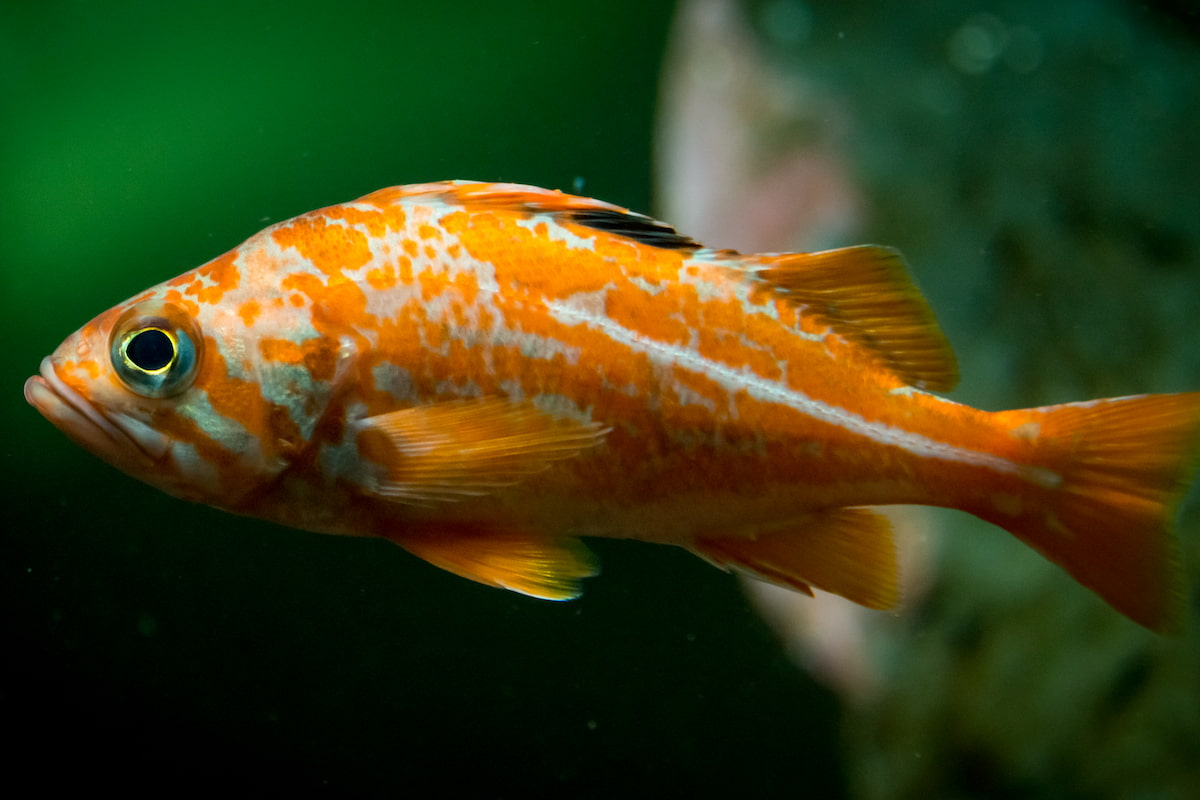
A canary rockfish at one of the survey sites.

The work’s not done—for us, and you too

“The news is good but we need to continue monitoring, especially so we can track changes related to climate change,” comments Shawn. Future plans for the study include adding a component to measure water temperature and using a remotely operated vehicle (ROV) to take measurements in deeper, colder waters.

You also have a role in ensuring that the outlook for rockfish stays rosy—in Neah Bay and elsewhere. Follow regulations if you enjoy recreational fishing. Contact your legislators to urge support for legislation that protects the ocean and its inhabitants. Use public transportation, fly less and limit your use of single-use plastics. Looking for other ideas? Check out our act for the ocean webpage or ask one of our friendly interpreters on your next visit to the Aquarium!

The ripple effect: Former youth volunteers make conservation a career, part 2

In our recent web story, we highlighted a number of former Youth Ocean Advocates, or YOAs—folks who participated in our teen volunteer program and then went on to a variety of ocean-related careers. Today, we’re happy to share several more.

These are just a few examples of the many young marine enthusiasts (over 2,500 since the program launched in 1994!) who learned and grew at the Seattle Aquarium—and then, in a wonderful ripple effect, went on to make a difference for the marine environment in their jobs and communities. We hope you enjoy reading their stories.

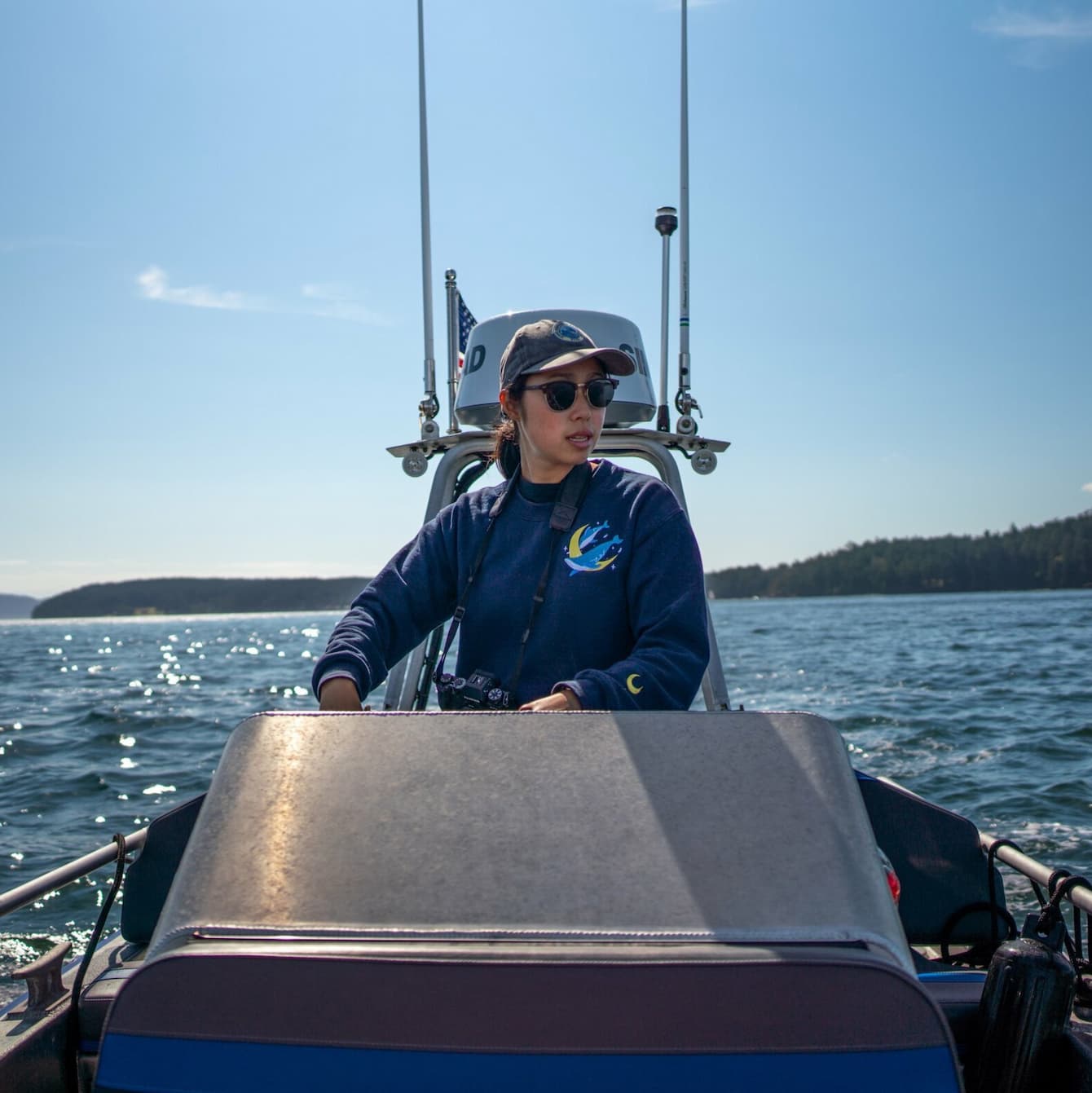
Bethany Shimasaki driving a boat on the open water. She is wearing a blue sweatshirt, a grey baseball cap, and sunglasses. An outcropping of forested islands can be seen in the far distance.

“The Seattle Aquarium shaped my journey and helped me see the tremendous impact of science education in informal settings.”

—Bethany Shimasaki, YOA 2012–2015

Imagine spending your days on the water, helping people discover the wonders of the ocean and the animals that live there. That’s what Bethany does: She works in ecotourism in Washington and Hawai‘i, specifically for small businesses that follow whale-watching guidelines. She shares knowledge with tour guests and, by taking photos of the whales she sees, she’s able to contribute data to researchers.

“I’ve been inspired by humpback whales since I was little,” she says. “I grew up in the San Juan Islands and spent a lot of my childhood on a boat.” Her curiosity and love for humpbacks only grew with time; in high school, she worked as a deckhand for a local whale-watching tour.

“Attending a career fair at the Seattle Aquarium helped me realize that people can do this for a living,” she comments. “I was shy and didn’t see my potential, but becoming a YOA helped me realize that I could talk to people.” She continues, “Education is key to changing policy. And if I can give people a connection to humpbacks, they’ll start caring and acting to protect them.”

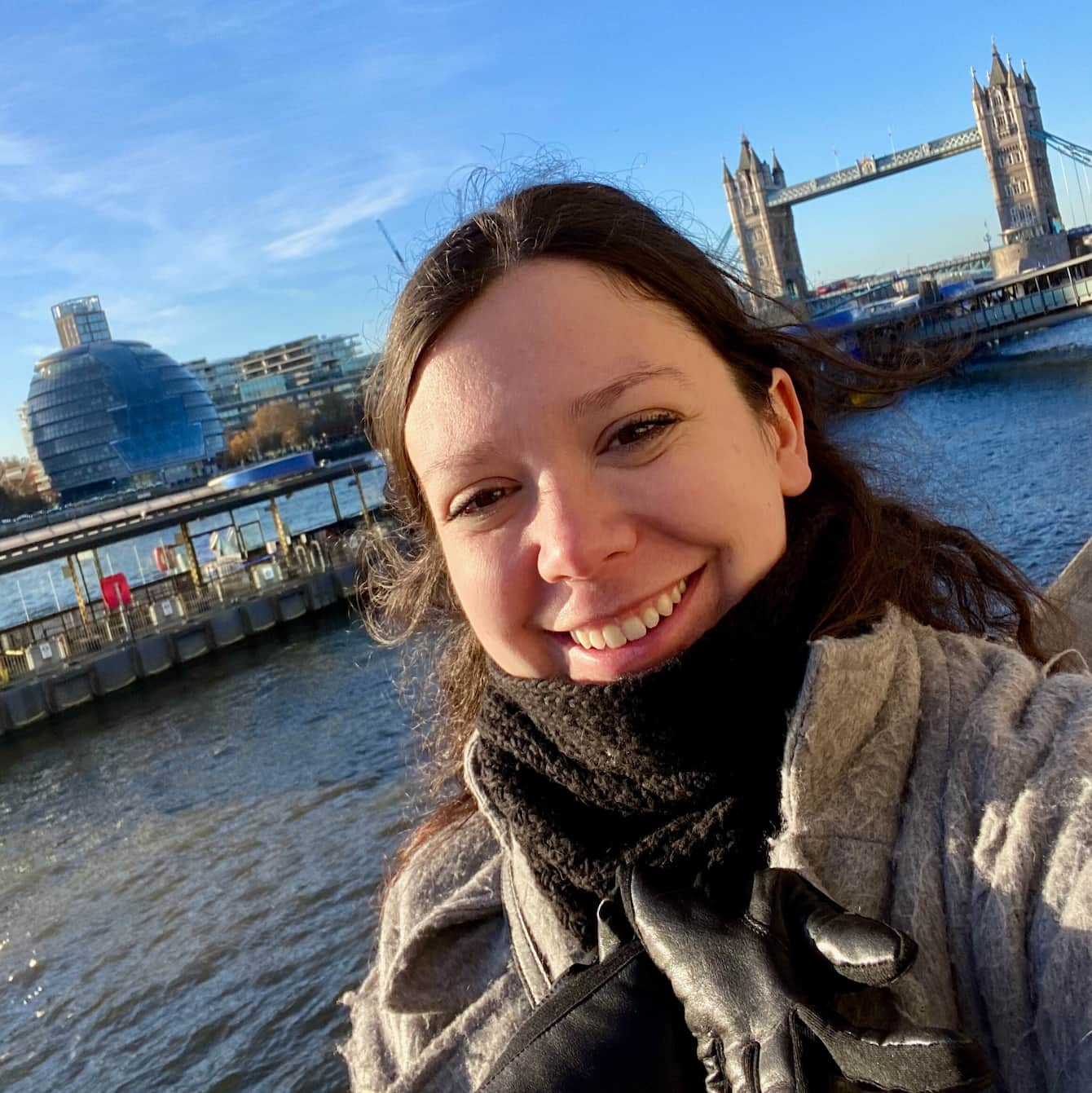
A selfie of Trinity Conn in front of London Bridge.

“It defined my high school years and gave me a community that I’ll forever belong to. I became a part of the Seattle Aquarium and never left.”

—Trinity Conn, YOA 2012–2015

The first time Trinity walked through the Aquarium’s Pacific Coral Reef habitat, she was captivated. “The corals blew my mind,” she says. “They looked so weird that I just had to know more.” By then, Trinity already knew she wanted to be a scientist. “I loved animals, marine life, the ocean and being outdoors right from the start,” she comments.

Trinity joined the YOA program in high school because she wanted to learn more about careers in marine conservation and see how she felt working in that world. Her years of volunteer service only fueled her interest in coral. “It felt like an unexplored world with so much to learn,” she explains.

That curiosity is still driving her. Trinity recently earned her Ph.D. from Penn State University, where she studied coral genomics and conservation. She is now continuing that work as a postdoctoral research fellow at the Shedd Aquarium.
Derek Baker in front of a brick wall.

“Being a YOA was the spark that ignited my lifelong passion for conservation and driving larger social change—it provided a platform for me to learn, grow and hone my advocacy skills.”

—Derek Baker, YOA 1995–1997

Sometimes former YOAs make their way back to the Aquarium—like Derek Baker, our senior director of strategic initiatives and government affairs. After graduating from Western Washington University with a double major in political science and communication, he held numerous roles in government and the private sector related to public policy, community organizing and communications. When the opportunity arose to join our staff in 2018, he jumped at it.

“I’ve always had a passion for our marine environment and effecting change,” he notes. “I was excited to take the skills I learned around public policy, community organizing and the power of connecting with people through storytelling, and apply them to ocean conservation at the Aquarium.”

Derek continues, “The challenges facing our ocean and planet can appear daunting, but educating and bringing government stakeholders to the table can make large-scale change possible for our communities. Just like our ocean, government and its policies touch us all—and bringing policymakers to the table will ultimately lead to a healthier future for everyone.”

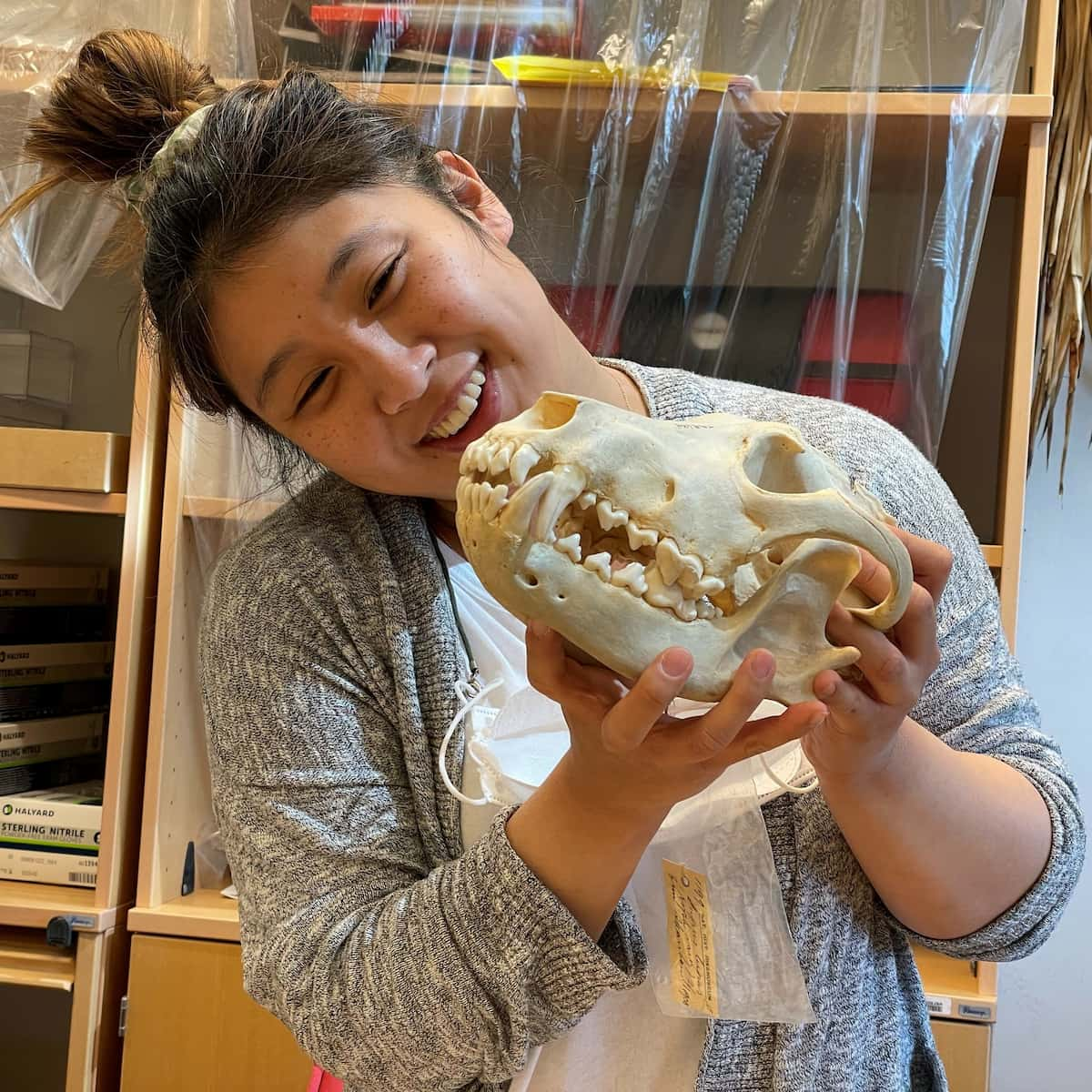
Hyejoo Ro holding a gray wolf skull in two hands.

“Meeting and working with Seattle Aquarium staff members made me realize I could make my love of the ocean my job.”

—Hyejoo Ro, YOA 2012–2015

Hyejoo grew up in the Pacific Northwest where, she says, “I was always interested in the marine environment, always outside and surrounded by nature—which really helped foster my empathy for animals.” Field trips to the Aquarium, the University of Washington and various labs opened her eyes to the idea that her love of animals and nature could become more than just a hobby.

Hyejoo brought her love for the ocean to college, where she’s currently in graduate school at the University of California–Merced. Her research is focused on understanding the dietary patterns of predators with stable isotopes, which are a tool that traces and reflects diet and habitat. She’s studied how shark or grey wolf diets differ according to different life history traits, like age and sex or where they live. Her work is centered on whether these predators are considered to be keystone species and their impact on other populations.

She’s not stopping there. In the future, Hyejoo would like to continue her research with stable isotopes because, she says, “They are a tool that can shed light on complex ecological interactions between species in any system—marine, terrestrial, estuaries, rivers, lakes and more.”

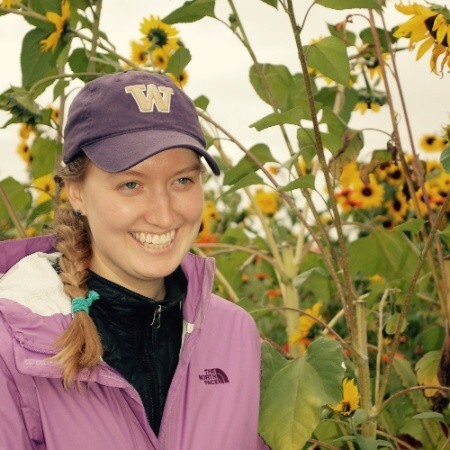
Liz Allyn standing in front of a sunflower patch. She is wearing a pink Northface jacket and a purple University of Washington baseball cap.

“My time at the Aquarium helped me break out of my shell. I was super shy and it helped me grow.”

—Liz Allyn, YOA 2014–2015

As a marine mammal technician for Makah Fisheries, Liz has found a sweet spot in the space where policy and research meet. She’s focused on evaluating strategies to restore local salmon, including studying seal and sea lion populations in Puget Sound. In what she describes as “a little of everything,” her role involves both fieldwork and data analysis.

“My childhood was centered around the ocean,” Liz says. She spent weekends on the beach at Golden Gardens and visited the coasts of Oregon and Maine. “I wanted to be either a marine biologist or a human rights lawyer—and, as it’s turned out, my career is kind of an intersection of those things,” she explains.

Participating in what was then called our Citizen Science program through her high school marine biology class in 2012, Liz researched sea stars. “That’s when it hit me: people do this for work,” she says. She soon joined the YOA program, one of the many steps that helped lead her to where she is today. Going forward, she aims to finish her Master of Science in fisheries at the University of Washington and continue working at the intersection of marine ecology and treaty resource management.

Be part of the next generation of Youth Ocean Advocates

With the opening of the Ocean Pavilion this year, the YOA program’s capacity will grow even further. Offering school-year and summer sessions, it’s open to young people enrolled in grades 9–12 in a high school, Running Start, GED or homeschool program at the time of application. Interested in becoming a YOA—or know someone who might be? You’ll find details on our Youth Ocean Advocates webpage.

The ripple effect: Former youth volunteers make conservation a career, part 1

Our volunteer program for high-school-aged teens, Youth Ocean Advocates (YOA), launched in 1994—and since then, has attracted over 2,500 marine enthusiasts. These youth volunteers (known as YOAs) often share that the experience has either furthered their existing desire for a career in marine conservation, or helped them discover a new one.

Here, we bring you the stories of a few of the many YOAs who have followed their dreams and, in a beautiful ripple effect, are continuing to benefit the marine environment through their careers. Watch for part two of this series, where we’ll introduce you to more former YOAs making a difference for ocean health!

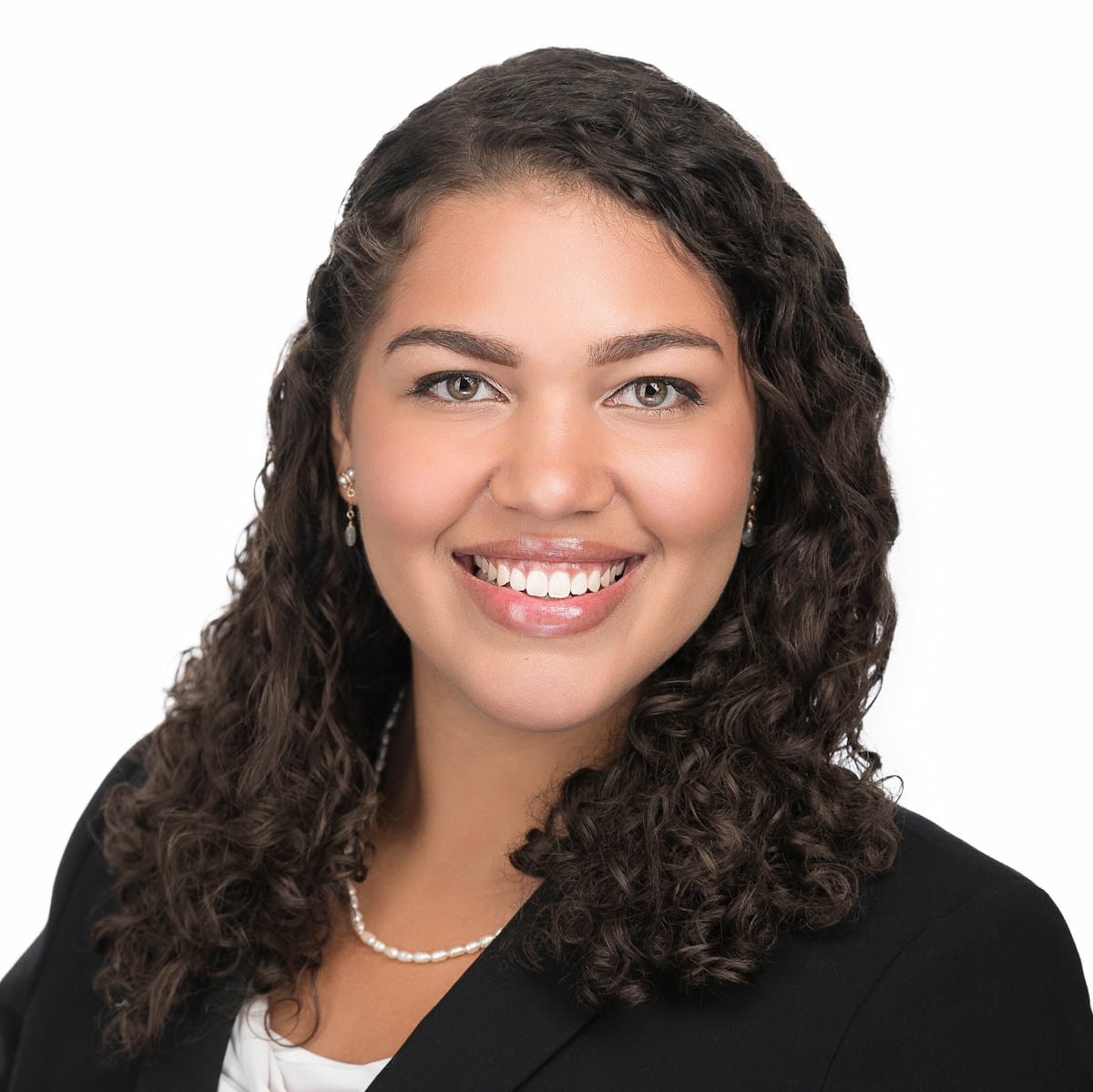
A headshot of Jasmine Prat. She has dark, shoulder-length curly hair.

“Having a sense of purpose and understanding the value of your opinion and knowledge was a really important lesson, especially as a young woman of color. It opened doors for me.”

—Jasmine Prat, YOA 2010–2013

Jasmine Prat went snorkeling for the first time during a family vacation when she was in 4th grade. “It blew my mind,” she says. “Seeing a whole new world underwater for the first time.” After moving to Seattle in the middle of high school, she jumped at the opportunity to join the YOA program to learn more about the ocean and meet new people.

“It was priceless,” she says, describing her experience. “It taught me how to inspire others and have an open mind and ear—and developed my own confidence too. Feeling like an expert at that age was really formative.”

Jasmine went on to earn a master’s in environmental science at Washington State University and is now a foreign affairs specialist with the National Oceanic and Atmospheric Administration (NOAA) in Silver Spring, Maryland. In her role, she helps draft and implement international policy regulating the high seas and marine mammal bycatch.

A photo of Emma Strand standing in front of the ocean. She has long, straight blonde hair.

“My time at the Aquarium was my base. It locked me into wanting to be a marine biologist.”

—Emma Strand, YOA 2012–2014

Emma Strand grew up loving the ocean and fantasizing about being a marine biologist. She says that, in addition to solidifying her career ambitions, participating in the YOA program helped increase her communication skills and confidence.

Scuba diving played a key role too. During a dive in Honduras, she saw the effects of coral bleaching firsthand, and found it fascinating that some corals were bleaching while others still appeared to be thriving.

“That experience sparked a curiosity that’s become the basis of my research,” she says. After earning her Ph.D. in biological and environmental sciences with a specialty in evolution and marine biology from the University of Rhode Island, she joined Gloucester Marine Genomics Institute as a postdoctoral scientist. Her current research is focused on sustainable fisheries and aquaculture—developing genomic tools to advance research-based sustainable management of marine environments; and climate change resilience— investigating how marine organisms respond to rapidly changing environments.

A headshot of Noah Chesnin. He has short, dark curly hair.

“It was a transformative experience for me. The program showed the potential to bridge passions into careers.”

—Noah Chesnin, YOA 1997–1999

Noah Chesnin was 16 when he joined what was then called our teen naturalist program in 1998. “I was shy and nervous,” he recalls. “But putting on a Seattle Aquarium t-shirt gave me the confidence to share my passion with visitors.”

After earning a master’s in environmental management from the Nicholas School of the Environment at Duke University, Noah went on to a stint at the Conservation Law Foundation, shaping policy related to ocean issues. That experience helped him realize that he wanted to focus on engagement and build a public movement.

He’s now the director of policy and outreach for the Wildlife Conservation Society’s New York Seascape Program, the conservation initiative of the New York Aquarium, where he leads policy advocacy work, including nominating and building a coalition to advocate for the designation of Hudson Canyon as a National Marine Sanctuary. He also serves as vice chair of the proposed Hudson Canyon National Marine Sanctuary Advisory Council and on the executive committee and as policy work group co-chair of the Aquarium Conservation Partnership—a consortium of 29 U.S. aquariums and zoos working collaboratively on conservation policy.

A headshot of Anja Brandon. She has long, dark curly hair.

“Becoming a YOA gave me confidence to talk to anyone—as well as confidence in what I did and didn’t know.”

—Anja Brandon, YOA 2008–2012

As a young child, Anja Brandon loved animals and dreamed of working at a zoo. But a field trip to the Seattle Aquarium changed all of that. “I fell in love with the tiny invertebrates and was inspired by how everything appeared to be connected and worked together,” she says.

She joined the YOA program as soon as she was able, and credits it with helping to develop her public speaking and customer skills. “Having exposure to staff members and volunteers alike helped build connections that I’ve been able to use throughout my career,” she comments.

And what a career it is! With a Ph.D. in environmental engineering at Stanford University, Anja is now the associate director of U.S. Plastics Policy at Ocean Conservancy, where she helps write legislative text for states working on policy. Among her many achievements, she helped write the federal “Break Free from Plastic Pollution Act” (S. 984) and California’s “Plastic Pollution Prevention and Packaging Producer Responsibility Act” (S.B. 54).

Be part of the next generation of Youth Ocean Advocates

With the opening of the Ocean Pavilion this year, the YOA program’s capacity will grow even further. Offering school-year and summer sessions, it’s open to young people enrolled in grades 9–12 in a high school, Running Start, GED or homeschool program at the time of application. Interested in becoming a YOA—or know someone who might be? You’ll find details on our Youth Ocean Advocates webpage.
How will the Ocean Pavilion model sustainable design?

This summer, the Seattle Aquarium’s campus will expand when our new Ocean Pavilion opens.

As we began this project, we asked ourselves a key question: How can a technically complex building like an aquarium—which must keep animals healthy 24 hours a day, 365 days a year—model sustainable design?

Navigating that answer has spanned years and included architects, regenerative designers, engineers, builders, animal experts and many others! Dive in with us:

The Ocean Pavilion’s sustainability features

When it’s complete, the Ocean Pavilion will be owned by the City of Seattle. It will serve as a living laboratory dedicated to ocean health. With that in mind, we designed the building to use energy, water and materials efficiently and with care. The Ocean Pavilion will:

An illustration of the Ocean Pavilion. Text on the illustration reads: "The Ocean Pavilion is designed to: Use carefully chosen materials, recirculate 96% of salt water in the building, recapture heat from the warmed water to warm the building, operate 100% fossil fuel-free...and much more!"
Explore salt water in the Ocean Pavilion: The Ocean Pavilion’s saltwater habitats are what’s called a “closed-loop” system. Watch our video to learn more:

Get nerdy with us: Learn how our Water Quality team uses science to maintain healthy saltwater habitats.

What “green building” certifications is the Ocean Pavilion pursuing?

The Ocean Pavilion will be LEED Gold-certified (update, May 2025: certification received!). We’re also targeting Zero Carbon Certification from the International Future Living Institute (ILFI), which includes requirements beyond LEED.

The ILFI is a global nonprofit that certifies advanced sustainable and regenerative buildings. ILFI Zero Carbon Certification is a rigorous international standard for buildings that are highly energy efficient and have fully neutralized their carbon emissions, meaning that they do not add any net carbon to the atmosphere.

Earning this certification requires neutralizing both operational and embodied carbon:  

  • Operational carbon comes from emissions required to heat, cool and power the building.
  • Embodied carbon is different. It refers to emissions generated by raw material extraction, manufacturing, transportation and installation of building materials (in other words, the emissions generated by creating the building’s materials and constructing it).

Zero Carbon Certification requires us to offset 100% of the building’s operational energy use with new renewable energy. Some buildings meet this requirement by adding rooftop solar panels, but our rooftop will be a space for the public to enjoy. So, instead we’re working on an agreement that will add additional renewable energy capacity to Seattle’s electric grid.

The best part? This additional capacity will meet our needs and provide additional renewable energy that others can use. Stay tuned for more details on that step.

Exterior of the Seattle Aquarium's new Ocean Pavilion, viewed from the side to showcase new cedar wood planks which cover the west side of the building.
We’re building new public space on the Ocean Pavilion’s roof that will help connect Pike Place Market to the city’s new 20-acre Waterfront Park.

Many green building experts consider ILFI certifications like Zero Carbon Certification to be especially challenging. Why? They’re based on actual performance over 12 consecutive months—not plans or estimates. We’re proud to be the first aquarium building in the world to pursue an ILFI certification. We hope to be the first of many.
A growing number of organizations are adopting this certification:

  • Climate Pledge Arena here in Seattle (world’s first arena to be certified)
  • Google’s 6 Pancras Square office in London (world’s first building project to be certified)
  • Microsoft’s Puget Sound and Silicon Valley campuses (pursuing certification)
An overhead shot of the Seattle Aquarium's Pier 59 building, showing the long stretches of solar panels installed on the roof.
Solar panels on the roof of our existing Pier 59 building provide renewable energy for Aquarium guests and animals in our care.

Why the focus on carbon?

We all impact the ocean through our actions. The Aquarium is no different!

Too much carbon in the atmosphere is warming the ocean and planet. These changes are wreaking havoc on delicate ocean ecosystems. As coastal storms intensify and seawater levels rise, human communities are feeling the impacts too.

Since 2012, the Aquarium has been carbon neutral, meaning that we’ve offset any emissions we’ve produced so that we don’t add net carbon to the atmosphere. And since 2014, we’ve offset more carbon than we emit for scope 1 and 2 emissions. In 2020, we took that further by also offsetting more than we emit for select scope 3 emissions. (Learn more about scope 1, 2 and 3 emissions on the EPA website.) When purchasing carbon offsets, we work with a climate consultant to select options that are third-party verified and align with our values.

Plans are in the works to revitalize the other buildings on the Aquarium’s campus—and we’ll continue challenging ourselves to meet tough green building standards. This goal complements the work we’re doing every day to conduct marine conservation research, advocate for ocean-friendly policies, rescue animals, provide exceptional animal care and restore endangered species—all of which are possible with support and engagement from our community members—like you!

A diver waving underwater. They hold a spooled measuring tool.
Stewarding shared resources like energy and waters aligns with our work to research marine ecosystems and share what we learn with others.

What is biodiversity and why is it important to us?

If you took a time machine back to four billion years ago, life would look very different. Because all life forms would look nearly the same! All life on Earth shares a common ancestor, but billions of years of genetic mutations took us from microscopic organisms to millions of unique species, adapted to live all around the world. This wide variety of life is known as biodiversity.

Biodiversity has three components: genes, species and ecosystems. All living things have genes, which guide how the organism will look and behave. Genes mutate, and these changes can impact how well organisms survive in their environment. Over time, genetic changes build up, eventually leading to distinct species. Many different species and nonliving environmental factors—including water, minerals, currents, wind and temperature—interact to function as an ecosystem, where they fulfill different roles. The global ecosystem of all Earth’s living beings is called the biosphere.

For example, an organism’s genes determine whether it grows a shell to become a mussel, sprouts many tentacles like a sea anemone or grows wings like a black oystercatcher. In a rocky shore ecosystem, these species all coexist. Each fills a different role, like how mussels filter water, anemones provide other organisms shelter and black oystercatchers maintain balance in the populations of their prey species.

Biodiversity's importance

A diverse ecosystem with many different species is more likely to survive natural and human-made catastrophes like floods, storms, wildfires and marine heat waves. The members of that ecosystem offer a wide range of possible strengths and defenses. Each adaptation represents a potential way to help the ecosystem bounce back from challenges.

Species within an ecosystem are connected, which means a threat to any one species could have surprisingly widespread effects. 

Sea otters represent a classic example of the dangers of disregarding biodiversity. During the 18th and 19th centuries, hunters and fur traders nearly drove sea otters to extinction. The decline in sea otters led to an explosion of sea urchins, their prey, since there were no longer enough sea otters to fill the role of predator. The urchins overgrazed kelp beds, which are vital habitats for many marine species, including rockfish and salmon. Sea otter populations are on the rebound thanks to conservation efforts, but recovery of these ecosystems is a lengthy process. 
Think of an ecosystem like a car. A car is made up of many different parts, some of them small or unseen. If your car were to lose one bolt, would you still want to drive it? What about two bolts or a headlight or even a whole tire? How many parts would you be willing to lose before you no longer feel safe?

Marine species face many human-caused threats, including overfishing, climate change, habitat loss and pollution. Losses of marine biodiversity have brought huge changes to ecosystems. And since Earth’s ecosystems connect to create the biosphere, losses of biodiversity could mean planet-wide changes, affecting us all.

Billions of people—including you!—rely on the ocean for food, medicine and other resources. Changes in marine ecosystems, like the continuous problem of overfishing, could threaten these resources. In addition, your job might be connected to the sea. Your favorite vacation spot or even your home might be located near a body of water that is vulnerable to coastal erosion, dangerous storms or species losses.

Threats to biodiversity could mean the loss of culturally important species or activities, especially for Indigenous communities. Some endangered marine species—including sea otters and southern resident orcas—are considered culturally significant by people native to the Pacific Northwest. Indigenous peoples have stewarded coastal areas since time immemorial and continue to lead efforts to protect marine biodiversity. Their traditional knowledge is vital to conservation work.

Our biodiversity initiatives

The Seattle Aquarium is involved in many conservation projects that aim to protect and restore biodiversity in the Salish Sea and beyond. Among our longest-running projects are seasonal and annual surveys of Washington’s sea otter population. The more information we have on sea otters, the better we can understand what conditions they need to thrive.

We are also involved in recovery projects for Indo-Pacific leopard sharks, kelp and xʷč’iłqs, which is the Lushootseed word for pinto abalone. The Seattle Aquarium values the expertise of Indigenous people and has partnered with tribes, Indigenous leaders, and local communities in Washington State and in the Coral Triangle on research and conservation efforts for these species.

Celebrating biodiversity at the Ocean Pavilion

Our new Ocean Pavilion expansion will bring the jaw-dropping biodiversity of the Coral Triangle to Seattle. Coral reefs are hubs of biodiversity. They support about a quarter of known marine life, despite taking up less than 1% of the seafloor. Known as the “Amazon of the ocean,” the Coral Triangle is a reef system in the Indo-Pacific that is considered the most biologically diverse marine ecoregion in the world. It contains 75% of known coral species, including at least 15 endemic species that are found nowhere else on the planet.

The Ocean Pavilion is designed to celebrate the biodiversity of Earth’s one ocean. The design process included cross-cultural collaboration between local Coast Salish and urban Indigenous leaders and the Aquarium’s design and architectural team.

When the building opens this summer, you’ll have the chance to come face to face with over 100 different tropical marine species. Through the Ocean Pavilion’s publicly accessible oculus window, you’ll see the beauty of a healthy reef ecosystem just by walking by. And native plantings on the rooftop and public artwork will highlight the relationships between Coast Salish communities and shoreline ecosystems.

By surrounding yourself in the ocean’s bounty of life—whether on a visit to the Aquarium or a trip to the shore—you can appreciate your part in the global web of biodiversity. And the role you can play in protecting it.

Join us for After Hours: New Beginnings on Thursday, April 16, to celebrate spring and all the wonderful changes that come with it.

Today only, your gift will be matched dollar-for-dollar up to $25,000 thanks to the generosity of donors Betsy Cadwallader, J & Tim, and Jess & Andy Peet. Help us reach our $50,000 goal!

End the year with a gift to the ocean.