This site uses cookies. View our Cookie Policy to learn more about how and why.

Regular hours: 9:30 am – 6 pm
Last entry at 5 pm

The Seattle Aquarium’s exciting research initiative focused on the ancient, elusive sixgill shark

Did you know one of the world’s largest shark species is not only found in the waters of Puget Sound—but that individuals have also been spotted directly under the Seattle Aquarium’s Pier 59?

Sixgill sharks (Hexanchus griseus) can grow to be up to 14 feet in length. They’re found worldwide, in tropical and temperate waters (such as those of the Pacific Northwest). And they’ve been around for literally millions of years—since before the dinosaurs, in fact.

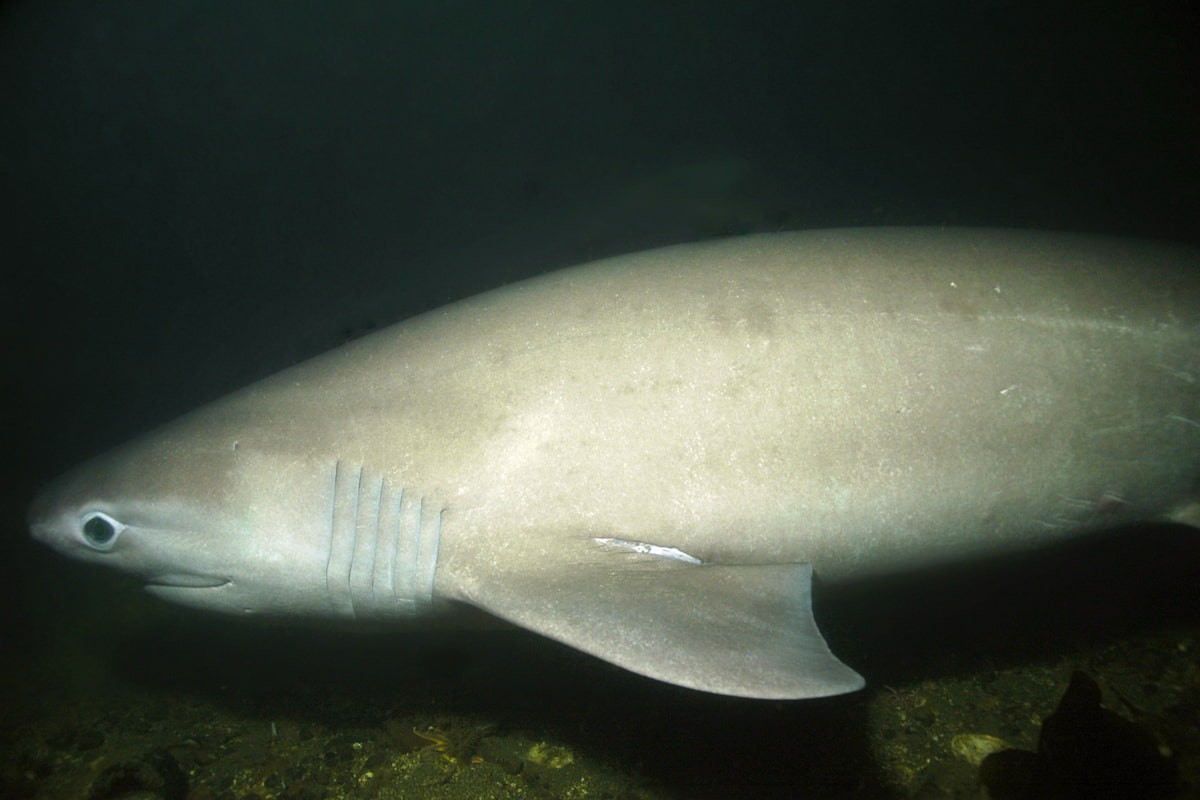
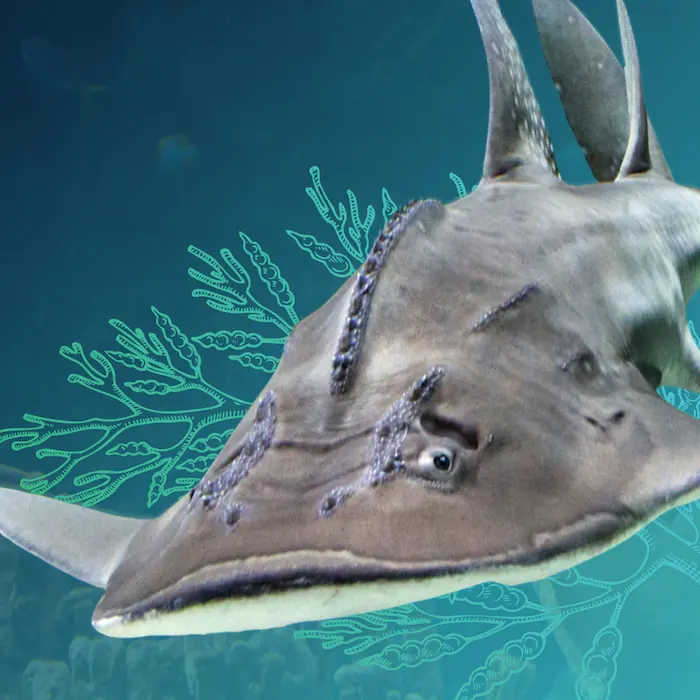
Look closely and you’ll see where sixgill sharks got their name!

However, beyond some of the basics, little is known about this species. Why? Because they tend to live deep in the ocean—up to 9,800 feet, or nearly two miles, below the surface!—and they’re elusive, typically preferring very low-light environments. For these reasons and others, it’s difficult for researchers to study them. But, fascinatingly, they’ve been sighted year-round in our local waters, at depths as shallow as 20 feet, which presents us with a unique opportunity to learn more about them.

Getting to know the sixgill shark

While most of the world’s 500+ shark species have five gill slits, aptly named sixgills have six slits along the sides of their heads. With their six gill slits and dimorphic teeth (which means the top teeth are different from the bottom), they bear a closer resemblance to extinct shark species than living ones—which is understandable, given how ancient they are.

Speaking of ancient: Sixgill sharks are presumed to have long life spans, and it’s thought that they reach sexual maturity later in life (20–25 years for males and 30–35 years for females). These two factors together make them vulnerable to overfishing—in other parts of the world, they’re often caught as bycatch or targeted for food and sport. They’re now classified as Near Threatened by the International Union for Conservation of Nature (IUCN) and included on the Washington state list of Species of Greatest Conservation Need.

Lastly, they’re carnivores, preying on bottom-dwelling fish and invertebrates (or animals without backbones).

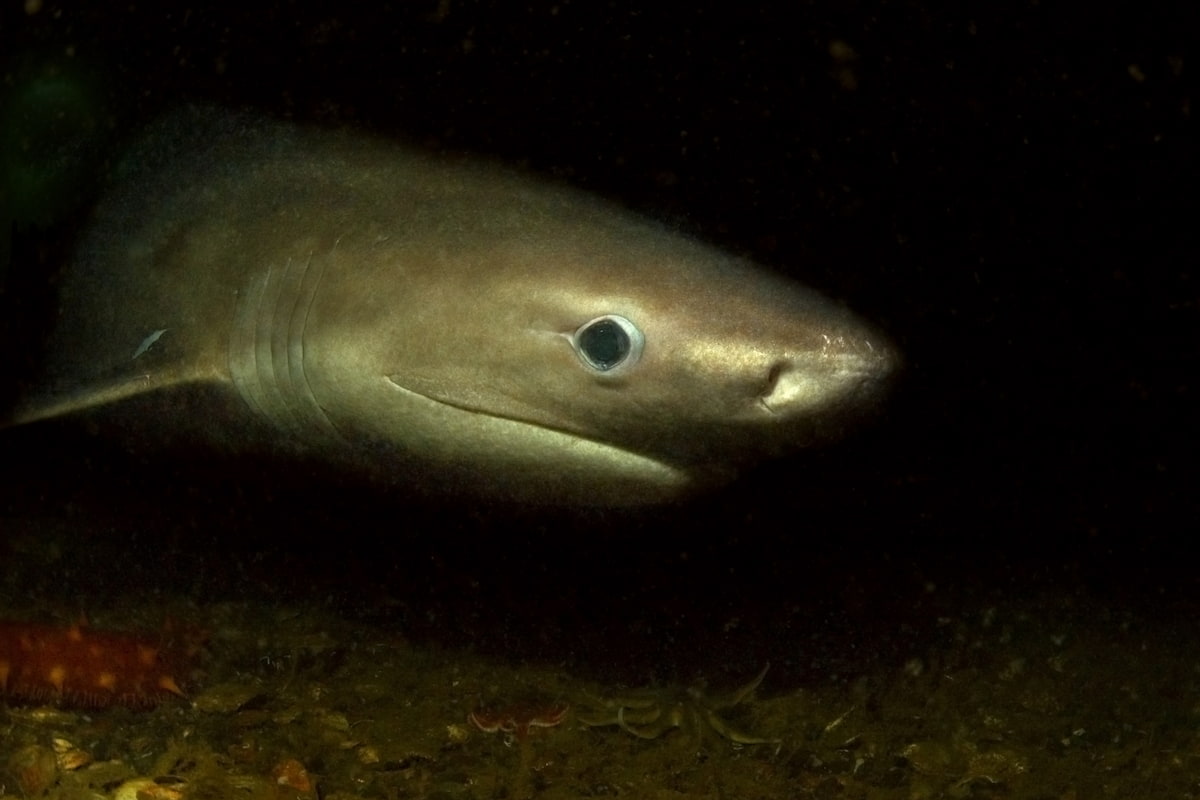
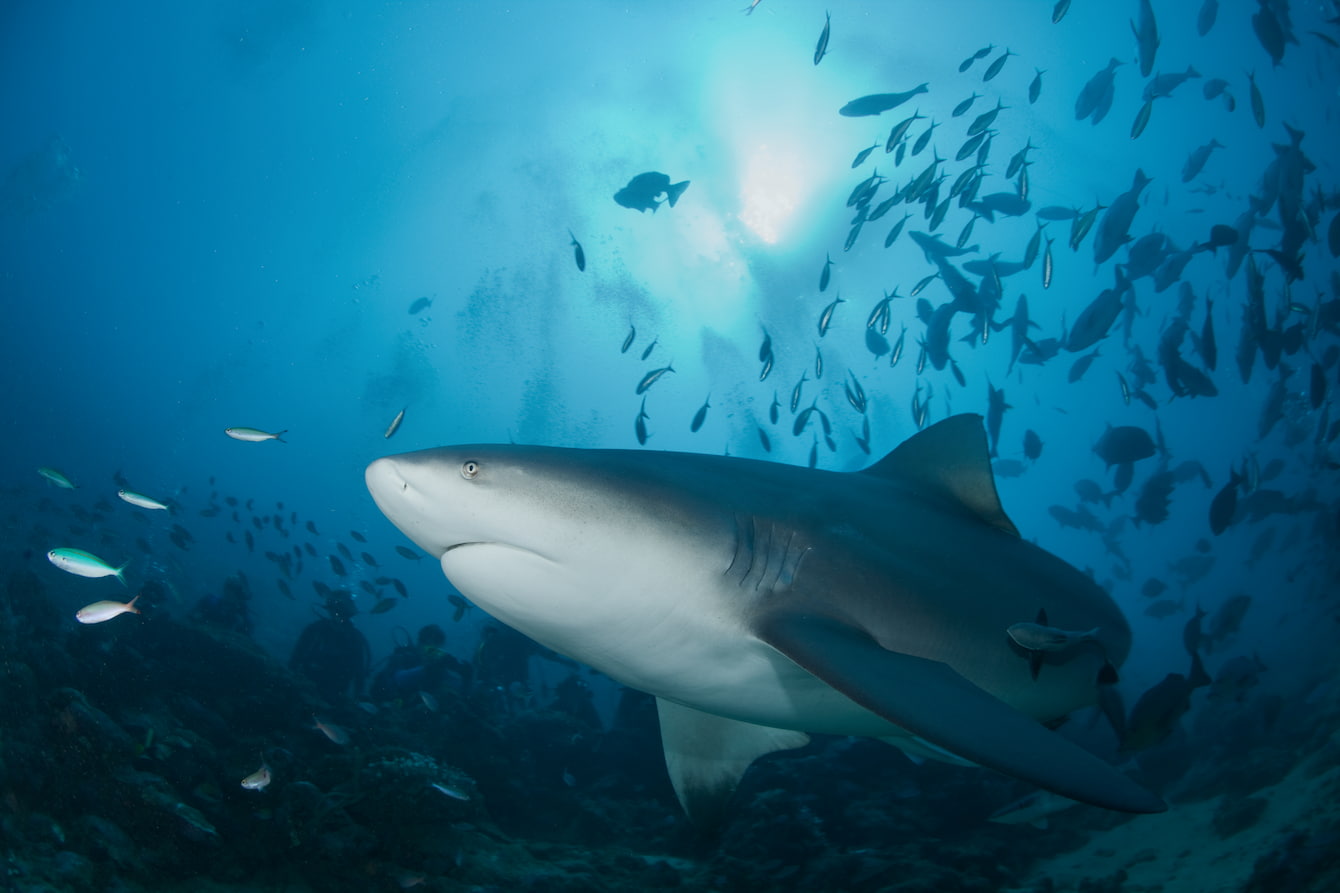
Sixgills are hard to study because they spend most of their lives in deep water and prefer dark conditions—as seen in this photo.

A rare—and unique—opportunity to learn more

Much about the biology and life history of sixgill sharks is unknown. But, using the opportunity presented by their presence in our local waters, the Seattle Aquarium is launching an initiative to increase the body of knowledge about these mysterious creatures. (Or perhaps we should say re-launching. See our FAQ below to learn about our previous work with this species.)

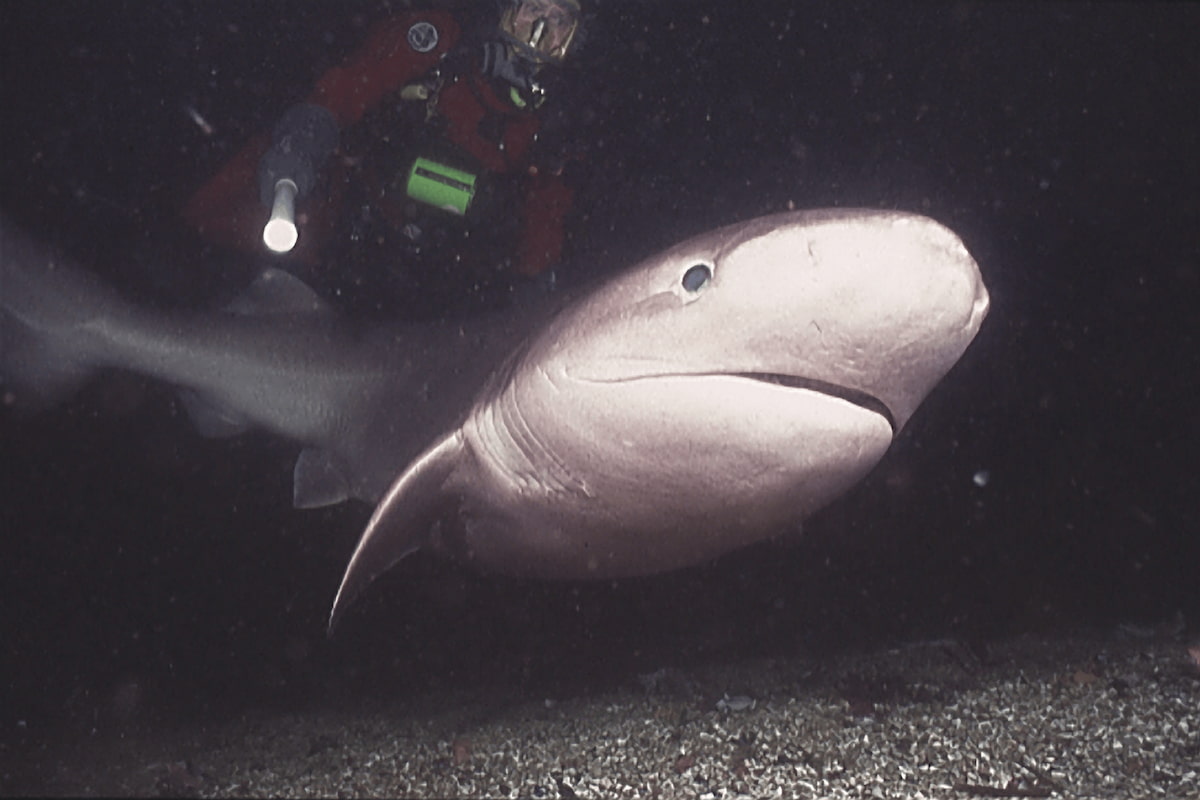
Former Aquarium Dive Safety Officer Jeff Christiansen with a sixgill shark in the early 2000s.

You may be wondering: If these sharks are typically found deep in the ocean, what are they doing in the shallower waters of Puget Sound? Scientists believe females are using our local waters as a birthing area. New Seattle Aquarium research shows that females have birthing site fidelity—in other words, they return to the Salish Sea to give birth multiple times (the amount of time between pregnancies isn’t known). Once the pups are born, the Sound becomes their nursery for another unknown period of time—they remain, it’s believed, because of an abundance of prey.

These young sixgills are referred to as juveniles and subadults. They reside in more southern Salish Sea* sites in the summer and fall, and make small northward migrations in the winter and spring. Their daily movements are typically less than two miles per day: They often rise to shallow water at dusk and descend to deeper water at dawn—likely in search of prey. We think these patterns repeat until they eventually depart for the open ocean.

This consistency of movement and behavior reinforces the strength of our opportunity to study sixgill sharks in Puget Sound.

*Not sure about the difference between Puget Sound and the Salish Sea? Check out our webpage!

Gathering data to increase knowledge and inform management

Through our research, we hope to answer questions about the life history and ecology of sixgill sharks—including migration, growth rates and prey preferences. In addition, given the difficulty of studying these animals, we aim to investigate aspects of their physiology that have never been examined. We also want to understand human impacts, such as how baiting affects sixgill shark movement in Puget Sound.

We’ll share our data and results with the scientific community at large, as well as relevant partners and conservation agencies to help inform management of the species.

"When people think of Puget Sound, they usually picture orcas and other marine mammals. Many are surprised to discover that large sharks live right here in our backyard. I’m excited to seize the opportunity to learn more about these elusive predators thanks to advances in research methods and technology that allow us to further explore a species that remains largely understudied.

Our goal is to answer as many questions as possible—everything from human impacts to physiology to their potentially important ecological role in Puget Sound. We’re collaborating with agencies like the Washington Department of Fish & Wildlife, the Big Fish Lab at Oregon State University, Point Defiance Zoo & Aquarium and other researchers to fill gaps in expertise, all while keeping animal health and well-being our top priority."

Summer of discovery

Starting in May, Seattle Aquarium researchers will attempt to study sixgill sharks at three different Puget Sound locations: off Redondo Beach, in Elliott Bay (near the Aquarium) and in the waters off southeast Bainbridge Island. They’ll visit each site once per month through September.

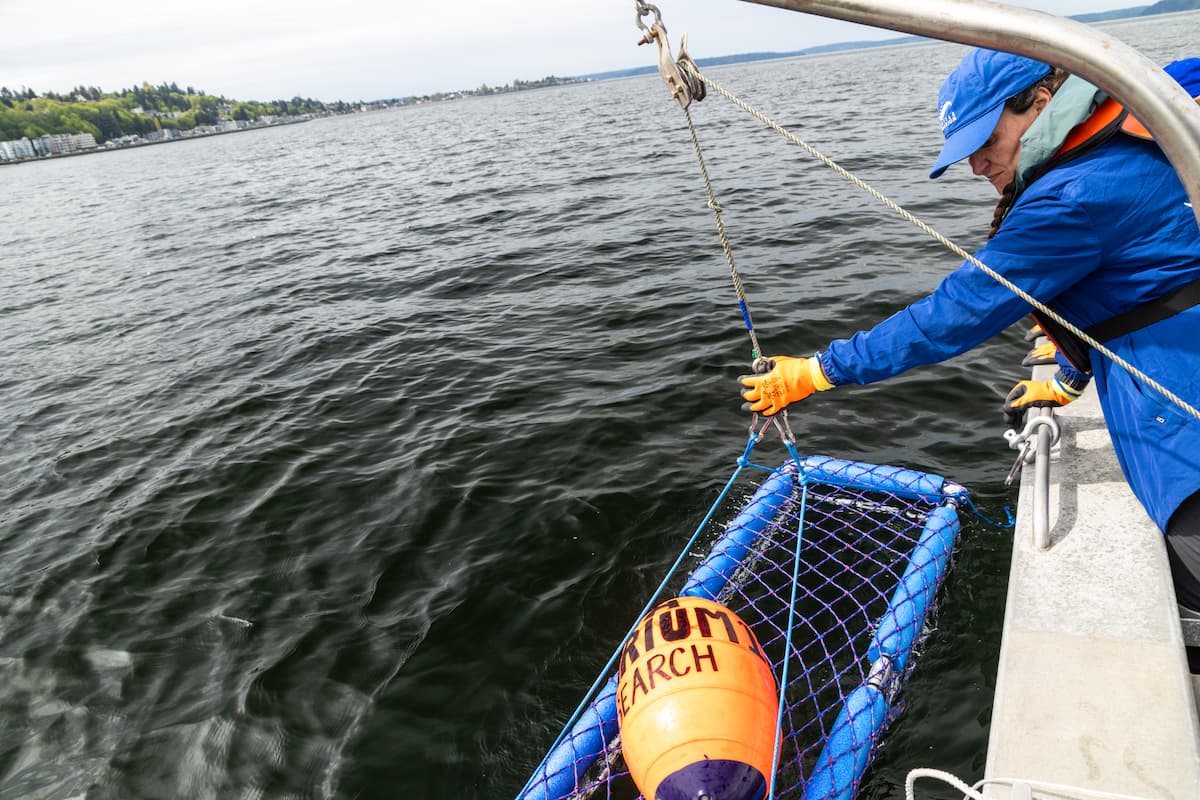
Most research will take place on the Seattle Aquarium’s vessel. Sharks will be carefully brought to the surface, and depending on their size, will either be quickly lifted on board the vessel using a custom-made cradle or secured at its side and placed on their backs to enter a state of natural tonic immobility.*

Once secured, they’ll be examined by our team—which will always include a veterinarian with extensive shark experience. Sharks alongside the boat will be kept partially submerged to ensure proper aeration of their gills; those on deck will be ventilated using seawater passed over their gills.

We created a custom “cradle” to safely hold a shark while our team works quickly to examine it.

Working swiftly over five to 10 minutes, the team will collect measurements, obtain tissue samples and deploy tags that will provide valuable data about movement, feeding ecology and habitat use. They’ll also take photos to assess whether photo identification is a viable method to identify individuals of this species. With all data collected, sharks will be quickly returned to the open water, and we’ll continue to follow their movements from afar. (See our FAQ below for more details.)

"There are lots of questions we would like to try to answer so that we can help identify what these incredible sharks need and how their lives might be affected by the world around them. For example, we have new methods, such as stable isotope analysis, to understand what they’re feeding on using small blood and tissue samples. Those same samples can help us assess the composition and genetic health of this population relative to 10+ years ago. And we can use tags to better understand their ranges and behaviors at the different sites.

Our priority throughout is the health and wellbeing of each individual—our project design is based around their care—but this gives us the opportunity to better understand an elusive species that is heavily dependent on the waters of Puget Sound."

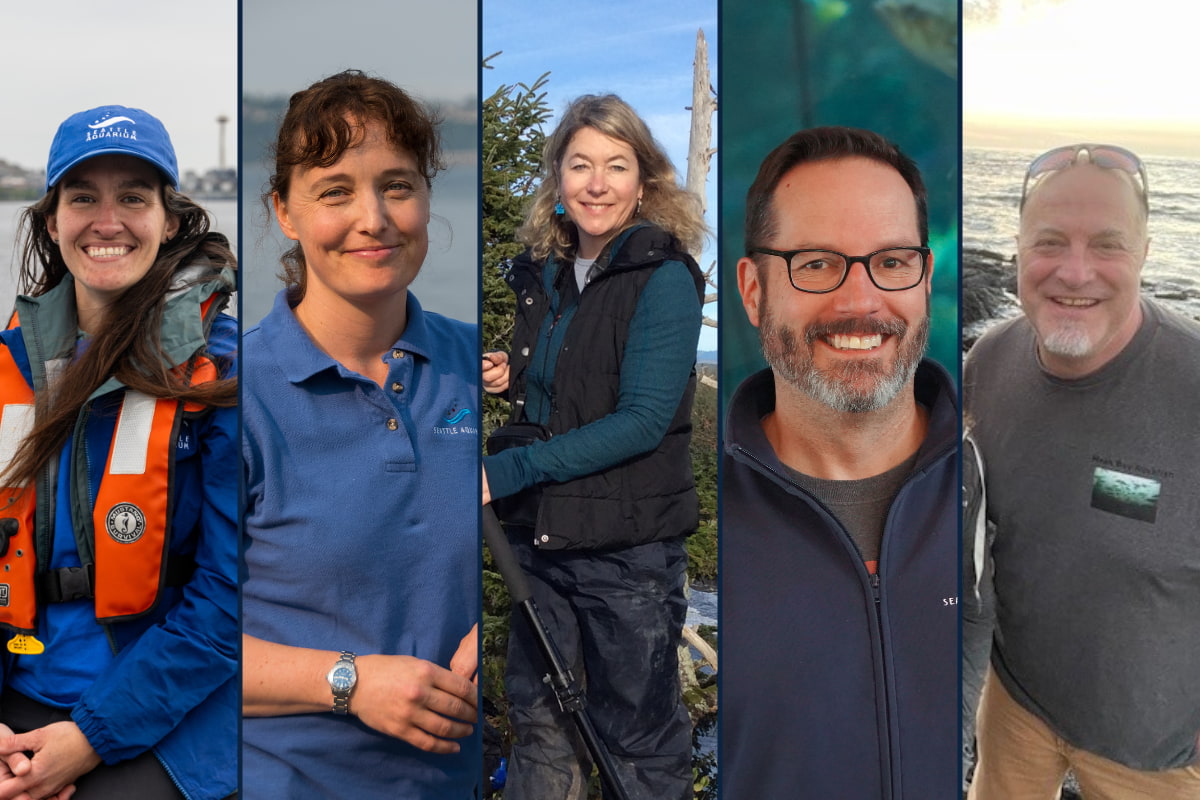
The work will be led by Research Scientist Dr. Dani Escontrela, Director of Animal Health Dr. Caitlin Hadfield, Senior Conservation Research Manager Dr. Shawn Larson, and others. See our FAQ to learn more about the team and why they’re uniquely qualified to lead this project.

From left to right: Research Scientist Dr. Dani Escontrela, Director of Animal Health Dr. Caitlin Hadfield, Senior Conservation Research Manager Dr. Shawn Larson, Director of Animal Operations Tim Carpenter, Dive Program Manager Joel Hollander.

*What’s tonic immobility? It’s a naturally occurring state that activates when sharks are on their backs—they become calm and motionless for a short period of time, creating the opportunity for safe and painless study before they resume normal activity.

Timing is everything

Although recreational divers are currently reporting frequent sightings of sixgill sharks, we don’t know how long they’ll be around—especially since we understand that both males and females eventually leave our local waters for the open ocean, but we don’t know when.

So there’s some urgency in our project, as well as optimism. We hope to encounter a good number of sharks across all three sites, and use what we learn to increase conservation of these fascinating and mysterious animals. We’re excited to discover more about this species and to share our findings with you, as well as the scientific community, as the project progresses!

"The Seattle Aquarium has been interested in sixgill biology, ecology and conservation for over 25 years. Our efforts in sixgill research in the early 2000s taught us that sixgills were once abundant in Elliott Bay and then were not—because they were growing up, reaching adult size and leaving the Sound for the open ocean. We also found that the sixgills were from one population, and related individuals were often found in the same area.

The new research will build on our earlier work and help answer many questions about sixgill biology and ecology that remain unanswered."

FAQs

Q: Can I see a sixgill shark at the Seattle Aquarium?

A: Well…kind of. You can see an illustration of a sixgill (and how you measure up to it!) near the Caring Cove play space on Pier 59. But, to thrive, this species needs plenty of room—far more than any aquarium habitat could provide. So, while you can’t see an actual sixgill at the Seattle Aquarium, your visit will help support the work we’re doing to increase understanding of these amazing, ancient creatures.

(You can, of course, see other shark species that thrive in smaller habitats when you visit us: blacktip reef sharks, Indo-Pacific leopard sharks and dogfish!)

Q: Didn’t the Aquarium study sixgill sharks in the early 2000s?

A: Yes! In the wake of increased local sightings in the early 2000s, we actively studied the species through a research program that ran from 2003 to 2015, with a brief pause between 2005 and 2008.

During that study, bait was placed under Pier 59, and when sharks were encountered, Aquarium divers collected skin biopsies and attached external tags for individual identification. Data collected during this period helped identify genetic relationships between individuals, estimate the abundance of sixgill sharks in Elliott Bay and analyze their feeding behavior. However, a decline in sightings (273 individuals between 2003 and 2005 versus 33 individuals between 2008 and 2015) led to the program’s end, as sixgills were believed to have left Elliott Bay.

Interested in learning more? Check out this video, which features our earlier work.

Q: What qualifies the Aquarium to conduct this research?

A: The Seattle Aquarium has 49 years of experience in shark husbandry and veterinary care*, and an 11-year history of conducting sixgill shark research. Additionally, this project has been collaboratively designed with partners from the Washington Department of Fish & Wildlife, Oregon State University Big Fish Lab and Point Defiance Zoo & Aquarium, who have significant experience with sharks in the region, including sixgills. Partners will join our research trips to help brainstorm, refine methods and share their expertise with our staff.

*Dogfish, small, bottom-dwelling sharks, have been in our care since we opened our doors in 1977. Learn more about them on our webpage!

Individual members of the team also bring a wealth of experience that will benefit this project:

  • Research Scientist Dr. Daniela Escontrela Dieguez completed her Ph.D. at the University of Hawaiʻi, studying coral predators. Her research was fieldwork-intensive, and as such she has familiarity and expertise conducting research on small boats and large ships. During her undergraduate studies, she served as an intern and trip leader with the University of Miami Shark Research and Conservation Program for four years. During her time there, she participated in at least 100 shark research expeditions, where she employed many of the methods that will be implemented in this project, including securing live sharks, collecting various types of data (measurements, tissue samples, tag deployments), and releasing sharks. She has worked with hundreds of sharks from a variety of species, including tiger, bull, hammerhead, sandbar, nurse, blacknose, blacktip, Caribbean reef and lemon sharks.

  • Director of Animal Health Dr. Caitlin Hadfield, MA VetMB DACZM DECZM MRCVS, completed veterinary school at Cambridge University, which was followed by a veterinary internship at the National Aquarium in Baltimore, where she became the senior veterinarian. She moved to Seattle in 2017. She is board-certified through the American and European Colleges of Zoological Medicine and has been working with elasmobranchs for 20 years, including sharks, skates, rays, guitarfish and sawfish. She has conducted clinical research and fieldwork on a wide variety of fish and invertebrate species. She is the primary author and editor for Clinical Guide to Fish Medicine and the head of the Veterinary Working Group and part of the steering committee for the multinational zebra shark recovery project (StAR: Stegostoma tigrinum augmentation and recovery) as well as the Association of Zoos and Aquariums’ Animal Welfare Committee.

  • Senior Conservation Research Manager Dr. Shawn Larson has been involved in sixgill shark research and conservation for 24 years. From 2002 to 2015, Shawn actively participated in the Seattle Aquarium’s sixgill shark research—baiting, filming, tagging and collecting skin biopsies from free-swimming sixgill sharks below Pier 59. She also led population genetics analyses on skin samples collected at the Aquarium and from longline operations of sixgill sharks conducted by various research partners. Shawn has published six peer-reviewed papers on sixgill sharks focusing on genetics, abundance and conservation, as well as edited four books: two on Northeast Pacific sharks, one on sharks in the United States and Canada, and one on sharks in Mexico. She has also led and organized shark community meetings since 2004, starting with the Cowshark Conservation Workshop (2004–2014), which eventually became the Northeast Pacific Shark Symposium (2014–present), held every two years. Lastly, she has been a member of the International Union for Conservation of Nature (IUCN) Species Survival Commission Shark Specialist Group since 2016 and has participated in shark conservation strategies and Red List assessments. 

  • Director of Animal Operations Tim Carpenter has cared for fish and invertebrates in an aquarium setting for over 30 years and has supervised animal care and field work for 25 years. During that time, he has been responsible for planning and conducting diving field work and boat-based trips every summer in coastal and inland Washington waters, while managing the Aquarium’s permitting process for all local collections and field activities. Tim was a key participant in the Seattle Aquarium’s earlier work with sixgill sharks, coordinating on-site and underwater diving and tagging operations, and he was a primary author of the resulting paper on the distribution of these sharks in Puget Sound. He has 30 years of experience using all kinds of collecting and sampling equipment, including longlines, seines, hand collection and other field capture methods for teleosts (ray-finned fishes) and elasmobranchs.

  • Dive Program Manager Joel Hollander is a marine biologist and dive operations leader and has been at the Aquarium since 1998. A key figure in field operations, Joel has been one of the Aquarium’s primary animal collectors for over two decades, specializing in both temperate and tropical species, and has served as primary boat operator since 2005. He was also co-principal investigator on the Aquarium’s earlier sixgill shark research project and has conducted longline surveys for skates, rays and spiny dogfish.

Q: What methods will the researchers use for this project?

A: At each site, the team will deploy fishing lines for short periods of time. While lines are in the water, the team will deploy a baited remote underwater video system (BRUVS), which will help document behavior if sharks are encountered.

If a shark is on the line when it’s pulled back in, the team will quickly either secure it alongside the boat or on the deck using a custom-made cradle (depending on the size of the individual). Sharks alongside the boat will be kept partially submerged to ensure proper aeration of their gills; those on deck will be ventilated using seawater passed over their gills.

In either location, once secured, our team will work as two teams to efficiently collect a variety of data, including:

  • Length and other measurements to help answer questions about growth rates, maturity and body condition.
  • Blood, muscle and fin samples to investigate trophic ecology (e.g., food preferences), blood hematology and biochemistry values, stress indicators, toxicology and genetics.

They’ll also deploy two types of tags:

  • Floy tags will be placed on all sharks and can help answer questions about movement if individuals are sighted by divers or caught by other people. They can also help estimate population abundance if an individual encounters our team again. The tags will have big, visible numbers to help divers and others report sightings using a reporting form.
  • Acoustic transmitters will be implanted in a selection of sharks by one of our veterinarians and will provide data on movement and habitat use.

Lastly, photographs will be taken to assess whether photo identification is a viable method to identify individual sixgills.

The entire data collection process will take five to 10 minutes. The team will prioritize animal health from start to finish—if an individual displays signs of stress, poor ventilation or poor health, it will be released immediately.

Taking a bite out of food waste: Composting supports sustainability at the Seattle Aquarium Café

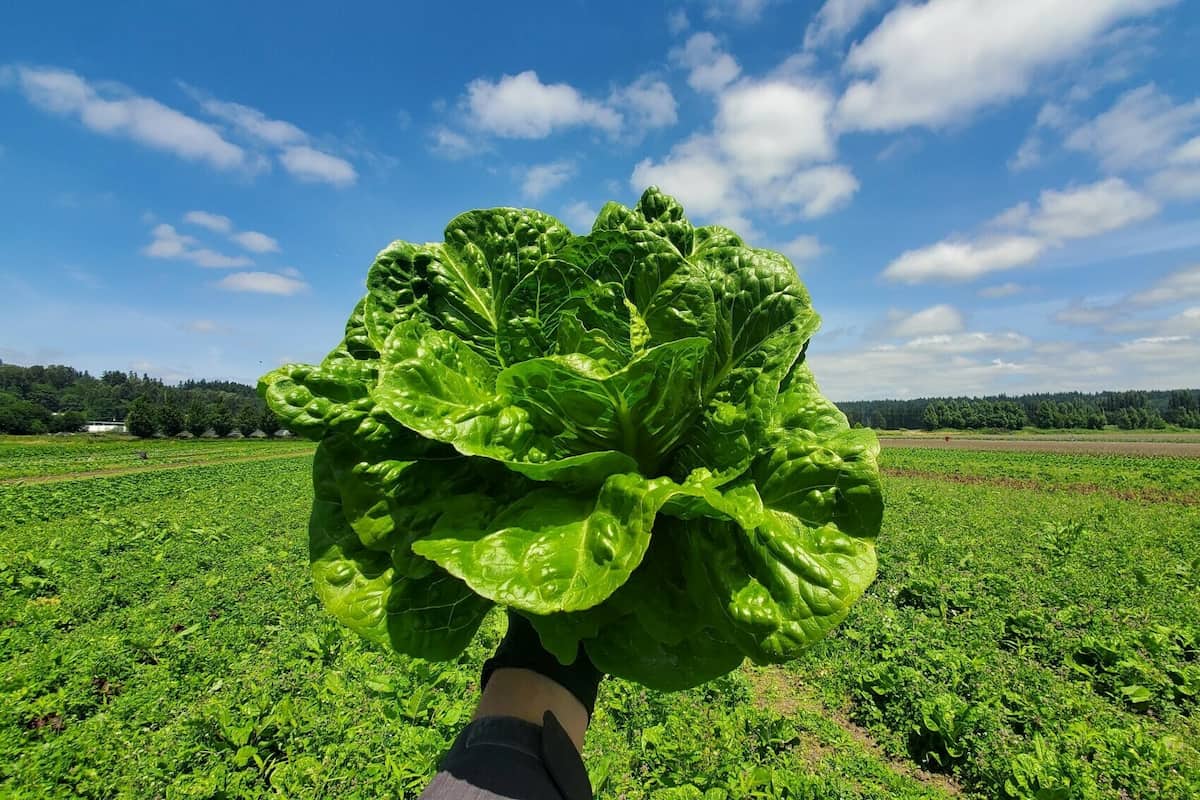
A large head of lettuce being held up in front of a farm.

Compostable packaging from the café ends up helping local farmers grow lettuce and other produce—which then gets served at the café! Photo credit: Sound Sustainable Farms.

When you sit down to enjoy a delicious lunch in the Seattle Aquarium Café, there’s a chance that the lettuce on your burger was grown using “trash” from the Aquarium.

As a part of our vision to become a regenerative institution—one that gives back to the environment more than we take from it—the Aquarium has a complex relationship with “trash.” We know it well. That’s because we work to divert as much “trash” as we can from landfills, with the ultimate goal of becoming a zero-waste facility. Instead, most items on our campus can be recycled or composted.

Composting is a method of breaking down or “recycling” organic matter, including food scraps, into a rich material that resembles soil. Growers use the finished compost to enrich their soils.

OVG Hospitality, which operates the Seattle Aquarium Café, partners with the local composting company Cedar Grove. Cedar Grove provides the compostable packaging for café food and handles the composting process afterward.

Two people holding large clumps of composted material in their hands.

Finished compost like this is a soil enricher made of broken down organic matter.

When a used compostable fork or cup enters the compost bin at the café, that is just the start of its journey. Cedar Grove picks up the Aquarium’s compostable materials, which also includes other organic waste and paper towels, and takes them to their composting facility. There, it is processed and refined into high-quality compost.

After that, the compost gets put to work at Sound Sustainable Farms, an organic farm in Redmond that is also operated by Cedar Grove, where it enriches the soil for local produce, which can be enjoyed by many businesses and community members.

Available produce at Sound Sustainable Farms varies by season, but the Aquarium mainly purchases leafy greens like lettuce and kale. We strive to source as much produce as possible from them and plan to buy even more as they continue to scale up their operations.

Cedar Grove’s rich compost is also used by other organizations, including the City of Seattle, and can be purchased by anyone. That means the Aquarium’s food waste goes on to support gardens, farms and green spaces across the region. Through the composting process, the Aquarium and our community can participate in “closing the loop” on sustainability, where discarded “waste” can actually be processed and used in a way that allows for future growth.

A large truck scooping up food waste.

By composting food scraps, yard waste and other organic matter, Cedar Grove diverts hundreds of thousands of tons of waste from landfills every year.

The Seattle Aquarium Café also recently took another exciting step toward sustainability by swapping out gas-powered food prep equipment for electric appliances earlier this year.

We all have a part to play in caring for the environment, including by making more conscious decisions about the ways we choose, prep, store and dispose of our food and other waste. So, the next time you’re at the Seattle Aquarium, double check before tossing something out. We’ve got some handy signs in the café to help you sort your “trash.” Because that napkin or spoon could have a second life nourishing somebody’s lunch.

A rosy outlook for rockfish: good news from our research in the Strait of Juan de Fuca

Imagine you’re on a small boat in Neah Bay, located within the traditional waters of the Qʷidiččaʔa•tx̌iq (Makah) on Washington’s remote outer coast. The wind is blowing. Frigid seawater surges around you as the boat rises and falls with the waves.

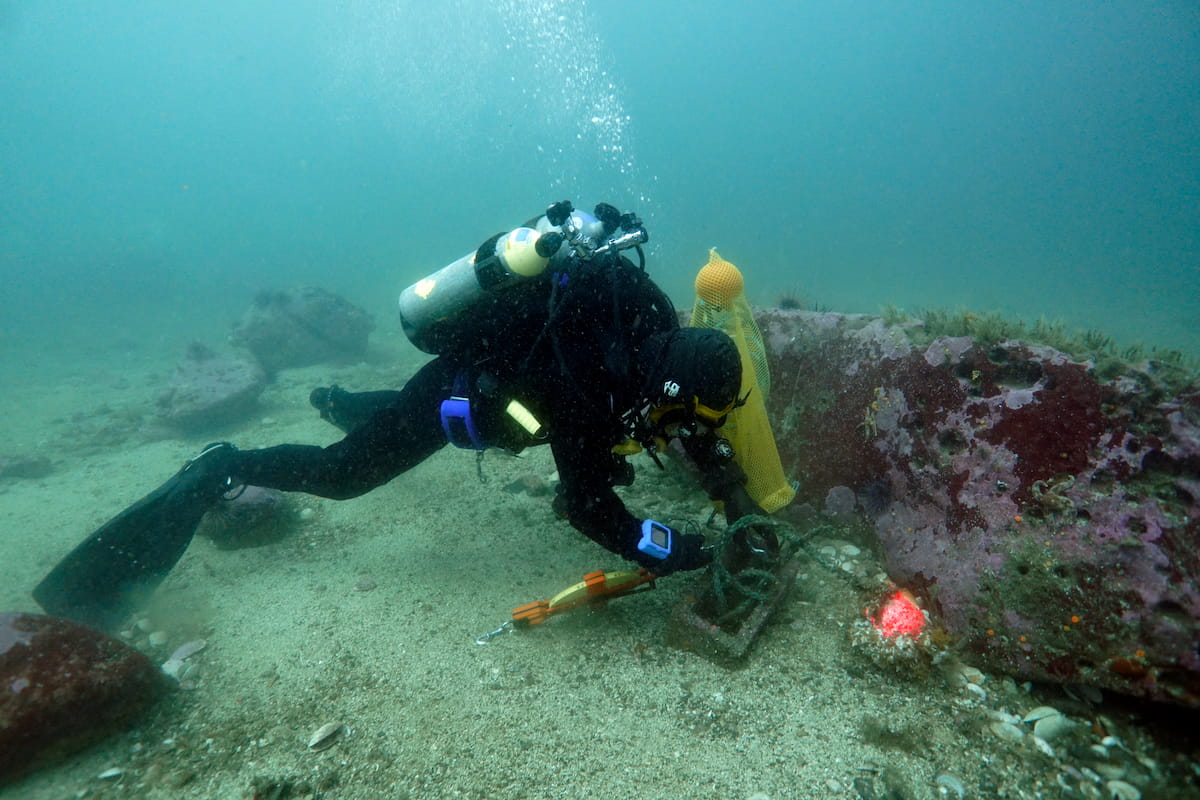
Why are you here? To scuba dive up to 70 feet below the surface and find a concrete marker, only about a foot long, on a seafloor that’s teeming with life: anemones, sponges, sea stars and more.

And that’s just the beginning: That small marker is the starting point for a survey in which you’ll swim about 280 feet (100m) ahead and behind, taking video of everything in your path—including the rockfish you’re there to count—before you run out of air. When you’re done, you’ll surface, climb back into the boat, move to another site and do it all again.

A diver placing a survey marker on the seafloor.

A Seattle Aquarium diver at a survey marker in Neah Bay.

Twenty years (and counting!) of rockfish research

The Seattle Aquarium launched our research study in Neah Bay in 2005—but our dive team has been sustainably collecting fish and invertebrates for the Aquarium’s habitats in those waters since the 1980s.

“It was very ‘fishy’ in the early years,” says Senior Conservation Research Manager Dr. Shawn Larson, who has been on staff at the Aquarium since 1995. “But as time went by, we noticed things were different. It seemed that we were seeing fewer rockfish but there was no way to know for sure. It was clear that population monitoring was needed.”

A memorandum of agreement with the Makah Tribe was signed, stating that the Tribe gives the Seattle Aquarium permission to conduct this research in their waters, and share the data collected to inform ecosystem management. And with that, our rockfish monitoring study was born.

Go below the surface of Neah Bay with our dive team!

Wait a minute: what’s the big deal about rockfish?

There are over 1,000 species of rockfish around the world, with 34 of them in Washington waters (and 14 at the Seattle Aquarium!). They’re important in a variety of ways, such as:

  • As mid- to top-level predators, rockfish help maintain ecosystem balance by controlling populations of their prey, including shrimp, crabs and smaller fish. On the flip side, they’re an important food source for larger species like halibut, lingcod, marine mammals and seabirds.
  • Because they rely on healthy prey to thrive, their health is a good indicator that their ecosystems and prey populations are healthy too.
  • Rockfish do have a bit of an Achilles heel, though. For fish, they live very long lives (over 100 years for some species!). But they also have an extended generation time—meaning the number of years it takes for them to become sexually mature and produce young of their own. These long life spans and slower reproduction rates mean that every individual rockfish is an important contributor to the biodiversity of the ecosystem and that rockfish population recovery is slow.
  • There’s more. Check out our rockfish webpage to learn more about these amazing fish!

Now back to the good news

Results from this long-term research endeavor were recently published in a paper co-authored by current and former Seattle Aquarium staff members (including our own Dr. Shawn Larson), a biologist from Makah Fisheries Management, and researchers from the National Oceanic and Atmospheric Administration (NOAA).

If you’d like to take a really deep dive—including learning about the research methods and the value of using video as opposed to a more traditional slate and pencil—the paper is available to read online.

What we can share in a nutshell (or maybe a clamshell?) is that results from 19 years of research, across five different sites, revealed that the populations of rockfish in Neah Bay are stable—and even, in some species, increasing.

This is extra good news when you consider that rockfish are still legally fished (within limits) in these waters, whereas rockfish fishing in Puget Sound has been closed since 2010. “It shows that co-management of fisheries by the Makah Tribe and the state of Washington is working,” says Shawn.

Sea urchins and a sea star on a large rock underwater. A rockfish swims in the background.

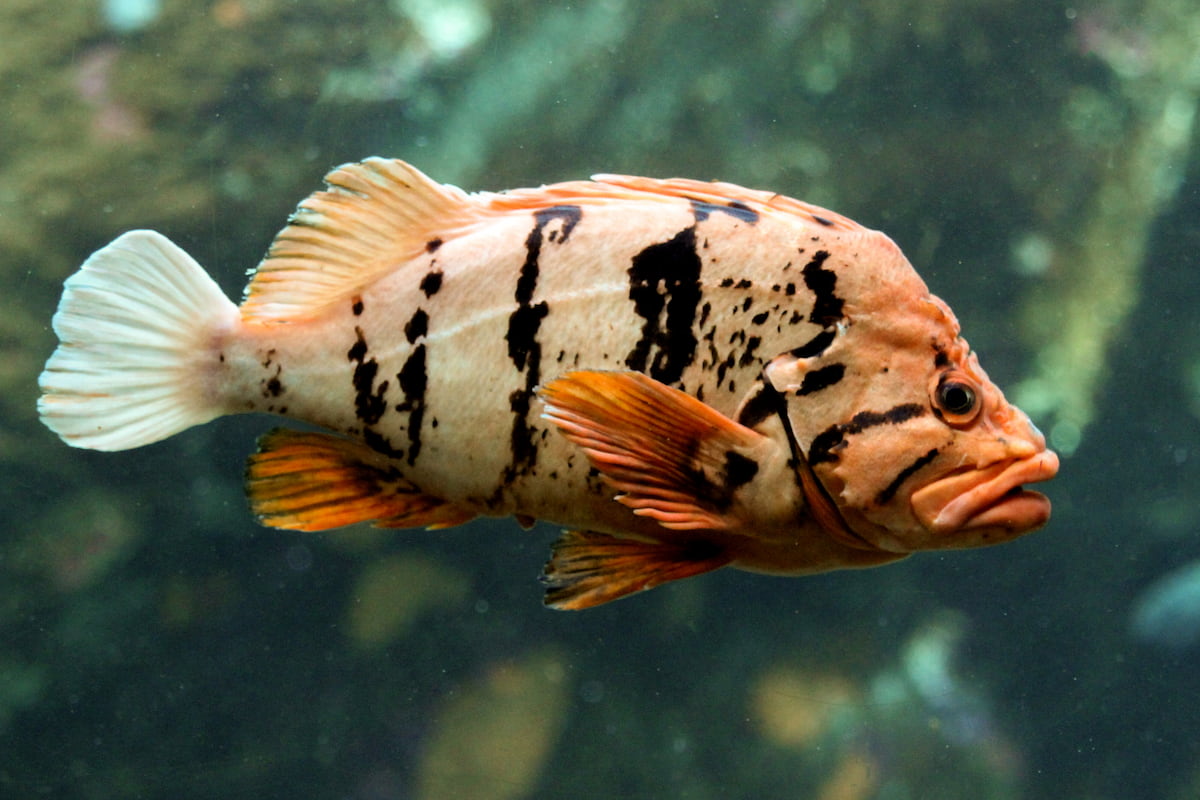
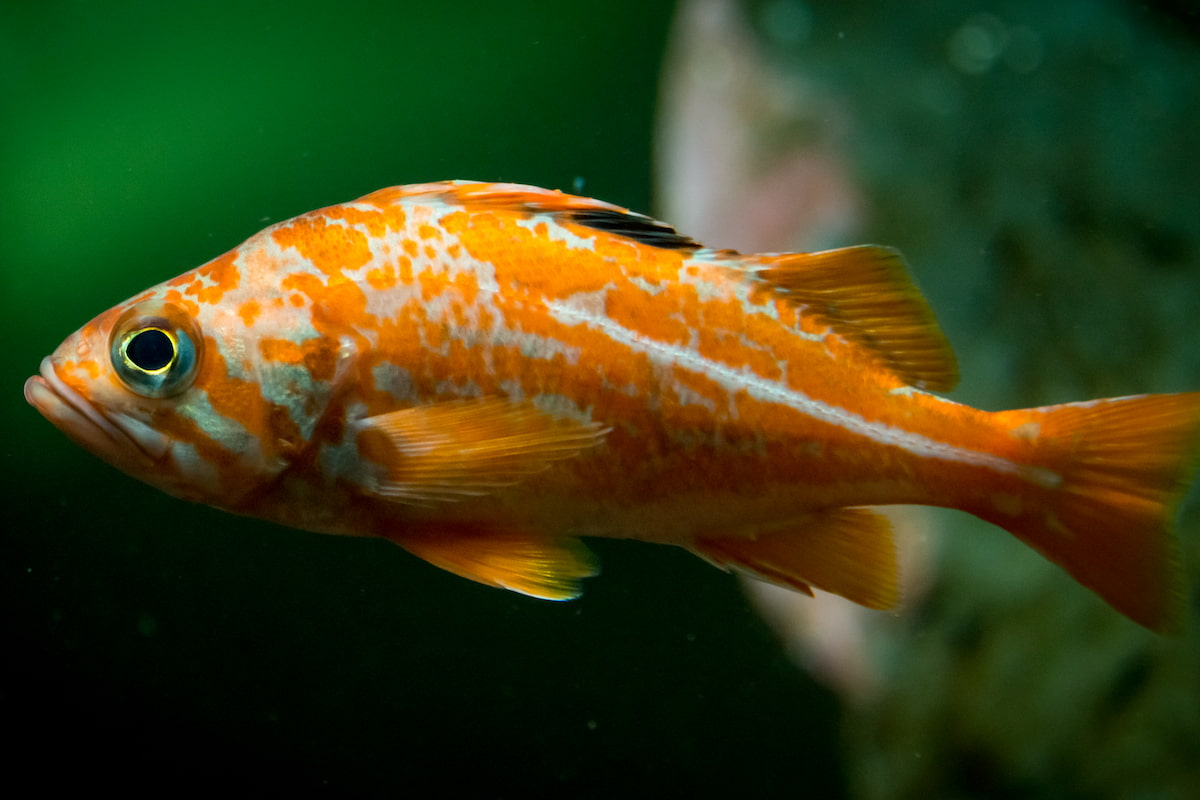
A canary rockfish at one of the survey sites.

The work’s not done—for us, and you too

“The news is good but we need to continue monitoring, especially so we can track changes related to climate change,” comments Shawn. Future plans for the study include adding a component to measure water temperature and using a remotely operated vehicle (ROV) to take measurements in deeper, colder waters.

You also have a role in ensuring that the outlook for rockfish stays rosy—in Neah Bay and elsewhere. Follow regulations if you enjoy recreational fishing. Contact your legislators to urge support for legislation that protects the ocean and its inhabitants. Use public transportation, fly less and limit your use of single-use plastics. Looking for other ideas? Check out our act for the ocean webpage or ask one of our friendly interpreters on your next visit to the Aquarium!

Shark and ray populations halved in just 50 years, but solutions offer hope

This year, the Seattle Aquarium welcomed beautiful sharks and rays to the warm waters of our Ocean Pavilion expansion. These animals came from other accredited zoos and aquariums or were diverted from the commercial fish trade. But in the ocean, large fishes like these are disappearing, mainly due to human activity.

Sharks and rays, along with deepwater chimaeras, are part of a class of fishes known as Chondrichthyes. Though they have lived on Earth for hundreds of millions of years, today about one-third of these species face extinction.

But marine scientists will not let these important fishes sink quietly into oblivion.

A team of researchers, including the Seattle Aquarium’s species recovery program manager Riley Pollom, spent years studying patterns of their decline and developing an aquatic Red List Index to study the threat of their extinction.

Sharks and rays are one of the oldest evolutionary lineages on the planet. They’re part of our global heritage. And if we lose any of those species, we’re losing millions of years of evolutionary adaptation.”

—Riley Pollom, species recovery program manager, Seattle Aquarium

Sinking population numbers

The study comes at a crucial time. Since 1970, Chondrichthyan populations have decreased by over 50%, according to the team’s analysis, which was published in the journal Science last month. Sharks and rays are threatened primarily by overfishing, being targeted or accidently caught as bycatch. Other threats include pollution, habitat loss and climate change.

Declines in shark and ray populations tend to begin close to land—like in rivers, estuaries and coastal waters—before spreading outward, to the upper part of the open ocean and finally to the deep sea.

This worrying trend spells trouble for their ecosystems. These large fishes play important roles in their habitats, including predation, foraging and moving nutrients around different parts of the ocean. Without them, food webs can break down and the effects ripple through the ecosystem.

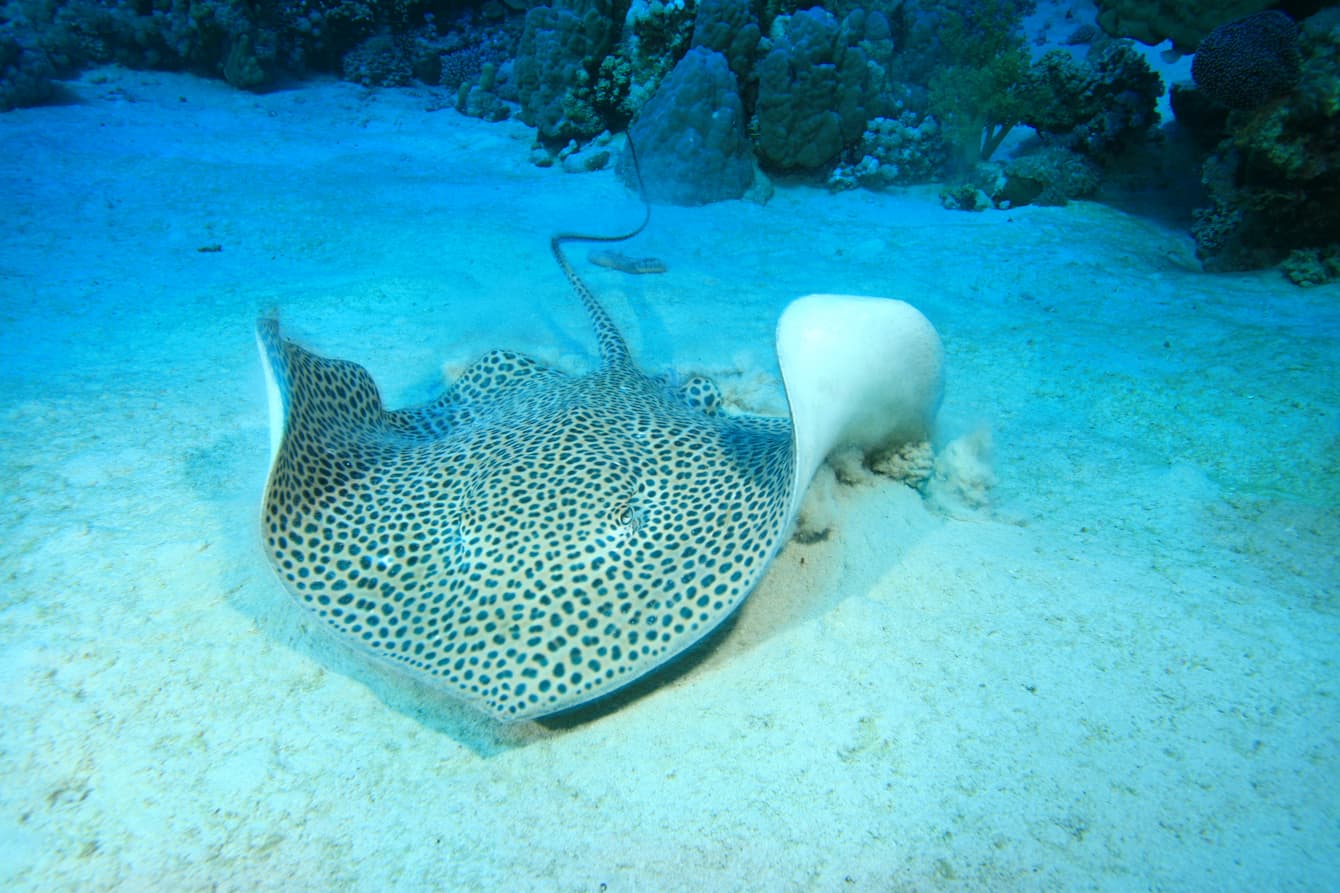
A leopard whiptail ray swimming along the bottom of The Reef habitat at the Seattle Aquarium's Ocean Pavilion.
Large fish, like rays, play important roles in their ecosystems. Without them, the local food web can experience upheaval.

Lending a hand to our finned friends

Tools like the Red List Index can help governments and other organizations track population losses and determine whether their policies and actions are making meaningful strides for conservation and population recovery.

Governments can help species recover by creating and enforcing sustainable fisheries management measures. Fisheries management refers to setting, enforcing and monitoring strict limits on how many animals can be caught, where and when they can be caught, and other important rules. Some countries have seen progress in species recovery, but more work remains to be done.

“A first step for species recovery is fisheries management. But there are some species, like Indo-Pacific leopard sharks, that are so depleted that they need an extra helping hand to replenish their wild populations.

—Riley Pollom, species recovery program manager, Seattle Aquarium

One method of helping populations recover is by directly introducing more sharks to their wild home waters. That’s the idea behind ReShark, a global coalition—of which the Seattle Aquarium is a founding member—that works to restore wild shark populations, starting with the Indo-Pacific leopard shark.

Accredited aquariums help sharks already in human care reproduce, and transport the eggs to nurseries in the Indo-Pacific. Once hatched, the sharks are reared, tagged and released into marine protected areas, where fisheries are effectively restricted. Right now, the Seattle Aquarium serves as the North American hub for these egg transports. Once fully mature, the Indo-Pacific leopard shark in our care will help directly contribute eggs to this effort.

We can do our part by voting for politicians who support marine-friendly practices and pressuring those in office to do more to help the ocean and its inhabitants. Choosing sustainable seafood is also a great way to protect sharks, rays and other fishes. The Monterey Bay Aquarium’s Seafood Watch is a helpful guide for making ocean-friendly dining choices.

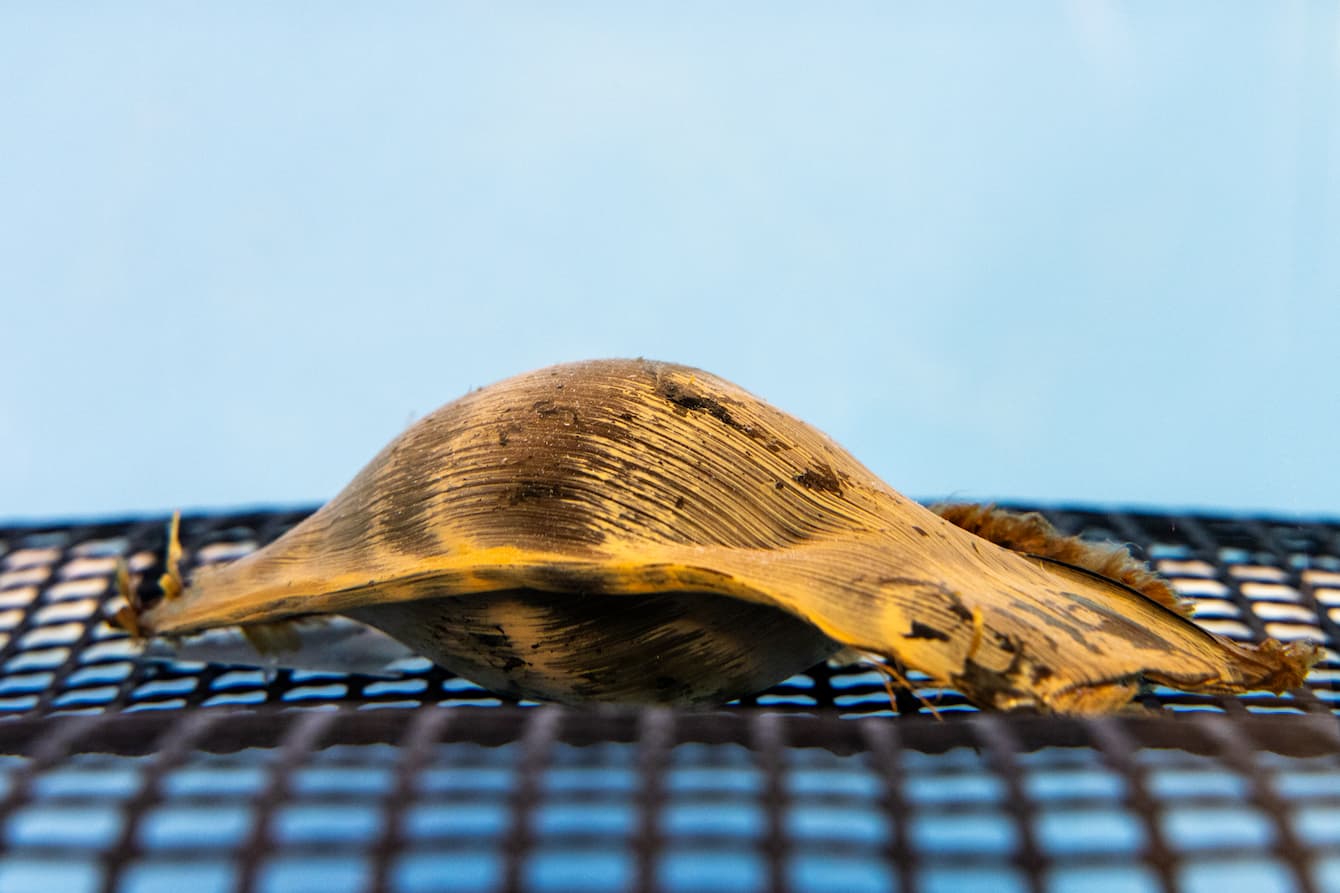
A light brown Indo-Pacific leopard shark egg.
Through ReShark, eggs laid by sharks already in human care—like this egg pictured at our off-site Animal Care Center—are helping to restore shark populations in the Indo-Pacific.

Hidden science superheroes: Meet the Seattle Aquarium’s water quality team

Seattle Aquarium Nerdy Science Series logo of an illustrated microscope.

This story is part of our Nerdy Science Series—how we’re using research and technology in service of a healthy ocean.

From basket stars to fur seals, what do all animals at the Seattle Aquarium have in common? They need just the right conditions in their water to flourish. The mission of maintaining the Aquarium’s water quality every minute of every day is undertaken by a small but skilled group of chemists using both new technology and ancient solutions.

Water Quality Manager Hannah Mewhirter says her team is usually the first to notice when there’s a problem with a habitat’s water. That’s mainly because many water quality issues don’t change the water’s appearance.

The team tests 20–40 water samples from the main Aquarium and offsite Animal Care Center each day. They check several physical properties of the water like salinity, pH levels, dissolved oxygen levels and temperature. And they test for nutrients like ammonia, nitrate, nitrite and phosphate. All these parameters need to be balanced for aquatic animals to thrive.

The team also collects daily data, which helps them identify changes and guides their actions. When they notice an imbalance, they work with members of the engineering team and animal care teams to identify what caused the issue and how to amend it.

“It’s a collaborative process,” Hannah says. “We tell the animal care teams what their water quality looks like. They tell us what they need for their animals, and we work together. It’s like creating a customized plan.” 

Many species at the Aquarium are from the Puget Sound region. To accommodate them, the Aquarium brings in seawater from Elliott Bay. After a little filtration and supplementation, this water is pumped into our animal habitats. We then filter and return the water back into Puget Sound. 

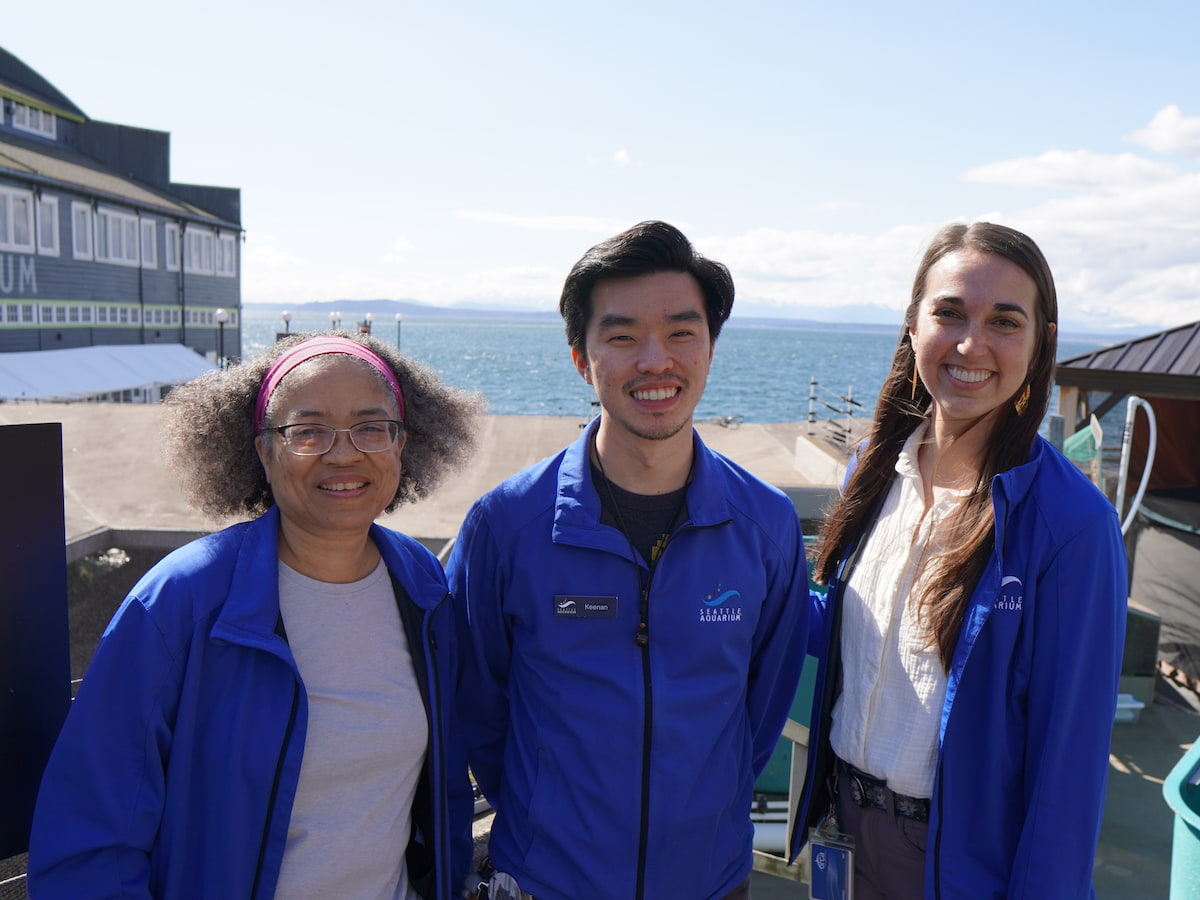
Seattle Aquarium Water Quality team members Angela Smith, Keenan Wong and Hannah Mewhirter standing together and smiling in front of the Salish Sea.
Seattle Aquarium Water Quality team members Angela Smith (left), Keenan Wong (center) and Hannah Mewhirter (right) keep our aquatic habitats clean and safe.

Although seawater looks like an unlimited resource, it’s not. We want to be the best stewards of that seawater because it is the lifeblood of the Seattle Aquarium.

Hannah Mewhirter
Water Quality Manager, Seattle Aquarium

Ocean Pavilion brings changes

The Ocean Pavilion—which opens in 2024 and will feature tropical plants, fish and invertebrates from the Coral Triangle region of the Pacific Ocean—uses a different system. It’s designed to clean and recirculate 96% of the salt water in its habitats, saving both water and energy. Recaptured heat from the warm water will also help heat the building.

“The Seattle Aquarium has embraced a paradigm shift,” Hannah says. “Water quality is far more complex and sensitive in a closed-mode aquarium than in an open-flow aquarium. That will require daily testing and looking at more parameters because we are intentional about reusing the water.”

Innovative technology helps the team stay on top of water quality testing. One tool that Hannah is particularly excited about is the ion chromatograph, which tests nine different chemical properties at once. The tool not only cuts down on the time, energy and chemical reagents needed to conduct those individual tests but also reduces the amount of plastic packaging.

“Ammonia is one of the most sensitive parameters we test,” Hannah says. “We’re never going to miss ammonia testing. If anything, we’re going to add ammonia testing, especially in a fully recirculating water system. But thinking of doing that while adding environmental costs with all that plastic—it just didn’t sit well with me. So, we’re going to pursue a greener method using an ion-selective electrode.”

These sustainable choices also align with the Aquarium’s goal of becoming a zero-waste operating facility by 2025.

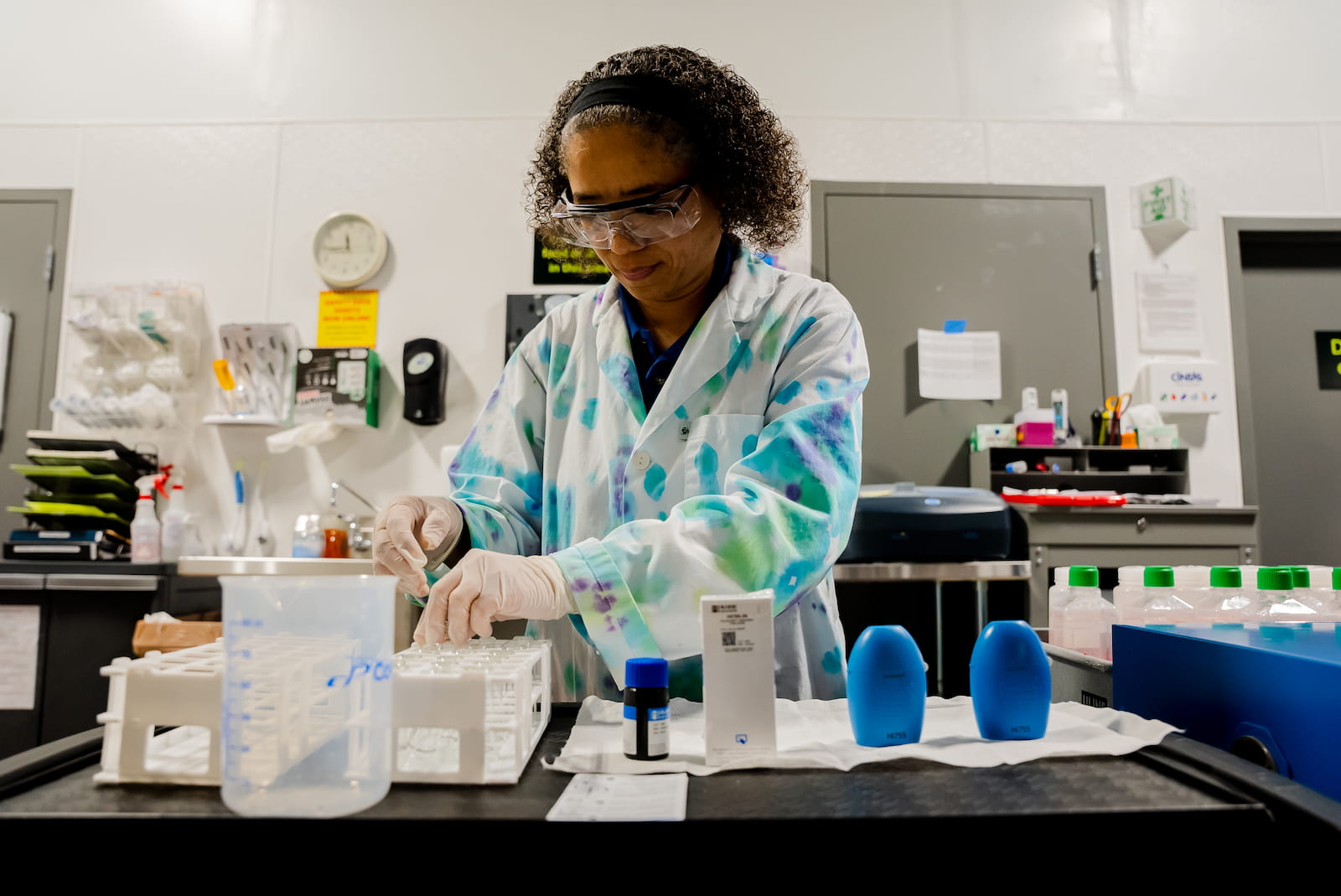
Angela Smith testing water quality samples in a lab. She wears safety glasses and a white lab coat speckled with blue and green.
Our water quality team works at the Aquarium and off-site at our Animal Care Center (pictured here).

Finding solutions

The most powerful tool the team uses to keep water clean is low-tech but no less meticulous: bacteria.

When animals eat food, they convert some of it into energy and the rest into waste products, which contain a lot of nitrogen. In large quantities, nitrogen could create harmful conditions.

Nitrifying bacteria break down the nitrogen-rich waste products and help balance the chemistry in animal habitats. These bacteria create their own waste that other bacteria eat in turn, creating a sustainable cycle. The water quality team monitors the bacterial population to create a biological filtration system that maintains water quality 24/7.

Hannah sees her work as a puzzle with many pieces. Chemistry, creativity and collaboration help Hannah and her team keep the Aquarium’s water in the clear.

“Things are relatively stable from day to day—and we want them to be. But when they’re not, that is a challenge that brings out the joy of problem-solving. I like figuring out what has changed and collaborating on how we need to fix it,” Hannah says.

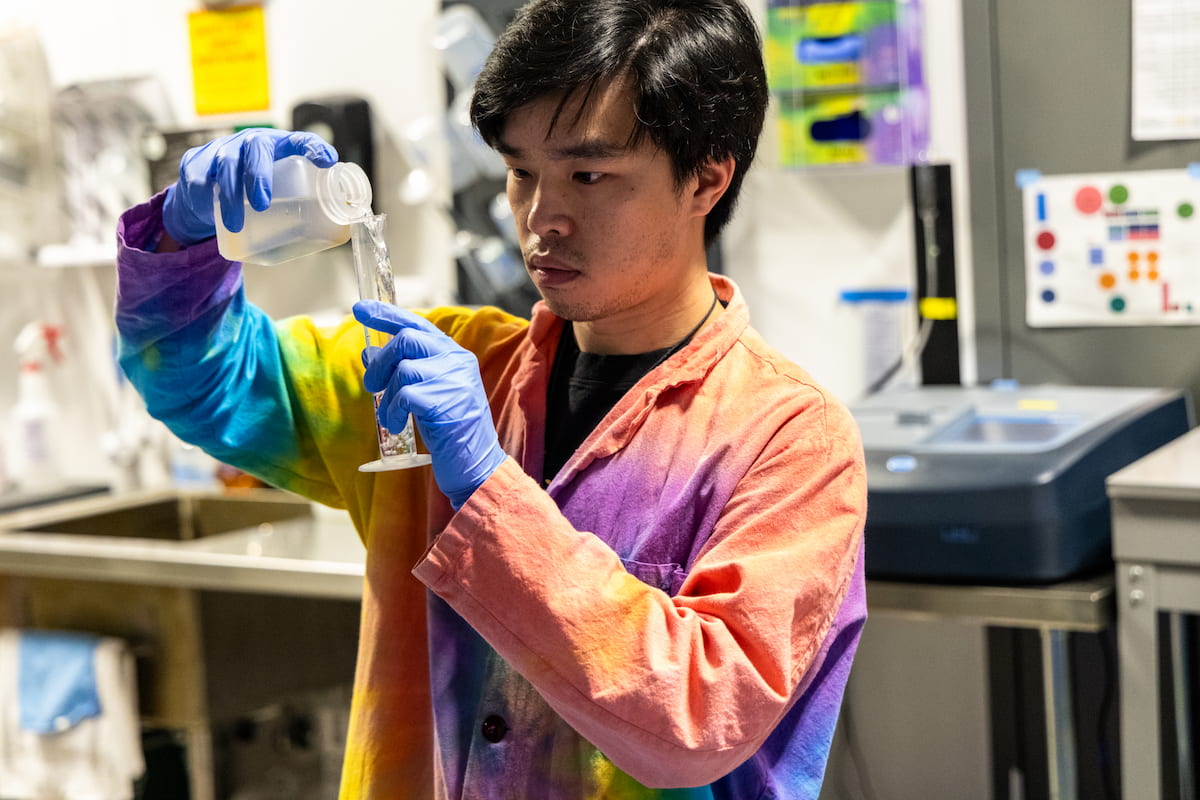
Keenan Wong pouring a solution into a graduated cylinder. Keenan wears a multicolored, tie-dyed lab coat.
Water quality specialists test multiple parameters in every water sample.

She sees sea otters by the nearshore: Tracking sea otter populations with Dr. Shawn Larson

Seattle Aquarium Nerdy Science Series logo of an illustrated microscope.

This story is part of our Nerdy Science Series—how we’re using research and technology in service of a healthy ocean.

Guests at the Seattle Aquarium know how fun it is to watch sea otters eat and play. But for sea otter researchers, watching these adorable animals on Washington’s outer coast also provides valuable scientific information. By keeping track of wild sea otter populations through regular surveys, Dr. Shawn Larson of the Seattle Aquarium and her team hope to better understand the important role otters play in the marine ecosystem and what the future might hold for them.

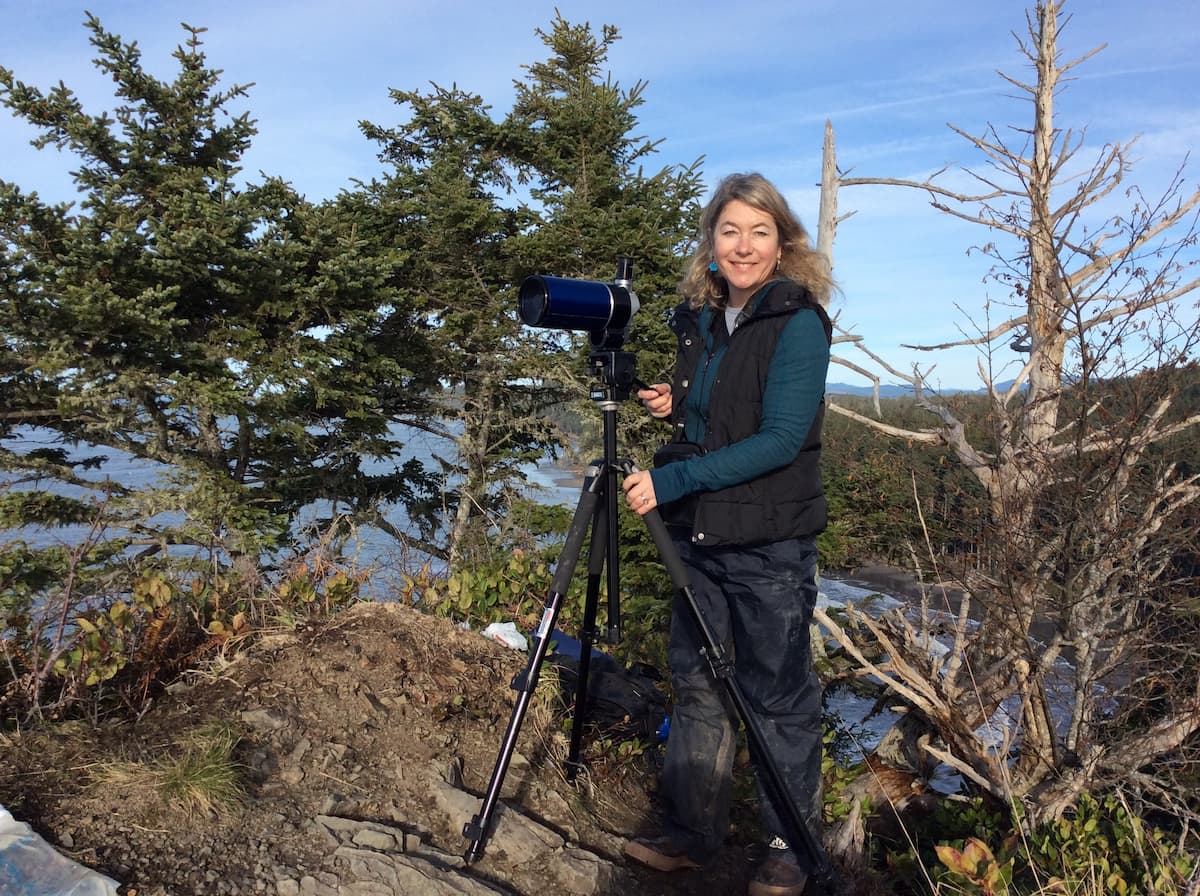
Dr. Shawn Larson standing on a rocky shore and holding a small telescope.
Senior Conservation Research Manager Dr. Shawn Larson studies wild sea otter populations and diets.

Searching for sea otters on Washington’s outer coast

Each June for the past 23 years, Seattle Aquarium researchers have participated in a statewide, multiday survey of the Washington sea otter population, organized by the U.S. Fish and Wildlife Service and the Washington State Department of Fish and Wildlife.

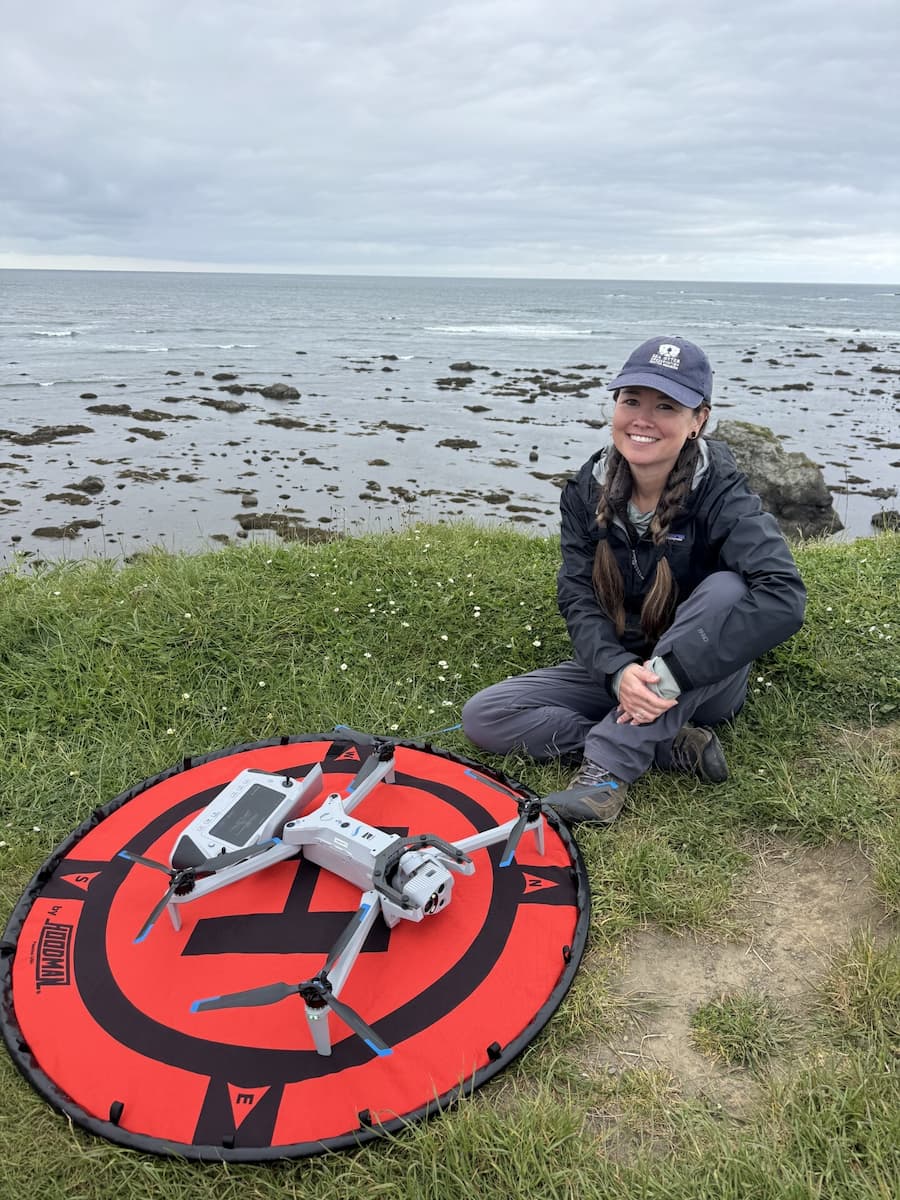
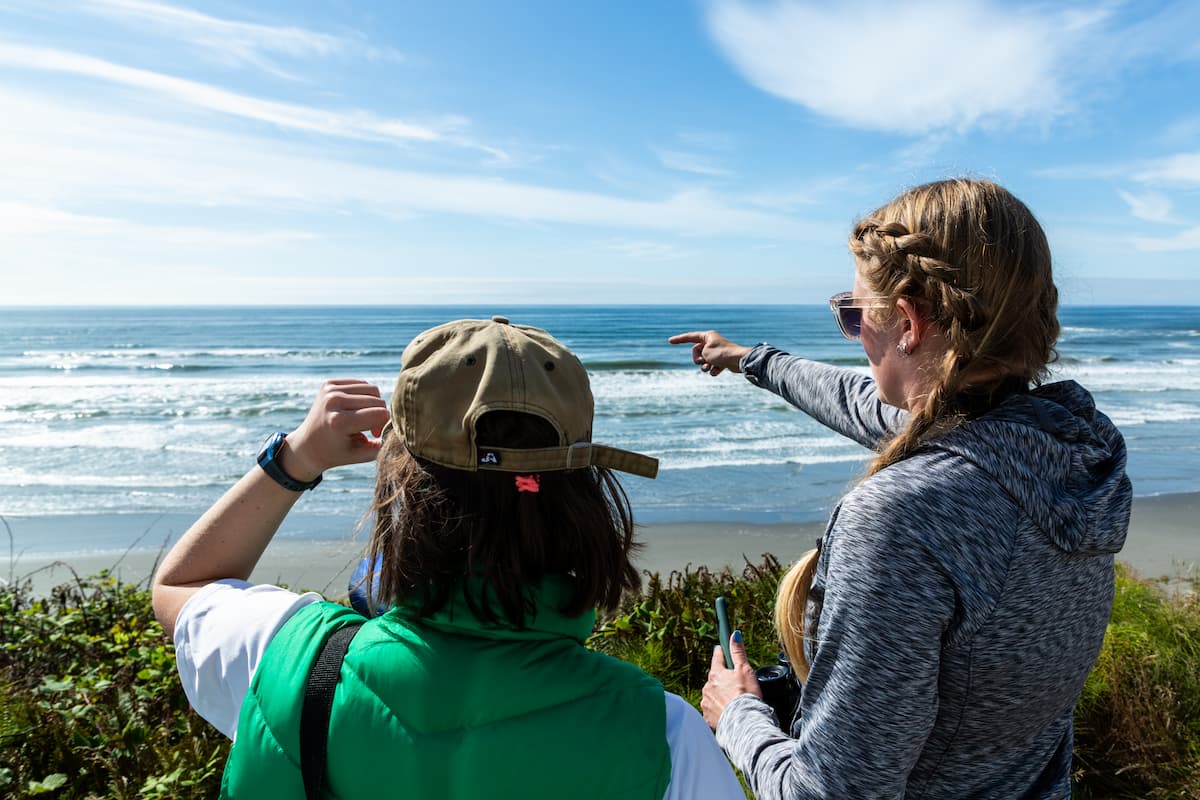
Shawn and other Seattle Aquarium staff assist by forming ground teams at specific locations along the coast to carefully count all the otters in an area. The team usually leaves bright and early to hike to the observation point, where they set up their spotting scopes and start looking for otters.

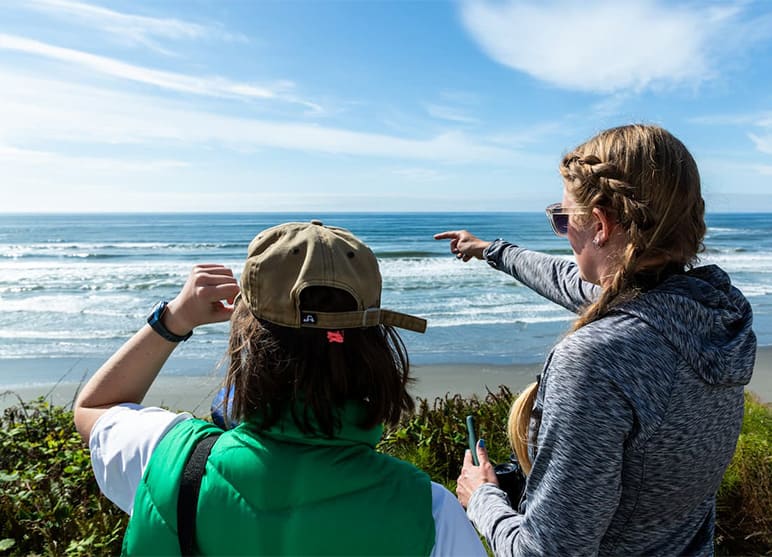
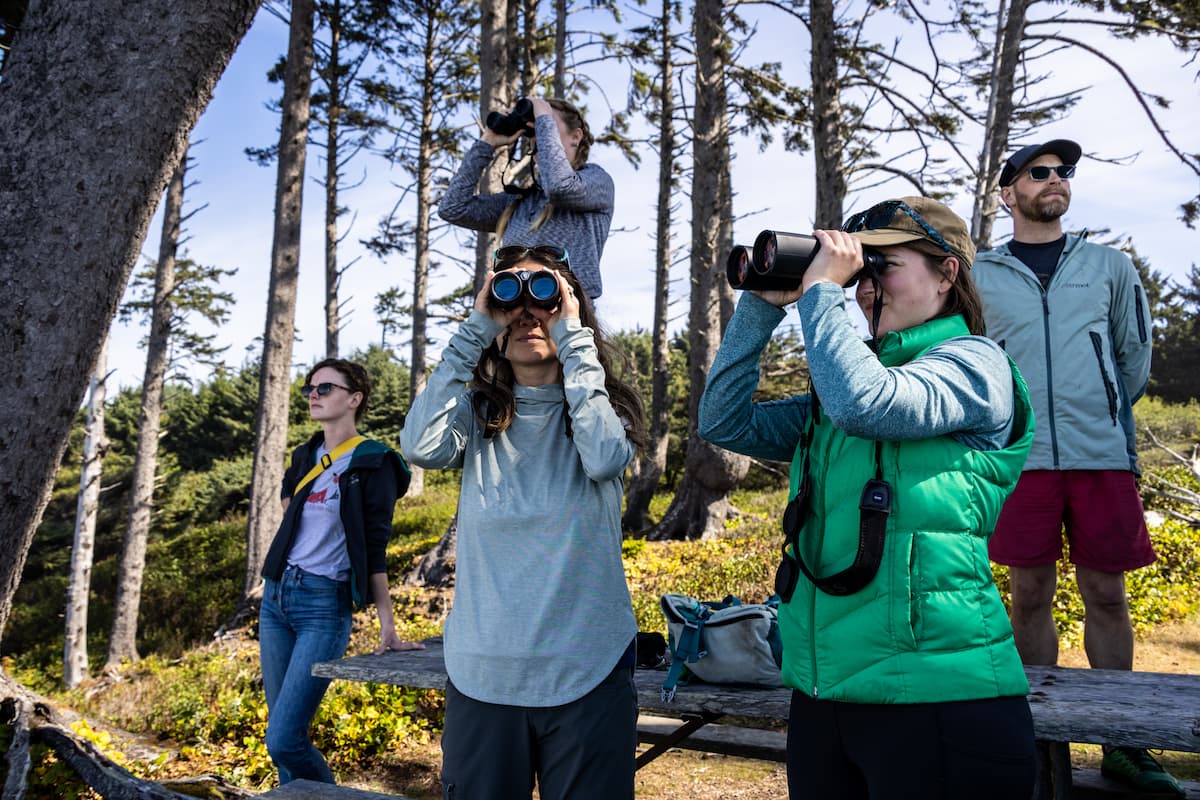
Three researchers observing sea otters on a beach; three of the researchers are holding binoculars up to their eyes.
Researchers from the Seattle Aquarium and Oregon Coast Aquarium look for sea otters off the Washington coast.

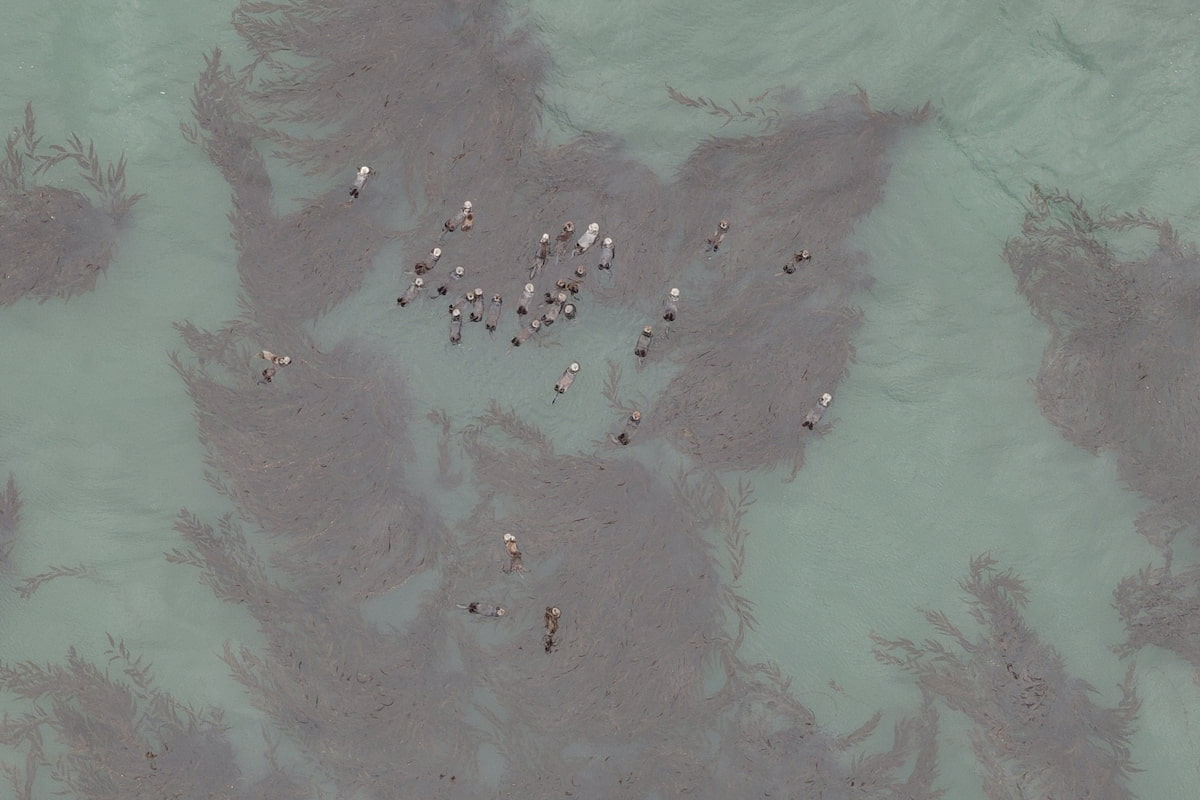
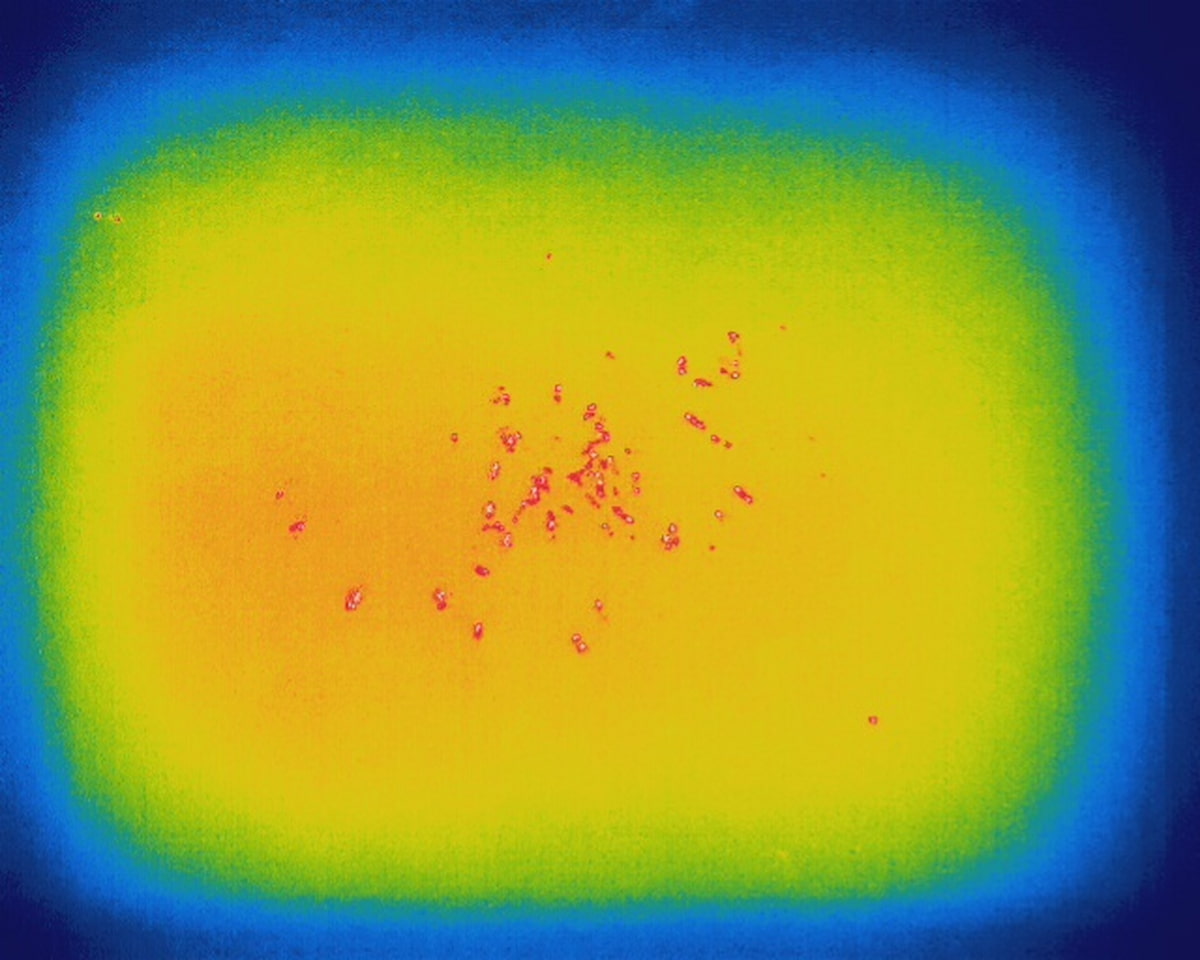
They also record information on the otters’ ages and behaviors. During the survey, a plane circles above large groups of otters—known as rafts—to take high-quality digital photographs. Researchers count the otters in these photos later.

The otters tend to float about a kilometer (a little over half a mile) from the shore in groups of up to 1,000. It can be hard, at that distance, to distinguish rafts from clumps of kelp floating nearby. But Shawn, a seasoned otter spotter, knows to look for heads and flippers. Otters also tend to appear black, while kelp looks dark brown.

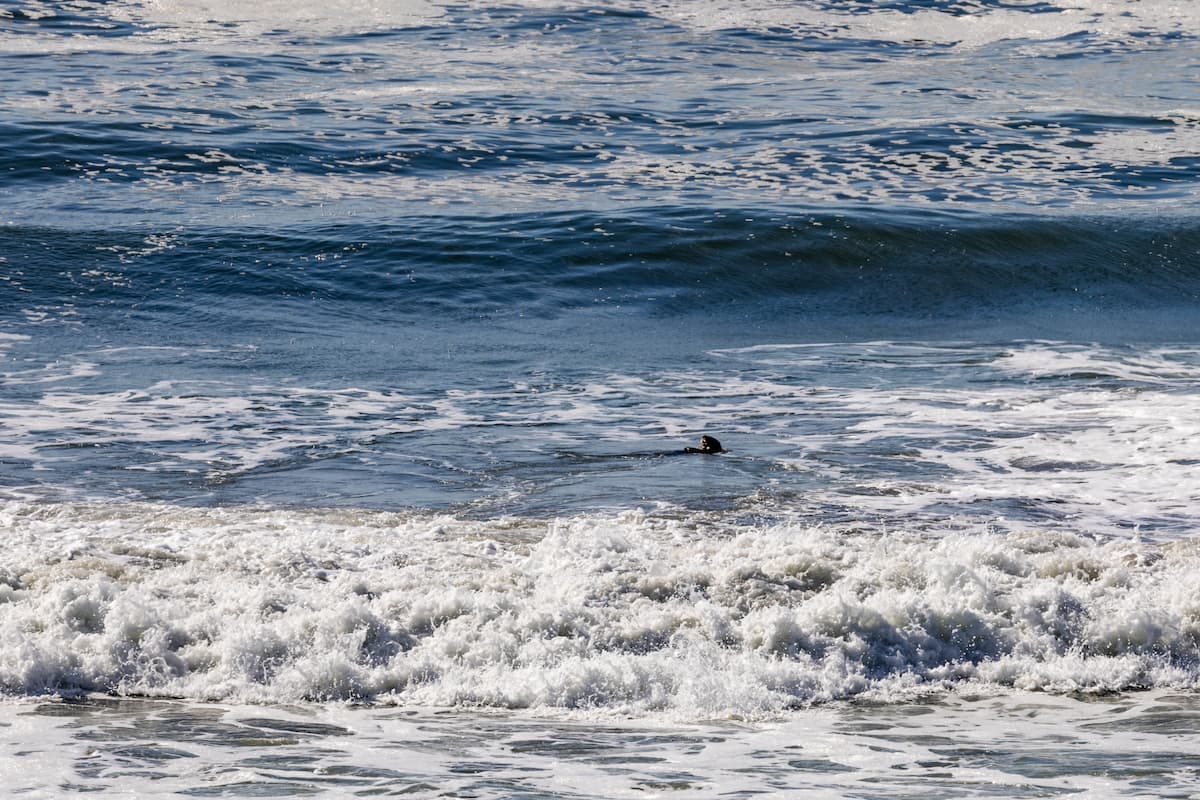
A sea otter floating on its back in the ocean.
A sea otter floating off Washington’s outer coast.

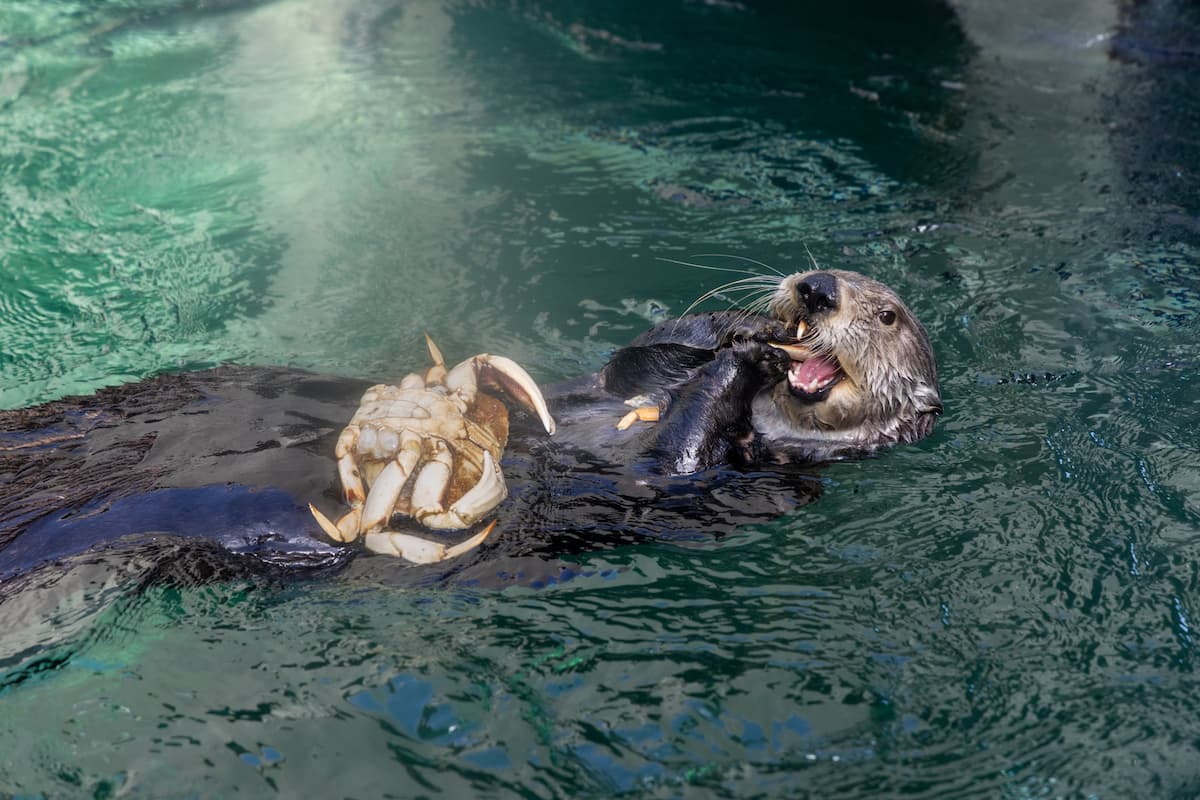
The Seattle Aquarium also does surveys of the local population monthly, documenting their numbers and diets. Like us, otters have preferred foods. If they’re available, otters will go for sea urchins, crabs and clams. When those become scarce, otters will turn to snails, mussels and sea cucumbers. Shawn has even seen otters eat a giant Pacific octopus!

“Their diet starts to diversify…and that’s when we know that their population has pretty much reached its carrying capacity—meaning the limit for that area,” Shawn says.

Happily, the sea otters in Washington are doing well. Their population is steadily growing with an increase of about 10% each year. They’re growing large and raising many pups, suggesting that these days, there’s plenty of their favorite foods on the outer coast.

Scientists still have a lot of questions about sea otters

Despite decades of research, scientists are still uncovering new information about sea otters. We know that otters eat sea urchins that would otherwise consume kelp. So, where there are otters, there are usually also healthy kelp forests, which serve as habitats for an array of nearshore marine life. However, researchers seek a deeper understanding of how sea otters impact nearshore environments.

"They're kind of a mystery in a lot of ways. There's a lot we do know about them, but there's a lot we don’t."

“We know that sea otters tend to structure the nearshore where they live, but exactly how does that work? What are the pieces of the puzzle that make it work?” Shawn says.

To unravel the mystery, the Aquarium is in the early stages of using a remotely operated vehicle, or ROV, to study otter foraging behavior in kelp forests on the outer coast. By going underwater to where the action is, the ROV will provide in-depth footage and data on sea otter foraging behavior.

A better understanding of sea otters and kelp can’t come soon enough. Kelp is highly effective at sequestering carbon, which could help offset some effects of climate change.

"I hope that we continue to do this work for decades to come… The food sea otters are able to catch really will show how they are able to adapt or not to oceanic changes."

Another question researchers are exploring is how sea otters will react to climate change.

With up to 1 million hairs per square inch, their dense coats keep them warm in the chilly waters of the Pacific. But otters have trouble expelling heat. Rising ocean temperatures could push them farther north. At the same time, otters tend to thrive in nearshore environments. Rising sea levels and melting sea ice could provide more habitat for them.

“We just don’t know. There could be dramatic negatives with climate change for sea otters and there could be dramatic positives,” Shawn says.

Two researchers stand on a beach overlooking the ocean searching for sea otters.
Researchers Katie Shelledy from the Seattle Aquarium, left, and Brittany Blades from the Oregon Coast Aquarium search for sea otters.

How to help sea otters in the wild

One thing we do know is that sea otters need a clean home. Trash that ends up in the sea can reach them via ocean currents. By properly disposing of trash, you can help keep the ocean clean for sea otters and other marine life.

Consider reducing plastic consumption and choosing reusable options when you can. Better yet, volunteer at a beach cleanup to remove plastic and other trash from our shores. You can even get your friends involved!

For more ways to help the ocean and all that depend on it (including humans!) check out our Act for the Ocean page.

Microplastics pollution along Seattle’s waterfront: Effects of pandemic detected

This story was written by guest writer Lyda Harris, Ph.D., microplastics fellow at the Seattle Aquarium.

The Seattle Aquarium’s unique location and ongoing monitoring efforts enabled us to publish the first long-term monitoring of microparticle concentrations in an urban waterfront of the Salish Sea as a scientific paper. Our paper, titled Temporal variability of microparticles under the Seattle Aquarium, WA: Documenting the global Covid-19 pandemic, is available online.

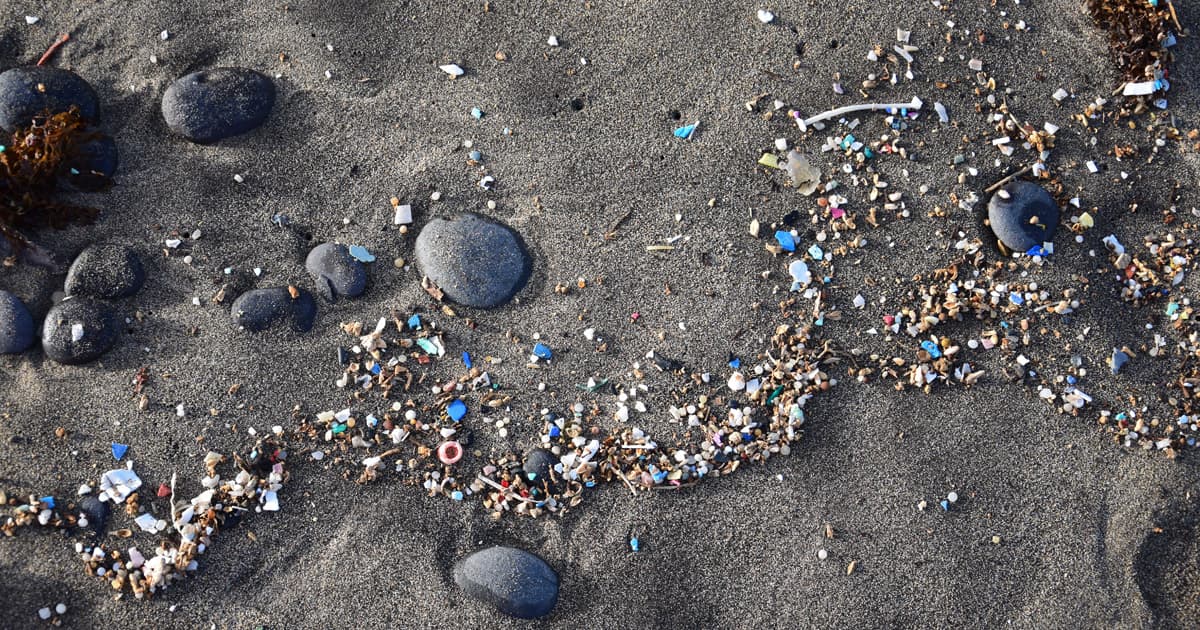
Human-generated (or “anthropogenic”) debris on the ocean’s surface, within seabeds and on the beach is up to 80% plastic. Microplastic, or small plastic less than 0.2 inches (five millimeters) in size, is widespread in the marine environment and within every group of marine organisms that has been studied. Once ingested, microplastics can cause multiple health issues in marine animals, such as lower birthrate and increased susceptibility to disease. It isn’t just the physical properties of microplastics that negatively affect animals, however. Due to plastic’s petrochemical origin (fossil fuel), plastic particles act as a sponge and transportation method for persistent organic pollutants and other chemicals that are toxic.

We define “microparticles” (less than 0.2 inches, or the size of a sesame seed) as a single umbrella term to encompass all suspected micro anthropogenic debris, including microplastics.

We still don’t know what the baseline concentrations of anthropogenic debris are and how they shift seasonally, which is critical information for researchers to determine how local species, including humans, are impacted by shifts in microparticle loads. Thus, it’s important to measure long-term microparticle concentrations to establish a baseline across time, document anomalies and help researchers understand if there are certain times (e.g., seasonal rains, combined sewage overflows, tourist seasons, etc.) when the Salish Sea is more at risk from microparticle pollution.

Initially, the Seattle Aquarium set out to establish baseline microparticle concentrations and seasonality in Elliott Bay through ongoing water column sampling. Our study period, 2019–2020, occurred prior to and during the global COVID-19 pandemic with associated reductions in human activity, presenting an unprecedented opportunity to capture pre- and mid-pandemic contamination baselines. 

Our goals were two-fold:

  1. Describe long-term microparticle contamination data, including concentration, particle type and particle size.
  2. Determine if seasonal microparticle concentrations are dependent on environmental or tourism variables in the Salish Sea’s Elliott Bay.

We sampled 26 gallons (100 liters) of seawater at depth (approximately 30 feet) under the Seattle Aquarium every two weeks in 2019 and 2020. Environmental and tourism data from public sources such as precipitation, Duwamish River effluent (outgoing water), wastewater effluent, and tourism were used to explain changes in microparticle concentrations. Lastly, 10% of microparticles were subsampled to test for plastics at Oregon State University.

Findings:

  • Microparticle concentrations ranged from 0 to 3.4 particles per gallon (or 0–0.64 particles per liter).
  • Fibers were the most common type observed.
  • A drastic decrease in microparticle concentrations occurred on April 10, 2020, and was identified as a breakpoint, separating two distinct time periods.
  • The observed change in microparticle concentrations was found to be correlated with a decrease in tourism that occurred along Seattle’s waterfront at the onset of the global COVID-19 pandemic.
  • All microparticles that were analyzed for plastics were either anthropogenic (reminder: “human generated”) in material (80%), plastic (16%), or possibly anthropogenic or natural (4%).

Overall, we found a decrease in concentration as well as a potential change in the microparticle source. Decreased tourism from pandemic shutdowns led to a smaller urban population, which may have additional effects on human movement, wastewater effluent, and waterfront activity. All of these anthropogenic factors can affect both the concentration as well as composition of microparticle pollution in Elliott Bay.

The decline in tourism and subsequent lack of activity on the waterfront decreased the quantity of microparticle pollution we observed. However, the long-term COVID-19 effects on marine debris remain unknown. The microparticles we found were primarily fibers and likely not from single-use plastics, but rather from the washing and shedding of clothing (e.g., fleece, leggings, rain jackets, etc.). 

While the quantity of microparticles found in this study decreased with the onset of COVID-19 and stay-at-home orders, global single-use plastic consumption increased substantially. When plastic enters waterways, it is degraded by UV rays and broken apart by physical forces, such as wave action, over time. As single-use plastic consumption remains high throughout the pandemic and the foreseeable future, it is possible that as these plastics break apart, they will begin to appear in future water samples. 

While microparticle contamination along Seattle’s waterfront is relatively low and mostly consists of fibers as of 2020, future conditions are likely to worsen due to a return of tourism and current consumption and waste of single-use plastics.

Join us for After Hours: Family Matters on Thursday, May 21, when the Aquarium when remains open late just for adults 21+!

Today only, your gift will be matched dollar-for-dollar up to $25,000 thanks to the generosity of donors Betsy Cadwallader, J & Tim, and Jess & Andy Peet. Help us reach our $50,000 goal!

End the year with a gift to the ocean.