Do you know someone who’s full of surprises—and just when you think you’ve got them figured out, they do something entirely unexpected? Our summer SEAlebrities are like that, too! They’re not always what they seem to be, so look closely. Some change colors, others are showy birds that swim like fish. Check them out on your next visit to the Seattle Aquarium!
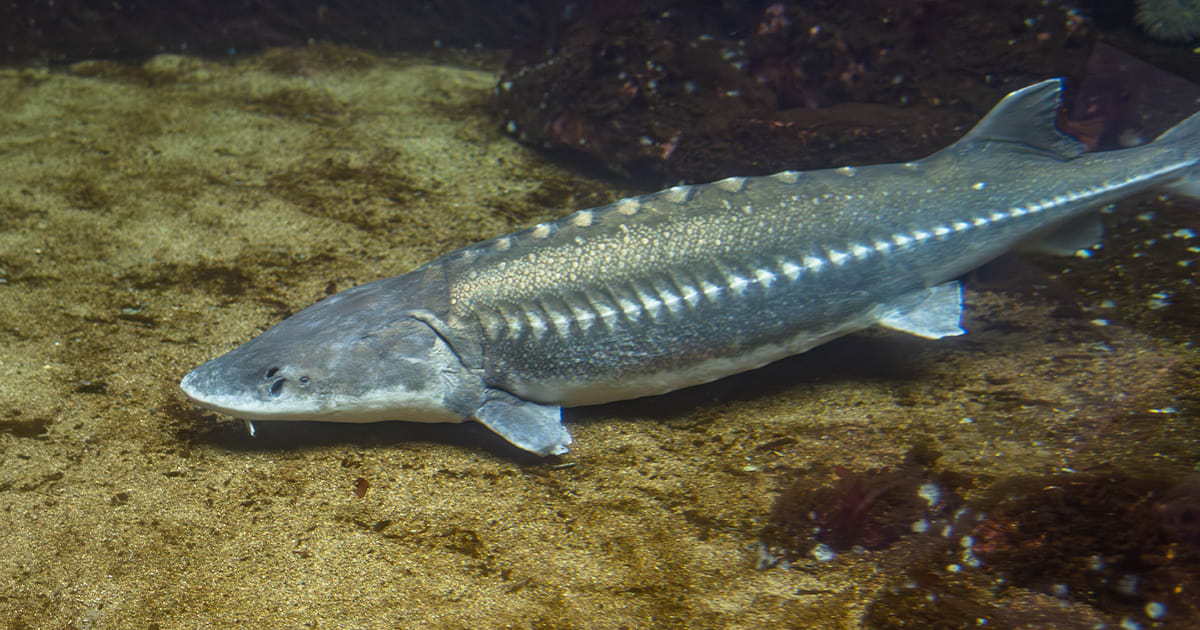
White sturgeon: fish with an identity crisis?
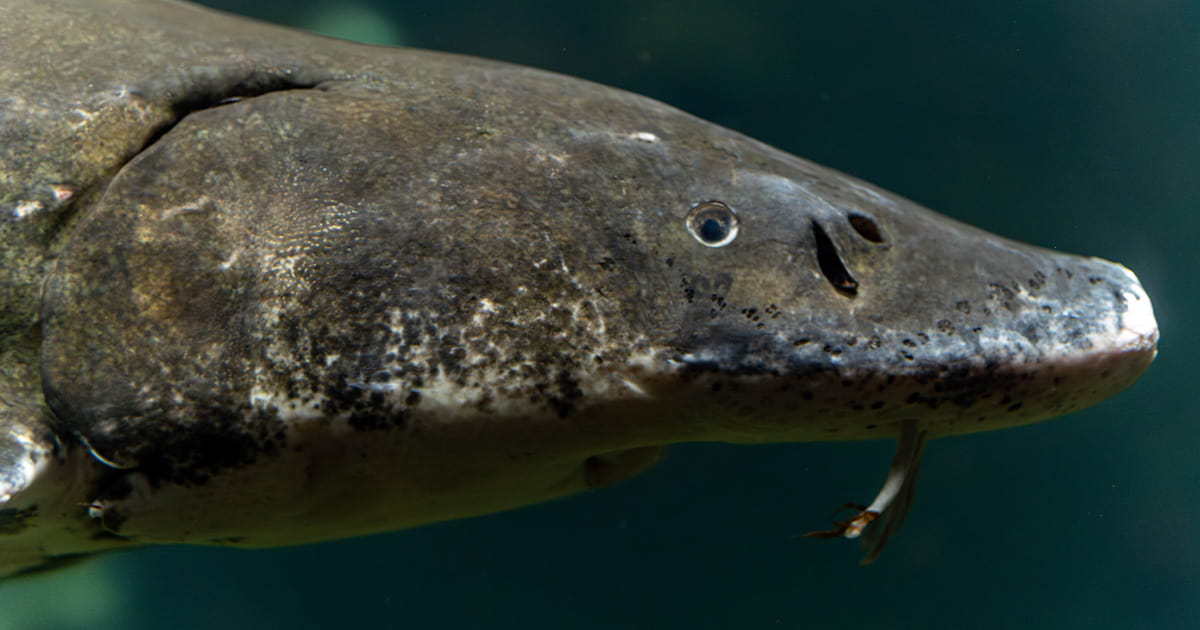
One glance at their long bodies, pointy snouts and dorsal fins and you might ask, “Who let the sharks in?” Often mistaken for sharks, white sturgeon, Acipenser transmontanus, are bottom-dwelling fish that live in the temperate waters of the Pacific Coast from Alaska to upper Baja California.
HOW ARE STURGEON JUST LIKE US?
They have what it takes to protect themselves.
Like sharks, sturgeon have been around since the time of the dinosaurs. They have smooth skin and a skeleton made of cartilaginous scutes, not bone. Reminiscent of scales, the rows of scutes protect the sturgeon’s vital internal organs. Unlike sharks (or us), sturgeon have no teeth. Smile!
They like to lay low and feel things out.
Sturgeon hover over sandy floors of the ocean and estuaries to forage for food with their barbels—long, whisker-like feelers above their mouths. They drag their barbels along the bottom, searching for shellfish, invertebrates (animals with no backbone) and small fish, then suck their prey into their mouths and swallow it whole.
Can you spot a sturgeon? Test your observation skills at our Underwater Dome habitat.
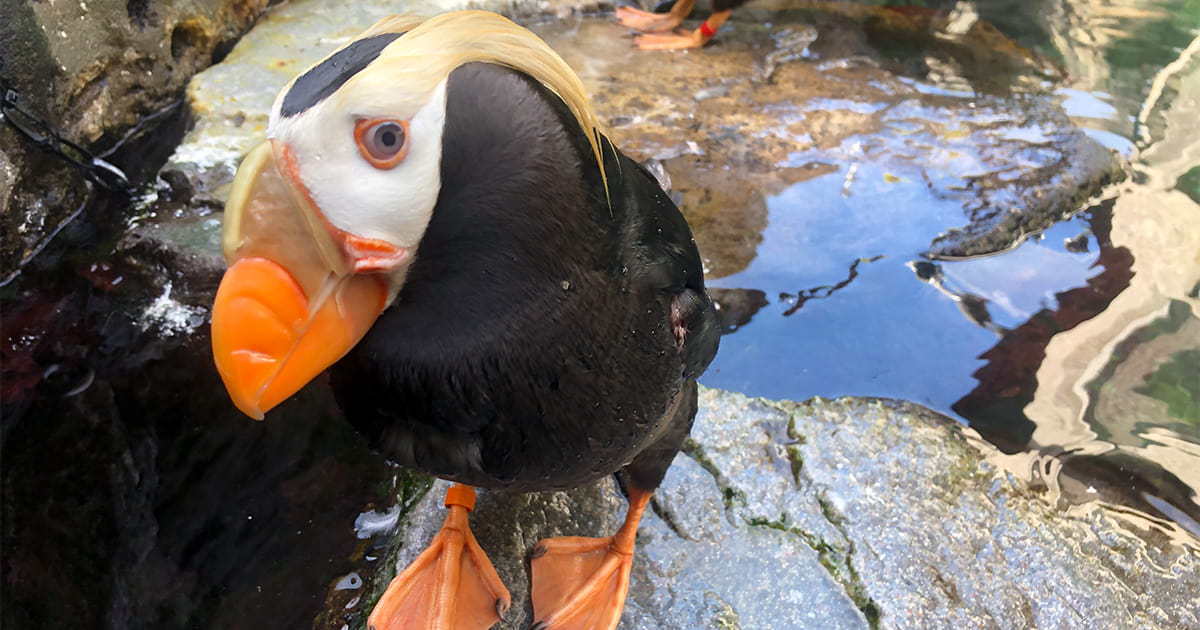
Tufted puffins: parrots of the sea
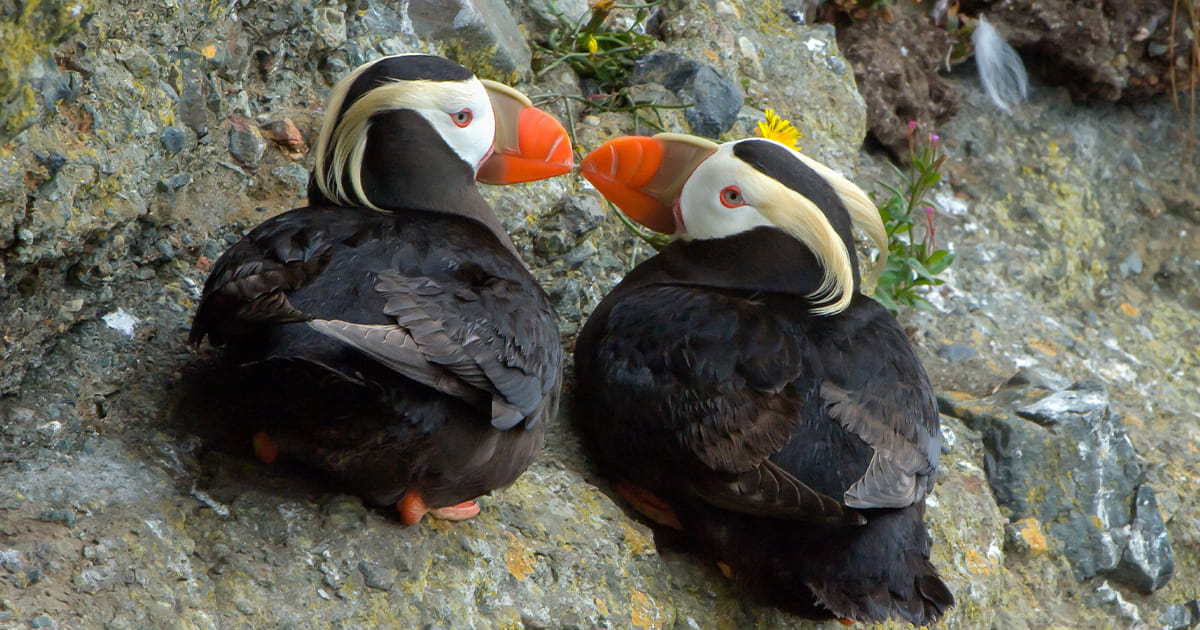
Tufted puffins, Fratercula cirrhata, spend summers in remote island colonies and winters on the open sea. These diving birds (alcids) seem to fly through water as easily as air. Yet their webbed feet are also used to burrow into cliffs or slopes where they will build nests safely hidden from predators and food-snatching gulls.
HOW ARE TUFTED PUFFINS JUST LIKE US?
They dress for the season.
In summer, tufted puffins shed their dull winter feathers and bill coverings for a more colorful look. Legs and feet turn bright orange. An ornamental bill plate appears. Golden tufts accent a white “face mask.” That’s how they gain a mate—and the nickname “parrots of the sea.”
They search for love that lasts a lifetime.
Once they’re dressed to impress, courtship begins. Tufted puffins rub bills, strut and “skypoint” (pose with bills thrust upward, wings and tail raised). Couples then find a suitable spot for a home, dig a burrow, build a nest and take turns incubating their single egg. Bonded couples often form lifetime partnerships and return to the same area each year.
What are the tufted puffins wearing today? Check them out in our Birds & Shores habitat. (Phelps will be sporting an orange band on his right leg.)
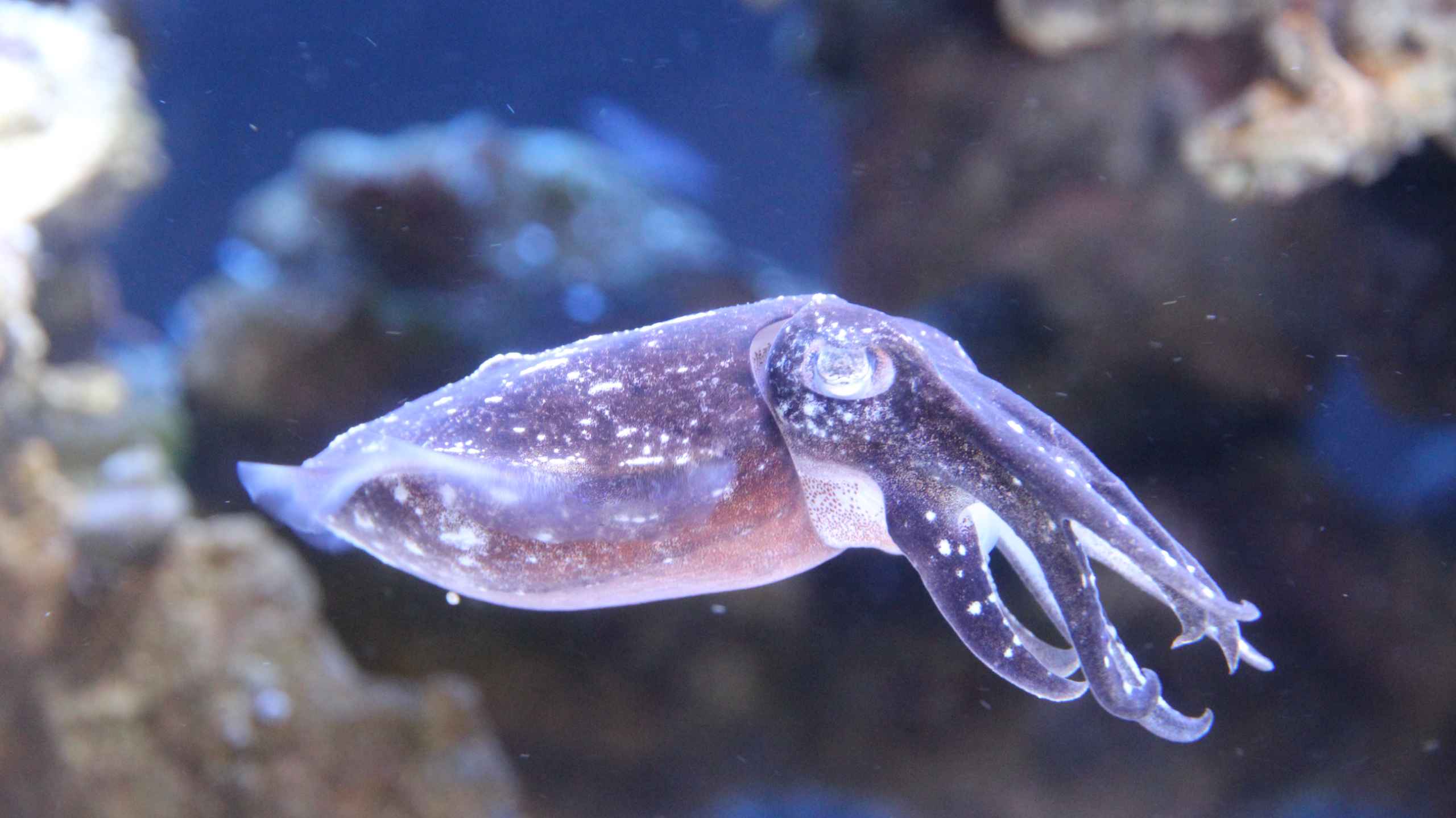
Dwarf cuttlefish: now you see them, now you don't
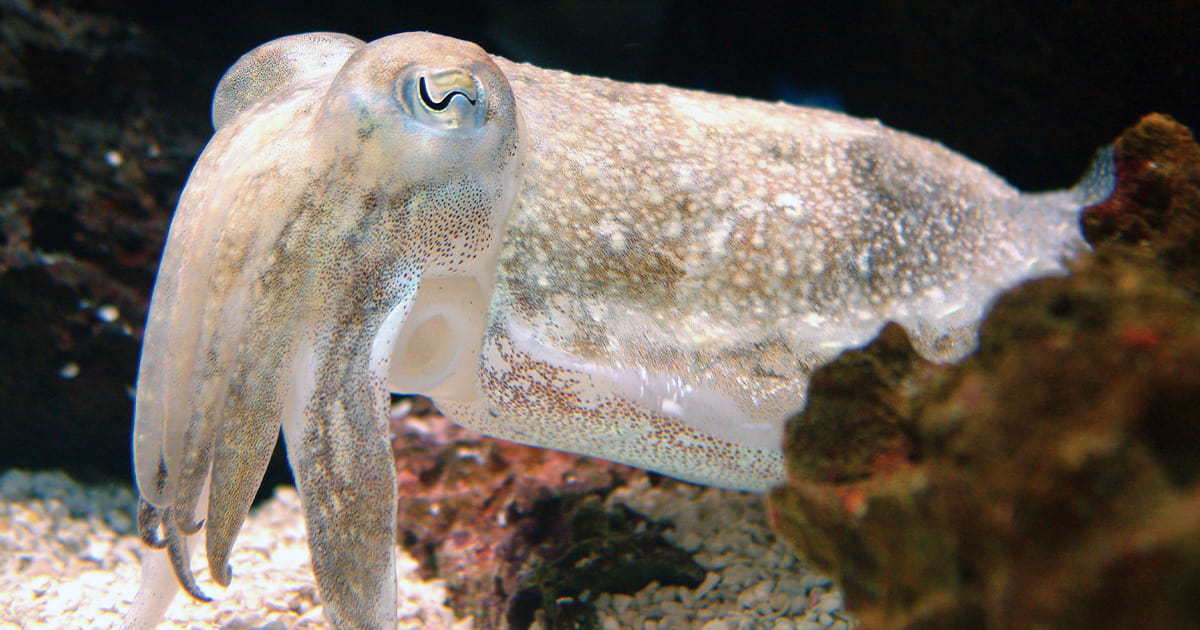
Dwarf cuttlefish, Sepia bandensis, are native to coral reefs of the Indo-Pacific region. Cousins to squids, octopuses and nautiluses, these tiny cephalopods have keen brains, three hearts and excellent vision that’s essential for hunting. They are often called “chameleons of the sea” for their skill at quick-change camouflage.
HOW ARE DWARF CUTTLEFISH JUST LIKE US?
They know when to fade into the background—and when it’s time to be seen.
Their small size makes dwarf cuttlefish easy prey, but their ability to quickly change color, skin texture and pattern makes them harder to spot. Conversely, a hungry cuttlefish disguised as a rock will find it much easier to sneak up on their next meal. And sometimes, male cuttlefish display female colors to get past bigger, stronger suitors.
They like to go out for a stroll.
Dwarf cuttlefish have eight arms encircling their mouth. They often appear to “walk” along the ocean floor using two of their eight arms. When a tasty morsel appears, their arms open quickly and two feeding tentacles shoot out, grabbing the prey and pulling it toward the cuttlefish’s beak and mouth.
See Cuttle Puddle and the other dwarf cuttlefish in action in our Pacific Coral Reef habitat!
Just like us, all of our SEAlebrities need healthy habitats to thrive. The threats to their homes are largely manmade. Find out what you can do to preserve the marine environment they—and we—depend on. Visit our Act for the Ocean page to learn more.
The Seattle Aquarium’s latest SEAlebrities are an interesting bunch. Some hide right before our eyes; others stand out in flashy colors. Then there are those that just love to play! Sounds like some people you know, right? Let’s meet them.
Giant wrymouths: mysterious and reclusive
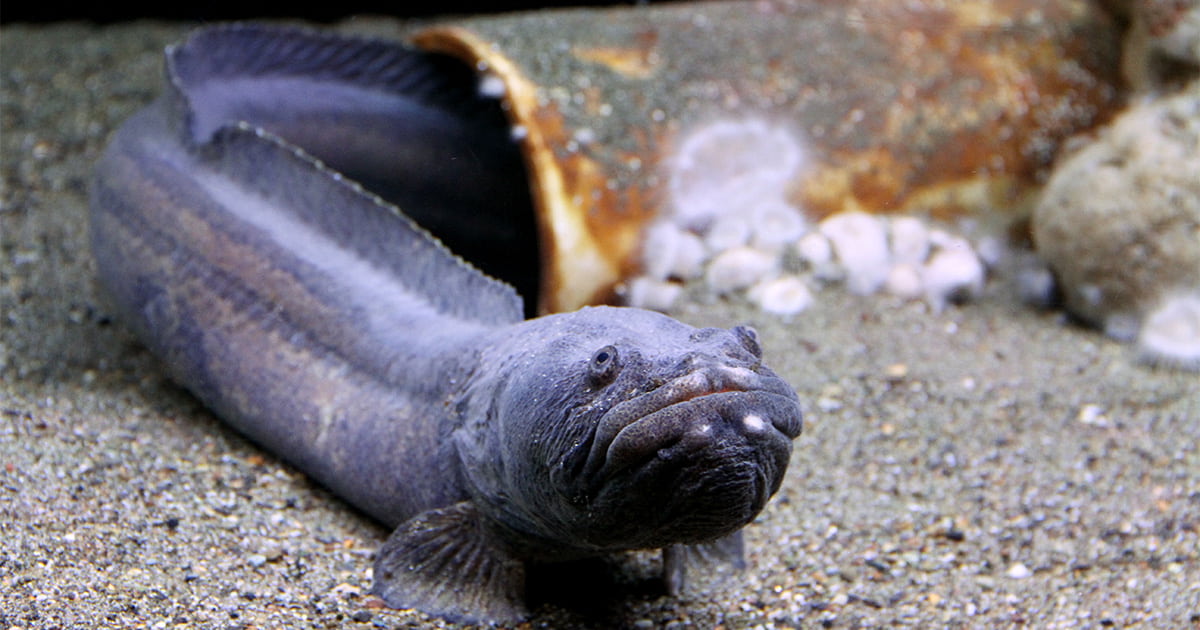
There are four recognized species in the wrymouth family. At over 5½ feet in length, Cryptacanthodes giganteus is the largest. (Regular wrymouths grow to around 3 feet, dwarf wrymouths to 1 foot.) With their long, narrow bodies, giant wrymouths are easily mistaken for eels. The big clue? Pectoral fins, which are characteristic of fish and not eels.
Here are two ways they’re just like us!
They like a safe, cozy home.
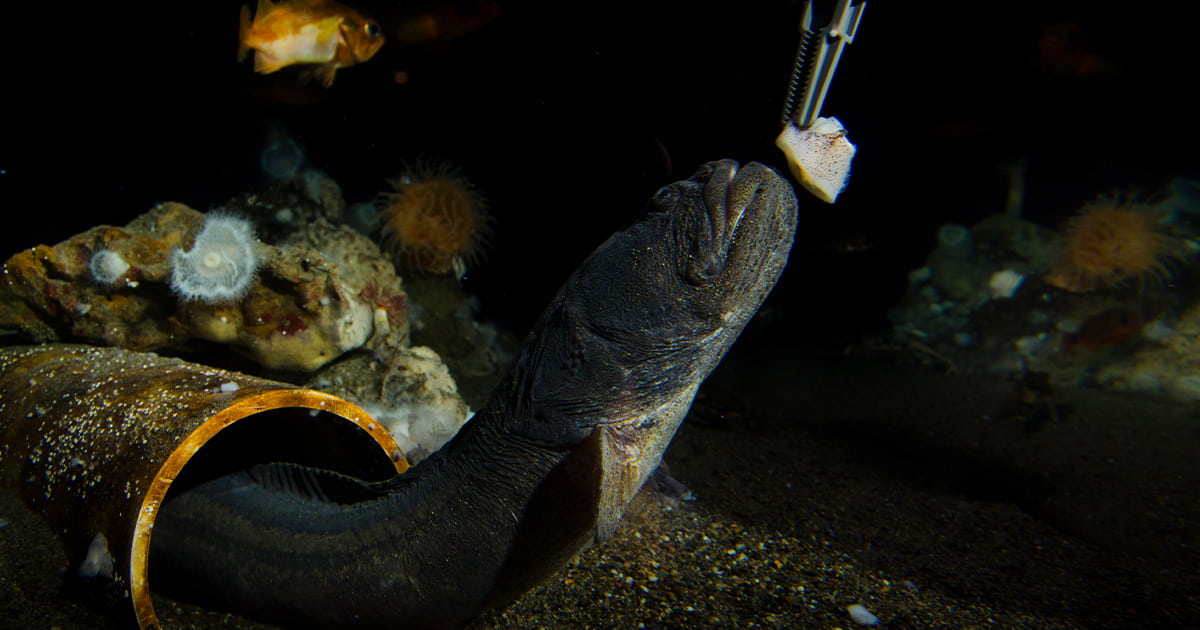
Giant wrymouths build their homes in the northeast Pacific Ocean, from the Bering Sea off the coast of Alaska to Humboldt Bay in California. They burrow into the soft ocean floor with just their heads peeking out—hiding in plain sight from hungry seals and sea lions.
They love snacks.
It is thought that giant wrymouths live most of their lives in the sand. Only tasty treats like crustaceans and invertebrates—or a special delivery by feeding pole, as shown in the photo taken at the Aquarium—can coax them out of their cozy burrows.
Meet Belle, a giant wrymouth in our care. Look for Belle in our Puget Sound Fish habitat on your next visit to the Aquarium!
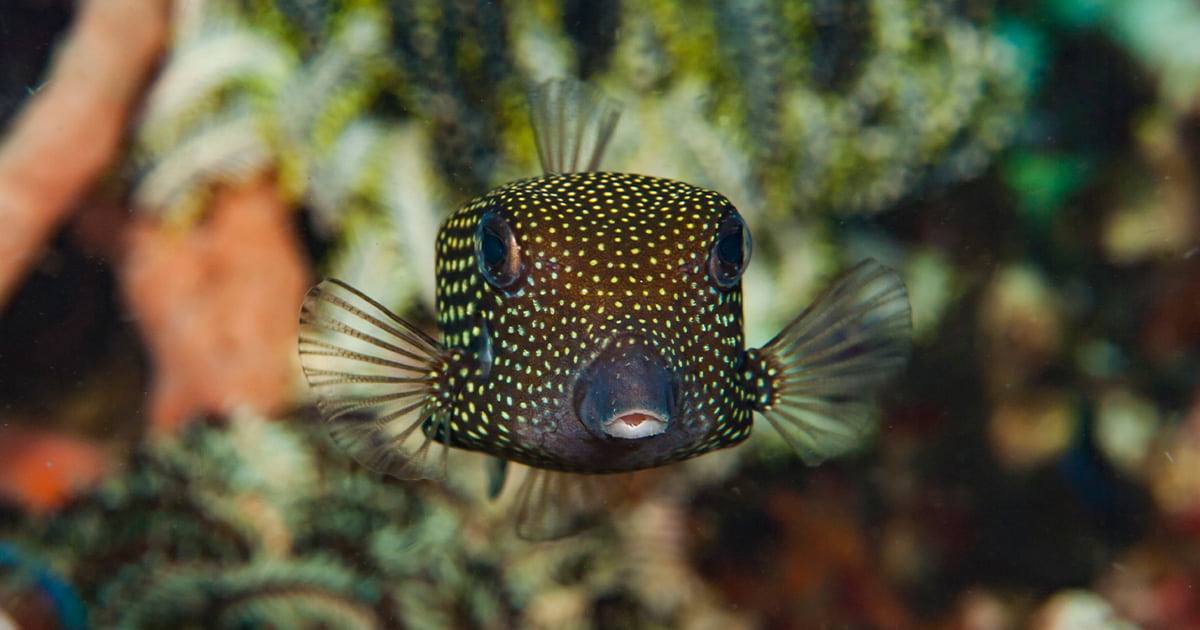
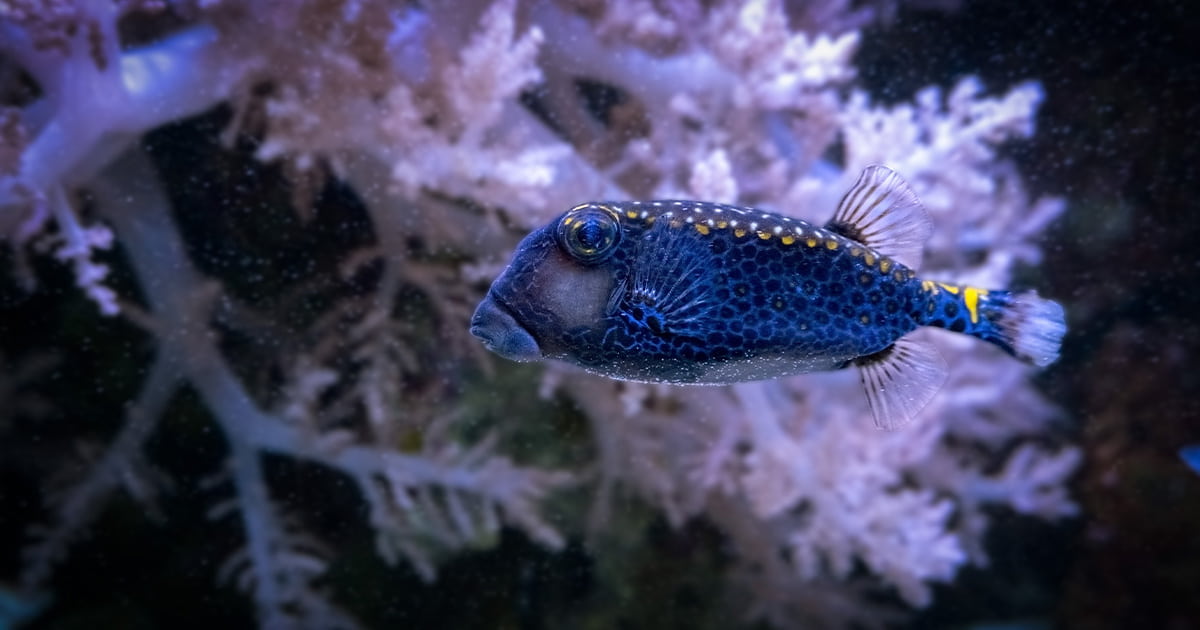
Whitespotted boxfish, Ostracion meleagris, are found throughout the Pacific and Indian oceans, where they make their homes in reef ecosystems. Although small, growing to less than 10 inches, their busy patterns and vibrant colors attract a lot of attention. Luckily, they have two sneaky ways of remaining safe from predators.
Here are two ways they’re just like us!
They protect their core valuables.
The whitespotted boxfish wields some invisible survival tools. Their body is built on a frame made of thickened and fused scale plates—a kind of armor—that protects their internal organs and gives them their characteristic shape. If a predator gets too close, the whitespotted boxfish turns on the slime, secreting poisonous mucus to repel or kill them.
They dress to impress potential mates.
Female whitespotted boxfish are tastefully dressed in black with allover white spots. Males have the same spotted back, but their sides are adorned with flashy colors—vivid blue with bright yellow bands and spots, the fish version of a custom-made, multi-hued suit. After all, it’s showtime.
Look for our two SEAlebrity whitespotted boxfish, Polka and Dot, at the Seattle Aquarium in the Pacific Coral Reef habitat!
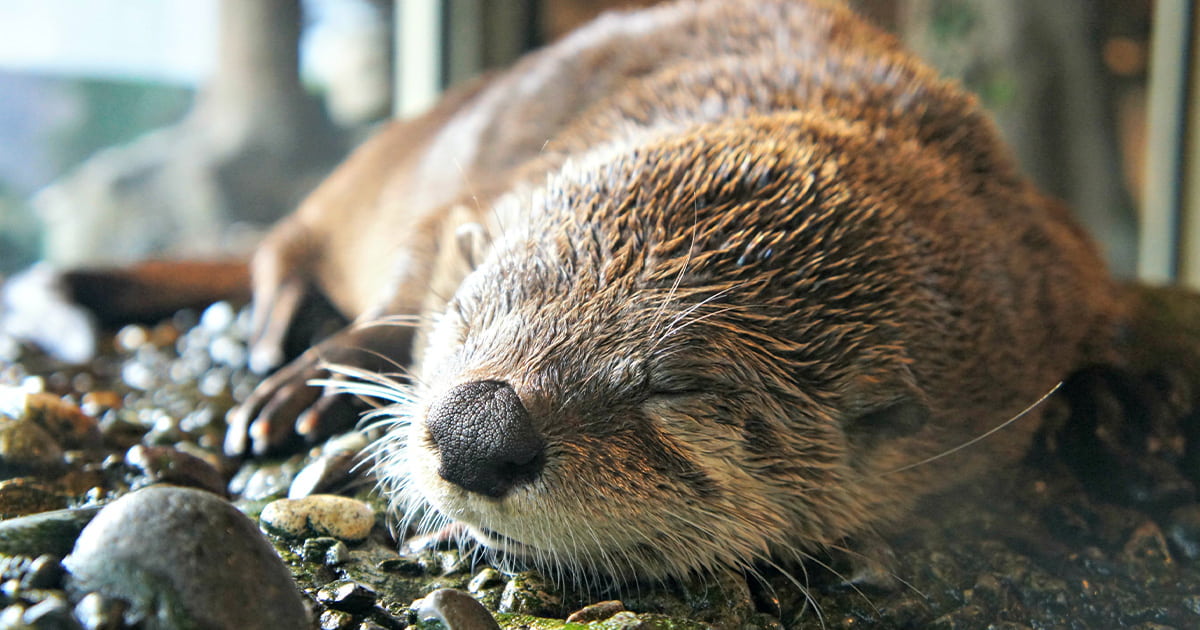
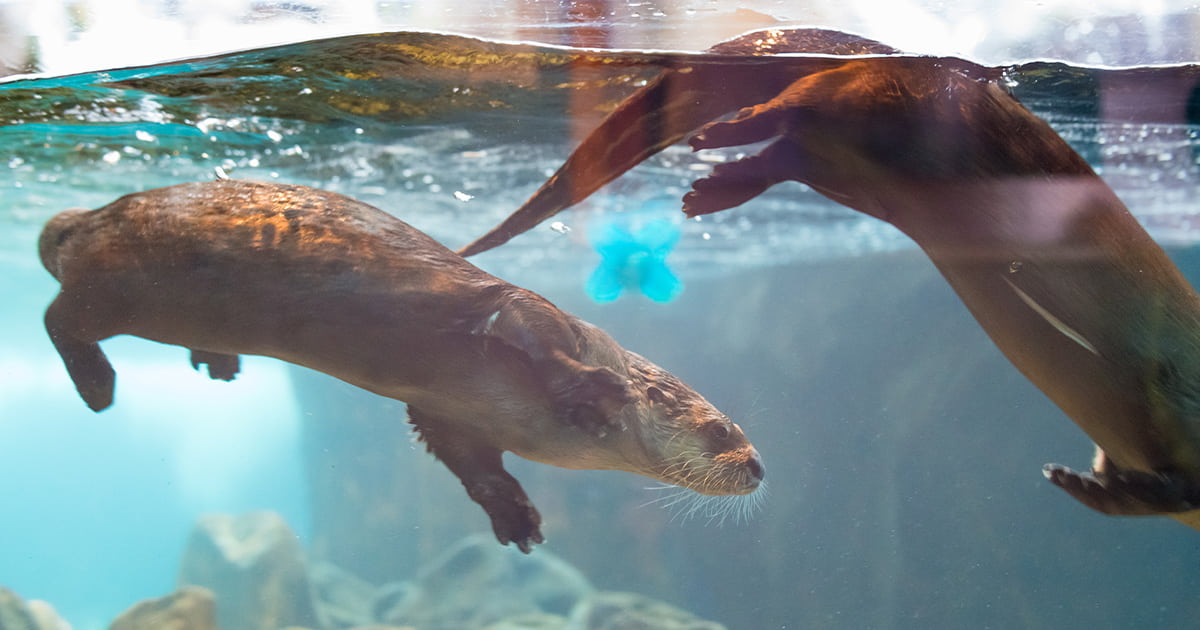
River otters: work hard, play hard, nap when needed.
Where there’s ample water, land and fish, chances are you’ll find North American river otters. Lontra canadensis thrive in both marine and freshwater habitats, frolicking in coastal estuaries, marshes and streams, as well as inland swamps, lowland marshes and small lakes. Although they can be shy with people, you might be surprised by what we have in common with these gregarious animals.
Here are two ways they’re just like us!
They like a good nap.
If you don’t see the river otters in our care at play, they’re probably napping in their den. Can you spot them? Depending on the time of year and where they live, river otters may be diurnal (more active during the daylight and less at night); nocturnal (more active at night and less during the day); or crepuscular—meaning most active at twilight! Regardless of when they keep busy, after hours of hunting, playing, building their dens and planning escape routes, a quick snooze is just the ticket.
Fun is having buddies to play with.
Otters like to socialize and when they get together it’s all about fun! Watching them speed through the water, slide down riverbanks and wrestle each other is very entertaining but this is not just play. The otters are learning and practicing survival skills that also build bonds among the group.
Don’t miss our SEAlebrity duo, Molalla and Ahanu, in the Aquarium’s river otter habitat!
You can make a difference for giant wrymouths, whitespotted boxfish and river otters. For them, there’s no hiding from trawling nets, diminishing habitats, climate change and plastic pollution. Whether or not they’re on the International Union for the Conservation of Nature Red List of Threatened Species™, human-caused impacts are a threat to their survival. Every animal in the ocean needs a healthy habitat to thrive—just like you do. Visit our Act for the Ocean page to learn what you can do to help preserve the health of our marine environment.
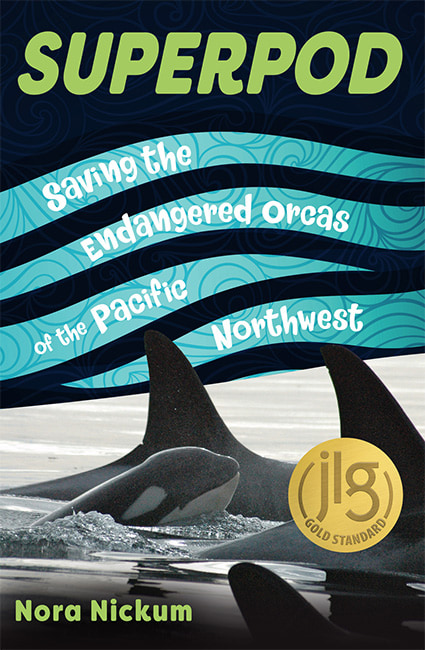
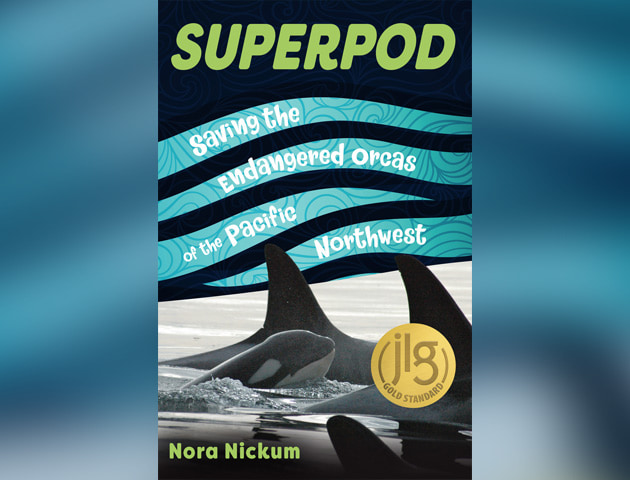
There’s a new book for kids ages 8–12+ about the amazing southern resident orcas, and it’s written by Nora Nickum, who leads our ocean policy program! Superpod: Saving the Endangered Orcas of the Pacific Northwest comes out April 11 from Chicago Review Press.
We asked Nora what she discovered about these iconic whales in the process of writing the book, what you’ll find in its pages, and what the Seattle Aquarium is doing to help these orcas recover.
You’ve been working on orca recovery for a long time. What’s something new you learned while doing the research for this book?
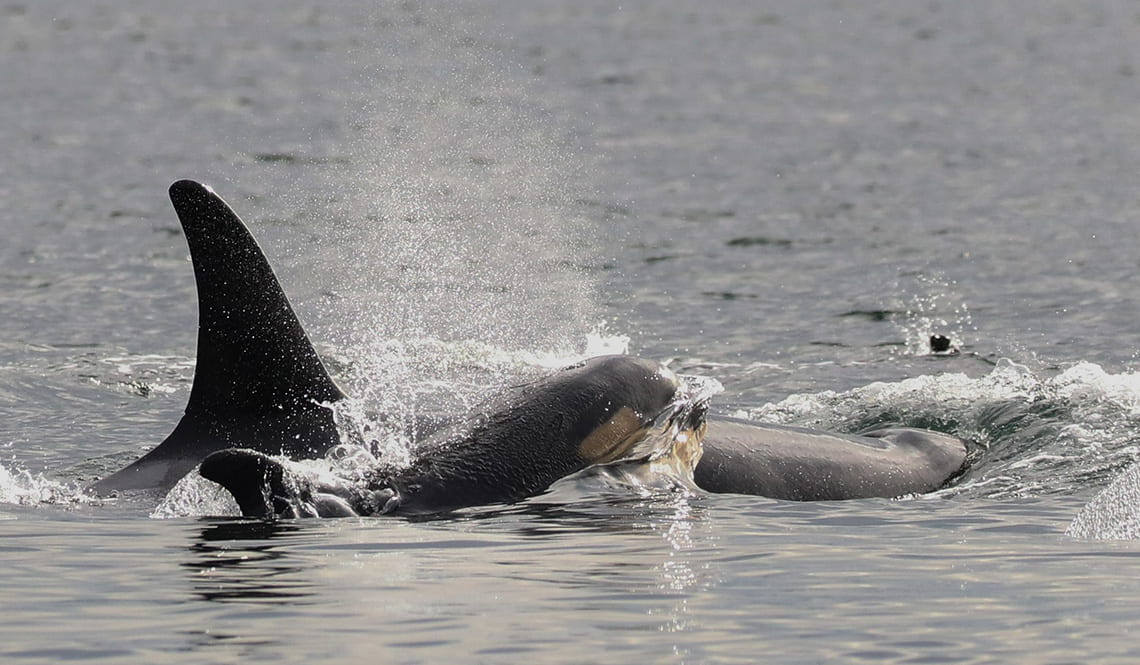
I learned that orcas are born tail-first! Their tails are floppy to start with. Getting the tail out first means it can harden in the cool water so the baby orca can use it right away to swim up to the surface for a breath of air.
I also had fun talking with Dr. Bob Otis about why orcas breach (jump out of the water). It turns out it’s still something of a mystery, but there are enough clues from his years of research that I was able to guess what was happening the time I saw an up-close breach from shore at Lime Kiln Point State Park.
Did you get to go on some fun field trips while you were writing Superpod?
Yes! I interviewed a lot of dedicated people who are working to help the orcas, and they do their work in amazing places, so I tagged along whenever possible. I went out on a boat with Dr. Deborah Giles and Eba, the scat-sniffing dog, from Wild Orca as they collected scat samples from transient orcas (see Eba in action in this video from the Seattle Aquarium!).
I also visited scientists working in a lighthouse, stopped by the Whale Trail site at Alki Beach, and went to a few spots along the Cedar River where Seattle Aquarium volunteer naturalists helped me catch glimpses of spawning Chinook salmon. I highly recommend that readers check out Whale Trail sites in the region and participate in the Cedar River Salmon Journey this fall!
Phoenix swims alongside his mom, Tahlequah. Photo: Danielle Carter
There are some cool photos in Superpod—exuberant breaches, a transient orca flinging a seal pelt, and amazingly close encounters with shore-based whale-watchers. How did you gather all those pictures, and do you have a favorite?
I do love those! Some of my other favorite photos were taken by scientists from the air, showing orcas playing together and chasing salmon underwater. Those aerial photos are like a window into a fascinating and usually unseen social life beneath the waves.
I was so lucky to find scientists and talented photographers who were willing to share their images (one was Danielle Carter, who worked for the Seattle Aquarium for many years), and to be able to use public images from the Washington state archives and NOAA. It was important to list the NMFS permit numbers associated with many of the photos—researchers get permits that allow them to get a little closer than other boaters can, and to take photos while they’re there.
You lead policy work for the Seattle Aquarium. How can policy advocacy help the orcas? And what can readers do?
There are so many things we can each do to help restore the Salish Sea and protect the orcas, like choosing sustainable seafood, following Be Whale Wise guidelines and giving the orcas as much space as possible when boating, and picking up litter at the beach. But policy change is also important because it can make large-scale improvements happen faster. We’ve been advocating for state and federal funding to restore salmon habitat; policies to protect kelp and nearshore ecosystems that support forage fish and salmon; changes in boating regulations to quiet the waters so orcas can communicate and forage more successfully; and measures to reduce toxic pollution. Readers—and Aquarium guests—can join us in raising our voices for these kinds of policies and find lots of other action ideas in the book.
In January, years of planning culminated in a hopeful moment on a beach in Raja Ampat, Indonesia. That moment centered on two baby sharks: Charlie and Kathlyn.
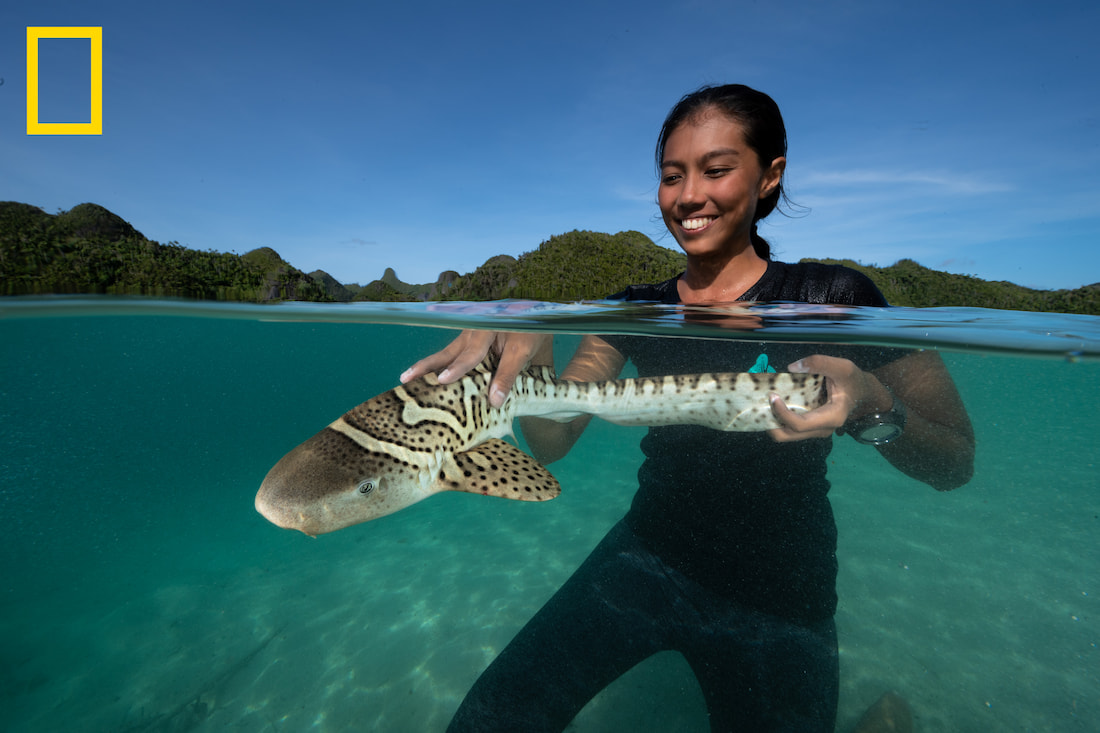
First Charlie, and next Kathlyn, were gently cradled in the water by marine scientist Nesha Ichida of Thrive Conservation.
A Seattle Aquarium team, Indonesian government officials, Kawe tribal community members and other conservationists watched closely. Photographers Jennifer Hayes and David Doubilet were nearby to capture the moment for National Geographic.
Nesha grasped each shark in her hands for the final time. Then she let go.
Scientist Nesha Ichida of Thrive Conservation releases Kathlyn, named for Kathlyn Tan of Rumah Foundation. (Ichida had released Charlie, Kathlyn’s older sibling, 20 minutes earlier.) Charlie is named after Professor Charlie Heatubun, head of the Raja Ampat Research and Innovation Agency. Photo: David Doubilet and Jennifer Hayes, National Geographic.
“I’m happy. And excited. And hopeful.”
Dr. Erin Meyer, Seattle Aquarium chief conservation officer in National Geographic
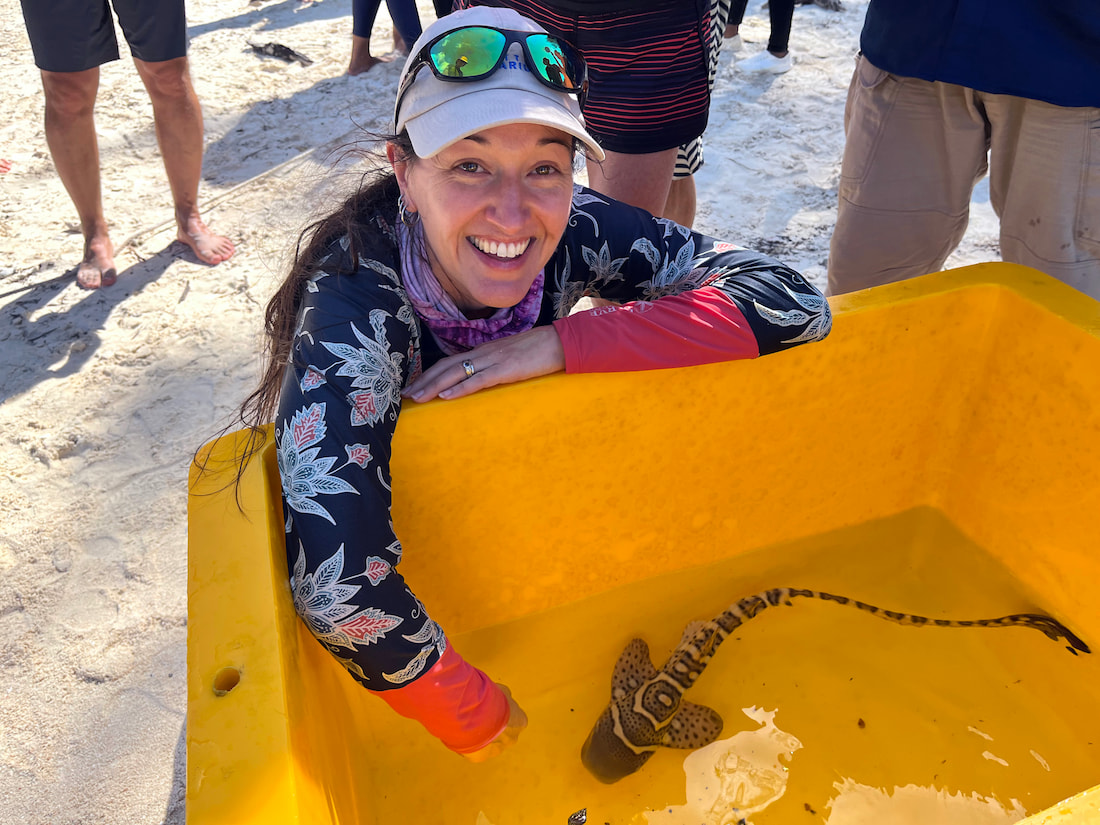
Dr. Erin Meyer, Seattle Aquarium vice president of conservation programs and partnerships, greets Charlie upon his arrival to the Wayag Islands. Photo credit: Indo Pacific Films.
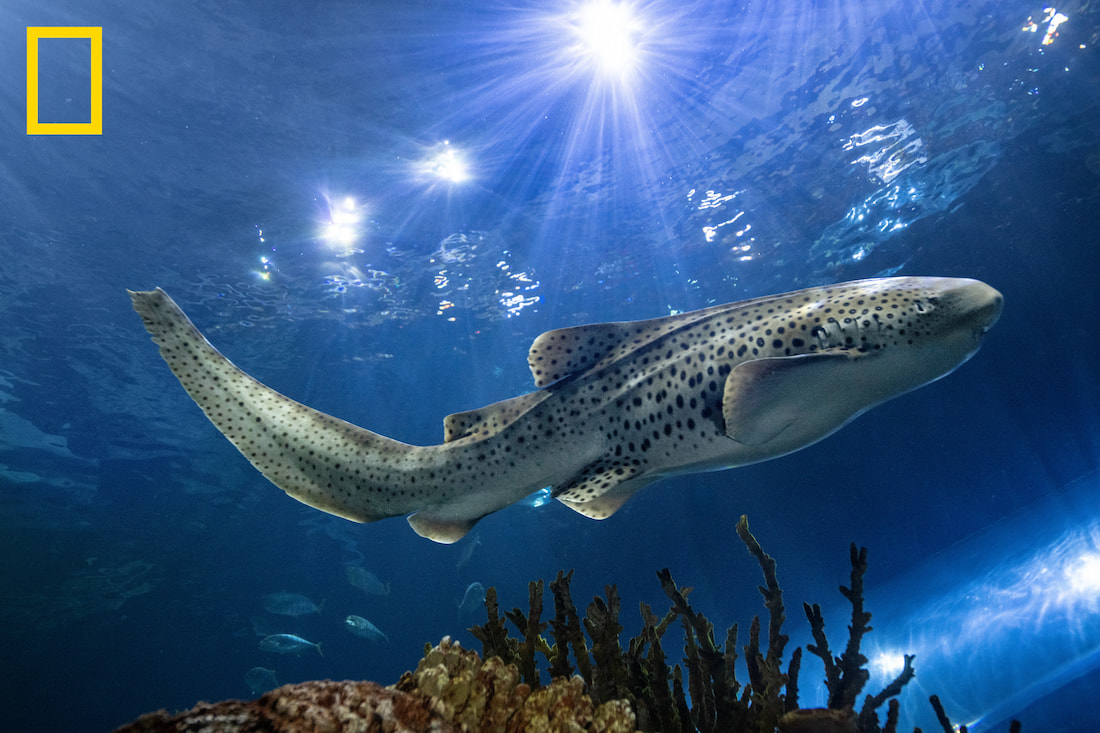
Charlie and Kathlyn are beacons of hope. As Indo-Pacific leopard sharks (Stegostoma tigrinum and also called zebra sharks), they belong to an endangered species. Due to commercial overfishing, these sharks have nearly disappeared from their home waters in the Coral Triangle. And despite a series of protective measures added in recent years, their numbers haven’t come back.
Hatching an ambitious plan
Sadly, our ocean is losing sharks and rays at an astonishing speed: More than 37 percent of species are at risk of extinction.
We and our global ReShark partners are working to change that story.
Dr. Erin Meyer of the Seattle Aquarium first discussed the idea of an international partnership in 2018. She helped assemble and lead a group of founding members that has grown to include more than 70 organizations in 15 countries—aquariums, local governments, conservation nonprofits and many others.
Professor Charlie D. Heatubun, head of the Raja Ampat Research and Innovation Agency and the namesake of baby shark Charlie, calls ReShark’s success “proof of the tight collaboration between all the parties.”
Aquariums offer expertise—and eggs
ReShark’s innovative model begins at aquariums.
The eggs that hatched into Charlie and Kathlyn were laid at the SEA LiFE Sydney Aquarium in Australia. They were then transported to Raja Ampat. Charlie and Kathlyn hatched at a special nursery built and managed by the Raja Ampat Research and Conservation Centre located at Papua Diving’s Sorido Bay Resort.
There, the siblings were cared for by a local team of aquarists who proudly consider themselves “shark nannies.” After growing into healthy pups, they’d been brought to marine-protected waters for release.
Members of the ReShark collective, including the Seattle Aquarium’s Dr. Erin Meyer (front row, left), at Raja Ampat Research and Conservation Centre’s shark nursery in Indonesia. Photo credit: Indo Pacific Films.
Charlie and Kathlyn’s journey from an aquarium to marine-protected waters will be repeated many times over. ReShark’s plan is to release 500 baby Indo-Pacific leopard sharks over the next several years.
“If we do what we’re planning to do … within 10 to 20 years, we see them coming back to an absolutely healthy, genetically diverse population with zero chance of extinction,” says Dr. Mark Erdmann of Conservation International and a ReShark founding partner.
“We have species disappearing off the face of this planet at a rapid rate, and in some cases the only place we have the genetics left or we have the species left are often in aquariums.”
Jennifer Hayes, photographer for the National Geographic story speaking on Good Morning America
An adult female Indo-Pacific leopard shark glides through the Wild Reef habitat at Shedd Aquarium in Chicago. Photo: David Doubilet and Jennifer Hayes, National Geographic.
ReShark and the Ocean Pavilion
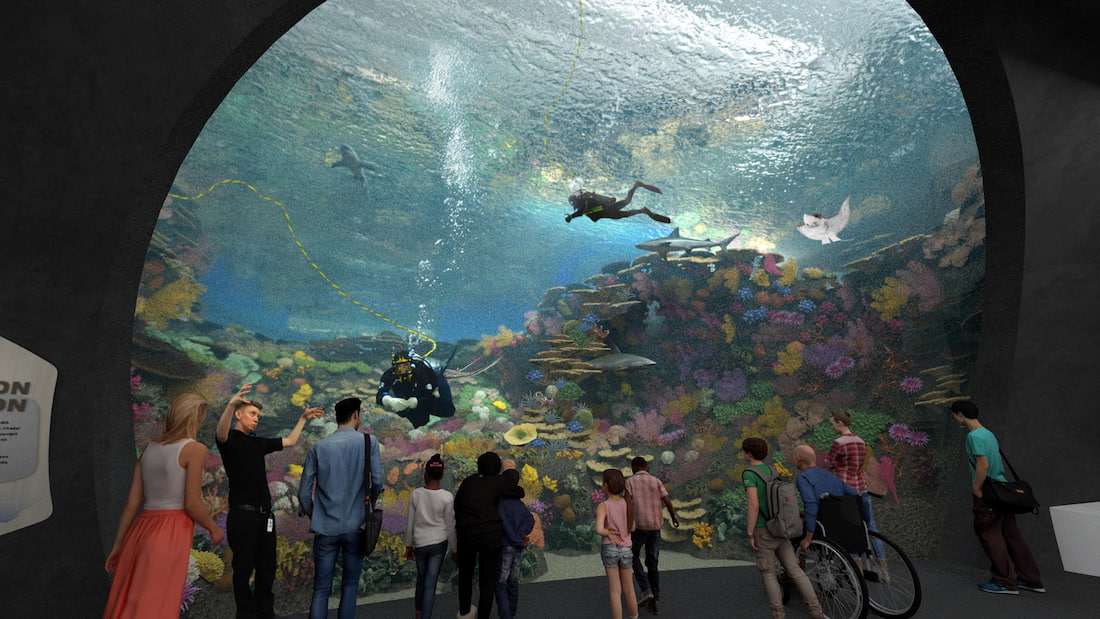
When our new Ocean Pavilion opens, it will be home to a small number of Indo-Pacific leopard sharks. As a result, we’ll not only continue to play a leadership role in ReShark’s growth—we’ll also be able to directly breed these sharks and send their offspring to Raja Ampat for release. And visitors to the Ocean Pavilion will see these exceptional animals, understand what we’re at risk of losing and learn how they can help.
The Reef, a future Ocean Pavilion habitat that will be home to Indo-Pacific leopard sharks who will produce eggs to help recover populations in the ocean.
On a wet and windy day in January, a field research excursion that almost didn’t happen ended up being a life-saving experience for a young fur seal pup.
Seattle Aquarium Senior Conservation Research Manager Dr. Shawn Larson looked at the weather forecast—predicting high seas, rain and high winds—and almost called off the trip to Sand Point, a remote beach on the Olympic Peninsula. She and Seattle Aquarium Research Scientist for Clean Seas Veronica Padula had planned to meet a team from the Oregon Coast Aquarium, Curator of Marine Mammals Brittany Blades and Senior Mammologist Ashley Griffin-Stence, to observe sea otters as a training exercise and part of our ongoing research on the species.
But Brittany and Ashley were already on their way, so Shawn and Veronica headed out with their heavy rain gear. The group met at the trailhead, hiked three miles to the beach and, despite the weather and a very high tide, were rewarded with the sight of many sea otters in the water offshore, including mothers and pups.
After a wet and windy hike, the group was rewarded with the sight of many sea otters.
“You could tell something was wrong.”
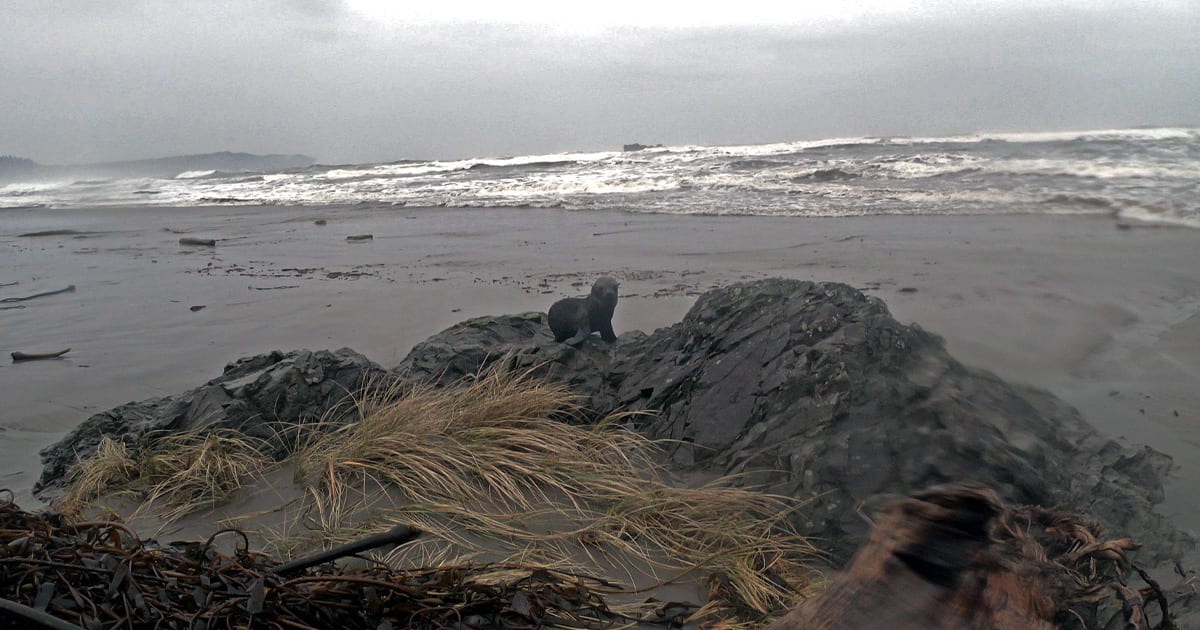
Suddenly, all four women noticed a cry of distress and started searching the water for a sea otter pup in need of its mom. Then they realized that the sound was actually coming from the beach behind them. They turned, followed the cries and discovered a young northern fur seal pup.
“In my 22 years of doing this work, I’ve never seen a northern fur seal pup on the beach,” says Shawn. Adds Veronica, “You could tell that something was wrong with it. It looked like it was struggling somehow.”
When they got closer, the group realized that the pup was entangled, with material wrapped tightly around its neck. They knew what to do: call the National Oceanic and Atmospheric Administration (NOAA) West Coast Marine Mammal Stranding Network.
In her many years of field research on this remote stretch of coastline, Dr. Shawn Larson had never encountered a northern fur seal.
Typically, when a marine mammal is reported stranded or injured, a Network partner responds to assess the animal and determine the best course of action. But given the remote location, it would have taken responders many hours to arrive on scene—and, in a very happy stroke of luck, all four women are marine mammal biologists with specific experience handling and rehabilitating entangled fur seals.
“This time of year, no one goes down there,” says Shawn. “No one else would have known what to do in that situation.”
Springing into action
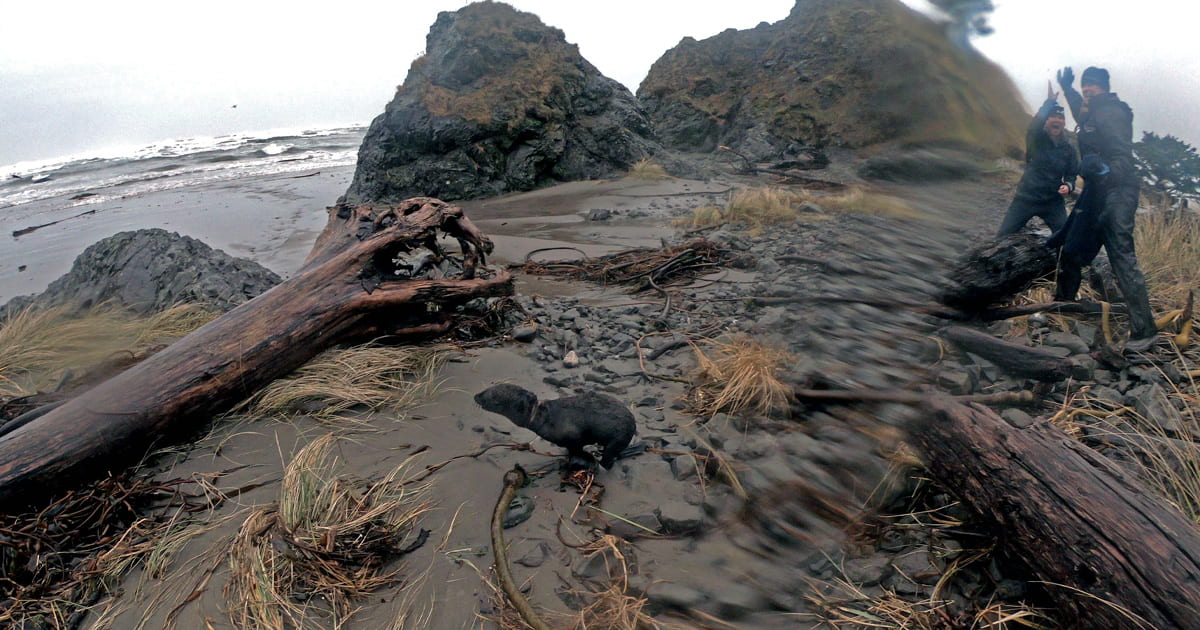
Shawn, with a single bar of service on her phone, managed to complete the call and was given authorization from NOAA officials to disentangle the pup. Using a pair of scissors from her first aid kit, she swiftly cut the material—a loop of elastic, similar to what you’d find in a garden glove, stretched to its limit around the animal’s neck—while Brittany and Ashley secured its body.
With the entanglement removed, the fur seal pup headed back toward the water.
“If we hadn’t been able to remove the elastic, the animal likely would have died,” says Shawn. “He was already starting to look a little lean, an indication that he wasn’t able to eat well, and the material could have also restricted his breathing.”
Once freed, the pup quickly made his way to the water—where, we hope, he will live a long and happy life.
Northern fur seals, listed as vulnerable by the International Union for Conservation of Nature, spend the majority of their lives at sea, coming ashore only for the summer breeding season on islands in the icy waters of the North Pacific and Bering Sea—or in other, more southerly locations if they’re injured or ill. Interested in learning more about them? Check out our webpage or, better yet, come visit northern fur seals Chiidax and Flaherty at the Seattle Aquarium!
From late October to early January—for the first time—many large ships in Washington waters slowed down for orcas.
How does this help whales? Slower vessels make less noise. When the waters are quieter, endangered Southern Resident orcas have an easier time communicating with each other and echolocating to find and catch scarce salmon. Slow-moving vessels are also less likely to hit a whale, and as a bonus for the climate, the ships’ greenhouse gas emissions decrease.
A promising partnership
The voluntary ship slowdown was made possible by a new program called Quiet Sound—a collaborative effort involving government agencies, the shipping industry, the U.S. military, tribal groups, environmental organizations like the Seattle Aquarium and the scientific community—and modeled after a successful program in British Columbia, Canada. The Washington waters trial encouraged vessel operators to reduce their speed in designated transit areas to targets of 11 or 14.5 knots, depending on vessel type. The result? Twenty nautical miles of a quieter, better protected habitat for orcas and other wildlife.
Quiet Sound’s strong start
Week to week, between 46% and 69% of ships slowed down—a remarkable participation rate for a brand new, voluntary initiative.
The slowdown window overlapped with three-quarters of the days the Southern Residents were in Puget Sound in 2022.
An opportunity to do more
To continue and even expand this work, Quiet Sound needs additional funding from the Washington state legislature. This legislative session, the Seattle Aquarium is supporting a $700,000 two-year request in Olympia to do just that.
But large ships are just one source of underwater noise. This legislative session, we also have an opportunity to reduce noise from smaller recreational boats. Senate Bill 5371/ House Bill 1145 reflects the latest science-based recommendations from the Washington Department of Fish and Wildlife to create a 1,000-yard buffer around the endangered orcas for all small boats (except active commercial fishing and tribal fishing boats and permitted research boats). This simplifies currently complex regulations and reflects the latest science from NOAA, showing that a Southern Resident orca’s chance of catching a salmon is dramatically reduced when boats are moving at any speed within 1.5 km (1,640 yards). The bill also reduces the cost of a commercial whale-watching license, and boaters would not see any changes in what is allowed for viewing other whale species. The Seattle Aquarium supports this legislation, and we hope you will raise your voice with us.
Ready to help orcas?
Contact your Washington state legislators and ask them to support two initiatives to reduce noise impacts on orcas: funding for Quiet Sound and Senate Bill 5371/ House Bill 1145. Call the toll-free legislative hotline at 1-800-562-6000 (TTY for hearing impaired 800-833-6388) between 8am and 7pm, Monday through Friday, to leave a message for all three of your legislators at once.
Observe Be Whale Wise regulations and guidelines, at a minimum, when boating and try to give the endangered orcas even more space. That’ll make it easier for them to forage successfully.
Report whale sightings so mariners can receive alerts when whales are in the area and take action to avoid them. You can report through Orca Network, the WhaleReport app (on Apple and Android) or the Whale Alert app (on Apple and Android).
For more orca inspiration, check out our short film Stories from the Salish Sea: Eba and the Orcas if you haven’t already! That webpage also has ideas for how you can take action to reduce toxic pollution, which will help increase salmon available for the orcas to eat—vital for their recovery.
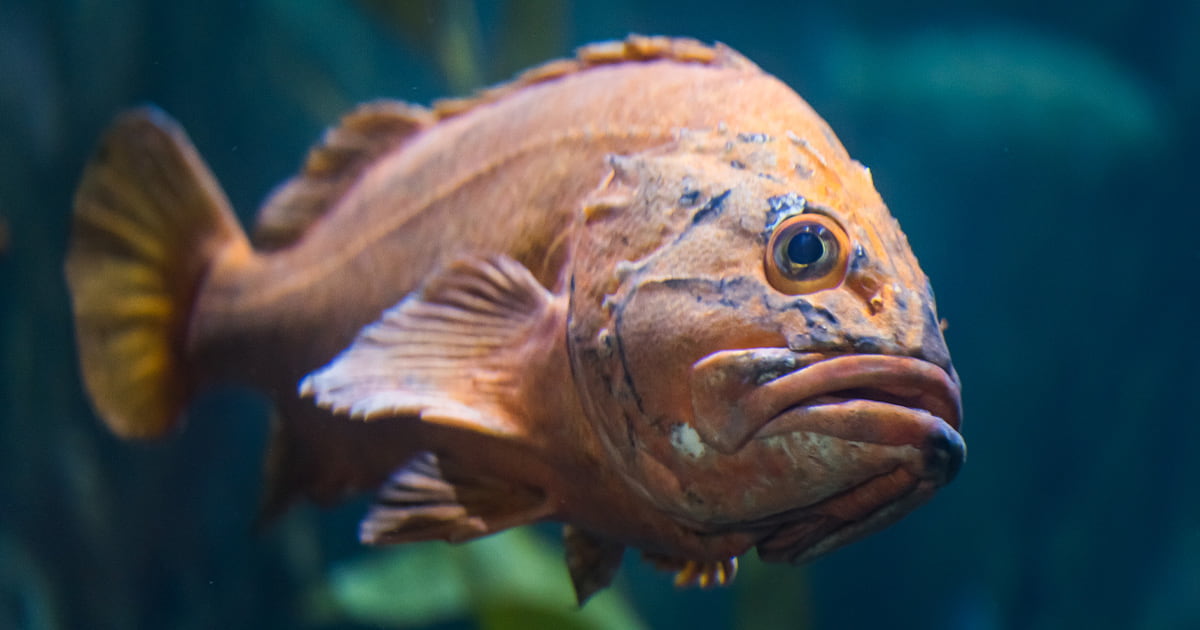
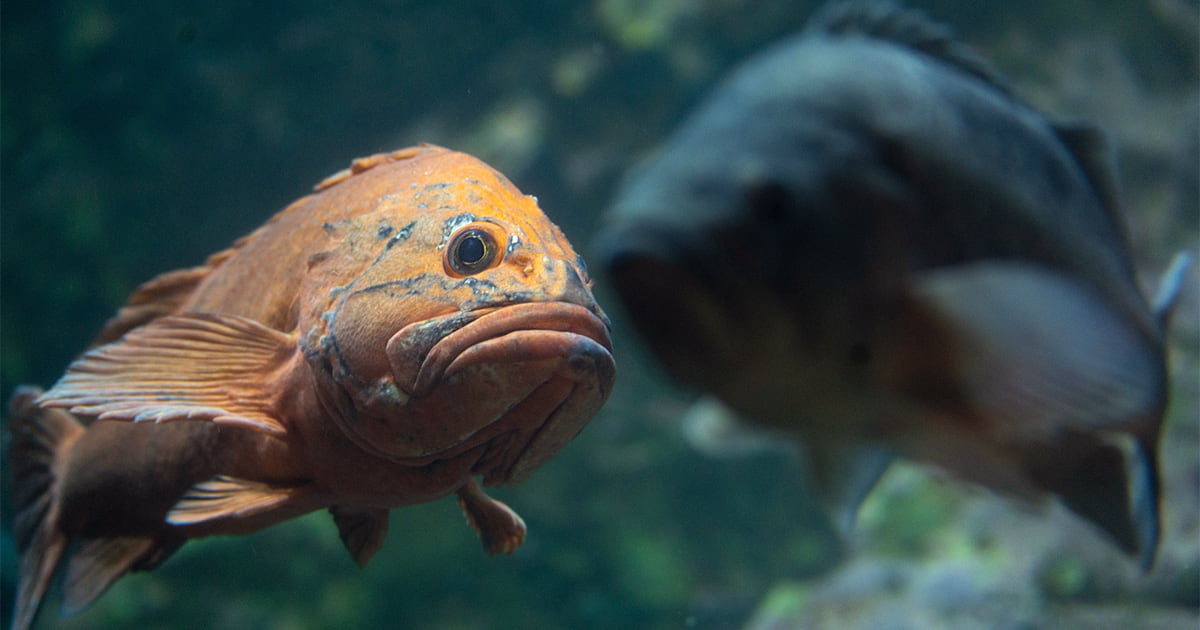
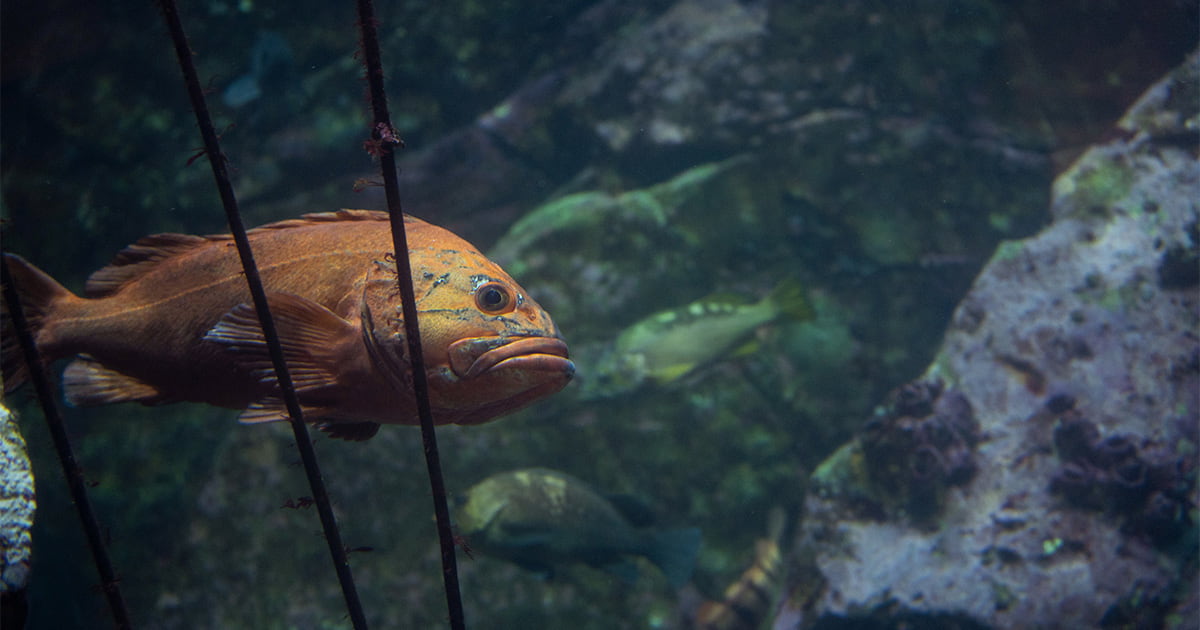
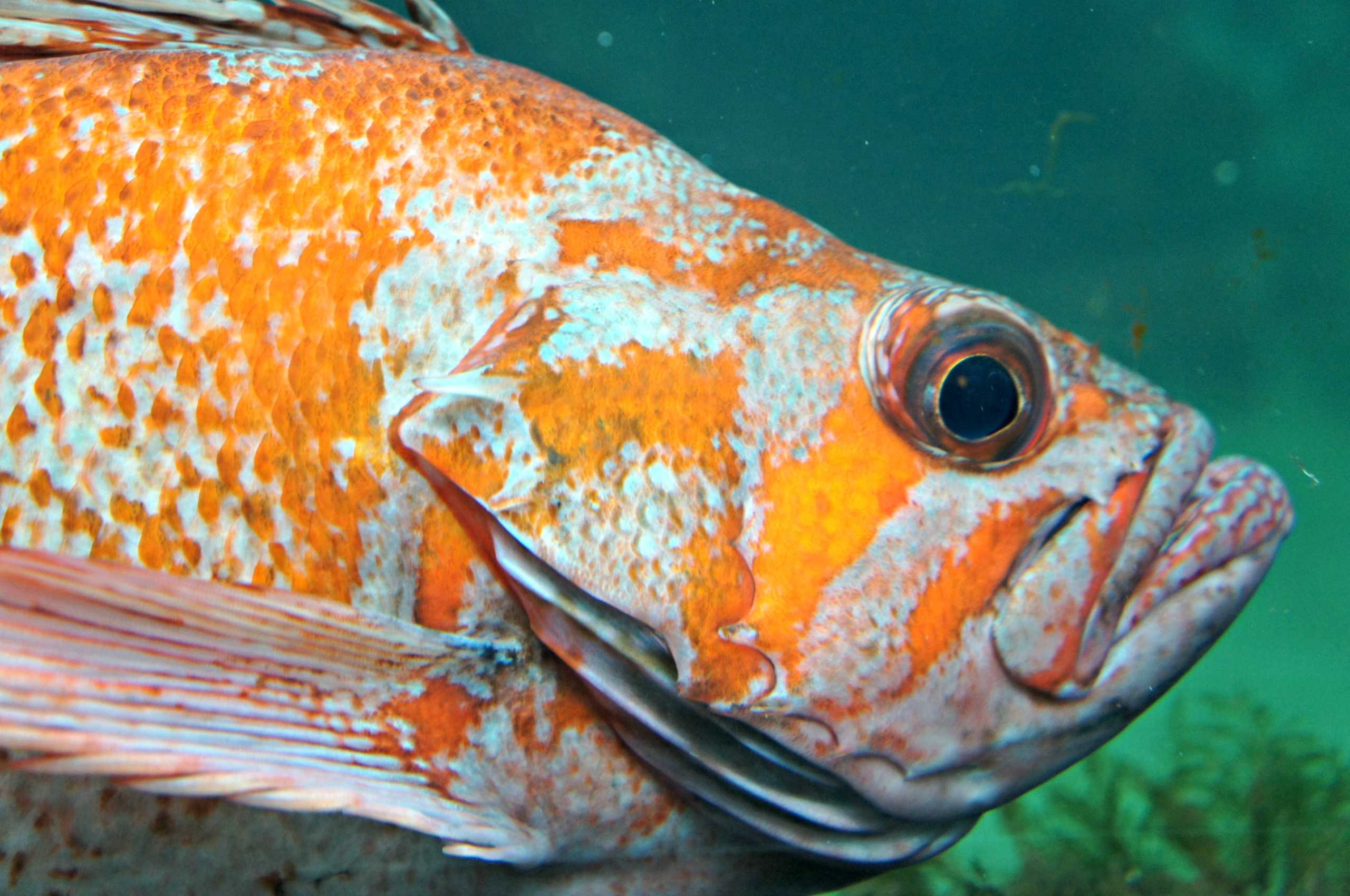
Meet the Seattle Aquarium’s latest SEAlebrities: Rock and Roll, the rockfish! They are just two fish out of the 14 different rockfish species found at the Seattle Aquarium. But there are many more types of rockfish in the wild, with 24 species in the Pacific Northwest and more than 100 species worldwide.
When looking at a rockfish, it’s easy to point out how different they are from humans. But we share a lot more similarities than you might think:
1. Age is only a number.
Admit it—getting older can be stressful sometimes. But one similarity humans and rockfish have is the ability to age gracefully. While most other fish have lifespans of two to 10 years, rockfish tend to live very long lives—up to 100 years or more! Unfortunately, there is a downside: Many rockfish who live to be 100 years or older don’t reach sexual maturity until they’re nearly 20 years old. Since they are susceptible to overfishing, some rockfish don’t have a chance to reproduce before they’re caught in a fishing net. That’s why most rockfish are listed as a species to avoid in sustainable seafood consumer guides.
2. Our differences make us who we are.
Though all people share common physical characteristics, our appearances vary widely and each of us is unique. Rockfish are the same way. Some species can be as small as 6 inches, while others may be 3 feet long and weigh up to 40 pounds! Rockfish can be red, orange, black or green, or even have a splotched or striped pattern.
3. “Should I stay home or go out?” Rockfish can be introverted and extroverted.
Some people love to be social butterflies, while others prefer to go it alone. The same applies to rockfish. Some rockfish species live in schools, with hundreds or even thousands of individual fish! Others live more independent lifestyles and are protective of their solitary homes.
4. Their tastes differ.
Human diets can range widely, depending on our individual wants and needs. Rockfish are the same way. Their go-to meals include plankton, small crustaceans such as crabs and shrimp, smaller fish like Pacific herring, and even jellyfish and squids!
5. (A healthy, clean) home is where the heart is.
Humans, fish and every living organism on the planet need a healthy, clean environment to thrive. You can help rockfish and other species by doing your part to protect Puget Sound and the ocean beyond, and choosing seafood from the “Best Choices” and “Good Alternatives” lists on the Seafood Watch cards at the Seattle Aquarium.
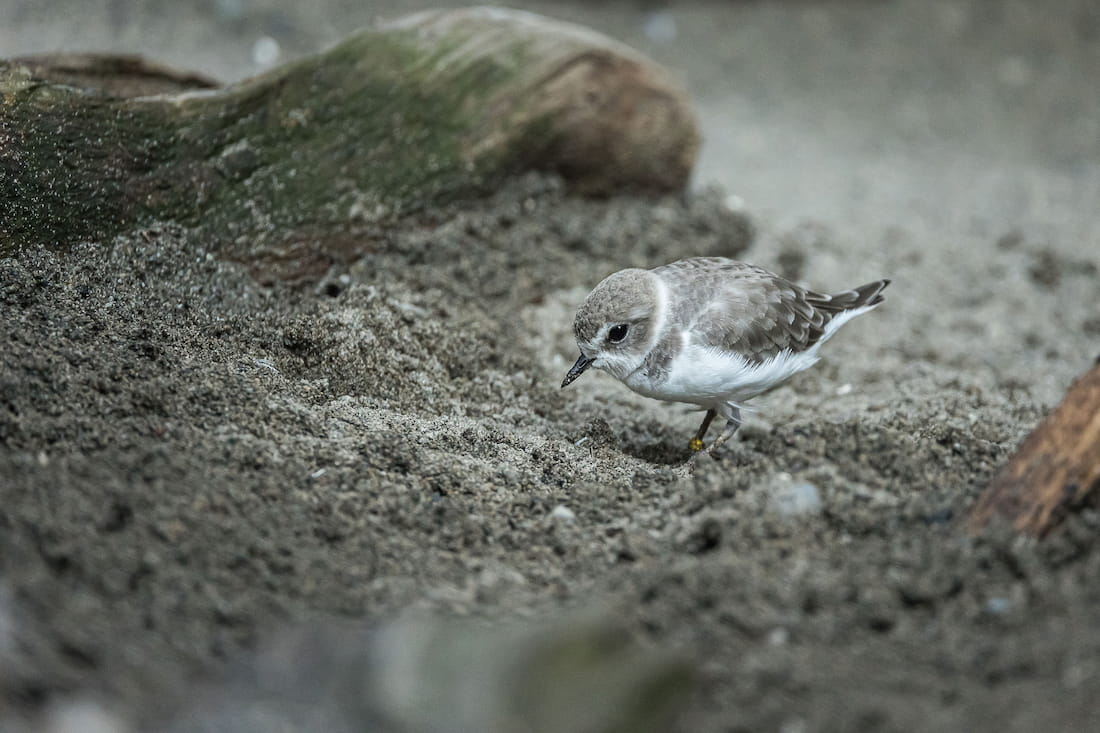
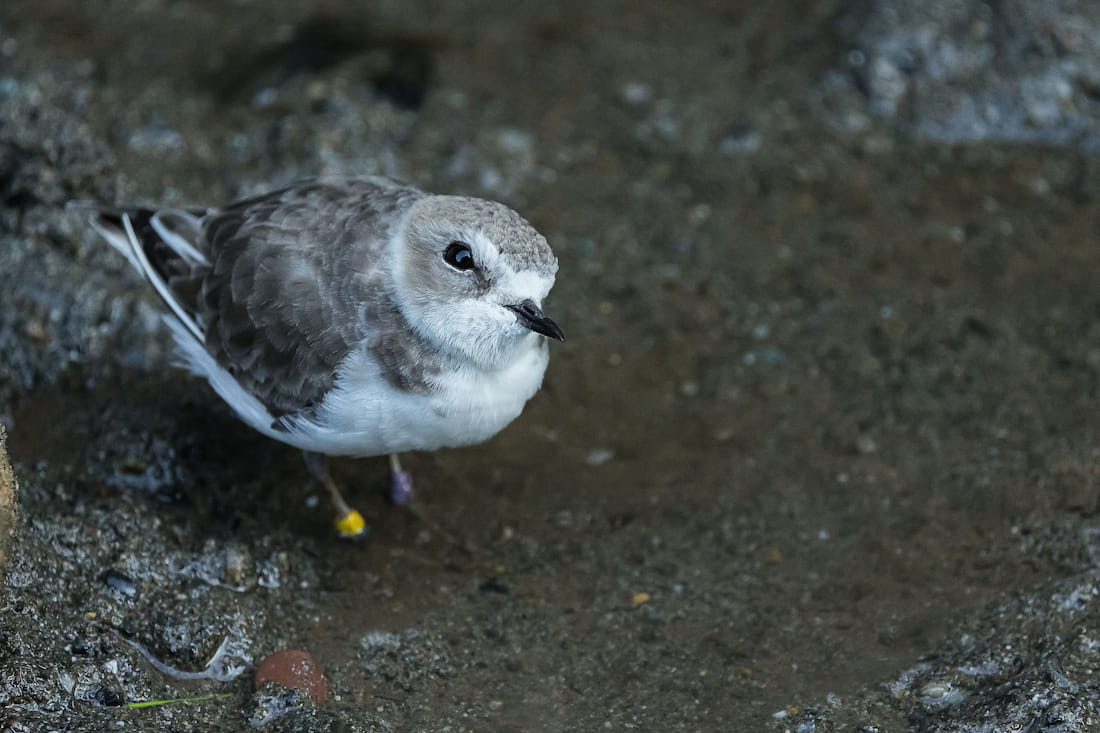
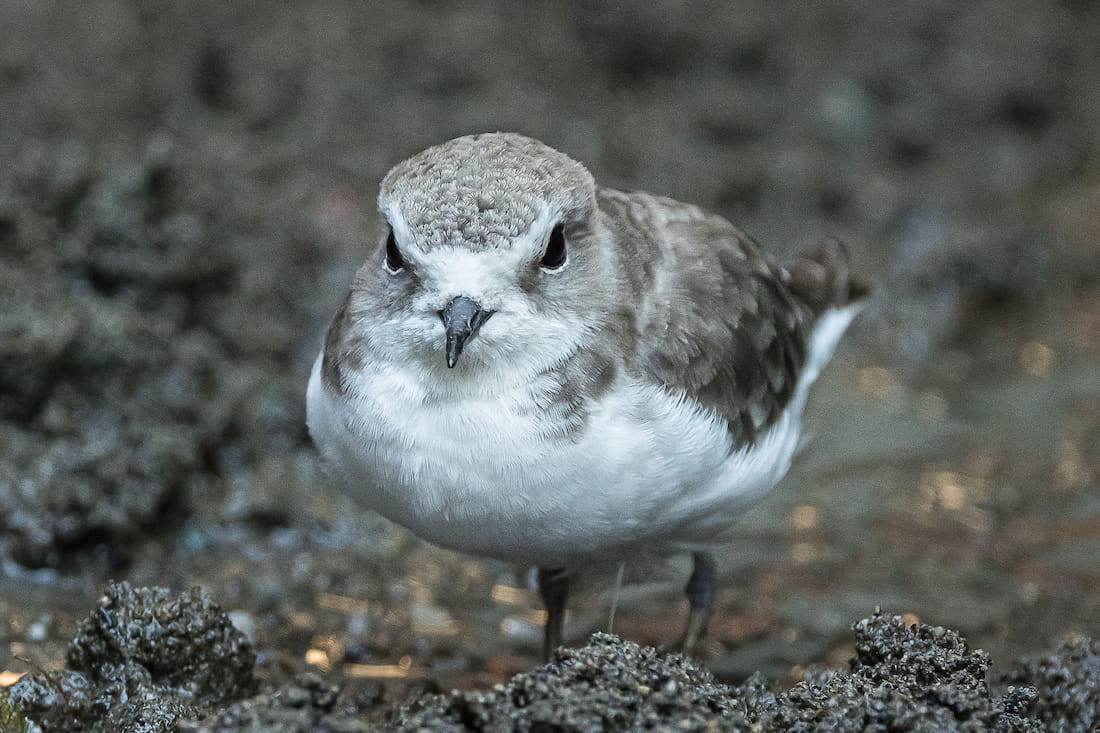
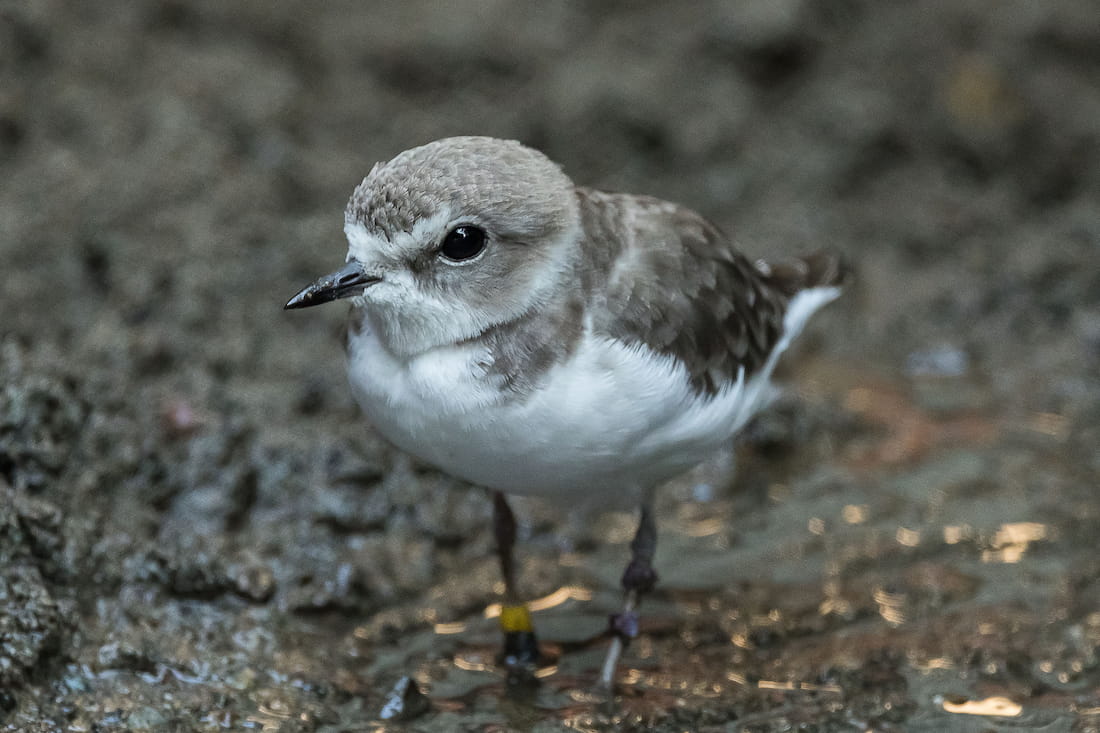
Introducing Crush the western snowy plover, one of our new Seattle Aquarium SEAlebrities! After being injured, she was rehabilitated at the Monterey Bay Aquarium in California, then moved to make her home with us in 2019. You can find her in our Birds & Shores habitat.
At first glance, you might think that people don’t have a lot in common with Crush and her species, Charadrius nivosus. After all, humans can’t fly (at least, not unassisted) and human adults are pretty much guaranteed to weigh more than two slices of sandwich bread (or about 2 ounces, which is where adults of this species typically tip the scales). As it turns out, though, we share a lot of common ground!
Six ways that western snowy plovers are just like us
1. They dress to impress.
During their breeding season, May to September, both males and females add a little extra flair: black stripes above their eyes, near their ears and along their necks (although these markings are less distinct on females).
2. In the right surroundings, they blend in perfectly.
The bodies of western snowy plovers are pale, sandy brown on top with a white underside. What else is pale, sandy brown? Sand, of course! And sandy beaches are where western snowy plovers make their homes, along the Pacific coast from Washington to northwest Mexico. Unless they’re in motion, their coloration and tiny size make them hard to spot in the wild.
3. They have independent spirits.
Western snowy plover eggs hatch after an incubation period of 26–33 days. And then the chicks are literally off and running: They’re able to leave the nest and forage on their own within three hours! What are they looking for? Prey like insects, marine worms, crustaceans and invertebrates.
4. They fight for what’s important to them.
While their eggs are incubating, both male and female western snowy plovers may defend their nest and the surrounding area by posturing (or spreading out their wings), chasing and even fighting potential predators (such as gulls and falcons) or other perceived threats to their families-in-the-making.
5. They work with what they’ve got.
Western snowy plovers make their nests on the sandy beach, in slight depressions on the dry ground (sometimes even in human footprints!). And they line those nests with just about anything they can scavenge: pebbles, shell fragments, fish bones, bits of driftwood and more.
6. They can get hurt—even by people with the best intentions.
Western snowy plovers have been listed under the Endangered Species Act since 1993, and their numbers are still declining. Unfortunately, human impacts are the main problem for this struggling-to-survive species. The good news is that we can be part of the solution too! Read our western snowy plover webpage for more details and to learn how you can help.
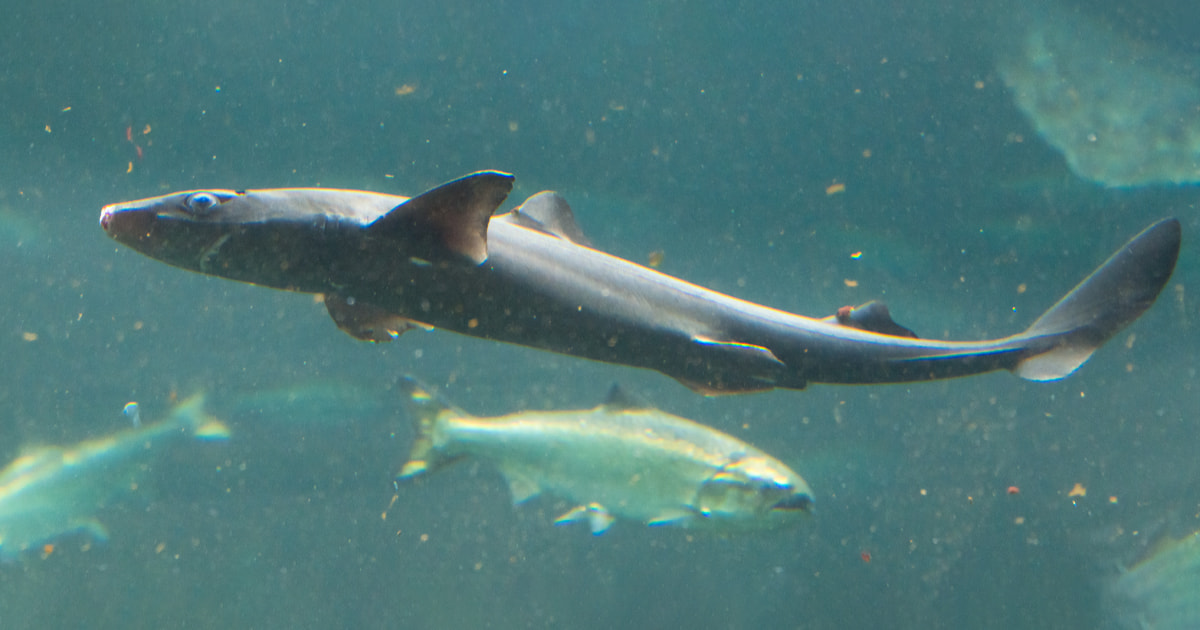
Senior Aquarist Chris Van Damme gingerly holds one end of a herring when feeding Elliott and the other Pacific spiny dogfish at the Aquarium. Dogfish—who are just as enthusiastic about meals as their furry namesakes—can chomp through their food with astonishing speed and force. As Chris shares in our interview, it’s just one of the many reasons these creatures inspire awe and affection from their caretakers.
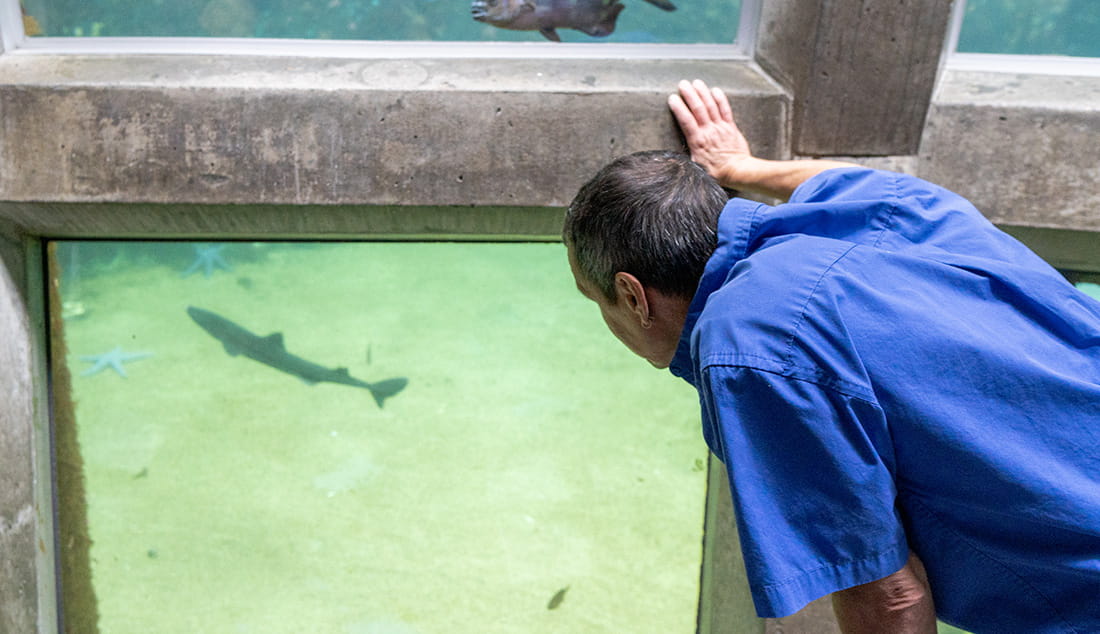
Chris Van Damme, senior aquarist, in front of the Underwater Dome at the Seattle Aquarium. Stop by the Underwater Dome to see the dogfish at the Aquarium during your next visit!
Q: What do you find fascinating about dogfish? A: You wouldn’t know it from their name, but dogfish are sharks. They’re a smaller species of shark, but like all sharks, they’re fast and sleek. They can turn on a dime. They’re immensely strong.
Dogfish are also record-setters. They have among the longest pregnancies of any animal: 22 to 24 months. (Fun fact: Dogfish pups are born ready to hunt!) They reproduce late in life—as late as their mid-30s for females—and they live long lives—80 years or more! They’re also remarkable travelers. One of my colleagues found a dogfish in California that had been tagged in Alaska.
Q: What surprises people when they visit dogfish at the Aquarium? A: Visitors who hear there are sharks living in the Aquarium’s Underwater Dome sometimes mistake the sturgeon—a prehistoric-looking animal—for dogfish. Dogfish are understated. They can be hard to spot, and you’ve got to be patient.
Q: Where can you spot dogfish in the Underwater Dome? A: In the mornings, unless it’s time to eat, you’ll often see them sitting on the sand at the bottom. At other times, you’ll see them swimming about midway up in the Dome.
Q: How does the Underwater Dome mirror how dogfish live in Puget Sound? A: First, the water here comes directly from the Sound. Its temperature and salinity match their natural environment. Also, the Dome is a multi-species habitat just like in the wild. And, like in Puget Sound, there are open sandy bottoms where they can rest.
Q: What do dogfish at the Aquarium eat? A: They eat a variety of herring, anchovy, clam, squid and shrimp. Their diet here mimics their diet outside the Aquarium, and that’s important to their health.
Take your time when looking for the dogfish in the Underwater Dome! They can sometimes be hard to spot as they swim throughout their habitat.
Q: Do they consider other fish in the Dome as prey? A: No, we dive and target-feed them by hand every afternoon to minimize the possibility of that happening. (And since they are primarily scavengers, it’s a highly unlikely scenario anyway.) We also do a surface feed, where we drop larger pieces of food to the bottom for them.
Q: What is it like to hand-feed dogfish? A: They have very sharp teeth, so it’s important to release the fish before they get too close!
Q: How do they eat outside the Aquarium? A: They often hunt in packs like dogs—that’s why they’re called dogfish—and can eat their way through schools of fish. (Fun fact: Dogfish can hunt in packs of up to 1,000!)
Q: Are local dogfish populations healthy? A: Thankfully, our local dogfish populations are healthy. In part that’s because we don’t have a targeted fishery here (meaning that we don’t eat them). Atlantic spiny dogfish, by contrast, are eaten in Europe. Our local dogfish populations are also managed by National Oceanic and Atmospheric Administration fisheries and by the Pacific Coast Management Fishery Council, which helps keep populations healthy.
That said, dogfish and all the animals living in our local waters are affected by what goes in our sewers and drains. (Tip: Learn how you can protect ocean health on our Act for the Ocean page.)
Q: What is a good pathway to a career like yours? A: I studied oceanography at the University of Washington, which is a good field for studying the marine environment as a system. Oceanography combines physical, chemical, biological and geological science. If you’re specifically interested in working with sharks or helping to manage healthy shark populations, you should consider studying marine biology.
Q: As a diver, have you encountered dogfish outside of the Aquarium? A: I can think of only a handful of times I’ve seen them while diving. Their senses are a lot better than ours. They see and hear us before we know they’re around, and they move fast.
They’re beautiful animals. It’s such a treasure and a treat to find one as a diver. It’s a gift.
Now that you’ve read Chris’s thoughts, check out our dogfish page to learn more about Elliott and the other dogfish at the Aquarium. On your next visit to the Aquarium, look carefully for Elliott in the Underwater Dome!
Today only, your gift will be matched dollar-for-dollar up to $25,000 thanks to the generosity of donors Betsy Cadwallader, J & Tim, and Jess & Andy Peet. Help us reach our $50,000 goal!