Local youth taking conservation action: Meet Hermione “Drain”ger

This site uses cookies. View our Cookie Policy to learn more about how and why.

Last summer, the Seattle Aquarium offered high school students the opportunity to participate in our first-ever online marine science club, an eight-week drop-in program featuring guest speakers, behind-the-scenes Aquarium tours and opportunities for participants to earn service hours by completing conservation actions.
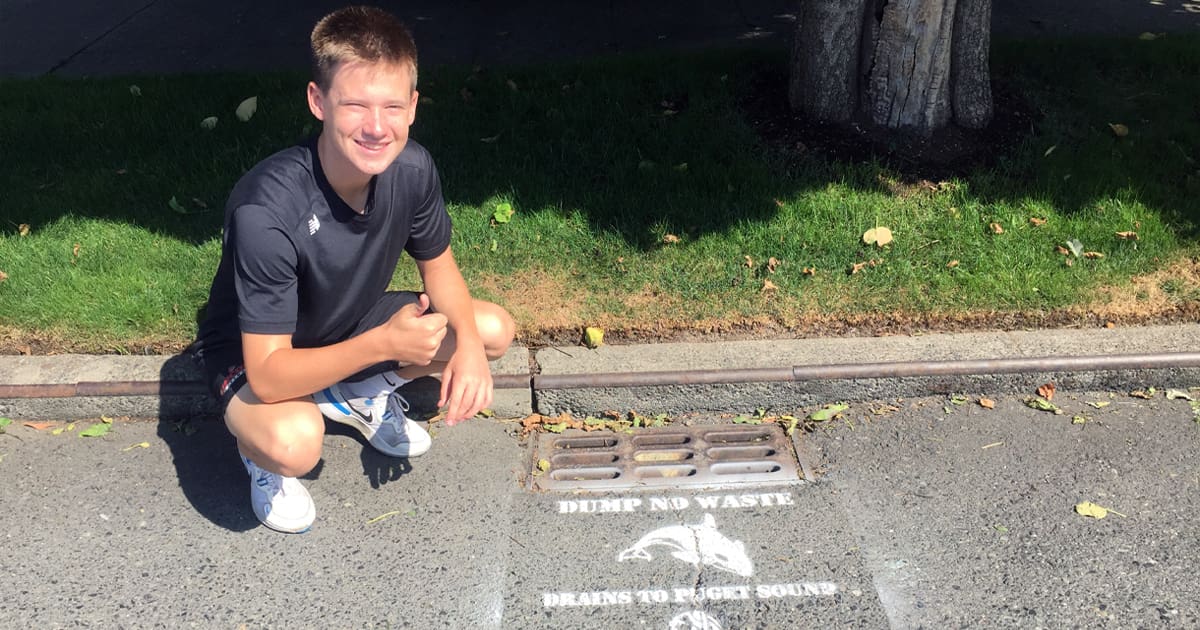
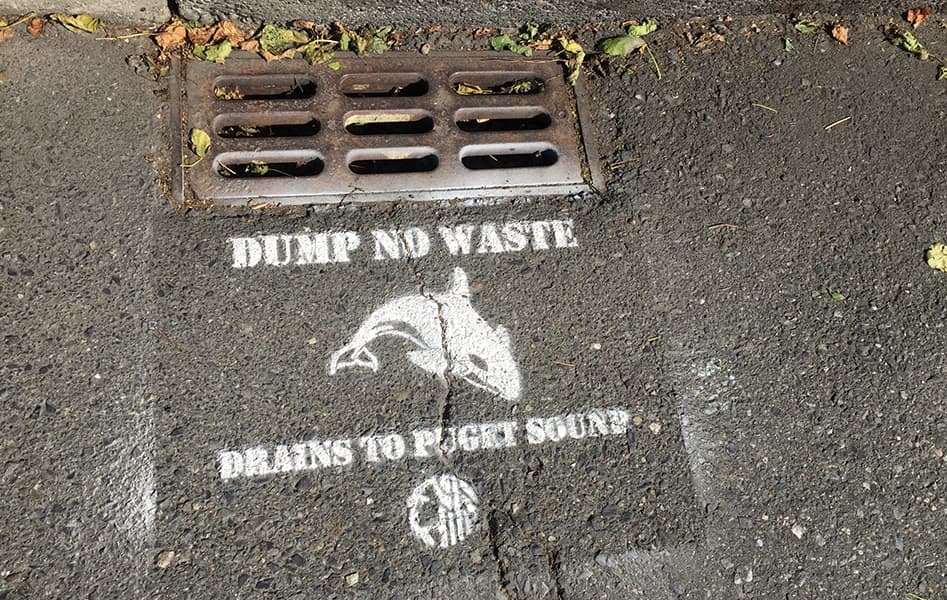
One participant, Lucas C., took those actions to the next level. After learning about his local watershed, he completed the suggested activity of counting storm drains in his neighborhood and noticed that some had stencils on them—and some of those were pretty faded. So went home and did a little research, learning that stencil kits are available by request from the City of Seattle. “The stencil says ‘DUMP NO WASTE—DRAINS TO PUGET SOUND,’ “ says Lucas, “Which I thought was perfect after learning about the watershed and researching how pollutants get into and out of our water.”
He adds, “Most storm drains direct water and pollutants to a nearby steam, lake and/or Puget Sound. A stenciled drain reminds neighbors and other community members that what goes down the drain will end up in our local waterways—which directly affects wildlife, marine life and the people in our community. When people see the stencil, I hope it reminds them to not dump pollutants like soap (from car washing), paint, antifreeze and used motor oil into storm drains.”
But did Lucas stop there? He did not! “I started to wonder who actually takes care of the drains,” he says. “Some have lots of leaves and other debris in them.” He found that, while city workers do some maintenance, community support is needed to keep drains clear. “Because my street has a natural spring running down it, I watched to see where that water goes,” Lucas continues. “Turns out it flows directly to a storm drain at the base of the hill next to my house.”
But was Lucas done? He was not! With an assist from his mom, he registered to adopt the drain that’s next to his house. “There were actually quite a few that I could have adopted, but I’ll start with one and see how it goes,” he says. “They ask you to clean out the drain and report back every three months on how it’s going.” (Interested in adopting a drain yourself? Get the details on drain adoption!)
Lucas also learned that adopting a drain comes with naming privileges. And with that, we proudly introduce you to…Hermione “Drain”ger! As of this writing, Lucas had been caring for her for a couple of months. “She’s doing great,” he says. “The first time I cleaned her out it was all really old debris and lots of cobwebs and garbage. With the leaves falling down now, I check her weekly to make sure she’s not clogged. I’ve filled a few buckets of leaves over the last several weeks. Sometimes a car gets parked on top of her cover and I don’t think she likes that very much but I’m still waiting for the sign that says she’s been adopted so people know she’s there.”
Adopting Hermione isn’t the only action that Lucas and his family have taken on behalf of the marine environment. “We’ve all made the switch to refillable water bottles instead of single-use bottles,” he says. “Learning about microplastics and what they do to our water and the marine life really made us think about how we were contributing to the problem and how we could do our part by making that change.”
“Marine science camp really opened my eyes to how even small changes can make a difference,” Lucas adds. “I think trying new things like the Aquarium’s marine summer camp is really good for broadening your horizons and shows you there are so many different jobs and things that might interest you if you just give them a try.”
Many thanks to Lucas—and his family—for making a difference for our local watershed, Puget Sound and all the animals that make their homes there!
Interested in volunteer opportunities for youth at the Seattle Aquarium? Visit our Youth Ocean Advocates page to learn more.
This story was written by guest writer Lyda Harris, Ph.D., microplastics fellow at the Seattle Aquarium.
The Seattle Aquarium’s unique location and ongoing monitoring efforts enabled us to publish the first long-term monitoring of microparticle concentrations in an urban waterfront of the Salish Sea as a scientific paper. Our paper, titled Temporal variability of microparticles under the Seattle Aquarium, WA: Documenting the global Covid-19 pandemic, is available online.
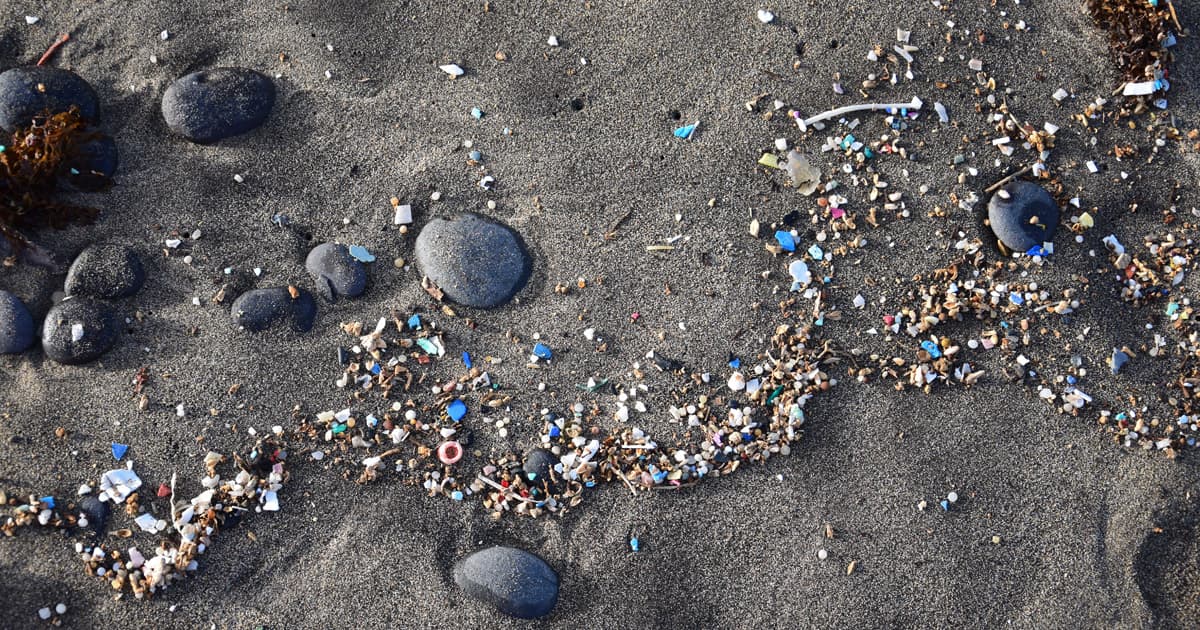
Human-generated (or “anthropogenic”) debris on the ocean’s surface, within seabeds and on the beach is up to 80% plastic. Microplastic, or small plastic less than 0.2 inches (five millimeters) in size, is widespread in the marine environment and within every group of marine organisms that has been studied. Once ingested, microplastics can cause multiple health issues in marine animals, such as lower birthrate and increased susceptibility to disease. It isn’t just the physical properties of microplastics that negatively affect animals, however. Due to plastic’s petrochemical origin (fossil fuel), plastic particles act as a sponge and transportation method for persistent organic pollutants and other chemicals that are toxic.
We define “microparticles” (less than 0.2 inches, or the size of a sesame seed) as a single umbrella term to encompass all suspected micro anthropogenic debris, including microplastics.
We still don’t know what the baseline concentrations of anthropogenic debris are and how they shift seasonally, which is critical information for researchers to determine how local species, including humans, are impacted by shifts in microparticle loads. Thus, it’s important to measure long-term microparticle concentrations to establish a baseline across time, document anomalies and help researchers understand if there are certain times (e.g., seasonal rains, combined sewage overflows, tourist seasons, etc.) when the Salish Sea is more at risk from microparticle pollution.
Initially, the Seattle Aquarium set out to establish baseline microparticle concentrations and seasonality in Elliott Bay through ongoing water column sampling. Our study period, 2019–2020, occurred prior to and during the global COVID-19 pandemic with associated reductions in human activity, presenting an unprecedented opportunity to capture pre- and mid-pandemic contamination baselines.
We sampled 26 gallons (100 liters) of seawater at depth (approximately 30 feet) under the Seattle Aquarium every two weeks in 2019 and 2020. Environmental and tourism data from public sources such as precipitation, Duwamish River effluent (outgoing water), wastewater effluent, and tourism were used to explain changes in microparticle concentrations. Lastly, 10% of microparticles were subsampled to test for plastics at Oregon State University.
Overall, we found a decrease in concentration as well as a potential change in the microparticle source. Decreased tourism from pandemic shutdowns led to a smaller urban population, which may have additional effects on human movement, wastewater effluent, and waterfront activity. All of these anthropogenic factors can affect both the concentration as well as composition of microparticle pollution in Elliott Bay.
The decline in tourism and subsequent lack of activity on the waterfront decreased the quantity of microparticle pollution we observed. However, the long-term COVID-19 effects on marine debris remain unknown. The microparticles we found were primarily fibers and likely not from single-use plastics, but rather from the washing and shedding of clothing (e.g., fleece, leggings, rain jackets, etc.).
While the quantity of microparticles found in this study decreased with the onset of COVID-19 and stay-at-home orders, global single-use plastic consumption increased substantially. When plastic enters waterways, it is degraded by UV rays and broken apart by physical forces, such as wave action, over time. As single-use plastic consumption remains high throughout the pandemic and the foreseeable future, it is possible that as these plastics break apart, they will begin to appear in future water samples.
While microparticle contamination along Seattle’s waterfront is relatively low and mostly consists of fibers as of 2020, future conditions are likely to worsen due to a return of tourism and current consumption and waste of single-use plastics.
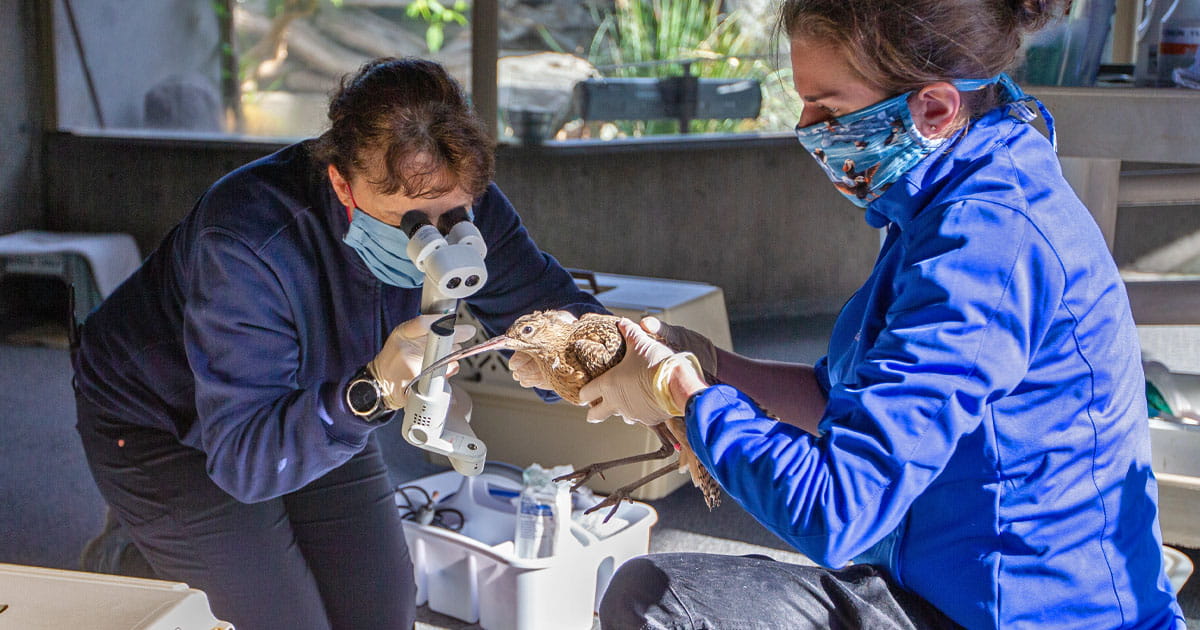
The Seattle Aquarium is home to nearly 400 species and over 12,000 individual mammals, birds fish and invertebrates. And, just like humans, these species have their own distinct care needs that change as they age. “All animals at the Aquarium have care plans that are customized to their species and the needs of the individuals or groups,” says Senior Veterinarian Dr. Caitlin Hadfield, MA VetMB DAZCM DECZM.
Being responsible for so many species and individuals means that animal care at the Seattle Aquarium is a team effort. Our veterinary and husbandry staff monitor the health of the animals every day and work together to provide the best life possible for them. “That’s the essence of good animal welfare,” notes Dr. Hadfield.
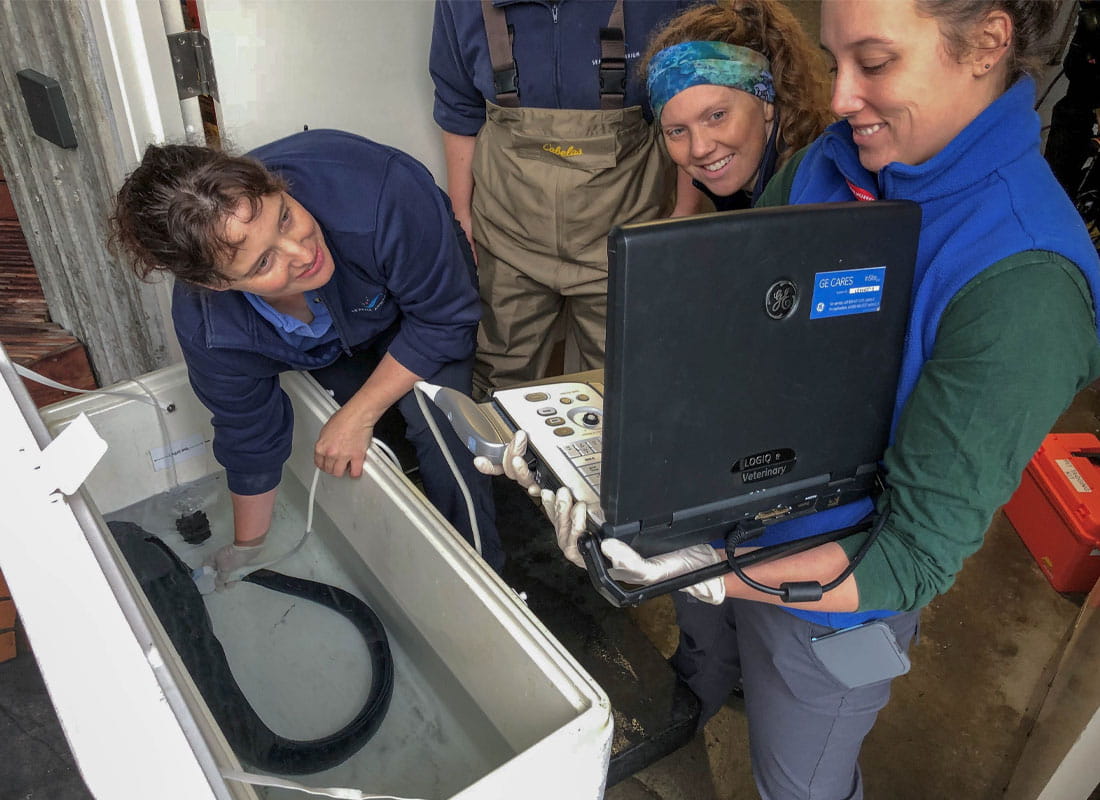
What’s it like being the doctor in charge for so many mammals, birds, fish and invertebrates? “It’s a mixture of routine preventative care—like wellness exams and environmental quality assessments—and reactive care, where we respond to changes we’ve seen in the animals or their environment,” says Dr. Hadfield. “With so many animals, we rely heavily on our professional staff and animal records to identify anything of concern, then work together to understand the situation and identify the best solution if needed. Because of the variety of species, I often reach out to colleagues with different fields of expertise so that, together, we can provide a great quality of care.”
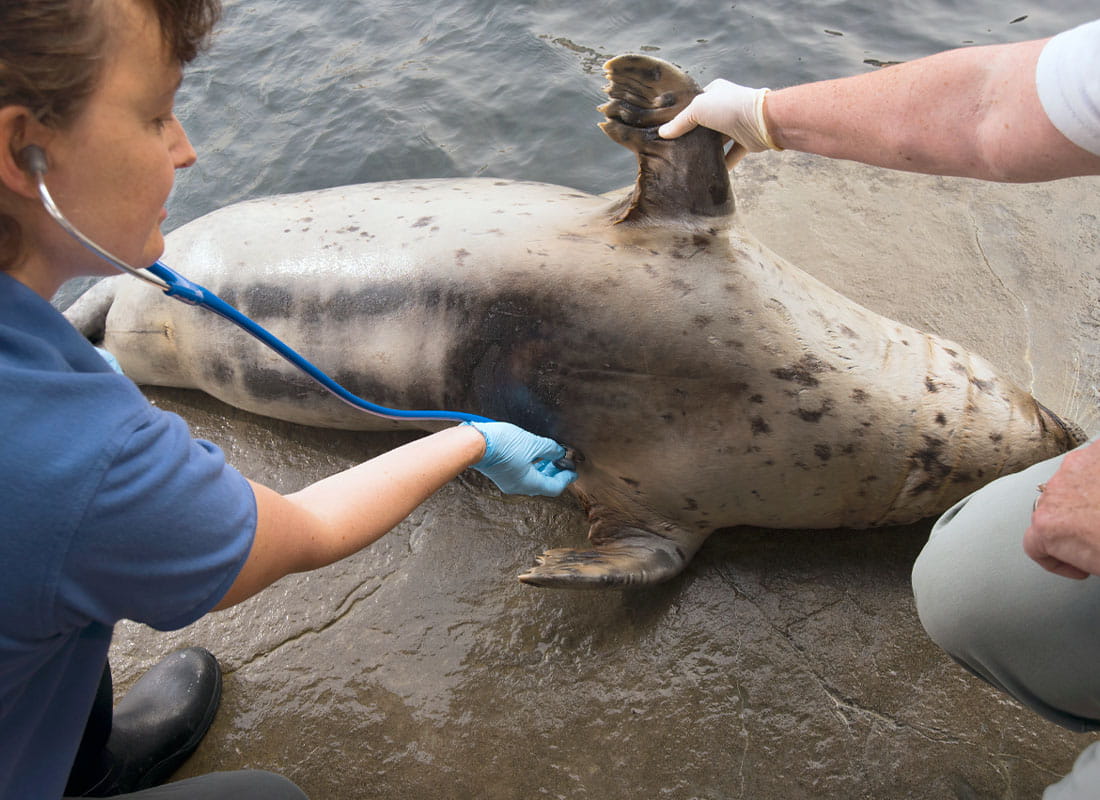
Here’s a fast fact: The average life span of a male Pacific harbor seal (Phoca vitulina vitulina) in the wild is 26 years1. Longtime Seattle Aquarium favorite Barney is now 36 years old, well above the average in the wild population. “Like any elderly animal, including us humans, he has some health issues, but is enjoying life,” says Dr. Hadfield.
Barney is just one example of how animals in human care at zoos and aquariums accredited by the Association of Zoos & Aquariums (AZA), including the Seattle Aquarium, tend to live significantly longer lives than those in the wild. “Over the Aquarium’s history, lessons learned and the application of new, innovative technologies designed for animal care have enabled our team to provide a good quality of life well beyond the expected life span for their counterparts in the wild,” notes Director of Life Sciences Grant Abel.
Visitors often ask about the origins of the Aquarium’s birds and mammals (and not in the “birds and bees” way!). Barney was born right here, in 1985—as was sea otter Aniak, in 2002. In fact, every marine mammal and bird in our care was either born in a zoo or aquarium, like Barney and Aniak, or rescued and deemed non-releasable by the U.S. Fish and Wildlife Service or the National Marine Fisheries Service, like sea otters Adaa and Mishka. Rescued animals that are deemed non-releasable either have a health issue or stranded too young to be able to survive in the wild.
Stay tuned for our upcoming blog posts for details about how we care for aging animals, as well as the AZA species survival plans for maintaining healthy, genetically diverse populations of animals within accredited zoos and aquariums.
Lastly, another fast fact: The Seattle Aquarium was first accredited by the AZA in 1979 and, like all accredited members, is subject to a thorough on-site inspection every five years to renew that accreditation.
The Seattle Aquarium is committed to continued diversity, equity and inclusion (DEI) learning and practices, and to using our sphere of influence to actively oppose racism within our industry and communities of conservation. We are proud today to share with you our commitment to anti-racism, as well as some further information about our ongoing DEI work.
The Aquarium views diversity as a strength and recognizes that we can only achieve our mission by including the skills and varied perspectives of all people. In 2019, we formed a DEI Council to guide and support the application of time and resources to create an inclusive Aquarium culture across all dimensions of diversity. The purpose of the DEI Council is to bring staff at all levels together to define, prioritize, and implement actions that foster a welcoming and equitable culture that reflects the multiple dimensions of diversity within our community. Recently, the council finalized an anti-racism statement for the Seattle Aquarium that is shared on our website and among all staff and volunteers.
The Seattle Aquarium’s commitment to anti-racism:
The Seattle Aquarium respects and celebrates the vitality and strength of the ethnic and cultural diversity that thrives in our neighborhood and surrounding communities. We recognize that we can only achieve our mission of Inspiring Conservation of Our Marine Environment by including the skills and varied perspectives of our entire community. To include the entire community, we must be a welcoming and inclusive organization making the conscious decision to identify and challenge racism daily. This requires on-going self-awareness and self-reflection as we move through our daily operations and plan for the future.
The Seattle Aquarium honors our location on the traditional territories of the Coast Salish peoples, who stewarded these lands and waters for generations and continue to do so today. As an organization striving to be anti-racist, we are making ourselves more aware of how racism has affected the lived experience of Black, Indigenous and People of Color and in what ways we are playing a role in those experiences. We know that racism is systemic and has been deeply ingrained in society throughout history. We understand that too many people knowingly and unknowingly participate in racism and perpetuate white-dominant norms. Using our sphere of influence the Seattle Aquarium is actively opposing racism within our industry and communities of conservation by committing to:
These commitments, while not an exclusive list, represent the Aquarium’s commitment to continued diversity, equity and inclusion learning and practices. The DEI work currently underway at the Seattle Aquarium is grappling with the unconscious perpetuation of inequity and reinforcement of stereotypes and implicit, or unconscious, bias. The Aquarium is currently creating a DEI strategic plan that will guide our next steps as we continue to evaluate our organization through an anti-racist and inclusive lens.
We know that there is more work to do and we are hopeful that through institutionalized, sustainable, action-oriented systems we will keep moving forward to the inclusive, anti-racist organization we strive to be. We will continue to share updates as we continue this work and we thank you for being part of the journey with us.
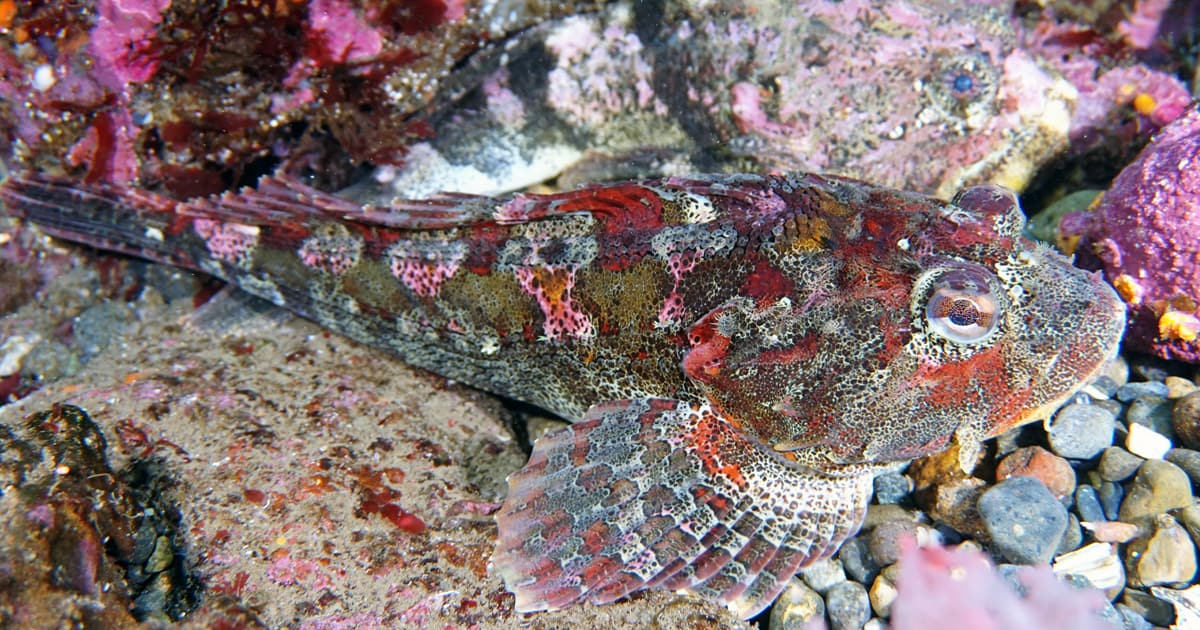
Q: What can you tell us about this species?
Tim: Red Irish lords are part of the sculpin family. They tend to rest on the bottom of shallow waters, down to depths of 1,500 feet. They’re common from the Bering Sea, near Alaska, to Washington, and are rarer south to central California. These fish are highly camouflaged and often overlooked by divers. Given that this species is not a common commercial or recreational fishing target, complete biological data on the species is not well-published. Based on limited fishing and other data gathered by the state of Washington, they can grow up to 20 inches long and 2.45 pounds in weight. Their maximum age is at least 6 years old.
Q: What does it mean for a fish to be egg bound?
Tim: Egg binding occurs when a female produces eggs but is not able to release them. This can lead to a buildup of eggs with each successive “clutch”, and the eggs become increasingly abnormal over time. There are many possible causes; we’re not sure why this species gets egg bound.
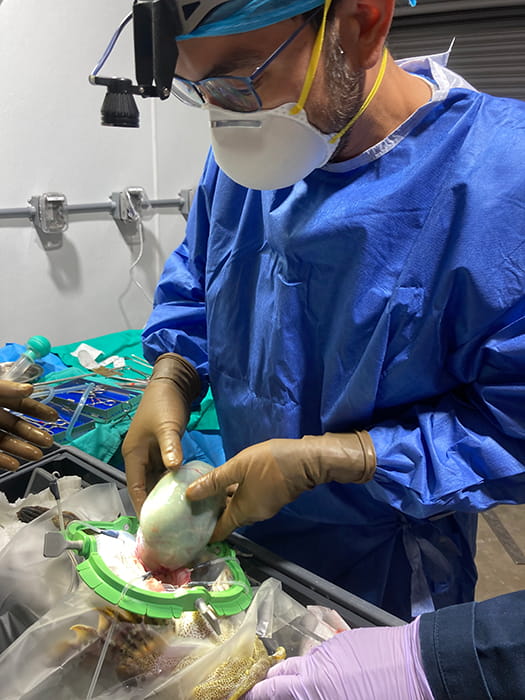
Q: Why was a board-certified surgeon needed to assist on a surgery for this red Irish lord fish’s case?
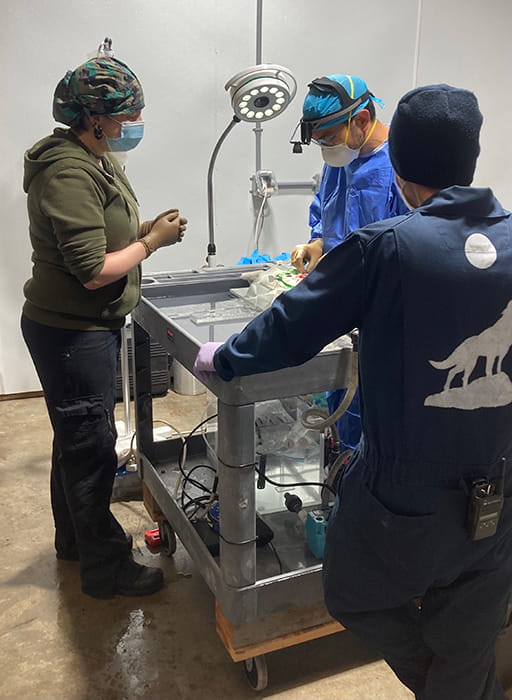
Dr. Hadfield: Aquarium and zoo veterinarians frequently reach out to specialists when we think it’s in an animal’s best interest. In this case, the anatomy is the main reason.
In fish like koi and salmon, the ovaries are two separate structures that sit loosely within a thin membrane and are easy to remove if they cause issues. In Irish lords, the two ovaries combine at the back, making them U-shaped, and that caudal aspect (i.e., near the tail) is tightly adhered to the body wall and the colon. Combined with that, these abnormal ovaries are very large—about 50% of the fish’s body weight—and the ovarian wall holding in all the little eggs is fragile.
These factors make this a particularly difficult surgery. We had tried environmental changes and hormones to induce egg laying but without success, and this surgery was needed to save the fish’s life. Dr. Alex Aguila, a board-certified surgeon from ASOC, and his surgical assistant, Sarah Gagliano, have extensive experience with difficult surgeries.
Alex was able to remove all the ovarian tissue, which is great news. The surgery is challenging and it is common to have to leave some of the ovarian tissue; this can regrow and cause more issues later on. Dr Aguila was also fast! This meant we were able to reduce the total anesthetic time to about 90 minutes, which also helps improve the long-term prognosis for the fish. And this was also a great opportunity for us all to work together and learn. The Seattle Aquarium has worked with ASOC for over 30 years, and we look forward to continuing our strong relationship well into the future.
Q: How does surgery happen on a fish?
Dr. Hadfield: To anesthetize a fish like this, we use a drug that is dissolved in the water. We keep that medicated water flowing over the fish’s gills through the surgery using a pump that moves the water through a big loop while we monitor the condition of the water. This lets us keep the fish’s belly out of water for the surgery. We also provide pain relief, similar to what you or your pet would receive, including anti-inflammatories, opioids, and local anesthesia around the surgery site. Once the fish is pre-medicated and on our surgical system, the surgeon can drape the site and get started. While there are differences in anatomy (like a lack of fur!), how surgery is done is similar to dogs and cats, including using the same types of sutures (stitches) to close up the body wall and skin.
Q: What happens next for the care of this red Irish lord?
Dr. Hadfield: The surgery was about a month ago, and the fish is doing great. She is eating again and looking like a healthy red Irish lord. She will get some more recheck exams and then move back to the Window on Washington Waters habitat. She has a small transponder now (just like your dog or cat), so we will be able to monitor her over time to see how she does.
Q: What are other examples of when specialists visit the Aquarium to help the animals in our care?
Dr. Hadfield: We are lucky enough to have a large support network of specialists in the zoo and aquarium field as well as in the private sector, including anesthesiologists, cardiologists, radiologists, ophthalmologists, and oncologists (lots of -ologists, really!). These specialists routinely donate their time and expertise to help improve the health and welfare of the animals under our care. One of the things that I appreciate most about this field is that we all want to learn and help each other out.
Q: When has the Aquarium shared our expertise in the community or with peer institutions and other organizations or efforts?
Dr. Hadfield: This is a hugely collaborative field, and we each try to help where we can. People often reach out to us to discuss challenges they may be having with species that we have under our care, as well as programs that we are particularly well known for, such as our animal welfare assessments and conservation programs.
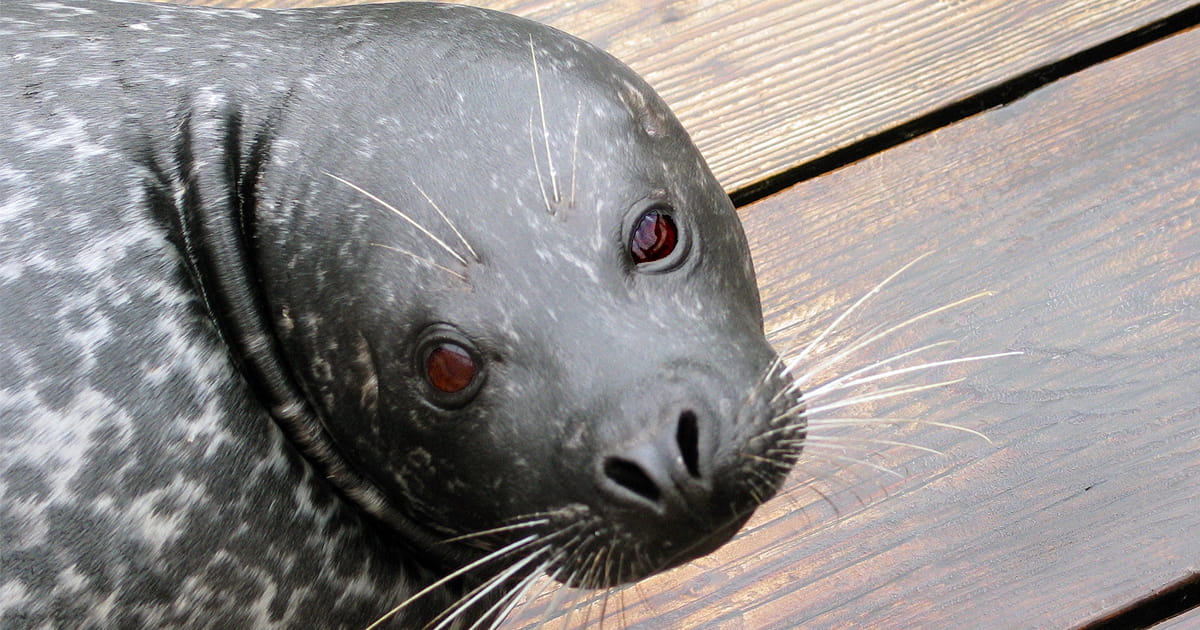
It is with great sadness that we announce the loss of Q, one of our beloved harbor seals, at the age of 22.
Q started showing some health issues in March of this year. X-rays at the time showed a mass inside his chest. “Diagnostic tests suggested that the most likely cause was a cancer known as lymphoma,” says Dr. Caitlin Hadfield, senior veterinarian at the Seattle Aquarium. “This is seen commonly in dogs, although there are very few reports of it in harbor seals and they were all found at postmortem exams (necropsies). For Q, we could not be sure of the diagnosis without taking samples of the mass inside his chest, but he was started on treatment based on this most-likely diagnosis, and he responded rapidly.”
However, this type of cancer is incurable; treatment is really good at shrinking the cancer for a while, and Q did great for two months, but remission is always temporary with this disease. “He showed a decline again in late May,” says Dr. Hadfield, “which looked to be due to recurrence of the cancer, and he was started on a rescue treatment to try to get him feeling better.” This type of rescue is rarely successful in dogs, but we are happy to report that Q got back to his usual self for an additional three weeks.
We closely monitor how all the animals are doing, and our teams work tirelessly to give them the best quality of life we can for as long as they are in our care; this includes giving them a peaceful passing when we know that they cannot live their full lives again. Q’s care team recently saw signs that his last-line treatment was no longer working, and he was humanely euthanized on June 23, 2021.
The Seattle Aquarium also recently lost sea otter Aniak, who passed away at age 19 last week. “The Aquarium is fortunate to provide a home for some amazingly long-lived animals, and we’re extremely proud of the care they receive with us,” comments Curator of Birds & Mammals Julie Carpenter. “It’s always hard to say goodbye to one when their time comes.”
Our other elderly mammals, including 35-year-old harbor seal Barney and 21-year-old sea otter Adaa (currently the oldest sea otter in the U.S.), continue to do well.
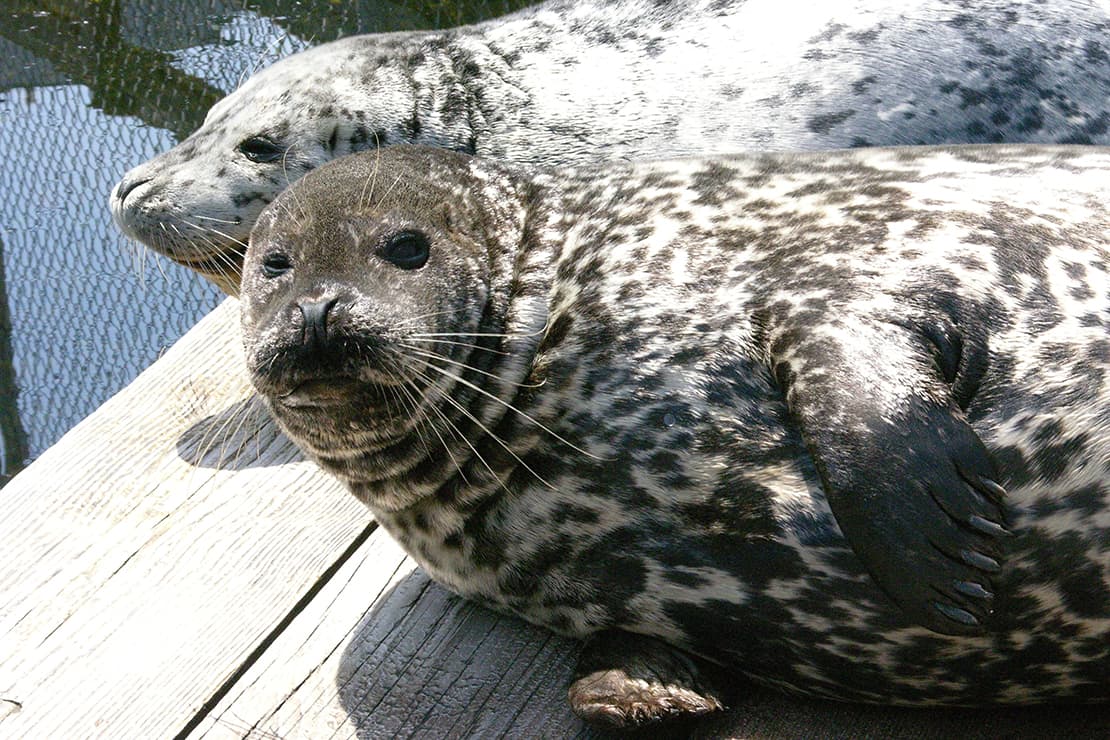
"Q was our go-to animal for new staff to learn feeding and training as he was incredibly patient and gentle. His laid-back personality and eagerness to participate in so many health care and husbandry trained behaviors made him a very unique harbor seal that the entire Bird and Mammal Team will miss greatly."
Kelli Lee, animal care specialist for the Aquarium’s Bird and Mammal team
Q was born at Sea World San Diego and brought to the Seattle Aquarium in 2002. Over the course of his time in the Pacific Northwest, he was a wonderful ambassador for the Seattle Aquarium, including participating in a harbor seal breeding exchange with the Point Defiance Zoo & Aquarium (PDZA) in 2012. It was a successful exchange, with Q becoming the dad of Saya and Hogan (who currently resides at our Aquarium) with harbor seals Qilak and Shila, respectively, from PDZA.
“We will continue to learn a lot from Q and hope that we can use this information to help with diagnosis and treatment of this disease in other seals,” explains Dr. Hadfield. “He will be missed—and his impact will live on.”
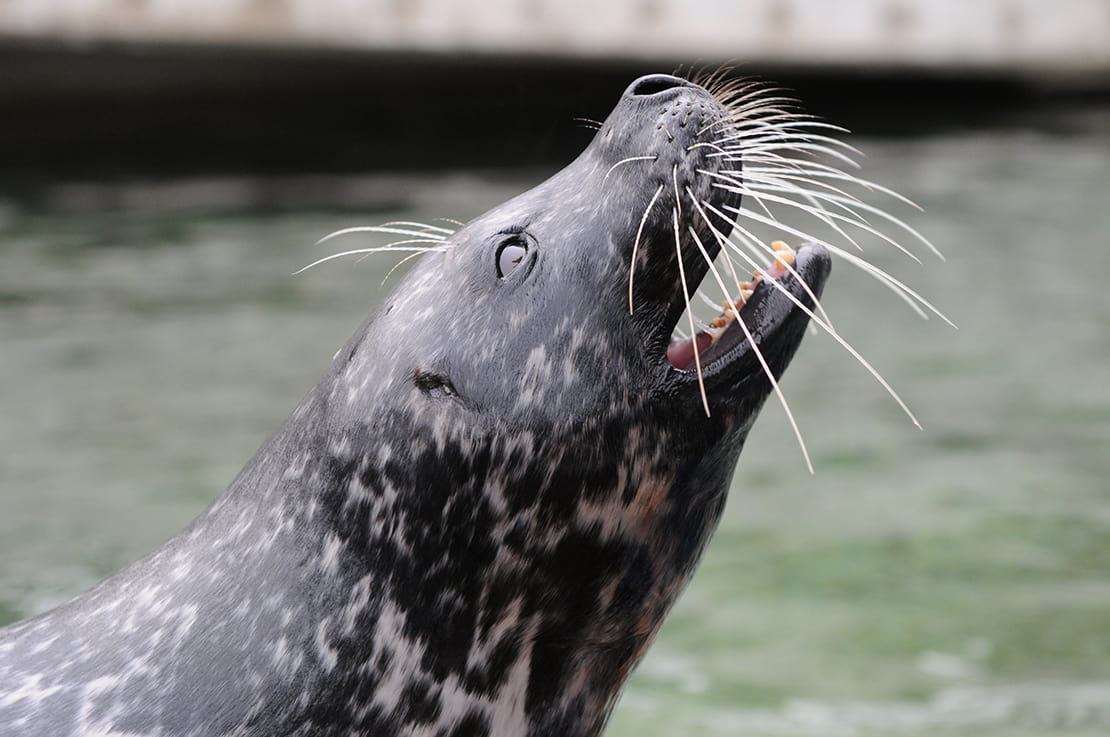
In the wild, harbor seals (Phoca vitulina) spend equal time on land as at sea, and they’re inquisitive, though sometimes elusive. They have a thick layer of blubber, which stores energy, makes them buoyant, and influences their streamlined shape. Male harbor seals are often 4–6 feet long and weigh between 150 and 375 pounds, and Q was no exception, with his weight ranging between 180 and 240 pounds. (Pinnipeds—including both harbor seals and northern fur seals—show a wide range in weight across the year as part of their normal annual cycle.)
Harbor seals are a common sight around inland marine waters like Puget Sound. You’ve likely seen them in the water when you walked along the shore or rode a ferry, and they often sit on top of buoys or piers—like around Elliott Bay, where the Aquarium is located. They also live in coastal waters and estuaries.
Q was a beloved fixture at the Aquarium, and he will be missed greatly by all. His legacy of Inspiring Conservation of Our Marine Environment will live on in Saya and Hogan and through all those who knew him and enjoyed watching him in his habitat or on our live webcams.
We invite you to learn more about harbor seals by visiting the Aquarium in person or our website’s fact sheet, and you can view Hogan and Barney in their habitat via our live webcams.
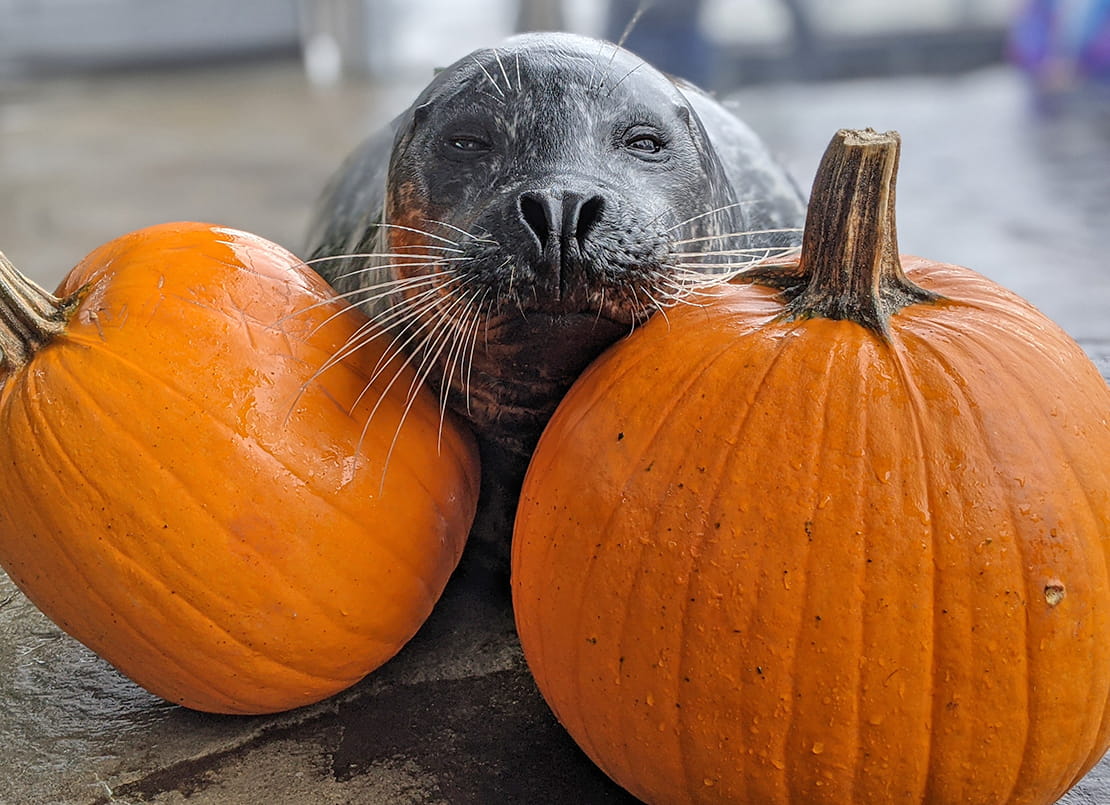
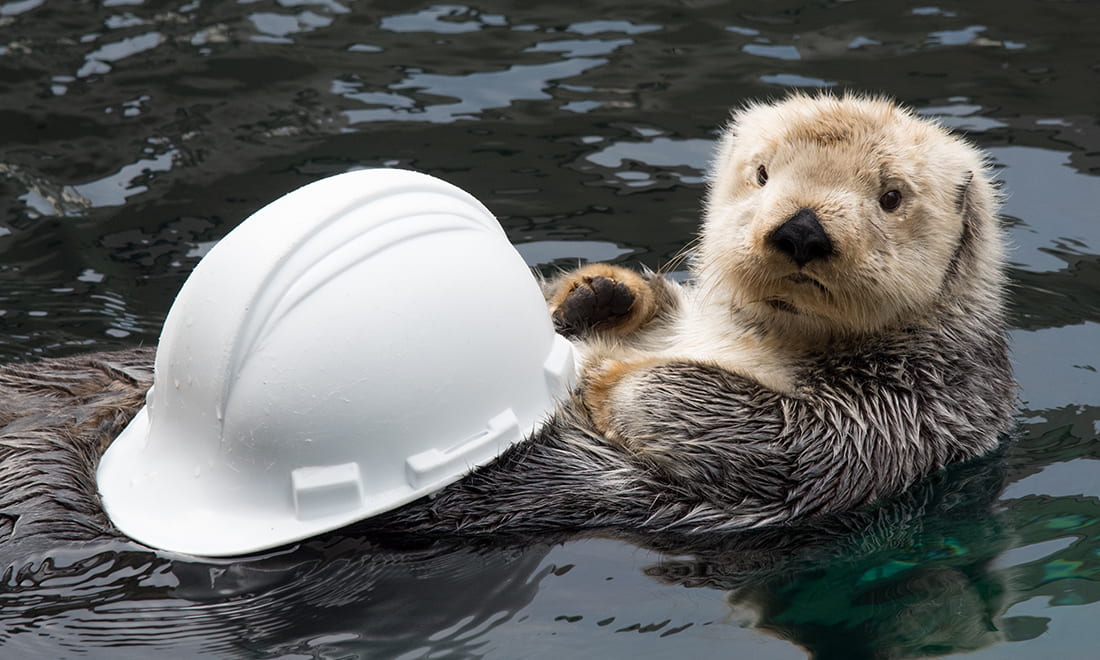
We are deeply saddened to announce the loss of Aniak, one of our beloved sea otters. Aniak was a 19-year-old female born here at the Seattle Aquarium to Lootas, our former sea otter matriarch. Aniak became a mother during her time at the Aquarium, giving birth to a male named Chugach in 2005, who moved to Pittsburgh Zoo & PPG Aquarium, and a female named Sekiu in 2012, who now lives at Point Defiance Zoo & Aquarium.
At 19, Aniak was an elderly sea otter. She had been dealing with chronic skin issues for six years, and while she continued to do all the normal sea otter things, it had been a delicate balance to maintain her comfort while also minimizing side effects from the medications needed to reduce her symptoms. Working with other sea otter veterinarians and dermatologists, we continued to adapt her care in the face of this chronic issue. In spite of the care provided, her health swiftly declined this week and the decision was made to humanely euthanize her early this morning.
This brings up the good question of how we know it’s time to provide humane euthanasia. “If an animal is in pain or distress that cannot be relieved, that decision is obvious and it is a great privilege as a veterinarian to be able to relieve suffering and provide an animal with a peaceful passing,” comments Senior Veterinarian Dr. Caitlin Hadfield. “However, just as with your dog or cat, that decision is harder with chronic relaxing-remitting health issues,” she continues. We want to give all the animals at the Aquarium the opportunity to live their best lives. To help with that, every animal at the Aquarium has regular welfare assessments to identify any opportunities to improve their well-being.
When an animal has a serious health condition or is past their expected life span, we use very frequent assessments that are tailored to that animal’s needs. For example, for a tufted puffin with arthritis, we may evaluate how well they are moving around on land and how much they explore their environment. We use these and other metrics as a base to talk about their quality of life, prognosis and the options available to us. For Aniak, we reached a point this morning where the best decision for her was humane euthanasia.
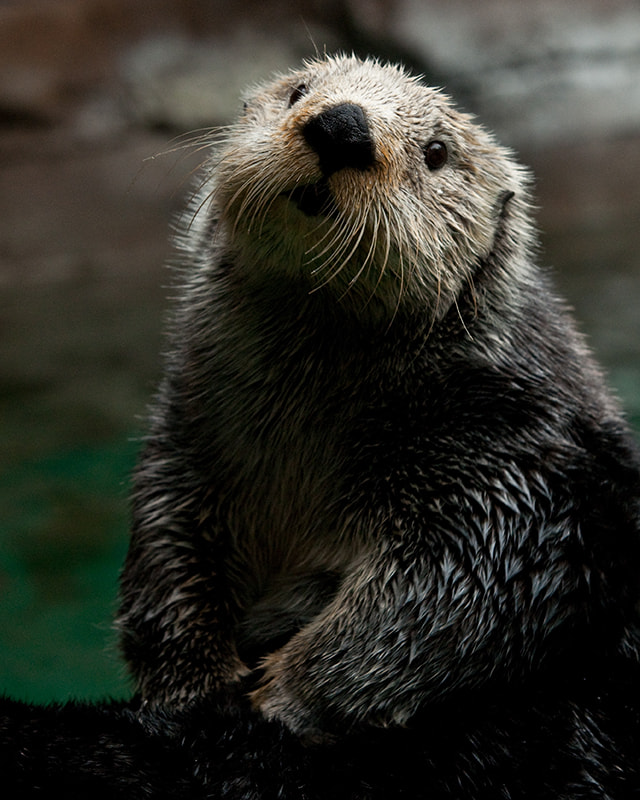
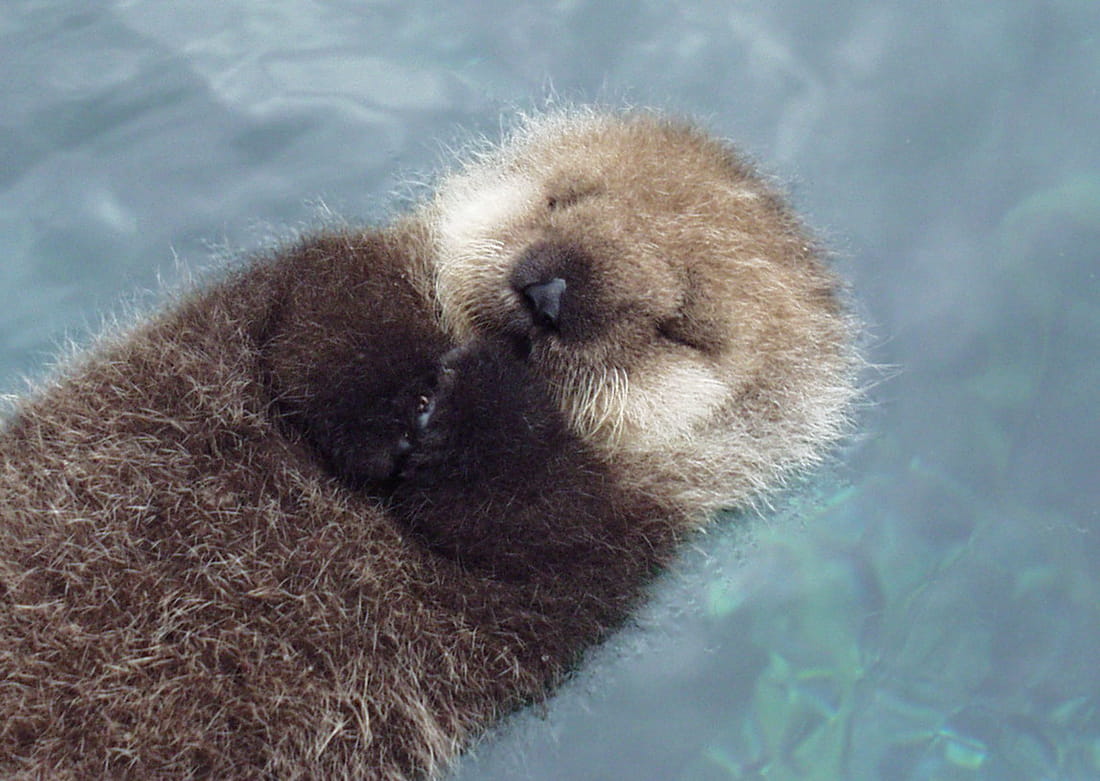
Aniak was a wonderful ambassador for her species. In addition to being absolutely adorable, sea otters are a vital part of our ecosystem in the Pacific Northwest. They feast on sea urchins, which prevents that population from eating all the kelp, which in turn offers habitat and protection to many species in our waters. Since sea otters need to eat around 25% of their body weight every day, that adds up to a lot of sea urchins, shellfish, squid, fish, crabs and shrimp.
There are around 2,800 sea otters living off the Washington coast; this is thanks to population recovery efforts after they were hunted nearly to extinction at the turn of the 19th century for their amazingly thick fur—anywhere from 500,000 to 1 million hairs per square inch, the densest fur on Earth! All that hair keeps sea otters from needing a layer of blubber to keep warm, but they do have to regularly groom their fur and blow air into it to maintain its incredible insulating qualities.
The Bird and Mammal team’s expert and diligent attention, along with the amazing veterinary care provided by Dr. Hadfield, allowed us to give Aniak the best life possible. She inspired not only our staff and volunteers but also countless people who visited her in person or watched her on our webcams. She was gentle, yet spirited, and a devoted mother, and will be dearly missed by our staff, volunteers and visitors.
We invite you to learn more about sea otters by visiting their fact sheet on our website and seeing them in person during your next visit to the Aquarium. You can also watch our sea otters in real time in their habitat via our live webcams.
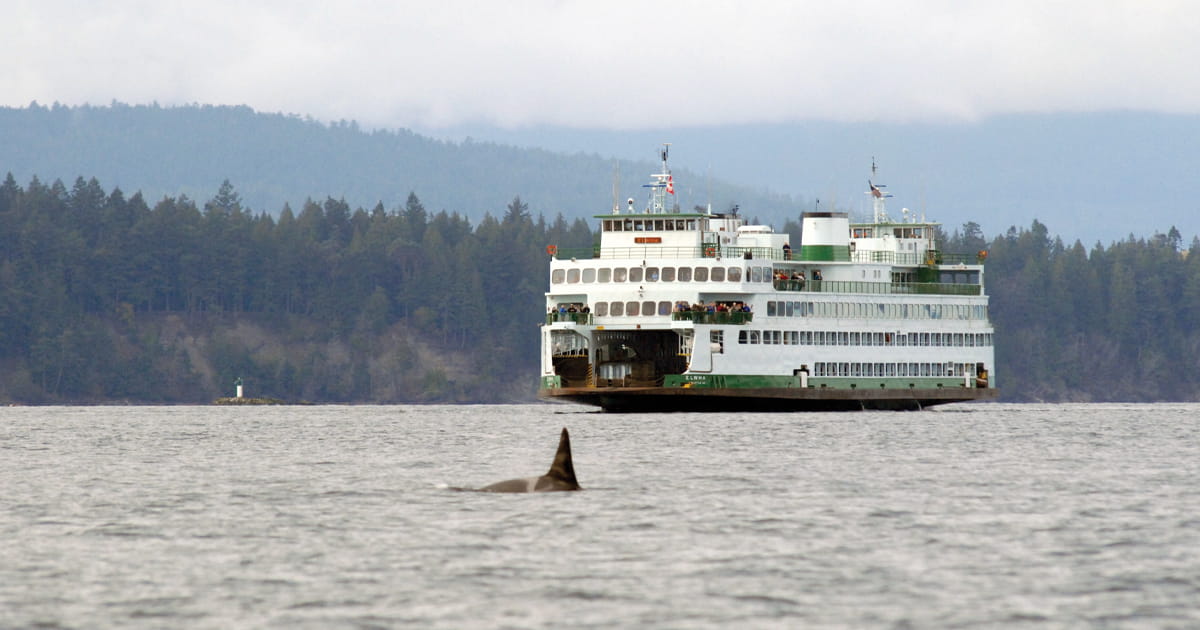
The Seattle Aquarium works on policies to reduce noise and disturbance impacts on the endangered southern resident orcas, which currently number only 75. Quieter waters will make it easier for the orcas to communicate with each other and find scarce salmon, while we all work to restore habitat so that those salmon are more abundant.
We have supported new requirements for slow-speed zones and vessel distance, measures to reduce oil spill risk, and state funding for the Quiet Sound program to encourage large ships to voluntarily slow down, and we’ve asked the Navy to do more to mitigate the potential impacts of sonar testing on the orcas. The Seattle Aquarium is also one of the shore-based marine mammal viewing spots along the Whale Trail.
But there is more that we can do to make the waters safer for the endangered orcas, and we invite you to join us in taking action when you’re outside this summer and beyond.
When ships collide with whales and dolphins, it can cause serious injury and even death. But with timely warnings, shipmasters and pilots can slow down the ship, alter course, increase vigilance or turn off their sounders to reduce disturbance and the risk of hitting a whale. Using the WhaleReport app, we can all help ensure that ship captains know when whales are in their vicinity.
The WhaleReport Alert System (WRAS) was developed in Canada by Ocean Wise and its partners, and a few years ago Governor Inslee’s Orca Task Force recommended expanding it to Washington waters. The WRAS has already delivered over 8,000 alerts to ship operators in Canada and Washington. But the platform needs more real-time sightings reports, especially from here in Washington, to be as effective as possible.
If you spot a whale, dolphin, porpoise or sea turtle—from shore, a ferry or a boat—report it via WhaleReport as soon as possible (in addition to any reporting you’d normally do to a local sightings network). It only takes a couple of minutes, and there are two ways you can do it:
or
Note that sightings data reported to the WhaleReport Alert System is only shared with the operators of large ships, tugs, ferries and government agencies. The data is not available for public use. The Whale Museum is responsible for data collection in Washington state and also uses the reports for conservation-oriented research.
If you would like to learn more about how the system works, visit wildwhales.org/wras.
Thank you for taking action to protect marine wildlife!
*Ocean Wise researchers will only use your contact information to ask you any follow-up questions regarding your sighting reports to aid in our research efforts and will not contact you for any promotional reasons. Your details are protected under Ocean Wise’s Privacy Policy.
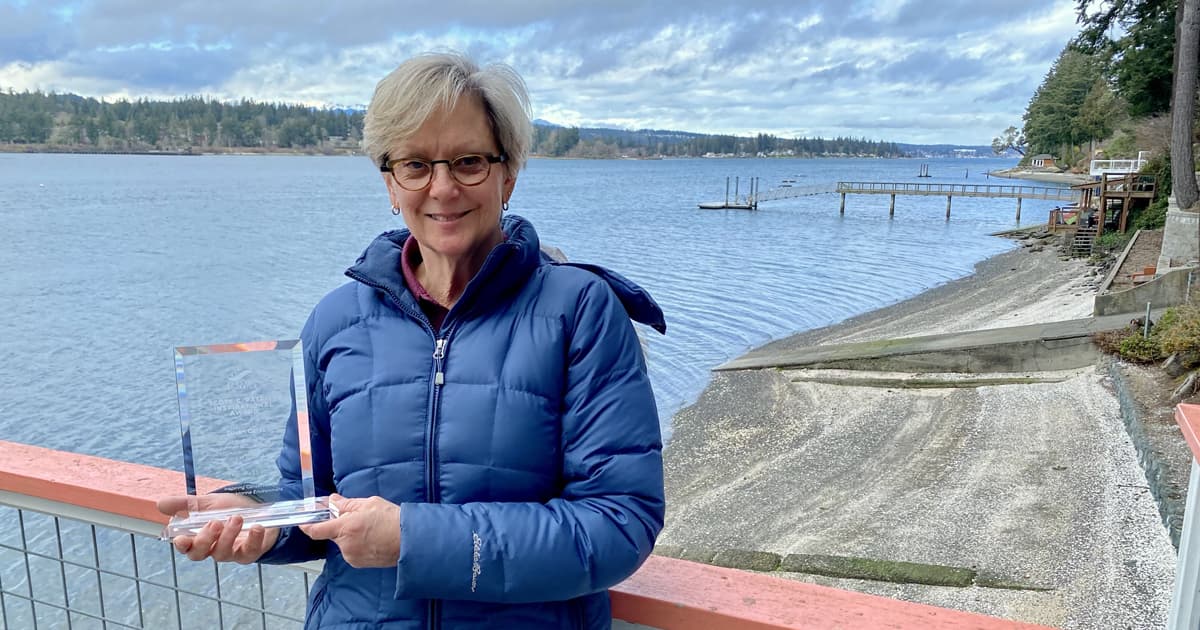
This year marks Susan’s 25th year as a Seattle Aquarium board member, and we’re proud to honor her with the Scott S. Patrick Inspirational Award. Named for the late Aquarium board member and Seattle Seahawks executive who served with extraordinary passion, the Scott S. Patrick award annually recognizes the Seattle Aquarium board member whose service best exemplifies the passion, leadership and enthusiasm that characterized Scott Patrick’s life and board service.
Susan joined the Seattle Aquarium board of directors in 1996 and sits on the finance and project oversight committees. She’s a regional credit administrator for Beneficial State Bank, and her previous experience includes being senior vice president of AmericanWest Bank, Key Bank and several other local and regional banks. She also works on several boards for bank trade associations and community nonprofits, as well as on the College of Business and Economics advisory committee for Western Washington University.
Susan’s lifelong and deep love of the ocean, along with long-held commitments to conservation and environmental justice, are reflected in her many contributions to our organization. We asked about her impressive tenure and valuable insights below:
Q: When did you first fall in love with the ocean, and how has that shaped your life?
A: My husband, Jack, and our grown kids, Margaret Ann and Elk, are longtime sailors and have sailed all over the Salish Sea. We love seeing orcas, humpbacks and minkes from a proper distance; Dall porpoises; and seals and otters. We’ve snorkeled with tropical fish and sea turtles in Hawaii and sailed and snorkeled in the British Virgin Islands and Croatia. All of that has inspired an awe of our one world ocean and a strong urge to protect it, as we have seen fewer and fewer sea creatures over the years inhabiting our area.
Q: What inspired you to join the Seattle Aquarium’s board of directors?
A: The “wow” moment for me was when our family traveled to the Shedd Aquarium in Chicago after they opened their Pacific Northwest exhibit in 1991. I had never seen such an amazing exhibit with all of “our” PNW aquatic critters, and I was really struck with the idea—Why isn’t this in Seattle? When we got home, I saw that the Seattle Aquarium was planning an expansion, so I pitched them on using KeyBank (my employer at the time) for the anticipated bond financing. That particular expansion and the bonds never happened, but one thing led to another, and I joined the membership committee, then the board—and the rest is history.
Q: The Scott S. Patrick award recognizes strong leaders on the Aquarium’s board. What advice do you have for students and young adults who want to become effective leaders?
A:
Q: You’re one of the top five longest-tenured Aquarium board members. What keeps you coming back?
A: Through all of these years, there have been interesting challenges for us on the board—always some knotty issue, expansion plans, funds to raise/keep track of, bonds to repay, budgets to balance, events to inspire, guests and members to stir to action, and staff members to encourage and empower.
This past year was awful, but we’ve been resilient and mercifully have had wonderful support from our amazing team members, board and community.
Q: You have an extensive background in finance. Has that perspective given you any particular insight when it comes to supporting conservation of our marine environment? What has that specific perspective made clear to you or brought to your attention?
A: For an organization to continue do good and improve the environment, and more specifically our marine environment, it needs to be on a sound financial footing or it won’t be around to fulfill its mission. And, while there are financial considerations, there is also the human side of running an organization like the Aquarium. We need to be kind and thoughtful with our teammates at the Aquarium; bear in mind how our decisions impact the animals in our care and our mission; and also be mindful of our sustainability as an economic entity.
Q: What excites you about the future of the Seattle Aquarium?
A: We have such a bright future as an organization, starting with the new Ocean Pavilion to expand our marine conservation story and reach. Our recognition of historic inequities in our communities and rededicating our organization to reaching and serving all of our diverse communities and telling their stories and lived experiences is so important. I especially am looking forward to our continued work with the Coast Salish peoples, amplifying Indigenous art and stories as we seek to inspire love and appreciation for our one world ocean.
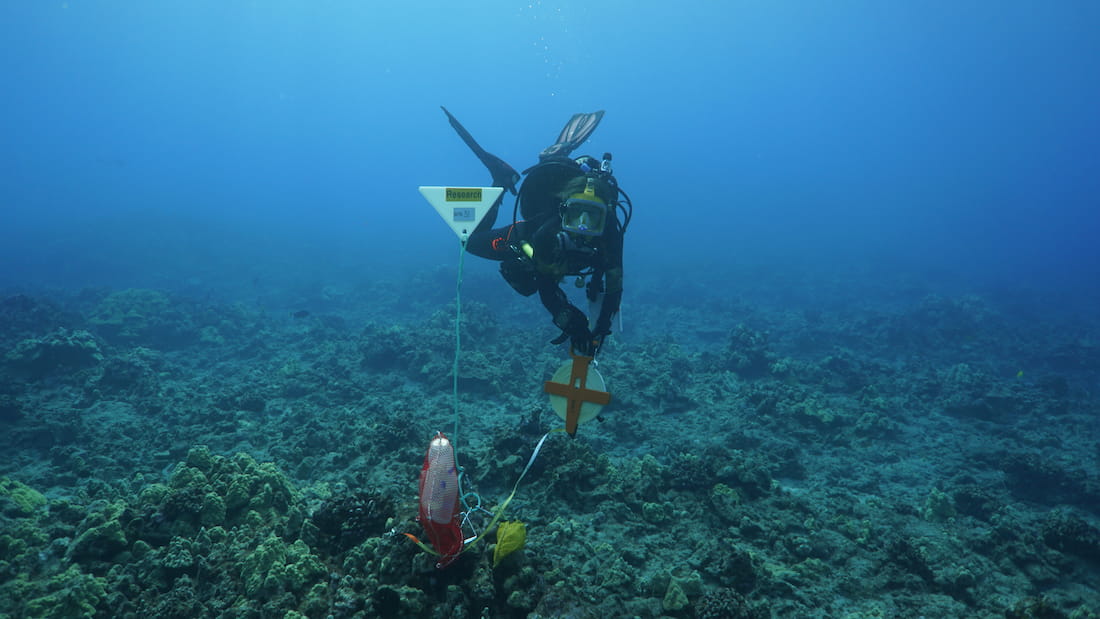
Guest blogger Amy Olsen began her time at the Seattle Aquarium as a volunteer diver in the Underwater Dome habitat. She is now a laboratory specialist/research technician in the Conservation Programs and Partnerships department. Her Master in Marine Affairs program is in the School of Marine and Environmental Affairs at the University of Washington.
Coral reefs are subject to marine heatwaves caused by human-induced climate change. Long-term thermal stress can negatively affect corals and the associated marine organisms that use these areas as critical habitat by causing coral bleaching. Coral reefs provide important ecosystem goods and services such as fisheries and tourism as well as aesthetic and cultural value. Healthy coral reefs have been estimated to add $477 million annually to Hawaiʻi’s economy through tourism and subsistence, recreational and commercial fisheries (Cesar & van Beukering, 2004).
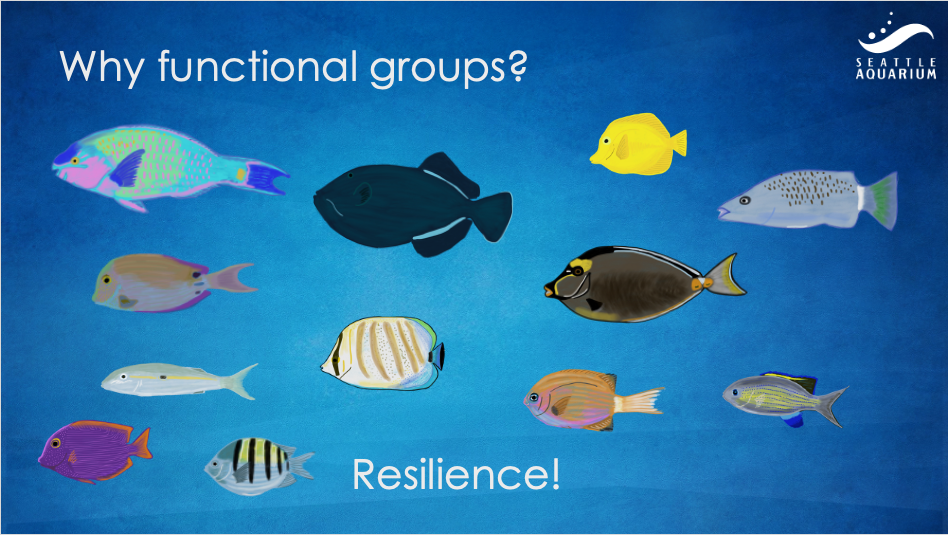
For my master’s thesis project, I examined coral reef resilience to climate change by analyzing changes in fish assemblages (i.e., which species exist in the same area at the same time) after a marine heatwave. I analyzed 11 years of subtidal video survey data in three areas in West Hawaiʻi, capturing a marine heatwave event from 2014 to 2016. Fish were counted and identified to species, then assigned to one of seven functional groups: predators, secondary consumers, planktivores, corallivores and three herbivore groups—scrapers, grazers and browsers.
The dataset I used was collected by my supervisor, Dr. Shawn Larson, curator of conservation research at the Seattle Aquarium. This work falls under climate resilience, one of our three organization-wide conservation priorities along with sustainable seas and clean waters.
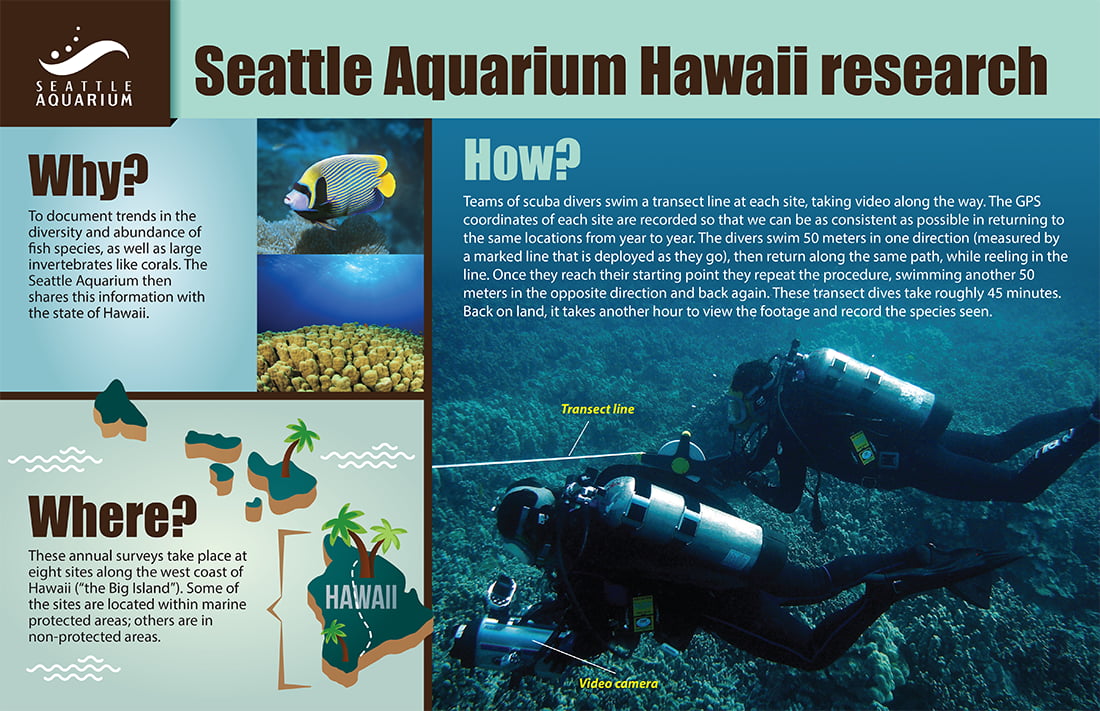
The Seattle Aquarium has been conducting video-based reef monitoring surveys every year in Hawaiʻi since 2009. The goals of this monitoring project are the following:
I used statistical tests to evaluate how the fish communities changed after the marine heatwave. All three areas in West Hawaiʻi were found to be different in the years after the heatwave. Interestingly, regardless of how differently these areas are managed or how different the habitat is, all three communities became more similar to each other.
This has been previously described in the literature where climate changes in the marine environment favor small, generalist, algae-eating fish that are able to adapt to these changes. This is called biotic homogenization and has been cited as a pressing global biodiversity crisis (Dornelas et al., 2014, Magurran et al., 2015, McGill et al., 2015).
Kona, the Marine Life Conservation District with the highest level of fishing protection among our sites, showed the highest total fish abundance and least variation over time in abundance over the study period, suggesting ecosystem stability. These sites had the highest diversity values and also documented the highest coral loss. While the fish assemblage was significantly different after the marine heatwave, the observation that fish abundance remained high could indicate this area has higher resilience than the other two areas, and may suggest more stability to new or unusual environmental conditions (Bernhardt & Leslie 2013).
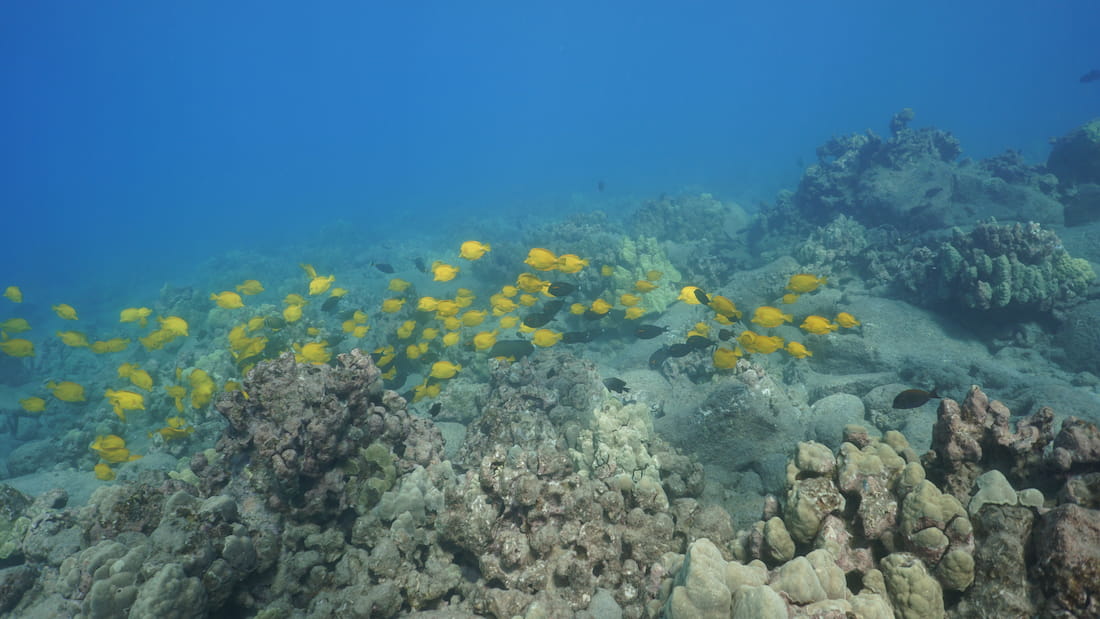
Marine protected areas can be an effective management strategy to prevent overfishing, protect diverse species and provide a refuge for life stages that are more sensitive, but they do not prevent warming of the ocean surface or coral bleaching. However, management policies that prevent overfishing of herbivorous fish, such as browsers or scrapers, can prevent phase shifts from healthy coral reef systems to algal-dominated systems which has been found to aid reef resilience (Hughes et al., 2003).
Protected reefs lead to higher abundance and biodiversity of reef fish (McLean et al., 2019). Coral and fish species responses to thermal stress is highly variable, so networks of marine protected areas require thoughtful place-based approaches for effective implementation. Success is dependent on an effective combination of science-based management, public support and political will (Bellwood et al., 2004).
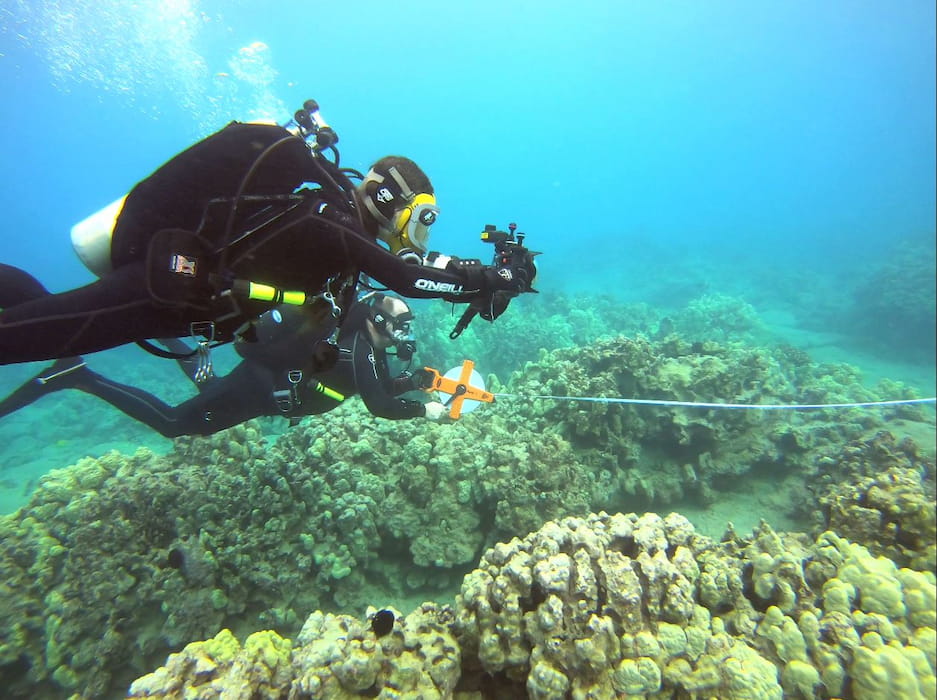
Understanding how marine heatwaves impact coral reef communities can guide decision-making for effective coastal management. Continued long-term monitoring is necessary to evaluate disturbance impacts on the coral reef ecosystem, as we anticipate climate change and marine heatwaves will continue into the future.
To help protect coral reefs from these stressors, the Seattle Aquarium is supporting policies such as the Restoring Resilient Reefs Act (S.46 and H.R.160). This act would provide new federal grants to support state coral reef management and restoration and respond to coral reef emergencies and disasters. You can help! Visit this Aquarium Conservation Partnership quick action page to encourage your members of Congress to co-sponsor this bipartisan legislation.
Bellwood DR, Hughes TP, Folke C, Nyström M (2004) Confronting the coral reef crisis. Nature 429:827–833.
Cesar HSJ, van Beukering PJH (2004) Economic valuation of the coral reefs of Hawaiʻi. Pacific Sci 58:231–242.
Dornelas M, Gotelli NJ, McGill B, Shimadzu H, Moyes F, Sievers C, Magurran AE (2014) Assemblage time series reveal biodiversity change but not systematic loss. Science (80- ) 344:296–299.
Hughes T, Jackson J, Kleypas J, Lough J, Marshall P, Palumbi S, Pandolfi J, Rosen B, Roughgarden J (2003) Climate Change, Human Impacts, and the Resilience of Coral Reefs. Science (80- ) 301:929–933.
Magurran AE, Dornelas M, Moyes F, Gotelli NJ, McGill B (2015) Rapid biotic homogenization of marine fish assemblages. Nat Commun 6:2–6.
McGill BJ, Dornelas M, Gotelli NJ, Magurran AE (2015) Fifteen forms of biodiversity trend in the anthropocene. Trends Ecol Evol 30:104–113.
McLean M, Auber A, Graham NAJ, Houk P, Villéger S, Violle C, Thuiller W, Wilson SK, Mouillot D (2019) Trait structure and redundancy determine sensitivity to disturbance in marine fish communities. Glob Chang Biol 25:3424–3437.
Adults 21+ Special Events!
June 18 | June 25 | July 2
Explore the Aquarium at night with friends, family or by yourself!
Today only, your gift will be matched dollar-for-dollar up to $25,000 thanks to the generosity of donors Betsy Cadwallader, J & Tim, and Jess & Andy Peet. Help us reach our $50,000 goal!